
Apr . 01, 2024 17:55 Back to list
Air Pressure Gauge how does a air pressure gauge work Performance Analysis
Introduction
Air pressure gauges are fundamental instruments employed across a vast spectrum of industrial and commercial applications, from pneumatic systems and HVAC to automotive maintenance and medical devices. These gauges function by measuring the force exerted by a gas per unit area, typically expressed in pounds per square inch (PSI), kilopascals (kPa), or bar. The core principle relies on the elastic deformation of a sensing element in response to applied pressure. This deformation is then mechanically or electronically translated into a readable indication. A critical component within many industrial control systems, accurate and reliable pressure measurement is paramount for process optimization, safety, and maintaining equipment integrity. Their ubiquity stems from their relative simplicity, affordability, and robust performance characteristics. Understanding the underlying principles, materials, and potential failure modes is crucial for engineers, technicians, and procurement professionals involved in specifying, maintaining, and troubleshooting these essential instruments. This guide provides a comprehensive overview of air pressure gauge technology, covering material science, manufacturing processes, performance characteristics, common failure modes, and applicable industry standards.
Material Science & Manufacturing
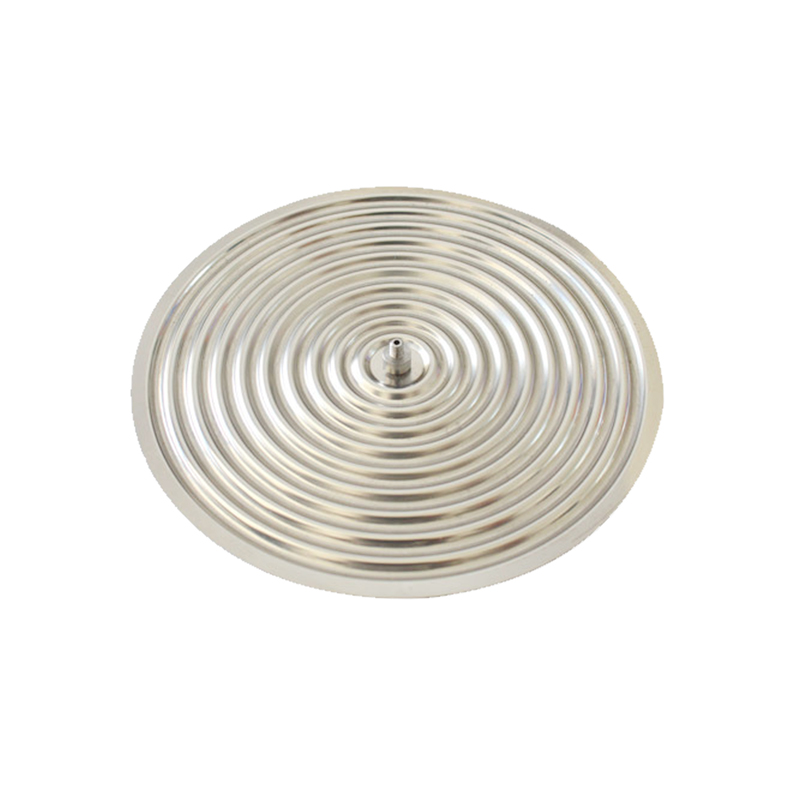
The performance and longevity of an air pressure gauge are intrinsically linked to the materials used in its construction. The pressure-sensing element, typically a Bourdon tube, diaphragm, or bellows, is commonly manufactured from alloys exhibiting high elastic modulus, yield strength, and fatigue resistance. Beryllium copper is a frequent choice for Bourdon tubes due to its excellent spring characteristics and corrosion resistance, although stainless steel (304, 316) is increasingly preferred for applications requiring broader chemical compatibility and lower cost. Diaphragms are often constructed from materials like stainless steel, Hastelloy, or even specialized polymers (e.g., PTFE) depending on the intended pressure range and corrosive environment. Gauge casings are generally made from steel (carbon steel, stainless steel) or aluminum, chosen for their strength, durability, and ability to withstand external mechanical stresses. The internal mechanisms, including gears and linkages, typically utilize hardened steel or brass for wear resistance. Manufacturing processes vary based on the gauge type. Bourdon tubes are produced through a cold-forming process – bending and shaping a metal tube into its characteristic curved form. Precise heat treatment is vital to optimize the spring properties of the tube. Diaphragm gauges involve deep drawing and subsequent machining to achieve the desired geometry and thickness. Manufacturing parameter control is paramount: tube wall thickness, heat treatment temperature and duration, and surface finish all influence accuracy and repeatability. Welding processes used must be carefully controlled to prevent stress concentrations and maintain structural integrity. Calibration is a critical final step, performed using precision pressure standards and automated calibration systems to ensure accuracy across the specified range.
Performance & Engineering
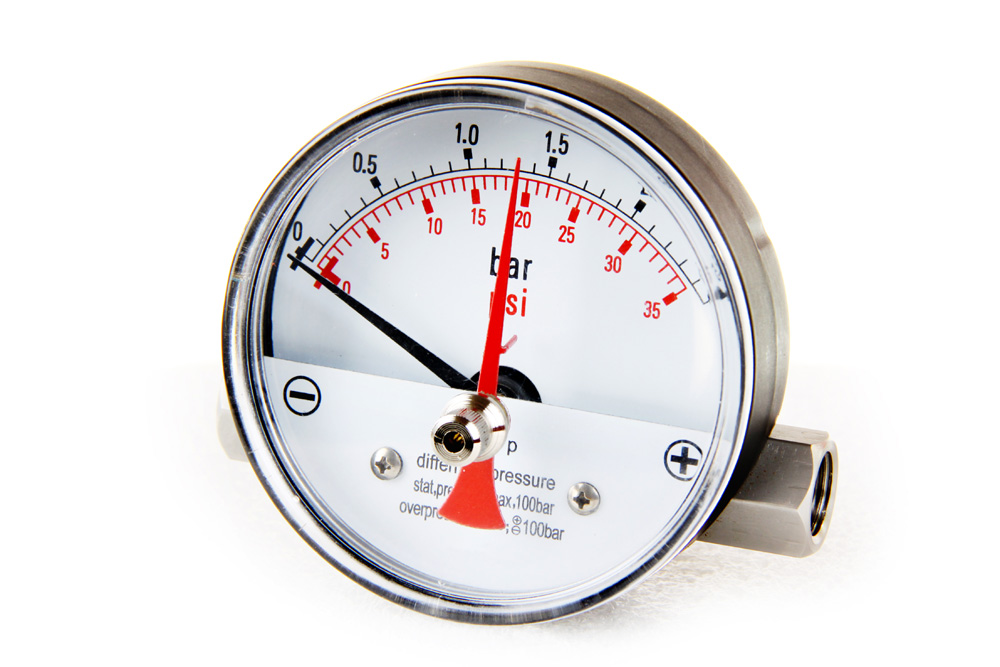
The core engineering principle behind air pressure gauges is the conversion of pressure into a mechanical displacement. In Bourdon tube gauges, pressure applied internally causes the tube to straighten, with the degree of deflection proportional to the pressure. This movement is then magnified by a linkage and gear system, driving a pointer across a calibrated dial. Diaphragm gauges utilize the deflection of a flexible diaphragm caused by the pressure differential. This deflection is typically measured using a mechanical linkage or a strain gauge. Bellows gauges function similarly, relying on the axial expansion or contraction of a corrugated metal bellows. Force analysis is critical in the design of these gauges. Engineers must consider the stresses induced in the sensing element by the maximum operating pressure, as well as the fatigue life under cyclic loading. Environmental resistance is another key performance consideration. Temperature fluctuations can affect material properties and calibration accuracy. Gauges designed for outdoor or harsh environments must incorporate features such as liquid filling (glycerin or silicone oil) to dampen vibrations, prevent corrosion, and extend the operating temperature range. Compliance requirements, particularly in industries like pharmaceutical or food processing, dictate materials of construction (e.g., sanitary fittings, food-grade elastomers) and surface finish (e.g., electropolished stainless steel) to prevent contamination. Accuracy is typically specified as a percentage of full scale (FS), with higher accuracy gauges employing more precise manufacturing techniques and calibration procedures. Hysteresis and repeatability are also important performance parameters, indicating the gauge's ability to provide consistent readings over multiple cycles.
Technical Specifications
| Parameter | Typical Value (Low Pressure Gauge) | Typical Value (High Pressure Gauge) | Units |
|---|---|---|---|
| Pressure Range | 0-30 | 0-10000 | PSI |
| Accuracy | ±3 | ±1 | % FS |
| Operating Temperature | -20 to 60 | -20 to 80 | °C |
| Case Material | Steel | Stainless Steel | - |
| Sensing Element Material | Beryllium Copper | Stainless Steel (316) | - |
| Connection Size | 1/8 NPT | 1/2 NPT | - |
Failure Mode & Maintenance
Air pressure gauges, despite their robust design, are susceptible to several failure modes. Fatigue cracking in the Bourdon tube or diaphragm is a common issue, particularly in applications with significant pressure fluctuations. This is often initiated at stress concentration points, such as welds or bends. Corrosion, especially in environments with corrosive gases or liquids, can lead to material degradation and failure. Delamination of laminated diaphragms can occur due to bond failure or material incompatibility. Zero drift, a gradual shift in the zero point of the gauge, can result from mechanical wear, temperature effects, or creep. Oxidation of internal components can lead to sticking and inaccurate readings. Maintenance practices are crucial for extending gauge lifespan. Regular visual inspection for signs of damage (e.g., cracked glass, leaking connections) is recommended. Periodic calibration, typically every 6-12 months, is essential to ensure accuracy. For gauges exposed to corrosive environments, cleaning and protective coatings can mitigate corrosion. Liquid filling can dampen vibrations and prevent corrosion. If a gauge is suspected of malfunctioning, it should be removed from service and either repaired by a qualified technician or replaced. Avoid overpressure events, as exceeding the gauge's maximum rating can cause catastrophic failure. Proper installation, avoiding excessive vibration and mechanical shock, also contributes to reliability.
Industry FAQ
Q: What is the impact of temperature on gauge accuracy?
A: Temperature fluctuations can significantly affect gauge accuracy. Changes in temperature alter the elastic properties of the sensing element, leading to zero drift or scale errors. Liquid-filled gauges mitigate this effect by providing thermal buffering. Calibration should account for operating temperature ranges, and temperature compensation mechanisms may be employed in high-precision applications.
Q: What materials are best suited for corrosive environments?
A: For corrosive environments, stainless steel (316) is a common choice due to its superior corrosion resistance compared to carbon steel. Hastelloy and other nickel-based alloys offer even greater resistance to highly corrosive chemicals. Diaphragm materials like PTFE can also be used for specific corrosive applications.
Q: How often should air pressure gauges be calibrated?
A: Calibration frequency depends on the application and required accuracy. Generally, a 6-12 month calibration interval is recommended for most industrial applications. Critical applications, or gauges exposed to harsh conditions, may require more frequent calibration.
Q: What is the difference between absolute, gauge, and differential pressure gauges?
A: Gauge pressure gauges measure pressure relative to atmospheric pressure. Absolute pressure gauges measure pressure relative to a perfect vacuum. Differential pressure gauges measure the difference in pressure between two points. The choice depends on the specific application requirements.
Q: What are the potential consequences of using an incorrectly sized gauge?
A: Using a gauge with an insufficient pressure range can lead to overpressure and potential failure. Using a gauge with an excessively large range can result in reduced accuracy and sensitivity.
Conclusion
Air pressure gauges remain indispensable instruments in a wide array of industrial processes, underpinned by relatively simple yet effective principles of material deformation and mechanical translation. The selection of appropriate materials – from beryllium copper and stainless steel for sensing elements to robust steel or aluminum for casings – is critical for ensuring accuracy, reliability, and longevity. Understanding the potential failure modes, including fatigue cracking, corrosion, and zero drift, is paramount for proactive maintenance and preventing costly downtime.
Looking forward, advancements in sensor technology are driving the development of digital pressure gauges with enhanced accuracy, data logging capabilities, and remote monitoring functionality. These smart gauges offer improved process control and predictive maintenance opportunities. Continued adherence to relevant international standards and best practices in material selection, manufacturing, and calibration will remain essential for ensuring the safe and efficient operation of air pressure gauge systems.
 English
  Arabic
  China
China  China (Taiwan)
  Danish
  Dutch
Dutch  French
  German
  Greek
Greek  Hindi
Hindi  Indonesian
  Italian
  Japanese
  Korean
  Latin
Latin  Polish
  Portuguese
  Russian
  Spanish
  Turkish