
Apr . 01, 2024 17:55 Back to list
Air Pressure Gauge Performance Analysis where to buy air pressure gauge
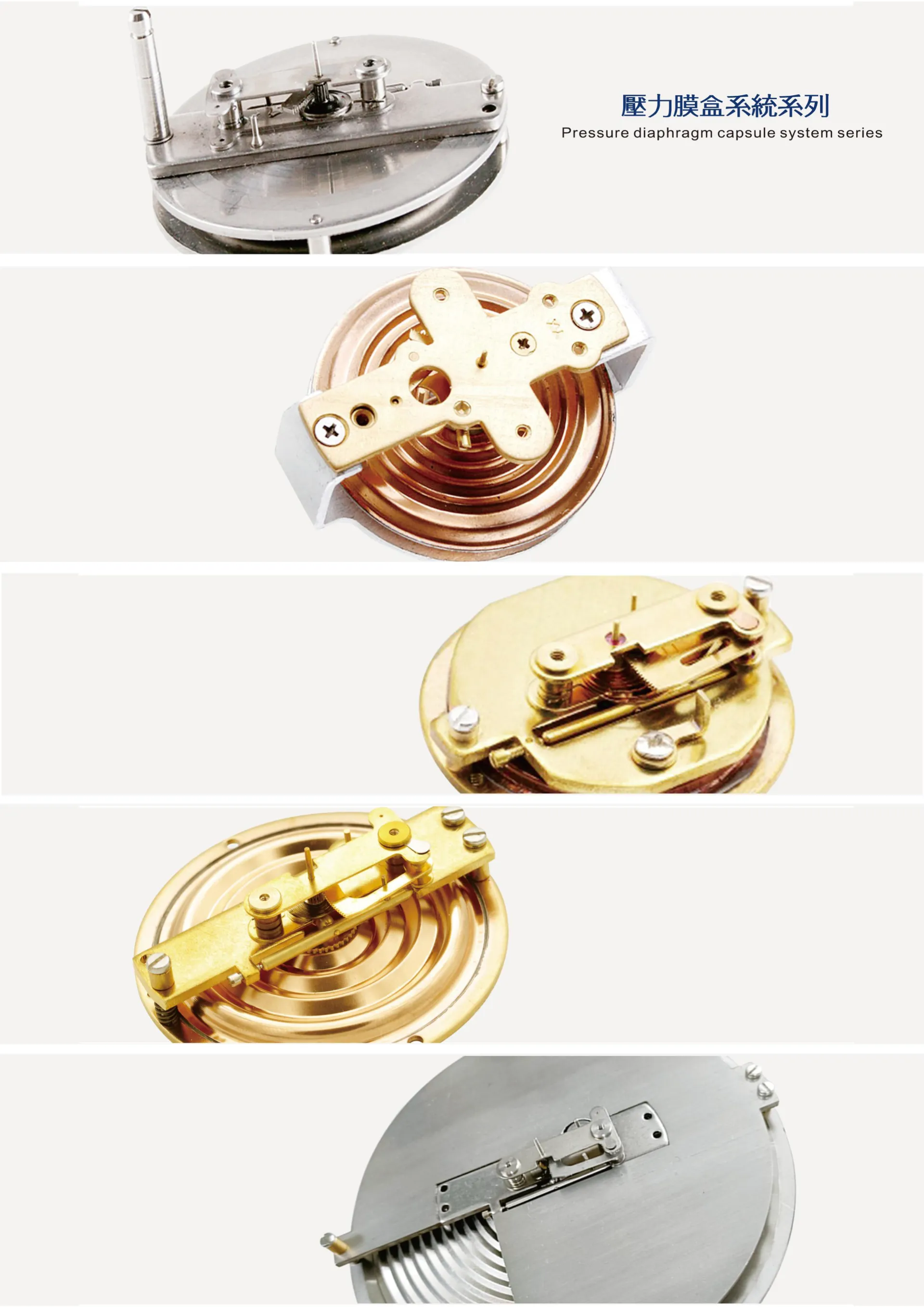
Introduction
Air pressure gauges are critical instrumentation used across a vast range of industrial and commercial applications, from pneumatic systems and HVAC to automotive maintenance and process control. These devices provide a visual indication of fluid pressure, enabling operators to monitor system performance, ensure safety, and maintain operational efficiency. The procurement of air pressure gauges is not merely a transactional event; it requires careful consideration of accuracy, reliability, application compatibility, and adherence to relevant industry standards. This guide provides an in-depth examination of air pressure gauges, encompassing material science, manufacturing processes, performance characteristics, potential failure modes, and industry best practices for procurement and maintenance. The core pain point within the industry revolves around ensuring accurate readings over extended periods, mitigating the impact of environmental factors (temperature, vibration), and verifying calibration traceability to national standards. Sourcing from reputable suppliers who can demonstrate compliance and provide comprehensive documentation is paramount.
Material Science & Manufacturing
The construction of an air pressure gauge relies on a combination of materials selected for their mechanical properties, corrosion resistance, and compatibility with the measured media. Bourdon tubes, the pressure-sensing element in many gauges, are commonly manufactured from alloys like beryllium copper, phosphor bronze, and stainless steel (304, 316). Beryllium copper offers high strength and elasticity, while phosphor bronze provides excellent corrosion resistance in non-aggressive environments. Stainless steel is employed in applications involving corrosive fluids or harsh operating conditions. Gauge cases are typically constructed from aluminum, steel, or engineered plastics (ABS, polycarbonate). Manufacturing processes vary depending on the gauge type and complexity. Bourdon tube fabrication involves forming a flat metal strip into a curved, flattened tube, followed by heat treatment to impart desired spring characteristics. The dial and pointer assembly requires precise machining and calibration. Key parameter control during manufacturing includes wall thickness consistency of the Bourdon tube (critical for linearity and accuracy), proper annealing to relieve internal stresses, and meticulous calibration against a known pressure standard. Welding, where utilized, requires skilled technicians and robust quality control to prevent leaks and maintain structural integrity. The choice of sealing materials (e.g., nitrile, Viton) is also crucial, dictating compatibility with the process fluid and operational temperature range. Differential pressure gauges introduce added complexity with the need for precise machining of diaphragms and internal chambers.
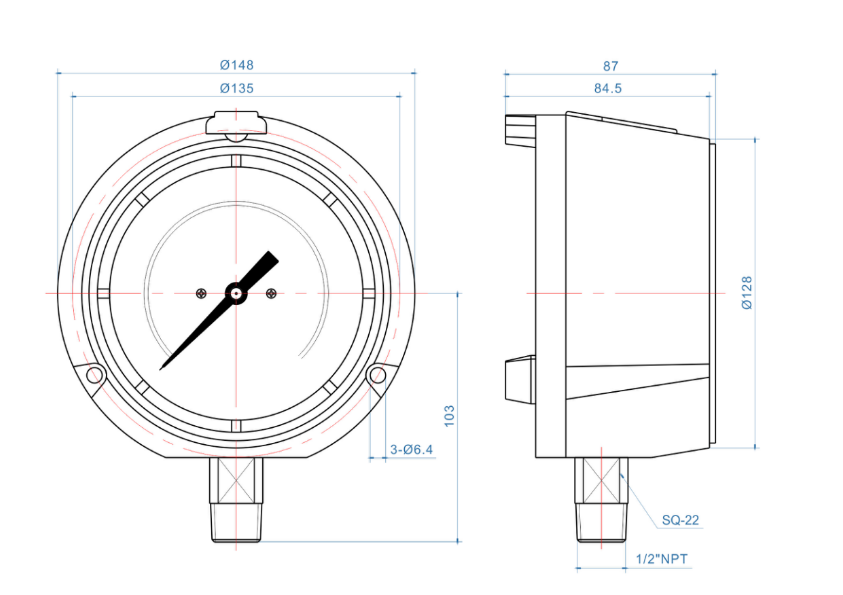
Performance & Engineering
Air pressure gauge performance is defined by several key engineering parameters. Accuracy, typically expressed as a percentage of full scale (%FS), dictates the permissible deviation between the indicated pressure and the actual pressure. Linearity refers to the consistency of the pressure reading across the gauge's operating range. Hysteresis represents the difference in readings obtained when approaching the same pressure from increasing or decreasing directions. Resolution is the smallest pressure increment the gauge can reliably detect. Environmental resistance is critical, encompassing temperature effects (drift with temperature changes), vibration resistance (accuracy degradation due to mechanical vibration), and shock resistance (ability to withstand sudden impacts). Compliance requirements, such as those stipulated by OSHA or industry-specific regulations, mandate specific accuracy levels and calibration intervals. Force analysis on the Bourdon tube is essential to understand stress distribution and prevent permanent deformation or fatigue failure. Finite Element Analysis (FEA) is commonly employed during the design phase to optimize tube geometry and material selection. In applications involving pulsating pressure, dampening fluids (e.g., glycerin) are often used within the gauge case to minimize needle flutter and improve readability. For high-pressure applications, safety features like blow-out disks or reinforced cases are incorporated to mitigate the risk of catastrophic failure.
Technical Specifications
| Parameter | Typical Value (Low Range Gauge 0-100 psi) | Typical Value (High Range Gauge 0-5000 psi) | Units |
|---|---|---|---|
| Accuracy | ±1.6% FS | ±1.0% FS | % of Full Scale |
| Pressure Range | 0-100 psi | 0-5000 psi | psi |
| Operating Temperature | -20 to 80 | -20 to 80 | °C |
| Process Connection | 1/8 NPT | 1/2 NPT | |
| Case Material | Aluminum | Stainless Steel | |
| Bourdon Tube Material | Phosphor Bronze | Stainless Steel 316 |
Failure Mode & Maintenance
Air pressure gauges are susceptible to several failure modes. Drift in accuracy is a common issue, often stemming from temperature fluctuations, mechanical wear, or corrosion of the Bourdon tube. Fatigue cracking can occur in the Bourdon tube due to repeated pressure cycling, particularly at stress concentration points. Leakage can develop at the process connection or within the gauge case due to damaged seals or corrosion. Damage to the movement (gear and pinion) can result in erratic readings or complete failure. Delamination of the dial face can occur due to exposure to UV radiation or harsh chemicals. Oxidation of internal components, particularly in gauges exposed to corrosive environments, can impair functionality. Maintenance typically involves regular visual inspections for leaks or physical damage. Periodic calibration against a traceable pressure standard is crucial to ensure accuracy. Lubrication of the movement (if applicable) can reduce friction and improve reliability. Replacement of damaged seals or components is necessary when failures are detected. For gauges used in critical applications, a preventative maintenance schedule should be established, including routine calibration and component replacement based on service life and operating conditions. Proper storage is also essential; gauges should be protected from extreme temperatures, humidity, and physical shock.
Industry FAQ
Q: What is the typical calibration cycle for an air pressure gauge used in a pharmaceutical manufacturing process?
A: In pharmaceutical manufacturing, where accuracy and traceability are paramount, the typical calibration cycle for air pressure gauges is six months, or after any event that may have affected their accuracy (e.g., a significant temperature excursion, physical shock). Calibration must be performed by a certified laboratory using equipment traceable to national standards (e.g., NIST in the US).
Q: How does the choice of process connection material affect the gauge's lifespan in a corrosive chemical environment?
A: The process connection material is critical. Brass connections are susceptible to corrosion from many chemicals. Stainless steel (316) is generally recommended for corrosive environments. PTFE (Teflon) coatings or stainless steel fittings offer additional protection. Regularly inspect the connection for signs of corrosion.
Q: What are the implications of using a gauge with an accuracy rating that is insufficient for the application?
A: Using a gauge with insufficient accuracy can lead to process control errors, product quality issues, and potential safety hazards. For example, in a pneumatic control system, inaccurate pressure readings can cause the system to operate outside of acceptable parameters, leading to instability or malfunction.
Q: How can I determine the appropriate pressure range for a specific application?
A: Select a gauge with a pressure range that encompasses the normal operating pressure plus a safety margin (typically 20-30%). Avoid selecting a gauge with a range that is significantly higher than the expected pressure, as this can reduce accuracy. Consider the potential for pressure spikes or surges.
Q: What is the difference between a liquid-filled and a dry gauge, and when should each be used?
A: Liquid-filled gauges (typically glycerin or silicone oil) are used in applications with vibration or pulsation. The liquid dampens the movement, reducing needle flutter and extending gauge life. Dry gauges are suitable for static pressure applications where vibration is minimal. Liquid-filled gauges are generally preferred for harsh environments.
Conclusion
Selecting and maintaining air pressure gauges requires a comprehensive understanding of their underlying principles, material science, and performance characteristics. Accurate pressure measurement is fundamental to the safe and efficient operation of numerous industrial processes. By carefully considering application requirements, selecting appropriate materials and construction, and implementing a robust calibration and maintenance program, operators can ensure the reliability and longevity of these critical instruments.
Furthermore, sourcing from reputable suppliers who provide full traceability and documentation is crucial. Staying abreast of evolving industry standards and best practices, such as those defined by ISO and NIST, is essential for optimizing pressure measurement accuracy and minimizing operational risks. Proper gauge selection and maintenance are not simply cost centers, but rather investments in process integrity and overall system performance.
 English
  Arabic
  China
China  China (Taiwan)
  Danish
  Dutch
Dutch  French
  German
  Greek
Greek  Hindi
Hindi  Indonesian
  Italian
  Japanese
  Korean
  Latin
Latin  Polish
  Portuguese
  Russian
  Spanish
  Turkish