
Apr . 01, 2024 17:55 Back to list
Gas Stations Tire Pressure Gauges Performance Analysis
Introduction
The availability and accuracy of tire pressure gauges at gas stations is a critical, yet often overlooked, component of vehicle maintenance and safety. While commonly assumed to be universally available, the provision of functioning and calibrated tire pressure gauges varies significantly. This guide will comprehensively examine the types of gauges found at gas stations, their operational principles, limitations, the underlying materials science impacting their performance, associated safety standards, common failure modes, and best practices for their usage and maintenance. The context for this investigation stems from the direct correlation between proper tire inflation and fuel efficiency, tire lifespan, vehicle handling, and overall road safety. Insufficient or excessive tire pressure can lead to premature wear, reduced braking effectiveness, and an increased risk of tire failure – particularly relevant given the rising complexity of tire constructions and the increasing integration of Tire Pressure Monitoring Systems (TPMS). This analysis targets procurement managers, fleet maintenance personnel, and automotive engineers responsible for ensuring vehicle safety and operational efficiency.
Material Science & Manufacturing
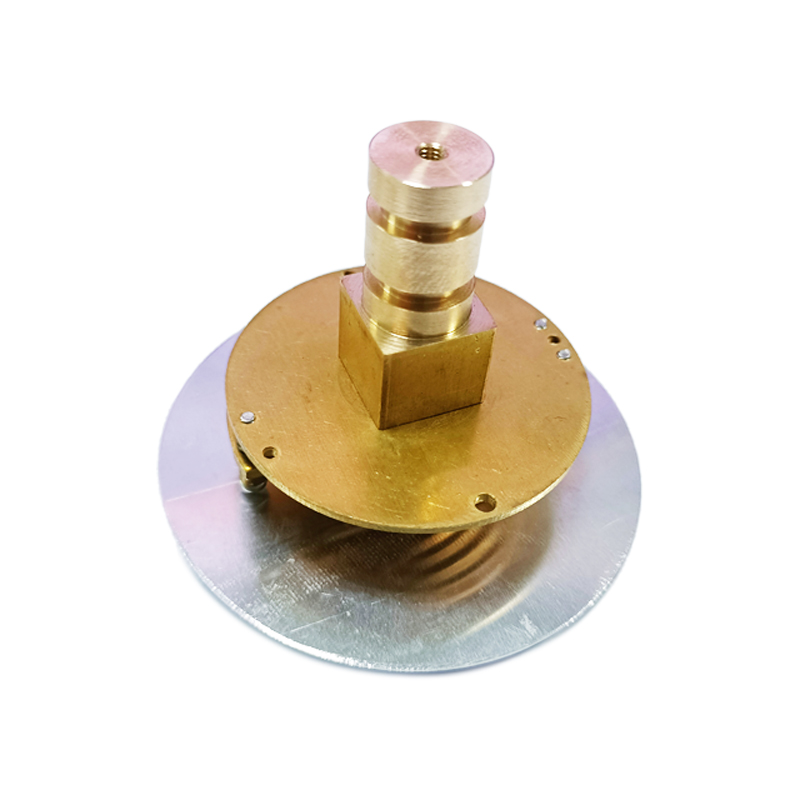
Gas station tire pressure gauges are predominantly constructed from stainless steel (304 or 316 grade) for the Bourdon tube, the primary sensing element. Stainless steel is favored for its corrosion resistance to atmospheric elements and potential exposure to fuel residues. The gauge housing typically utilizes a combination of thermoplastic polymers (ABS, polycarbonate) or aluminum alloys. These materials are chosen for impact resistance and ease of manufacturing. The diaphragm within the gauge, responsible for converting pressure into mechanical movement, is commonly made from a phosphor bronze alloy due to its elasticity and fatigue resistance. The glass covering utilizes tempered glass, providing shatter resistance. Manufacturing processes vary based on gauge type. Analog gauges rely on the precise bending of the Bourdon tube, requiring tight tolerances during forming and welding. Digital gauges utilize a piezoresistive pressure sensor – a semiconductor-based device – necessitating cleanroom fabrication and micro-electromechanical systems (MEMS) technology. Calibration is a critical process involving the application of known pressures and adjustment of the gauge mechanism to ensure accuracy, frequently utilizing NIST-traceable standards. Parameter control focuses on minimizing hysteresis within the Bourdon tube, ensuring linearity in the sensor response, and achieving a consistent seal between components to prevent pressure leaks. The accuracy of these gauges is also impacted by temperature fluctuations, requiring temperature compensation techniques in more sophisticated models.
Performance & Engineering
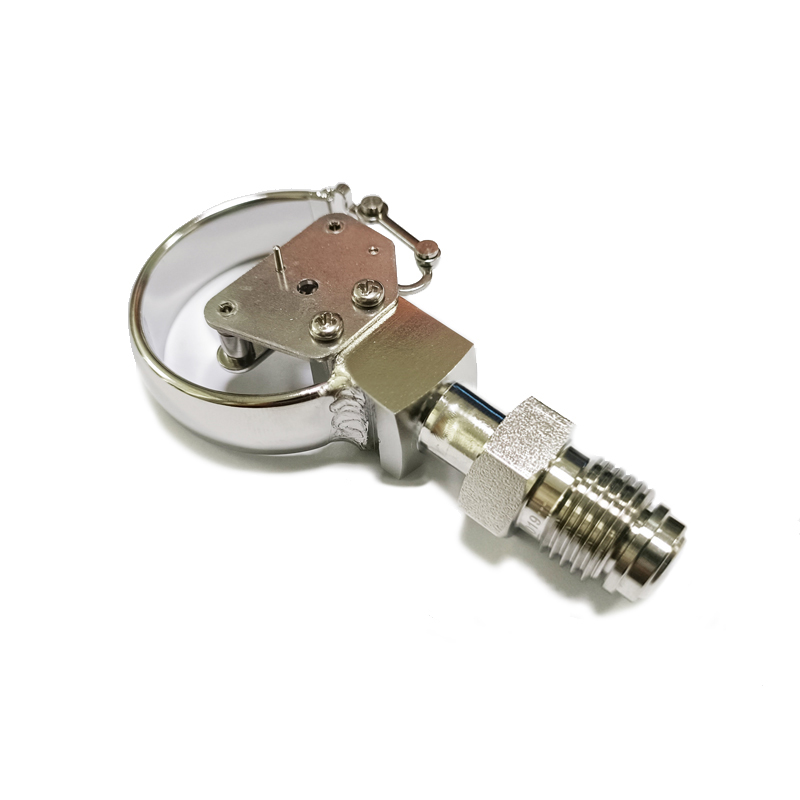
The performance of gas station tire pressure gauges is fundamentally governed by principles of fluid mechanics and material stress. The Bourdon tube’s deflection is directly proportional to the applied pressure, adhering to Hooke’s Law within its elastic limit. Force analysis focuses on minimizing strain within the tube to prevent permanent deformation and ensure repeatable readings. Environmental resistance is a key concern, with temperature variations affecting the viscosity of the air within the tire and consequently, the pressure reading. Gas station gauges must operate reliably across a wide temperature range (-20°C to 60°C). Compliance requirements are primarily dictated by regional metrology standards (NIST in the US, CE marking in Europe) which dictate allowable tolerances. Digital gauges introduce additional engineering considerations related to power management (battery life) and signal processing to minimize noise and ensure accurate digital display. Functional implementation relies on a robust mechanical linkage between the sensing element and the display, or in the case of digital gauges, a stable and accurate analog-to-digital converter (ADC). Furthermore, the ergonomics of the gauge’s grip and nozzle connection are critical for user ease and proper sealing against the tire valve stem, minimizing air leakage during measurement. Proper sealing is vital to ensure accurate readings and prevent sudden pressure drops in the tire.
Technical Specifications
| Parameter | Analog Gauge (Typical) | Digital Gauge (Typical) | Accuracy Tolerance |
|---|---|---|---|
| Pressure Range | 0-60 PSI (0-4.14 bar) | 0-120 PSI (0-8.27 bar) | ± 2 PSI (± 0.14 bar) |
| Resolution | 1 PSI (0.07 bar) | 0.1 PSI (0.007 bar) | N/A |
| Operating Temperature | -10°C to 50°C (14°F to 122°F) | -20°C to 60°C (-4°F to 140°F) | N/A |
| Housing Material | ABS Plastic, Aluminum Alloy | ABS Plastic | N/A |
| Sensing Element | Stainless Steel Bourdon Tube | Piezoresistive Silicon Sensor | N/A |
| Power Source | None (Mechanical) | Lithium Button Cell (CR2032) | N/A |
Failure Mode & Maintenance
Common failure modes for gas station tire pressure gauges include mechanical fatigue of the Bourdon tube leading to inaccurate readings or complete failure, leaks within the gauge housing caused by deterioration of rubber seals or corrosion, and damage to the glass lens from impact. Digital gauges are susceptible to battery leakage causing corrosion, sensor drift due to aging of the piezoresistive element, and display malfunctions. Fatigue cracking in the Bourdon tube is often initiated at points of high stress concentration, typically near the welded connections. Delamination can occur in digital gauges where the sensor is bonded to the substrate. Environmental degradation, particularly exposure to road salt and moisture, accelerates corrosion. Oxidation of the Bourdon tube's internal surface can lead to increased friction and inaccurate readings. Maintenance procedures are limited due to the relatively low cost of these gauges. Regular visual inspection for physical damage is crucial. Calibration services are rarely available for these gauges, and replacement is generally the most cost-effective solution when accuracy is compromised. Preventative measures include storing gauges in a dry environment and avoiding dropping or subjecting them to excessive force. Periodic testing against a known calibrated standard is recommended, though not always practical in a gas station setting.
Industry FAQ
Q: What is the typical lifespan of a tire pressure gauge found at a gas station?
A: The typical lifespan varies significantly depending on usage and environmental conditions. Analog gauges, if not physically damaged, can function for several years, but accuracy degrades over time. Digital gauges, due to battery leakage and sensor drift, typically have a lifespan of 2-5 years. Heavy usage and exposure to extreme temperatures will shorten the lifespan.
Q: How often should gas stations calibrate their tire pressure gauges?
A: There is no legally mandated calibration schedule for gas station tire pressure gauges in most jurisdictions. However, best practice dictates annual calibration against a NIST-traceable standard. In reality, due to cost considerations, calibration is infrequent, and reliance is placed on routine visual inspection for damage.
Q: What is the acceptable level of accuracy for a gas station tire pressure gauge?
A: Industry standards (SAE J1926) recommend an accuracy of ±2 PSI (±0.14 bar) for automotive tire pressure gauges. However, many gas station gauges fall outside this range, especially those that are older or poorly maintained.
Q: Are digital tire pressure gauges at gas stations inherently more accurate than analog gauges?
A: Not necessarily. While digital gauges offer higher resolution, their accuracy is dependent on the quality of the sensor and the calibration process. A well-maintained analog gauge can be as accurate, or even more accurate, than a low-quality digital gauge.
Q: What materials are most resistant to corrosion in a gas station environment for tire pressure gauge components?
A: Stainless steel (316 grade), engineered plastics like PTFE, and certain ceramic materials offer excellent corrosion resistance. However, cost considerations often limit the use of these materials to critical components like the Bourdon tube and seals.
Conclusion
The availability of accurate and reliably maintained tire pressure gauges at gas stations remains a significant challenge. While these gauges are ostensibly provided as a convenience to motorists, the reality is often one of varying accuracy and infrequent maintenance. The underlying principles of material science and engineering governing their performance – from the elasticity of the Bourdon tube to the sensitivity of piezoresistive sensors – are crucial to understanding their limitations. The lack of stringent regulatory oversight and the economic disincentives for regular calibration necessitate a heightened level of consumer vigilance.
Future advancements in sensor technology and the development of low-cost, self-calibrating gauges could significantly improve the reliability of tire pressure measurement at gas stations. Furthermore, integration of TPMS data with public fueling station networks could provide real-time gauge accuracy validation and alert consumers to potentially faulty equipment. Ultimately, ensuring proper tire inflation is a shared responsibility – requiring proactive maintenance by vehicle owners, responsible provision of accurate gauges by fueling stations, and continued innovation in measurement technology.
 English
  Arabic
  China
China  China (Taiwan)
  Danish
  Dutch
Dutch  French
  German
  Greek
Greek  Hindi
Hindi  Indonesian
  Italian
  Japanese
  Korean
  Latin
Latin  Polish
  Portuguese
  Russian
  Spanish
  Turkish