
Apr . 01, 2024 17:55 Back to list
Gauge Pressure Calculation and Performance Analysis
Introduction
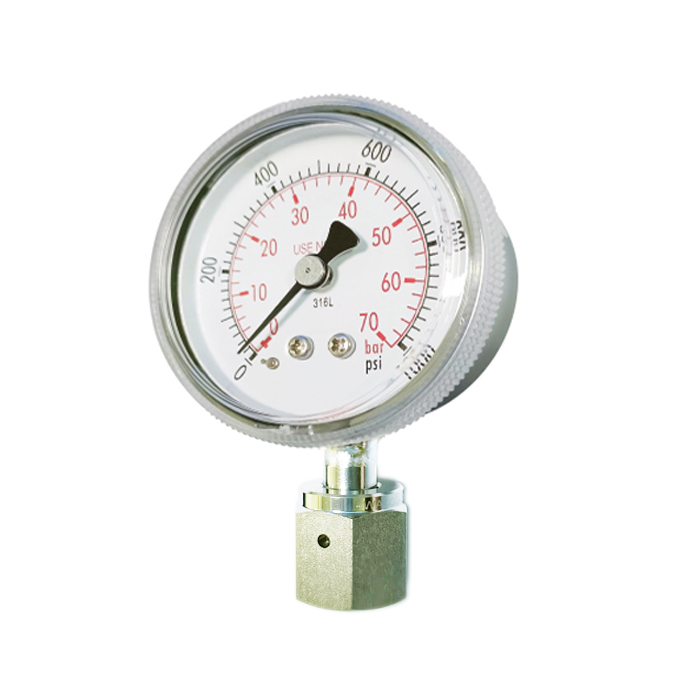
Gauge pressure is a crucial measurement in numerous industrial applications, representing the pressure relative to ambient atmospheric pressure. Unlike absolute pressure, which uses a perfect vacuum as a reference, gauge pressure provides a practical metric for monitoring and controlling systems where atmospheric pressure is a stable baseline. This technical guide provides an in-depth examination of gauge pressure calculation, encompassing its underlying principles, relevant material science, engineering considerations, common failure modes, and applicable industry standards. The accurate determination of gauge pressure is critical for safety, efficiency, and reliability across sectors including oil and gas, chemical processing, HVAC, and aerospace. A fundamental misunderstanding of gauge pressure calculation can lead to equipment malfunction, process instability, and potential hazards. This guide aims to equip engineers, technicians, and procurement professionals with a comprehensive understanding of this vital pressure measurement.
Material Science & Manufacturing
The accurate measurement of gauge pressure relies heavily on the materials used in pressure sensing elements – typically diaphragms, bellows, or Bourdon tubes. Common materials include stainless steel (304, 316), Hastelloy, Inconel, and various polymer composites. The material selection is dictated by the process fluid’s chemical compatibility, temperature range, and required accuracy. Stainless steel, particularly 316, offers excellent corrosion resistance in many common industrial environments. Hastelloy and Inconel are utilized in highly corrosive applications involving strong acids or chlorides. Polymer composites offer advantages in cost and weight but have limited temperature and pressure ranges.
Manufacturing processes vary depending on the sensing element. Bourdon tubes are formed through a precision bending and welding process of metallic tubing, ensuring dimensional accuracy and stress distribution. Diaphragm seals are typically manufactured via deep drawing or hydroforming of metallic sheets, followed by machining to achieve the desired thickness and flatness. Welding processes, such as TIG (Tungsten Inert Gas) welding, are critical for maintaining the integrity of pressure-containing components. Parameter control during welding—including heat input, shielding gas composition, and cooling rate—is crucial to prevent distortion, residual stress, and weld defects. Post-welding heat treatment may be applied to relieve stresses and improve mechanical properties. Calibration of these components necessitates precise reference pressure standards, traceable to national metrology institutes. The manufacturing tolerances directly impact the accuracy and repeatability of the gauge pressure measurement.
Performance & Engineering
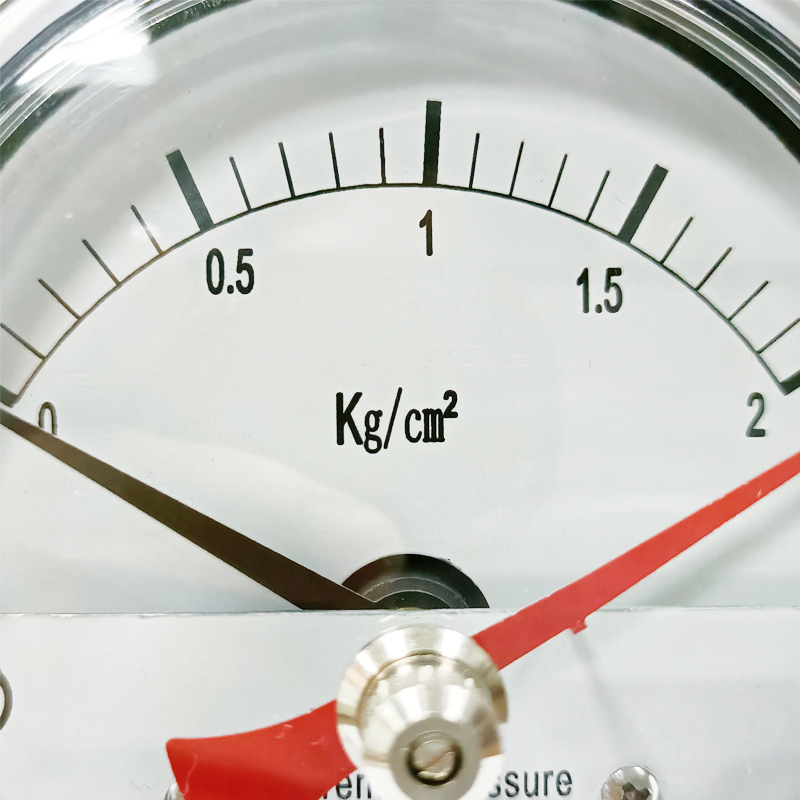
Calculating gauge pressure accurately involves understanding the relationship between the measured pressure, atmospheric pressure, and the pressure transducer’s output signal. The fundamental equation is: Gauge Pressure = Absolute Pressure – Atmospheric Pressure. Absolute pressure is the total pressure, including atmospheric pressure. The atmospheric pressure must be known and accounted for, as it varies with altitude and weather conditions.
Engineering considerations include the selection of the appropriate pressure range for the application. Operating within the optimal range (typically 20-80% of the sensor's full scale) maximizes accuracy and minimizes drift. Temperature compensation is also critical, as temperature variations can affect the sensor’s output and introduce errors. Many pressure transducers incorporate temperature sensors and internal compensation circuitry to mitigate these effects. Furthermore, the mechanical connection between the pressure source and the sensor must be designed to minimize pressure losses and avoid introducing additional stress on the sensing element. Dynamic pressure applications, such as those involving pulsations or rapid pressure fluctuations, require sensors with sufficient response time and damping characteristics to accurately capture the pressure profile. Stress analysis, utilizing Finite Element Analysis (FEA), is routinely employed to ensure the structural integrity of the pressure sensing element under operating conditions. Compliance with industry standards, such as ASME B40.100 for pressure gauges, is essential to ensure safety and reliability.
Technical Specifications
| Parameter | Unit | Typical Value (Stainless Steel 316 Sensor) | Accuracy |
|---|---|---|---|
| Pressure Range | psi | 0-1000 | ±0.25% FS |
| Overpressure Limit | psi | 1500 | - |
| Temperature Range | °F | -40 to 250 | ±0.5% FS over temperature |
| Media Compatibility | - | Water, Oil, Air, Non-Corrosive Gases | Refer to compatibility chart |
| Output Signal | mV | 0-100 | Linearity: ±0.1% FS |
| Process Connection | - | 1/4" NPT (Female) | - |
Failure Mode & Maintenance
Common failure modes in gauge pressure measurement systems include diaphragm rupture, sensor drift, zero shift, and signal loss. Diaphragm rupture can occur due to overpressure events, corrosion, or fatigue cracking. Sensor drift and zero shift are often caused by temperature variations, long-term exposure to harsh environments, or component aging. Signal loss can be attributed to wiring issues, power supply problems, or internal sensor failure. Fatigue cracking in Bourdon tubes can occur due to repeated pressure cycling. Corrosion, particularly in aggressive chemical environments, leads to material degradation and sensor malfunction.
Preventive maintenance is crucial for ensuring reliable operation. This includes regular calibration, visual inspection for corrosion or damage, and verification of wiring connections. Calibration should be performed using a certified pressure standard. Periodically cleaning the sensor and removing any debris or contaminants is also important. For diaphragm seals, regular leak testing is recommended. In corrosive environments, consider using sensors constructed from more resistant materials, such as Hastelloy or Inconel. Implementing a robust data logging and analysis system can help detect subtle changes in sensor performance, indicating potential issues before they lead to failure. Proper installation, minimizing vibration and mechanical shock, also extends the sensor’s lifespan.
Industry FAQ
Q: What is the difference between gauge pressure, absolute pressure, and vacuum pressure?
A: Gauge pressure is measured relative to atmospheric pressure. Absolute pressure is measured relative to a perfect vacuum. Vacuum pressure is measured relative to atmospheric pressure, but indicates a pressure below atmospheric. Thus, gauge pressure can be positive or negative (vacuum), while absolute pressure is always positive. The relationship is: Absolute Pressure = Gauge Pressure + Atmospheric Pressure.
Q: How does altitude affect gauge pressure readings?
A: Atmospheric pressure decreases with increasing altitude. Therefore, a gauge pressure reading at a higher altitude will correspond to a lower absolute pressure compared to the same gauge pressure reading at sea level. The atmospheric pressure component must be adjusted for altitude to obtain an accurate absolute pressure value.
Q: What is the typical accuracy of a gauge pressure sensor?
A: The accuracy of a gauge pressure sensor varies depending on the sensor type, range, and quality. Typically, accuracies range from ±0.25% Full Scale (FS) to ±1% FS. Higher accuracy sensors are available but are generally more expensive.
Q: What are the common causes of drift in gauge pressure sensors?
A: Drift can be caused by temperature variations, long-term exposure to harsh environments, sensor aging, and electrical noise. Temperature compensation and regular calibration can help minimize drift.
Q: How do I select the correct pressure range for my application?
A: Choose a pressure range that encompasses the expected operating pressure, plus a margin for safety and potential pressure spikes. Operating within the 20-80% range of the sensor’s full scale generally provides the best accuracy and linearity. Avoid selecting a range that is significantly higher than the expected operating pressure, as this can reduce resolution.
Conclusion
Accurate gauge pressure calculation is a cornerstone of reliable industrial operation. Understanding the fundamental relationship between gauge, absolute, and atmospheric pressure, coupled with careful consideration of material science, manufacturing processes, and potential failure modes, is paramount. Selecting the appropriate sensor for the application, ensuring proper calibration, and implementing a robust maintenance program are essential for maximizing accuracy, extending sensor life, and preventing costly downtime.
Looking ahead, advancements in sensor technology, such as micro-electromechanical systems (MEMS) and wireless communication, are enabling more precise and efficient gauge pressure monitoring. The integration of predictive maintenance algorithms, utilizing machine learning to analyze sensor data, will further enhance system reliability and reduce operational costs. Adhering to established industry standards remains crucial for ensuring safety, interoperability, and consistent performance across diverse applications.
 English
  Arabic
  China
China  China (Taiwan)
  Danish
  Dutch
Dutch  French
  German
  Greek
Greek  Hindi
Hindi  Indonesian
  Italian
  Japanese
  Korean
  Latin
Latin  Polish
  Portuguese
  Russian
  Spanish
  Turkish