
Apr . 01, 2024 17:55 Back to list
Gauge Pressure Calculation Principles and Applications

Introduction
Gauge pressure is a measure of pressure relative to ambient atmospheric pressure. It is a critical parameter across numerous industrial applications, including process control, fluid power systems, and pressure vessel design. Unlike absolute pressure, which references a perfect vacuum, gauge pressure simplifies measurements by using the prevailing atmospheric pressure as a baseline. This guide details the calculation of gauge pressure, its underlying principles, its reliance on accurate instrumentation, and its significance in maintaining operational safety and efficiency. The inaccuracies in gauge pressure readings directly impact process control, potentially leading to product defects, equipment damage, and safety hazards. Understanding the nuances of gauge pressure calculation is therefore paramount for engineers, technicians, and procurement specialists involved in industrial operations. This document will cover the fundamental equation, units conversion, practical application examples, and potential sources of error in gauge pressure measurement.
Material Science & Manufacturing
The precision of gauge pressure measurement relies heavily on the materials and manufacturing processes employed in pressure transducer construction. Diaphragms, commonly made from stainless steel (304, 316L), Hastelloy, or Inconel, are critical components. The material selection depends on the chemical compatibility with the measured fluid and the operating temperature range. Stainless steel offers good corrosion resistance for many applications, while Hastelloy and Inconel provide superior resistance in highly corrosive environments. Manufacturing processes such as deep drawing, etching, and welding are used to create the diaphragm. Residual stresses introduced during these processes can significantly affect diaphragm deflection and, consequently, the accuracy of the pressure reading. Stress relief annealing is often employed to minimize these stresses. Furthermore, the strain gauge bonding process, using epoxy adhesives, must be meticulously controlled to ensure reliable signal transduction. The quality of the weld between the diaphragm and the pressure port is also crucial to prevent leaks and maintain pressure integrity. The material's Young's modulus and Poisson's ratio are key physical properties influencing the diaphragm’s response to pressure. Finite Element Analysis (FEA) is frequently used during the design phase to optimize diaphragm geometry and material selection for specific pressure ranges and applications. The manufacturing tolerance of the diaphragm thickness directly impacts the sensitivity of the pressure transducer.
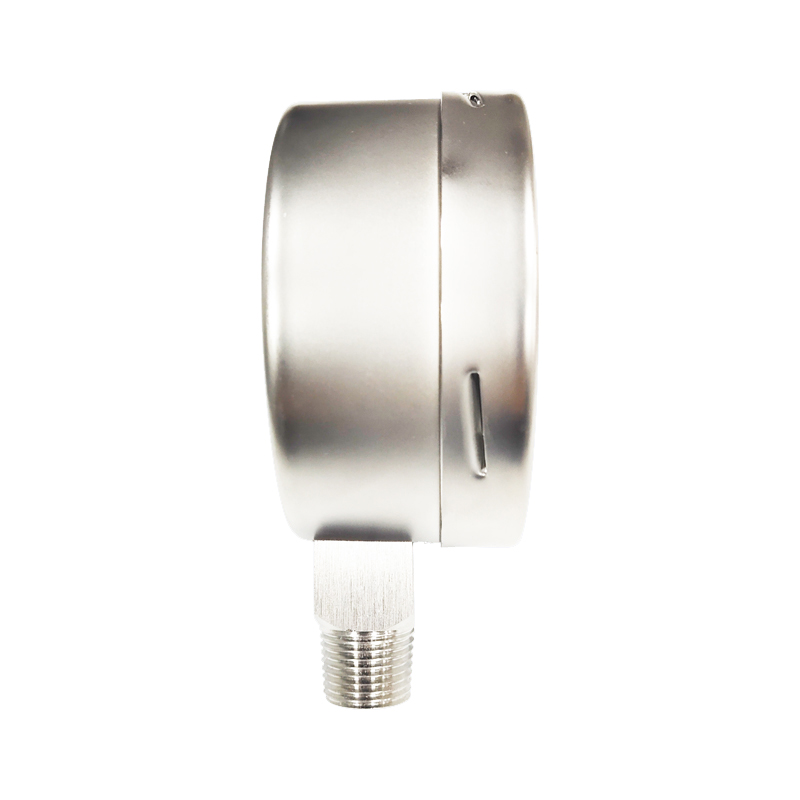
Performance & Engineering
Calculating gauge pressure accurately necessitates a thorough understanding of hydrostatic and pneumatic principles. The fundamental equation for gauge pressure (Pg) is: Pg = Pabs - Patm, where Pabs is the absolute pressure and Patm is the atmospheric pressure. Absolute pressure is the total pressure, including atmospheric pressure, while gauge pressure is relative to atmospheric pressure. Engineering applications frequently involve converting between absolute, gauge, and vacuum pressure. Force analysis on the sensing element (typically a diaphragm) is critical to determine its deflection under pressure. This deflection is proportional to the applied pressure, and the relationship is governed by the material properties of the diaphragm and its geometry. Environmental factors, such as temperature variations, can significantly impact the accuracy of gauge pressure measurements. Temperature-induced drift in the strain gauge or changes in atmospheric pressure necessitate compensation techniques. Compliance requirements, such as those stipulated by ASME B40.100 for pressure gauges, dictate the allowable error limits for pressure measurements. Pressure transducers used in hazardous environments must meet specific ingress protection (IP) ratings to prevent the ingress of dust and moisture. Furthermore, ensuring the correct fluid compatibility between the process fluid and the wetted parts of the pressure sensor is paramount to prevent corrosion and maintain accuracy.
Technical Specifications
| Parameter | Unit | Typical Range | Accuracy |
|---|---|---|---|
| Pressure Range | psi | 0-1000 | ±0.25% FS |
| Output Signal | mV/V | 0-100 | Linearity ±0.1% FS |
| Media Compatibility | - | Stainless Steel (316L) | Compatible with most industrial fluids |
| Operating Temperature | °C | -40 to +125 | Drift ±0.05% FS/°C |
| Pressure Cycle Life | Cycles | >1,000,000 | No degradation in performance |
| Ingress Protection | IP Rating | IP67 | Dust tight and waterproof |
Failure Mode & Maintenance
Gauge pressure transducers are susceptible to several failure modes. Fatigue cracking of the diaphragm can occur due to prolonged exposure to cyclic pressure loads. Delamination of the strain gauge bonding adhesive can lead to signal drift and eventual failure. Corrosion of the wetted parts, particularly in aggressive chemical environments, can result in inaccurate readings or complete failure. Oxidation of electrical connections can introduce resistance and affect signal integrity. Overpressure events can permanently deform the diaphragm and render the transducer unusable. A common failure mechanism is zero drift, caused by temperature variations or internal component aging. Maintenance should include regular calibration against a known pressure standard. Visual inspection for corrosion or physical damage is crucial. Periodic cleaning of the pressure port to remove debris and contaminants is recommended. Electrical connections should be checked for tightness and corrosion. For critical applications, implementing a preventative maintenance schedule based on mean time between failures (MTBF) data is advised. Regularly monitoring the output signal for drift or instability can provide early warning of potential failures. Replacement of the transducer should be performed according to the manufacturer's recommendations.
Industry FAQ
Q: What is the difference between gauge pressure, absolute pressure, and vacuum pressure, and how do they relate to each other?
A: Gauge pressure is measured relative to atmospheric pressure, absolute pressure is measured relative to a perfect vacuum, and vacuum pressure is measured relative to atmospheric pressure, representing a pressure below atmospheric. The relationship is: Absolute Pressure = Gauge Pressure + Atmospheric Pressure, and Vacuum Pressure = Atmospheric Pressure - Absolute Pressure. Choosing the correct pressure reference is critical for accurate measurements and process control.
Q: How does temperature affect the accuracy of gauge pressure measurements?
A: Temperature affects gauge pressure accuracy in several ways. It can cause thermal drift in the strain gauge, altering the output signal. Changes in atmospheric pressure due to temperature fluctuations impact gauge pressure readings. Furthermore, temperature changes can affect the material properties of the diaphragm, altering its sensitivity. Temperature compensation techniques, such as using temperature sensors and applying correction algorithms, are essential for high-accuracy measurements.
Q: What are the common sources of error in gauge pressure measurements?
A: Common error sources include calibration errors, non-linearity of the transducer, hysteresis, zero drift, temperature effects, atmospheric pressure variations, and improper installation. Regular calibration, careful selection of the transducer, and proper installation practices are crucial to minimize these errors.
Q: What are the key considerations when selecting a pressure transducer for a specific application?
A: Key considerations include the pressure range, media compatibility, operating temperature, accuracy requirements, output signal type, ingress protection rating, and the required life cycle. The transducer must be compatible with the process fluid and withstand the expected operating conditions.
Q: How important is proper venting when measuring gauge pressure?
A: Proper venting is critical. The reference port of the gauge pressure transducer must be vented to the atmosphere to accurately measure the pressure relative to ambient conditions. If the vent is blocked, the reading will be inaccurate. Venting is particularly important in applications where the atmospheric pressure is variable, such as altitude changes.
Conclusion
The accurate calculation and measurement of gauge pressure are fundamental to a wide range of industrial processes. Understanding the underlying principles, material science considerations, and potential sources of error is critical for ensuring operational efficiency and safety. Proper transducer selection, calibration, and maintenance are essential to maintain the integrity of pressure measurements. As industries continue to demand tighter process control and increased reliability, the importance of precise gauge pressure measurement will only continue to grow.
Future advancements in pressure sensing technology will likely focus on developing more robust, accurate, and intelligent transducers with integrated self-diagnostics and wireless communication capabilities. Furthermore, improved calibration techniques and the development of new materials will contribute to enhanced measurement accuracy and long-term stability. The integration of artificial intelligence (AI) and machine learning (ML) algorithms will enable predictive maintenance and optimize process control based on real-time pressure data.
 English
  Arabic
  China
China  China (Taiwan)
  Danish
  Dutch
Dutch  French
  German
  Greek
Greek  Hindi
Hindi  Indonesian
  Italian
  Japanese
  Korean
  Latin
Latin  Polish
  Portuguese
  Russian
  Spanish
  Turkish