
Apr . 01, 2024 17:55 Back to list
Oil Pressure Gauge how to read a oil pressure gauge Performance Analysis
Introduction
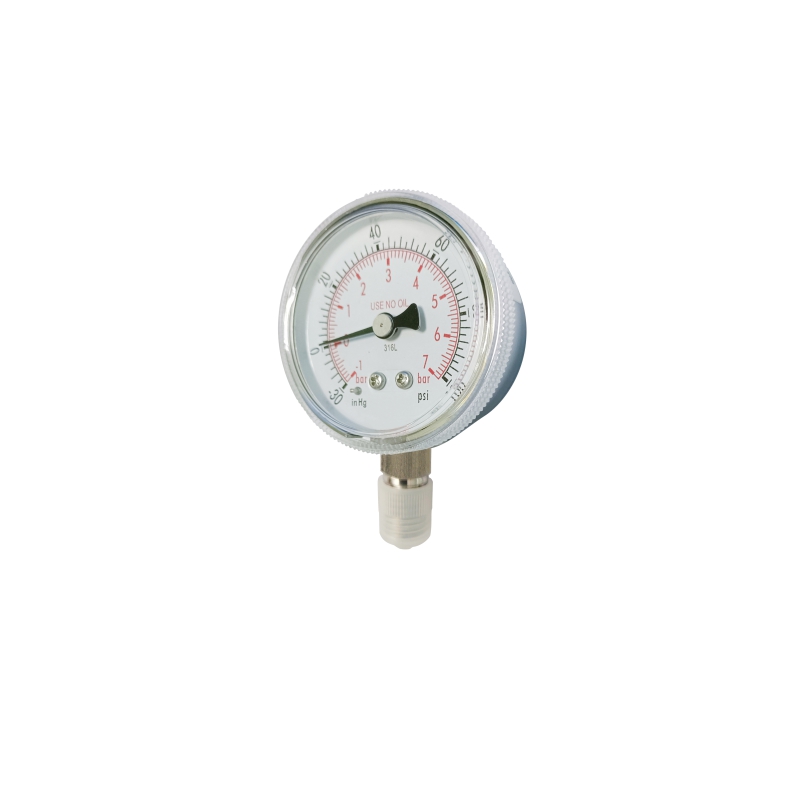
Oil pressure gauges are critical instruments for monitoring the health and performance of internal combustion engines, hydraulic systems, and various industrial machinery. Accurate interpretation of oil pressure readings is paramount for preventative maintenance, diagnosing potential failures, and ensuring optimal system operation. This guide provides a comprehensive understanding of oil pressure gauge operation, reading techniques, factors influencing pressure, and potential issues indicated by abnormal readings. The gauge doesn't measure pressure directly, but rather translates force exerted by the oil into a readable value, typically in pounds per square inch (PSI) or kilopascals (kPa). Understanding the specific range and calibration of the installed gauge is vital. The oil pressure represents the efficiency of the lubrication system, which is fundamental to minimizing wear and tear on moving parts. Discrepancies between normal and observed oil pressure can signify serious mechanical problems, demanding immediate attention. This document will cover both mechanical and digital gauge types, outlining their operational principles and common failure points.
Material Science & Manufacturing
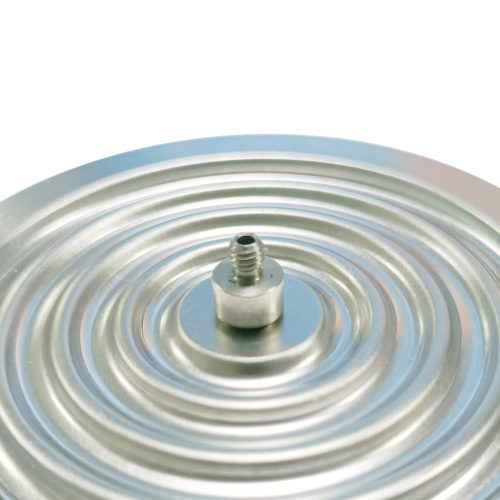
Oil pressure gauges, regardless of type, rely on several key materials and manufacturing processes. The Bourdon tube, central to most mechanical gauges, is typically constructed from beryllium copper or stainless steel alloys – materials selected for their high elasticity, corrosion resistance, and ability to withstand repeated stress cycles. The manufacturing process of the Bourdon tube involves precise cold forming and annealing to achieve the desired curvature and spring characteristics. Digital gauges utilize pressure transducers, often based on piezoresistive or capacitive sensing elements made from silicon. These sensors require highly controlled doping processes and microfabrication techniques to ensure accuracy and stability. The gauge housing is commonly made of steel, aluminum, or durable plastics (like polycarbonate) selected for impact resistance and environmental protection. The dial face, whether analog or digital display, relies on printed circuits and coatings for clear readability and longevity. Sealing materials, such as nitrile rubber or fluorosilicone, are crucial for preventing oil leaks and maintaining gauge integrity. The process of calibrating the gauges against known pressure standards is critical, often employing deadweight testers for traceable accuracy. The glass covering the analog face is often tempered or laminated for safety. The connection fittings (typically NPT or BSP) are manufactured from brass or stainless steel, ensuring compatibility with hydraulic fluids and resisting corrosion.
Performance & Engineering
The performance of an oil pressure gauge is dictated by several engineering principles. The core principle involves converting fluid pressure into a mechanical deformation (Bourdon tube) or an electrical signal (transducer). In mechanical gauges, the Bourdon tube’s deflection is proportional to the applied pressure, and this movement is amplified through a linkage system to drive the pointer. Engineering considerations include minimizing hysteresis (the difference in readings between increasing and decreasing pressure) and ensuring linearity across the gauge’s range. Digital gauges employ signal conditioning circuits to amplify and filter the transducer’s output, converting it into a digital value displayed on an LCD or LED screen. Environmental factors significantly impact performance: temperature fluctuations can affect fluid viscosity and sensor accuracy. Vibration can cause erroneous readings in both mechanical and digital gauges. Proper dampening mechanisms (e.g., glycerin-filled housings in mechanical gauges) are essential to mitigate the effects of pulsations and vibration. Gauge accuracy is typically specified as a percentage of full scale, and regular calibration is crucial to maintain this accuracy. Material selection is paramount for ensuring compatibility with the specific oil or fluid being monitored to prevent corrosion or swelling of seals. The connection thread type and size must be accurately matched to the system to prevent leaks and ensure a secure connection. Consideration must be given to the expected pressure surges within the system to ensure the gauge’s pressure rating exceeds the maximum anticipated pressure.
Technical Specifications
| Parameter | Typical Range (PSI) | Accuracy (% of Full Scale) | Operating Temperature (°C) |
|---|---|---|---|
| Mechanical Gauge - Automotive | 0-100 | ±3% | -40 to +85 |
| Mechanical Gauge - Industrial | 0-5000 | ±1% | -20 to +60 |
| Digital Gauge - Automotive | 0-100 | ±0.5% | -10 to +50 |
| Digital Gauge - Hydraulic Systems | 0-6000 | ±0.25% | 0 to +70 |
| Bourdon Tube Material | Beryllium Copper / Stainless Steel | - | - |
| Connection Type | 1/8" NPT / 1/4" BSPT | - | - |
Failure Mode & Maintenance
Oil pressure gauges are susceptible to several failure modes. Mechanical gauges can experience Bourdon tube fatigue leading to cracking and inaccurate readings, particularly under conditions of severe vibration or pressure spikes. Linkage wear and corrosion within the mechanism can also cause sticking or erratic pointer movement. Digital gauges are prone to transducer drift, signal noise, and display failures. Corrosion of electrical contacts can disrupt signal transmission. Common causes of inaccurate readings include oil contamination (leading to blockage of the sensing port), air ingress into the system (resulting in fluctuating readings), and improper calibration. Maintenance involves periodic visual inspection for leaks, damage, or corrosion. Mechanical gauges may require occasional lubrication of the linkage mechanism. Digital gauges should be checked for battery life and proper wiring connections. Calibration should be performed annually, or more frequently in demanding applications, using a certified deadweight tester. If erratic readings are observed, the gauge should be removed and inspected for internal damage. Replace damaged gauges promptly to ensure accurate monitoring of oil pressure. Regularly check for any signs of oil leakage around the gauge connection. For digital gauges, ensure the power supply is stable and free from interference.
Industry FAQ
Q: What does a consistently low oil pressure reading indicate?
A: A consistently low oil pressure reading typically indicates a problem with the oil pump, a significant oil leak, or excessive bearing clearances within the engine. It could also be caused by a clogged oil pickup tube. Ignoring low oil pressure can lead to severe engine damage due to lack of lubrication.
Q: What does a fluctuating oil pressure reading signify?
A: Fluctuating oil pressure readings can indicate air ingestion into the oil system, a failing oil pump, or a restriction in the oil flow path. It can also be caused by excessive bearing clearances, leading to inconsistent oil pressure. Careful diagnostics are necessary to pinpoint the exact cause.
Q: How often should an oil pressure gauge be calibrated?
A: Oil pressure gauges should be calibrated at least annually, or more frequently in applications where accuracy is critical, or the gauge is subject to harsh operating conditions. Calibration ensures the gauge provides accurate readings and allows for early detection of potential issues.
Q: What is the difference between a mechanical and a digital oil pressure gauge?
A: Mechanical gauges use a Bourdon tube and linkages to display pressure, while digital gauges use a pressure transducer and electronic circuitry. Digital gauges generally offer higher accuracy and features like data logging, but are more susceptible to electrical failures. Mechanical gauges are simpler and more robust, but typically less accurate.
Q: Can extreme temperatures affect oil pressure gauge readings?
A: Yes, extreme temperatures can significantly affect oil pressure gauge readings. High temperatures can reduce oil viscosity, leading to lower pressure, while low temperatures can increase viscosity, potentially causing higher readings. The gauge itself may also be affected by temperature changes, requiring temperature compensation in some designs.
Conclusion
Accurate oil pressure monitoring is fundamental to maintaining the reliability and longevity of critical machinery. The selection, installation, and interpretation of oil pressure gauge readings require a thorough understanding of the underlying principles of fluid mechanics, material science, and engineering. This guide has detailed the operational characteristics of both mechanical and digital gauges, outlining potential failure modes, maintenance procedures, and industry best practices. Properly maintained and calibrated oil pressure gauges provide invaluable insight into the health of lubrication systems, enabling proactive maintenance and preventing catastrophic failures.
Looking forward, advancements in sensor technology and wireless communication will likely lead to more sophisticated oil pressure monitoring systems with remote diagnostics and predictive maintenance capabilities. Further research into corrosion-resistant materials and improved sealing techniques will enhance the durability and accuracy of these critical instruments. Continuous professional development for maintenance personnel is essential to ensure they possess the skills necessary to interpret gauge readings effectively and respond appropriately to any anomalies.
 English
  Arabic
  China
China  China (Taiwan)
  Danish
  Dutch
Dutch  French
  German
  Greek
Greek  Hindi
Hindi  Indonesian
  Italian
  Japanese
  Korean
  Latin
Latin  Polish
  Portuguese
  Russian
  Spanish
  Turkish