
Apr . 01, 2024 17:55 Back to list
Oil Pressure Gauge how to read the oil pressure gauge Performance Analysis
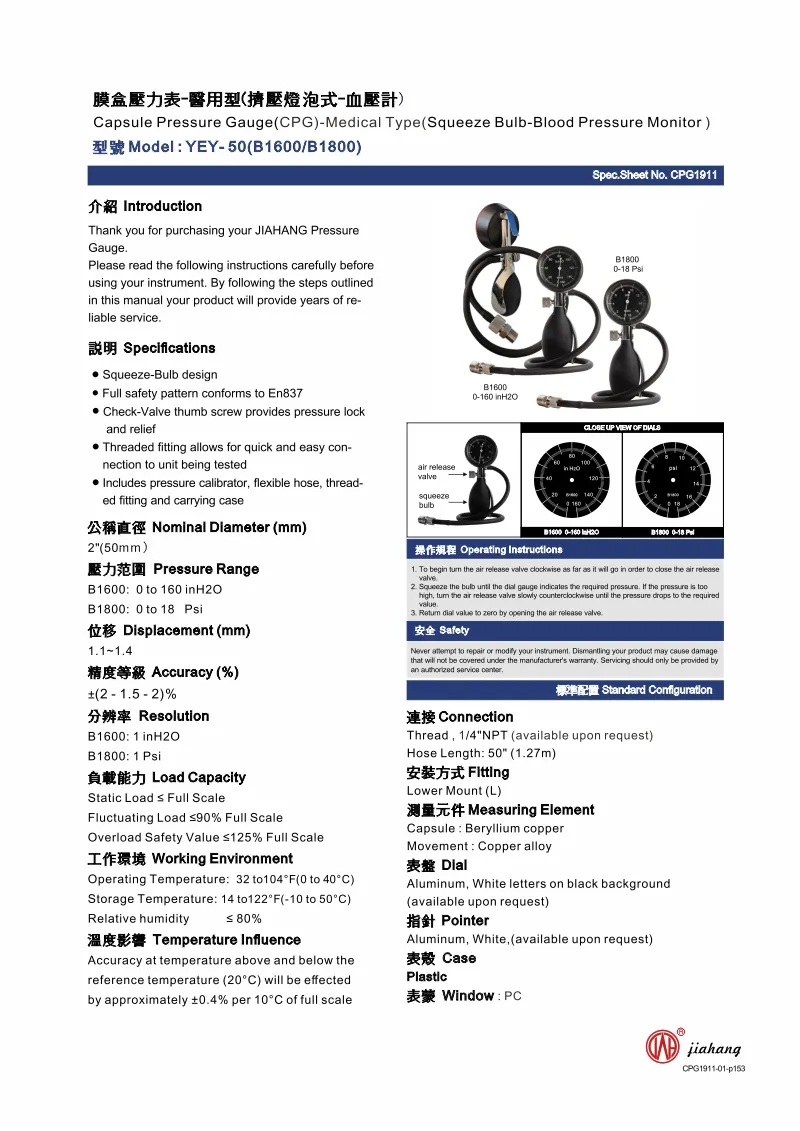
Introduction
The oil pressure gauge is a critical instrument in internal combustion engine systems, providing a real-time indication of the lubricating oil pressure within the engine. Accurate interpretation of this gauge is paramount for preventing catastrophic engine failure. This guide details the principles of oil pressure gauge operation, factors influencing readings, typical pressure ranges for various engine types, and diagnostic procedures for identifying potential issues indicated by abnormal readings. Within the broader automotive maintenance landscape, the oil pressure gauge offers a non-invasive method for assessing the health of the engine’s lubrication system, a system fundamental to the longevity and performance of the powertrain. Unlike temperature gauges which can tolerate some fluctuation, consistently low or high oil pressure is indicative of a significant mechanical problem demanding immediate attention. This document will provide a comprehensive understanding, moving beyond simple readings to a deep understanding of the underlying mechanics and potential failure points.
Material Science & Manufacturing
Oil pressure gauges utilize a Bourdon tube as their core sensing element. This tube, typically constructed from beryllium copper alloy or phosphor bronze, exhibits a predictable deformation when subjected to internal pressure. The material selection is crucial; beryllium copper offers excellent corrosion resistance and fatigue strength, vital for long-term reliability in a chemically aggressive environment. Phosphor bronze, while less expensive, is also commonly used. The manufacturing process involves precise cold-forming of the tube to its characteristic C-shape or helical configuration. Heat treatment is then applied to relieve stresses introduced during forming and enhance the material’s elasticity. The gauge face and internal components are usually made from stainless steel to prevent corrosion. The sending unit, which transmits the oil pressure to the gauge, commonly employs a diaphragm or piston linked to a potentiometer, converting the pressure into an electrical signal. Diaphragm materials range from nitrile rubber to fluorocarbon elastomers (Viton) depending on the oil type and operating temperature. The accuracy of the potentiometer relies heavily on precise machining tolerances and the quality of the resistive element – typically a carbon-based composite. Calibration is a critical step, employing precision pressure standards traceable to national metrology institutes. The gauge glass itself is typically tempered for impact resistance.
Performance & Engineering
The performance of an oil pressure gauge is directly related to its ability to accurately translate fluid pressure into a readable indication. Force analysis within the Bourdon tube is governed by the thin-walled pressure vessel theory. The deflection of the tube is proportional to the applied pressure, and this relationship is calibrated to the gauge’s scale. Environmental resistance is a key engineering consideration. Vibration, inherent in engine operation, can lead to spurious readings and premature gauge failure. Damping fluid, typically silicone oil, is incorporated within the gauge mechanism to mitigate the effects of vibration. Temperature fluctuations also influence accuracy due to thermal expansion and contraction of the Bourdon tube and other components. Compliance requirements mandate specific accuracy classes for oil pressure gauges, often adhering to SAE J1226 standards. Functional implementation involves the sending unit’s conversion of hydraulic pressure to an electrical signal. This signal is then processed by the gauge’s internal circuitry and displayed on the gauge face. The sending unit’s resistance changes proportionally to the oil pressure; this change is interpreted by the gauge as a pressure value. Proper grounding and shielding are essential to minimize electrical interference and ensure accurate readings. Signal linearity and hysteresis are critical performance parameters monitored during gauge testing.
Technical Specifications
| Parameter | Unit | Typical Range (Gasoline Engine) | Typical Range (Diesel Engine) |
|---|---|---|---|
| Pressure Range | PSI | 0-80 | 0-100 |
| Accuracy | % of Full Scale | ±3% | ±2.5% |
| Operating Temperature | °F | -40 to 250 | -40 to 250 |
| Bourdon Tube Material | - | Beryllium Copper/Phosphor Bronze | Beryllium Copper/Phosphor Bronze |
| Sending Unit Output Signal | Ohms | 0-30 (Varies by Manufacturer) | 0-30 (Varies by Manufacturer) |
| Connection Type (Gauge) | - | 1/8" NPT | 1/8" NPT |
Failure Mode & Maintenance
Oil pressure gauges can fail due to a variety of reasons. Fatigue cracking in the Bourdon tube is a common failure mode, particularly with prolonged exposure to vibration and pressure cycling. Corrosion, especially in environments with moisture contamination, can weaken the tube and lead to leaks. Delamination of the diaphragm in the sending unit can result in inaccurate readings or complete failure. Oxidation of the electrical contacts within the sending unit can also cause intermittent or inaccurate signals. Degradation of the damping fluid reduces the gauge's ability to dampen vibrations, leading to erratic needle movement. Maintenance primarily involves periodic visual inspection for physical damage, checking the electrical connections for corrosion, and verifying the accuracy of the gauge against a known pressure standard. If low oil pressure is indicated, the first step is to verify the oil level. If the oil level is adequate, further investigation is required to identify potential issues such as a faulty oil pump, worn engine bearings, or a clogged oil filter. A faulty sending unit should be replaced if it fails a bench test. Regular oil changes with the correct viscosity oil are vital for maintaining optimal oil pressure and extending the lifespan of the gauge and the engine’s lubrication system.
Industry FAQ
Q: What does a consistently low oil pressure reading indicate?
A: A consistently low oil pressure reading, even with a full oil reservoir, usually indicates a problem within the oil pump, worn engine bearings, a blocked oil pickup tube, or a significant internal oil leak. Ignoring this can lead to rapid engine wear and eventual failure due to insufficient lubrication.
Q: What is considered normal oil pressure for a gasoline engine at idle?
A: Normal oil pressure for a gasoline engine at idle typically falls between 10-20 PSI, though this can vary depending on engine design and oil viscosity. Refer to the vehicle's service manual for specific recommendations.
Q: How can I diagnose a faulty oil pressure sending unit?
A: A faulty sending unit can be diagnosed by disconnecting the wire from the sending unit and measuring the resistance across its terminals. Compare this resistance to the manufacturer’s specifications. You can also use a scan tool to monitor the voltage signal from the sending unit while manually varying the oil pressure.
Q: Why would oil pressure fluctuate with engine RPM?
A: Oil pressure should increase with engine RPM. Fluctuations beyond the expected increase can indicate issues with the oil pump’s internal relief valve, worn engine bearings, or aeration of the oil (air bubbles in the oil).
Q: What is the impact of using the wrong oil viscosity on oil pressure readings?
A: Using an oil viscosity that is too low can result in lower oil pressure, especially at higher temperatures. Using an oil viscosity that is too high can increase oil pressure, potentially overloading the oil pump and reducing oil flow to critical engine components.
Conclusion
The oil pressure gauge is an indispensable component of engine monitoring, providing critical insights into the health of the lubrication system. Understanding the principles of operation, material science, and potential failure modes is essential for accurate diagnosis and preventative maintenance. Regular monitoring of oil pressure, coupled with adherence to recommended oil change intervals and proactive attention to any abnormal readings, are vital for maximizing engine lifespan and minimizing the risk of catastrophic failure.
Looking ahead, advancements in sensor technology are leading to more precise and reliable oil pressure monitoring systems. Digital gauges with self-diagnostic capabilities are becoming increasingly common, offering enhanced accuracy and early warning of potential problems. The integration of oil pressure data with vehicle telematics systems allows for remote monitoring and predictive maintenance, further enhancing engine reliability and reducing downtime. Continued research into materials science and manufacturing processes will further improve the durability and accuracy of oil pressure gauges, contributing to the advancement of internal combustion engine technology.
 English
  Arabic
  China
China  China (Taiwan)
  Danish
  Dutch
Dutch  French
  German
  Greek
Greek  Hindi
Hindi  Indonesian
  Italian
  Japanese
  Korean
  Latin
Latin  Polish
  Portuguese
  Russian
  Spanish
  Turkish