
Apr . 01, 2024 17:55 Back to list
Pressure Gauge how does a pressure gauge work Performance Analysis
Introduction
A pressure gauge is a critical instrument utilized across a vast spectrum of industrial applications to measure and display the force exerted by fluids – liquids or gases – per unit area. Its fundamental role is to provide a visual indication of pressure, enabling process control, safety monitoring, and system performance evaluation. Within the broader context of process instrumentation, pressure gauges occupy a foundational position, serving as a direct measurement tool often integrated into more complex control systems. The industry chain positions the pressure gauge downstream of pressure generating equipment (pumps, compressors, reactors) and upstream of process control elements (valves, flow meters). Core performance characteristics revolve around accuracy, repeatability, responsiveness, and the ability to withstand the specific pressure range and environmental conditions of the application. Modern pressure gauges utilize various technologies – Bourdon tube, diaphragm, and digital sensors – each offering specific advantages and limitations dependent on the required precision, range, and application environment. Understanding the operating principles, materials, and potential failure modes of these instruments is paramount for ensuring reliable and safe industrial operations.
Material Science & Manufacturing
The construction of a pressure gauge relies on several key materials, each chosen for its specific physical and chemical properties. Bourdon tubes, the most common sensing element, are traditionally manufactured from beryllium copper, phosphor bronze, or stainless steel alloys (304, 316). Beryllium copper offers high elasticity and fatigue resistance, making it suitable for gauges requiring frequent cycling. Phosphor bronze provides good corrosion resistance and is often used in applications with moderate pressures. Stainless steel alloys provide superior corrosion resistance, particularly in harsh environments, but may exhibit lower elasticity than copper-based alloys. Diaphragm gauges utilize materials like stainless steel, Hastelloy, or titanium, selected based on compatibility with the measured fluid and the required flexibility. The gauge case is commonly constructed from steel, aluminum, or molded plastic, providing physical protection for the internal components. The glass covering, crucial for visibility, is often made from tempered glass or polycarbonate for impact resistance.
Manufacturing processes vary depending on the gauge type. Bourdon tubes are typically produced through a cold-forming process involving bending a flattened tube into a curved shape. Precise annealing and heat treatment are critical to achieve the desired elasticity and spring characteristics. Welding is employed to seal the tube ends and attach the movement mechanism. Diaphragm gauges involve deep drawing or hydroforming of metal sheets to create the diaphragm, followed by welding or brazing to connect it to the sensing element. The manufacturing of digital pressure gauges incorporates semiconductor fabrication processes for pressure sensors, as well as printed circuit board assembly and calibration. Key parameter control during manufacturing includes dimensional accuracy of the sensing element, weld quality, material hardness, and precise calibration against known pressure standards. Surface treatments like passivation (for stainless steel) or plating (for copper alloys) are applied to enhance corrosion resistance.
Performance & Engineering
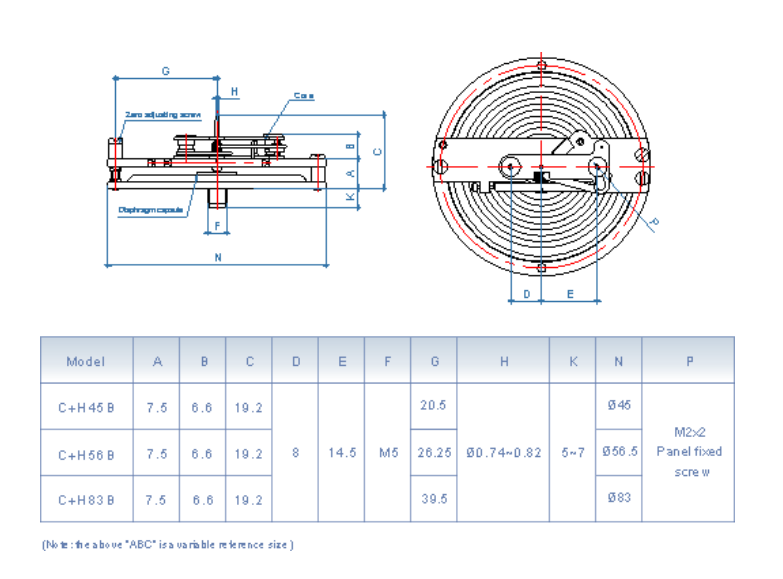
The performance of a pressure gauge is fundamentally governed by the principles of mechanics and material science. For Bourdon tube gauges, the pressure-induced deflection of the tube is directly proportional to the applied pressure, following Hooke's Law within the elastic limit of the material. The tube’s cross-sectional shape (C-shape, spiral, helical) affects its sensitivity and range. Helical Bourdon tubes offer higher sensitivity for low-pressure applications. The linkage mechanism converting tube deflection into pointer movement is subject to force analysis to minimize hysteresis and ensure accurate readings. Diaphragm gauges rely on the deflection of a flexible diaphragm under pressure. Strain gauges or other sensing elements bonded to the diaphragm translate this deflection into an electrical signal. The design must account for stress distribution and prevent diaphragm rupture. Digital pressure gauges utilize piezoresistive or capacitive sensors, which convert pressure into a measurable electrical signal. Engineering considerations include thermal compensation to mitigate temperature-induced errors, and signal conditioning to amplify and linearize the output.
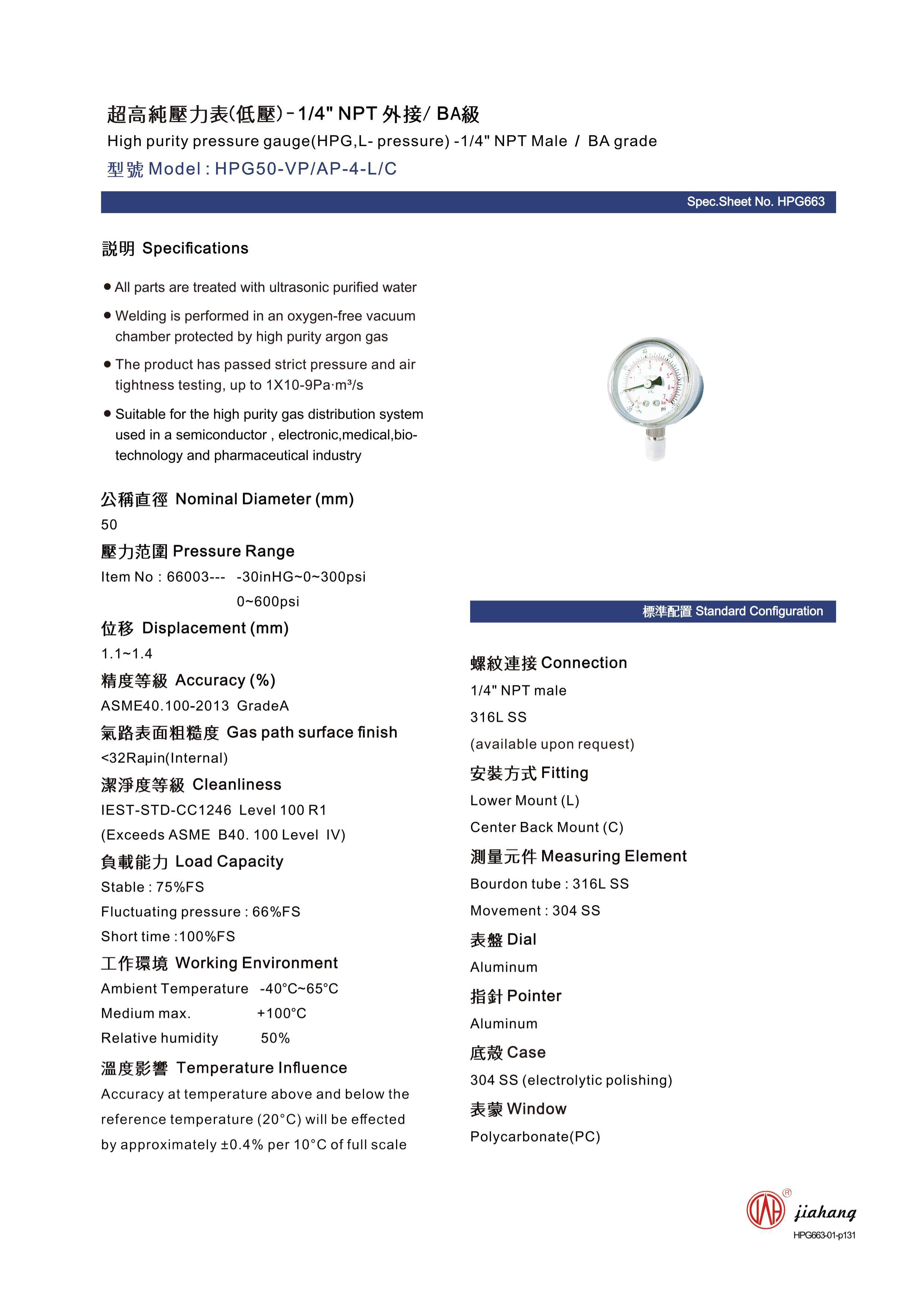
Environmental resistance is a crucial performance parameter. Gauges intended for outdoor or corrosive environments require robust materials and sealed construction to prevent ingress of moisture, dust, or chemicals. Compliance requirements, such as those defined by ASME B40.100 for pressure gauges, dictate accuracy classes, testing procedures, and safety features. Explosion-proof gauges, used in hazardous areas, are designed to contain any internal spark or flame, preventing ignition of flammable gases. Proper selection of materials and design features ensures adherence to these standards. Functional implementation relies on accurate calibration, regular maintenance, and proper installation to ensure reliable and long-term performance.
Technical Specifications
| Parameter | Unit | Typical Value (Bourdon Tube) | Typical Value (Diaphragm) |
|---|---|---|---|
| Pressure Range | psi | 0-10,000 | 0-600 |
| Accuracy | % of Full Scale | ±1% | ±0.5% |
| Temperature Range (Process) | °F | -40 to 250 | -60 to 300 |
| Temperature Range (Ambient) | °F | -20 to 150 | -20 to 150 |
| Connection Size | inches (NPT) | 1/4", 1/2" | 1/8", 1/4" |
| Case Material | - | Steel, Aluminum | Steel, Stainless Steel |
Failure Mode & Maintenance
Pressure gauges are susceptible to several failure modes. Fatigue cracking in Bourdon tubes can occur due to repeated pressure cycling, particularly at stress concentration points (welds, bends). Corrosion, especially in harsh environments, can lead to tube rupture or blockage. Drift in accuracy can result from material creep, hysteresis, or damage to the movement mechanism. Diaphragm gauges can fail due to diaphragm rupture caused by overpressure or fatigue. Leakage around the connection can occur due to damaged threads or seals. Zero shift can result from temperature fluctuations or internal component wear.
Preventive maintenance is crucial for ensuring reliable operation. Regular visual inspection should be conducted to check for physical damage, corrosion, or leaks. Periodic calibration against a known pressure standard is essential to verify accuracy. Lubrication of the movement mechanism can reduce friction and improve responsiveness. For critical applications, consider implementing a pressure gauge testing program, involving routine removal and bench testing. Replace gauges that exhibit signs of significant drift, damage, or corrosion. Proper installation, including the use of snubbers or pulsation dampeners, can minimize pressure fluctuations and extend gauge life. If a gauge fails catastrophically, a thorough failure analysis should be performed to determine the root cause and prevent recurrence.
Industry FAQ
Q: What is the difference between a Bourdon tube and a diaphragm pressure gauge in terms of application suitability?
A: Bourdon tube gauges are generally preferred for higher pressure applications and offer a wider pressure range. They are robust and cost-effective. Diaphragm gauges, however, are better suited for lower pressure ranges, corrosive media, and applications requiring high accuracy and sensitivity. The diaphragm material can be selected for compatibility with the process fluid, making them ideal for challenging chemical environments.
Q: How does temperature affect the accuracy of a pressure gauge?
A: Temperature can influence pressure gauge accuracy in several ways. Thermal expansion and contraction of the sensing element (Bourdon tube or diaphragm) can cause zero shift. Changes in ambient temperature can affect the viscosity of the fill fluid (if used) and alter the damping characteristics. Additionally, temperature fluctuations can induce stresses within the gauge components, leading to drift. High-quality gauges incorporate temperature compensation mechanisms to minimize these effects.
Q: What is the significance of the accuracy class specified on a pressure gauge?
A: The accuracy class, expressed as a percentage of full scale, defines the maximum permissible error in the gauge reading. For example, a Class 1.0 gauge has a maximum error of ±1% of the full scale range. A lower percentage indicates higher accuracy. Selecting the appropriate accuracy class depends on the critical nature of the application; processes requiring precise control necessitate higher accuracy gauges.
Q: What are the best practices for installing a pressure gauge to ensure accurate readings and long-term reliability?
A: Proper installation is crucial. Avoid direct sunlight and excessive vibration. Use a correctly sized wrench to tighten the connection, avoiding over-tightening which can damage the gauge. Consider using a siphon or loop seal to prevent process fluid from entering the gauge case. If pulsations are present, install a pulsation dampener or snubber upstream of the gauge. Ensure the gauge is mounted vertically for optimal readability.
Q: How often should a pressure gauge be calibrated?
A: The calibration frequency depends on the application, operating environment, and regulatory requirements. As a general guideline, gauges used in critical applications should be calibrated annually, or more frequently if exposed to harsh conditions or subjected to frequent cycling. Routine visual inspection can help identify potential issues requiring calibration.
Conclusion
Pressure gauges remain indispensable tools in a vast range of industrial processes, providing essential feedback for monitoring and control. Their functionality hinges on a delicate interplay of material science, mechanical engineering, and precision manufacturing. The selection of the appropriate gauge type – Bourdon tube, diaphragm, or digital – is dictated by the specific application requirements, including pressure range, accuracy, environmental conditions, and process fluid compatibility. Maintaining accuracy through regular calibration and implementing a robust preventive maintenance program are paramount for ensuring long-term reliability and safe operation.
Looking ahead, advancements in sensor technology and wireless communication are driving the development of smart pressure gauges capable of remote monitoring, data logging, and predictive maintenance. These innovations will further enhance process efficiency and minimize downtime. As industries continue to embrace digitalization, the role of pressure gauges will evolve from simple measurement devices to integral components of comprehensive industrial IoT (IIoT) systems, providing valuable insights for optimized process management and enhanced operational performance.
 English
  Arabic
  China
China  China (Taiwan)
  Danish
  Dutch
Dutch  French
  German
  Greek
Greek  Hindi
Hindi  Indonesian
  Italian
  Japanese
  Korean
  Latin
Latin  Polish
  Portuguese
  Russian
  Spanish
  Turkish