
Apr . 01, 2024 17:55 Back to list
Pressure Gauge how to read a pressure gauge Performance Analysis
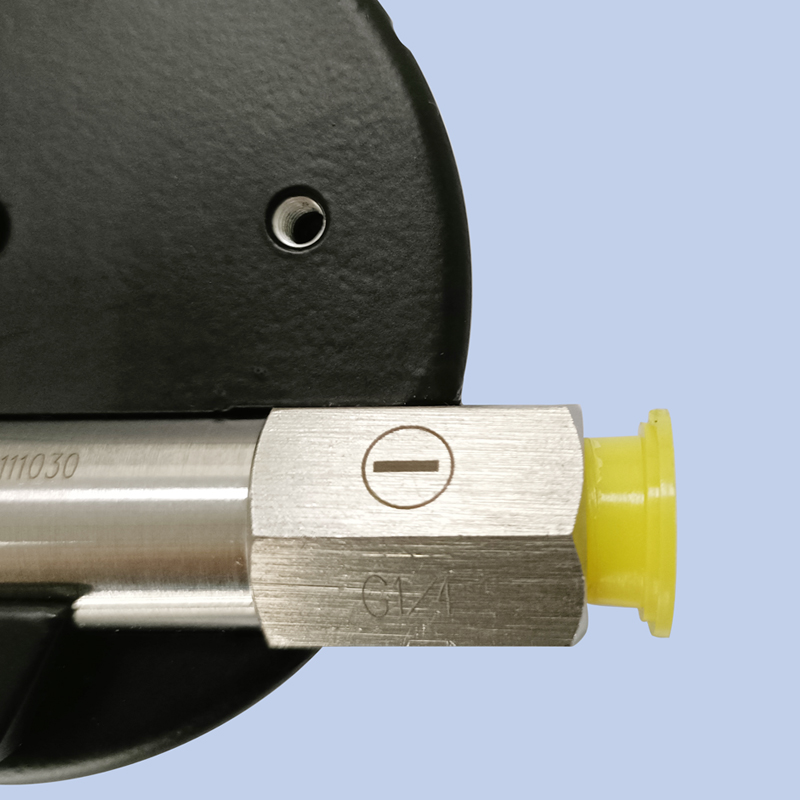
Introduction
A pressure gauge is a critical instrument used to measure the pressure of a fluid (liquid or gas) within a system. Its technical position within industrial processes is foundational, providing essential feedback for process control, safety systems, and performance monitoring across diverse sectors including chemical processing, oil & gas, manufacturing, and HVAC. Accuracy in reading and interpreting these gauges is paramount. Core performance indicators center around the gauge’s range, accuracy (expressed as a percentage of full scale), resolution, and responsiveness. Understanding these factors is essential for reliable system operation. A primary industry pain point revolves around misinterpretation of gauge readings, leading to inaccurate process adjustments, potential equipment damage, or even hazardous situations. This guide provides a comprehensive understanding of pressure gauge operation and accurate reading techniques.
Material Science & Manufacturing
Pressure gauge construction typically utilizes materials selected for their compatibility with the measured fluid and their ability to withstand high pressures. Bourdon tubes, the core sensing element in many gauges, are commonly made from beryllium copper, phosphor bronze, or stainless steel. Beryllium copper offers excellent spring properties and corrosion resistance, while phosphor bronze provides good corrosion resistance at a lower cost. Stainless steel is favored for highly corrosive environments. Cases are generally made from steel, aluminum, or plastic, often with a protective coating. Dial faces are typically constructed from aluminum or durable plastics. Manufacturing processes vary depending on the gauge type. Bourdon tube gauges involve forming a pre-coiled tube, heat treatment to establish desired spring characteristics, and precise calibration. Diaphragm gauges require meticulous diaphragm fabrication (often from stainless steel or Hastelloy) and assembly. Digital gauges employ pressure sensors, analog-to-digital converters, and microprocessors. Critical parameters during manufacturing include material purity, heat treatment temperatures, welding integrity (for Bourdon tube connections), and calibration accuracy. Quality control involves rigorous testing to ensure compliance with industry standards, including leak tests, cycle tests, and accuracy verifications.
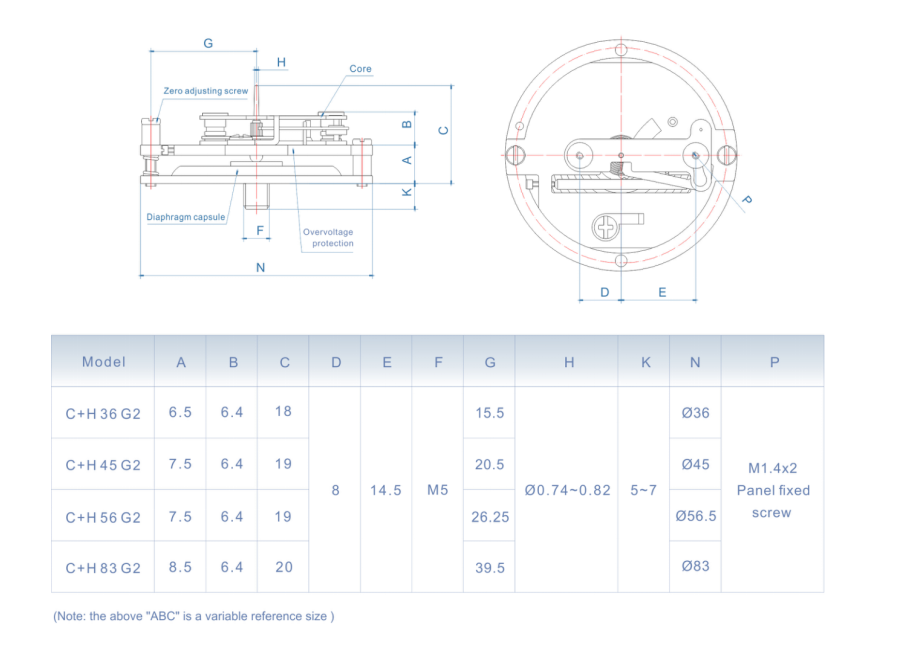
Performance & Engineering
The performance of a pressure gauge is fundamentally tied to its ability to accurately translate pressure into a readable indication. Force analysis centers around understanding the elastic deformation of the sensing element (Bourdon tube, diaphragm, etc.) and its correlation to pressure. Environmental resistance is a crucial factor, particularly in harsh industrial settings. Gauges must withstand temperature fluctuations, vibration, shock, and corrosive atmospheres. Gauge performance is also significantly affected by mounting orientation – vertical mounting is generally preferred for accurate readings, minimizing the effects of fluid column height. Compliance requirements dictate specific performance characteristics, such as accuracy class (defined by standards like EN 837) and safety features (e.g., blowout discs to prevent case rupture). The functional implementation involves selecting a gauge with an appropriate pressure range for the application, ensuring proper installation (correct tubing size, appropriate sealant), and implementing a regular calibration schedule. Pressure spikes and pulsations can impact gauge life and accuracy; dampening devices (e.g., liquid-filled gauges) can mitigate these effects. Consideration must also be given to the fluid’s viscosity and density, as these can affect response time and accuracy.
Technical Specifications
| Parameter | Unit | Typical Value (Industrial Gauge) | Tolerance |
|---|---|---|---|
| Pressure Range | psi / bar / kPa | 0-100 psi | ±0.5% of full scale |
| Accuracy Class | - | 1.6 | Per EN 837 standard |
| Case Material | - | Steel | Painted finish |
| Wetted Parts Material | - | Stainless Steel 316 | Corrosion resistant |
| Connection Size | NPT / BSPT | 1/4" | Varies based on application |
| Operating Temperature | °F / °C | -20 to 60 °C | Dependent on gauge fill fluid |
Failure Mode & Maintenance
Pressure gauge failure can manifest in several ways. Fatigue cracking of the Bourdon tube is common with prolonged exposure to pressure cycling and vibration. This often begins at the welded connections. Delamination of the dial face can occur due to UV exposure or chemical attack. Zero drift (loss of calibration) is a frequent issue, caused by mechanical wear or temperature effects. Leakage through the connection is often due to improper sealing or thread damage. Oxidation of internal components can lead to corrosion and sticking pointers. Maintenance involves regular visual inspections for physical damage (cracked glass, loose connections). Calibration should be performed annually or more frequently in critical applications. Periodic cleaning removes contaminants that can affect accuracy. For liquid-filled gauges, check for liquid level and clarity. If the gauge is subjected to significant vibration, consider using a vibration-dampening mount. Replacement is necessary if the Bourdon tube is cracked, the dial face is severely damaged, or calibration cannot be restored. Ensure proper disposal of damaged gauges, especially those containing mercury (in older models).
Industry FAQ
Q: What does 'full scale' mean when referring to accuracy?
A: 'Full scale' refers to the entire range of pressure the gauge is designed to measure. An accuracy of ±0.5% of full scale means that the indicated pressure may deviate by up to 0.5% of the maximum pressure on the gauge's dial. For example, on a 100 psi gauge, the acceptable error range would be ±0.5 psi.
Q: How does temperature affect pressure gauge readings?
A: Temperature affects the material properties of the sensing element and the density of the fluid being measured. Higher temperatures can cause the Bourdon tube to expand, potentially leading to overestimation of pressure. Lower temperatures can cause contraction and underestimation. Liquid-filled gauges minimize this effect by providing thermal isolation.
Q: What is the purpose of a pressure snubbers or restrictors?
A: Pressure snubbers (also called restrictors) are used to dampen pressure pulsations and spikes. These fluctuations can cause premature gauge failure and inaccurate readings. Snubbers reduce the rate of pressure change, providing a more stable indication.
Q: How do I select the correct pressure range for my application?
A: The selected range should encompass the normal operating pressure, plus an allowance for expected pressure fluctuations. Ideally, the operating pressure should fall within 25-75% of the gauge's full scale for optimal accuracy. Avoid selecting a gauge with a range that is significantly higher than the expected pressure, as this reduces resolution.
Q: What safety precautions should be taken when replacing a pressure gauge?
A: Always depressurize the system before removing a gauge. Use appropriate personal protective equipment (PPE), including safety glasses and gloves. Ensure the new gauge is compatible with the process fluid. Use proper thread sealant and torque specifications during installation. Slowly open the system's isolation valve after installation to avoid pressure surges.
Conclusion
Accurate pressure gauge reading is a fundamental skill for anyone involved in industrial process control and maintenance. Understanding the principles of operation, material science, and potential failure modes is crucial for ensuring reliable system performance and safety. Proper gauge selection, installation, and regular calibration are paramount.
Continued advancements in sensor technology are driving the development of digital pressure gauges with enhanced accuracy, data logging capabilities, and remote monitoring features. These technologies offer significant benefits for process optimization and predictive maintenance. Adhering to established industry standards and best practices remains essential for maximizing the lifespan and reliability of pressure measurement systems.
 English
  Arabic
  China
China  China (Taiwan)
  Danish
  Dutch
Dutch  French
  German
  Greek
Greek  Hindi
Hindi  Indonesian
  Italian
  Japanese
  Korean
  Latin
Latin  Polish
  Portuguese
  Russian
  Spanish
  Turkish