
Apr . 01, 2024 17:55 Back to list
Pressure Gauge what is a pressure gauge Performance Analysis
Introduction
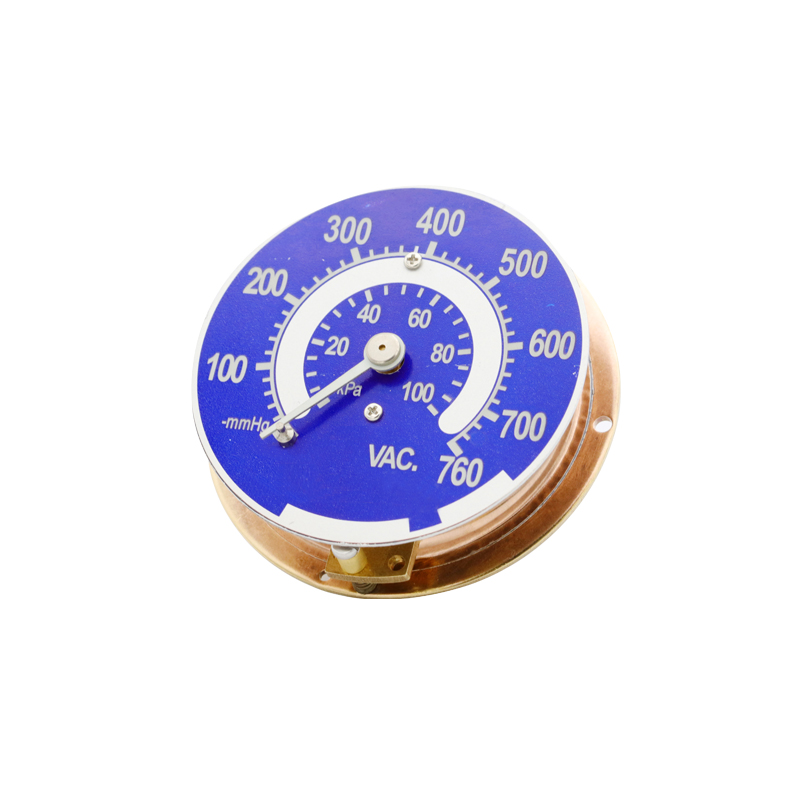
A pressure gauge is an instrument used to measure the pressure of a fluid – liquid or gas – within a system. Its technical position within the industrial chain is foundational to process control, safety systems, and quality assurance across a vast range of sectors including oil and gas, chemical processing, pharmaceuticals, HVAC, and manufacturing. Pressure gauges are not simply indicators; they are critical components in preventing catastrophic failures, optimizing process efficiency, and ensuring product consistency. Core performance characteristics revolve around accuracy, repeatability, robustness, and the ability to withstand the specific process conditions – including temperature, chemical compatibility, and pressure range. The inherent limitations of earlier mechanical gauges have driven development toward more sophisticated digital and smart pressure monitoring solutions, but the underlying principles remain essential to understanding and implementing effective pressure measurement strategies. A primary industry pain point is achieving consistent, traceable calibration and minimizing drift over the instrument's lifecycle.
Material Science & Manufacturing
The construction of pressure gauges involves a variety of materials selected for their specific properties. Bourdon tubes, the most common sensing element, are typically manufactured from alloys like beryllium copper, phosphor bronze, or stainless steel (304, 316). Beryllium copper provides high elasticity and corrosion resistance, ideal for applications with fluctuating pressures and corrosive media. Phosphor bronze offers good corrosion resistance and is often used in lower-pressure applications. Stainless steel provides superior corrosion resistance and strength for high-pressure and harsh environments. The case material is commonly steel, aluminum, or plastic (ABS, polycarbonate), chosen for its strength and resistance to impact and environmental factors. Glass for the dial window is typically tempered glass or polycarbonate for safety. Manufacturing processes for Bourdon tubes involve forming a flat metal strip into a curved, flattened tube, then heat-treating for optimal elasticity. Welding is critical, requiring precise control of heat input and shielding gas to prevent oxidation and ensure joint integrity. Dial faces are often created using printing technologies ensuring accurate scale markings and clear readability. Critical parameter control during manufacturing includes dimensional accuracy of the Bourdon tube (critical for linearity and accuracy), weld quality (assessed via non-destructive testing like radiography and dye penetrant inspection), and proper calibration procedures. Chemical compatibility of wetted parts with the process fluid is also paramount, as corrosion can significantly impact accuracy and lifespan.
Performance & Engineering
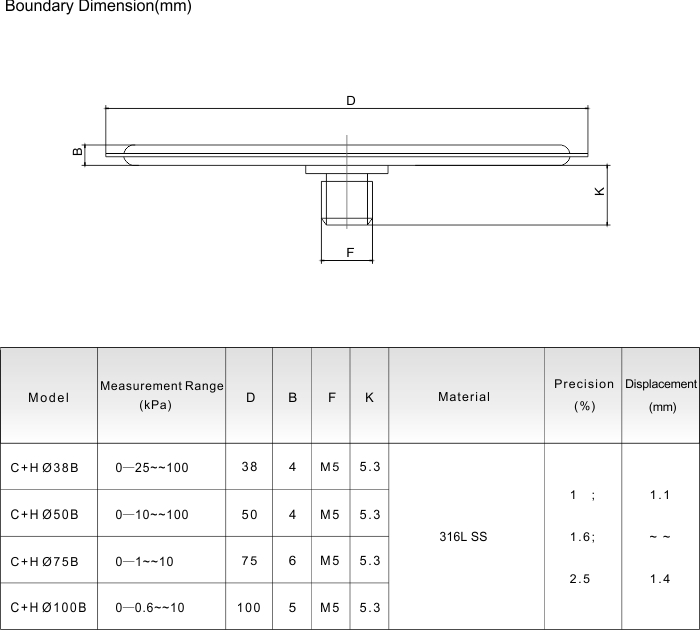
The performance of a pressure gauge is defined by several key engineering considerations. Force analysis focuses on the stress-strain relationship within the Bourdon tube as it deflects under pressure. The magnitude of deflection is directly proportional to the applied pressure, forming the basis of measurement. Environmental resistance is critical; gauges are often exposed to extreme temperatures, humidity, vibration, and corrosive atmospheres. Sealing materials (e.g., nitrile, Viton) must be selected for compatibility with the process fluid and temperature range. Compliance requirements vary widely by industry. For example, in the pharmaceutical industry, gauges must meet stringent sanitary standards (e.g., 3-A sanitary standards) and be constructed from materials certified for biocompatibility. In the oil and gas industry, gauges used in hazardous locations must be intrinsically safe or explosion-proof, adhering to standards like ATEX or IECEx. Functional implementation involves understanding the gauge’s intended application. Differential pressure gauges, for example, measure the difference in pressure between two points, used extensively in flow measurement and filter monitoring. Digital pressure gauges incorporate microprocessors and sensors to provide enhanced accuracy, data logging capabilities, and communication protocols (e.g., Modbus, HART).
Technical Specifications
| Parameter | Unit | Typical Value (Analog Gauge) | Typical Value (Digital Gauge) |
|---|---|---|---|
| Pressure Range | psi | 0-30 to 0-10,000 | 0-10 to 0-15,000 |
| Accuracy | % of Full Scale | ±1-3% | ±0.25-1% |
| Temperature Range (Process) | °F | -20 to 250 | -40 to 300 |
| Temperature Range (Ambient) | °F | -40 to 140 | -40 to 158 |
| Connection Size | in (NPT) | 1/8, 1/4, 1/2 | 1/8, 1/4, 1/2 |
| Case Material | - | Steel, Aluminum | Steel, Plastic |
Failure Mode & Maintenance
Pressure gauge failures can stem from various sources. Fatigue cracking in the Bourdon tube is common, especially under cyclical pressure fluctuations. This is exacerbated by exceeding the gauge's pressure limit. Delamination of the dial face can occur due to UV exposure or physical damage, affecting readability. Degradation of sealing materials leads to leaks and loss of accuracy. Oxidation of internal components, particularly in corrosive environments, can cause corrosion and seizure. Zero drift, a gradual shift in the zero point of the gauge, is a common failure mode often caused by temperature changes or internal stresses. Maintenance involves regular visual inspection for leaks, physical damage, and dial clarity. Periodic calibration against a known pressure standard is essential – typically every 6-12 months. For analog gauges, lubrication of moving parts may be required. Digital gauges should have their batteries replaced as needed and their sensors checked for proper operation. In instances of suspected internal damage, the gauge should be removed from service and either repaired by a qualified technician or replaced. Proper installation, avoiding excessive vibration and direct exposure to harsh chemicals, significantly extends the gauge’s lifespan.
Industry FAQ
Q: What is the difference between a gauge pressure and absolute pressure measurement, and why does it matter?
A: Gauge pressure measures pressure relative to atmospheric pressure, while absolute pressure measures pressure relative to a perfect vacuum. This matters because many process calculations and control systems require absolute pressure readings. Converting between the two requires knowing the local atmospheric pressure, which can vary with altitude and weather conditions. Using the wrong pressure type can lead to inaccurate control and potentially unsafe operating conditions.
Q: How do I select the correct pressure range for my application?
A: The pressure range should encompass the normal operating pressure plus a safety margin. Selecting a range that is too large reduces accuracy, while selecting a range that is too small risks exceeding the gauge’s limit and causing damage or failure. Aim for an operating pressure within 25-75% of the gauge's full scale.
Q: What are the implications of using a digital pressure gauge versus an analog gauge?
A: Digital gauges offer higher accuracy, data logging capabilities, and remote communication options. They are generally more expensive but provide significant advantages for applications requiring precise monitoring and control. Analog gauges are simpler, more robust, and less expensive, making them suitable for less demanding applications.
Q: How do I ensure proper calibration of my pressure gauges?
A: Calibration should be performed by a certified calibration laboratory using traceable standards. The calibration process involves comparing the gauge’s readings to known pressure values across its entire range and adjusting the gauge as needed. Regular recalibration is crucial to maintain accuracy.
Q: What materials should I specify for a pressure gauge used in a corrosive environment?
A: Select wetted parts constructed from materials resistant to the specific corrosive media. Common choices include stainless steel (316, Alloy C-276), Hastelloy, and certain polymers (e.g., PTFE, PVDF). The gauge case should also be chosen to withstand the corrosive atmosphere.
Conclusion
Pressure gauges, despite advances in digital technology, remain fundamental instruments for monitoring and controlling fluid pressure across numerous industries. Understanding the material science behind their construction, the engineering principles governing their operation, and potential failure modes is critical for ensuring accurate and reliable performance. Proper selection, installation, and regular maintenance are essential to maximizing the lifespan and minimizing the risk of process upsets or safety hazards.
The future of pressure gauge technology lies in increased integration with Industrial IoT (IIoT) platforms, enabling predictive maintenance, remote monitoring, and advanced data analytics. Development will focus on enhancing sensor accuracy, reducing power consumption, and improving resistance to harsh environments. Adherence to stringent industry standards and a commitment to continuous calibration remain paramount for maintaining the integrity of pressure measurement systems.
 English
  Arabic
  China
China  China (Taiwan)
  Danish
  Dutch
Dutch  French
  German
  Greek
Greek  Hindi
Hindi  Indonesian
  Italian
  Japanese
  Korean
  Latin
Latin  Polish
  Portuguese
  Russian
  Spanish
  Turkish