
Apr . 01, 2024 17:55 Back to list
Pressure Gauges can gauge pressure be negative Analysis
Introduction
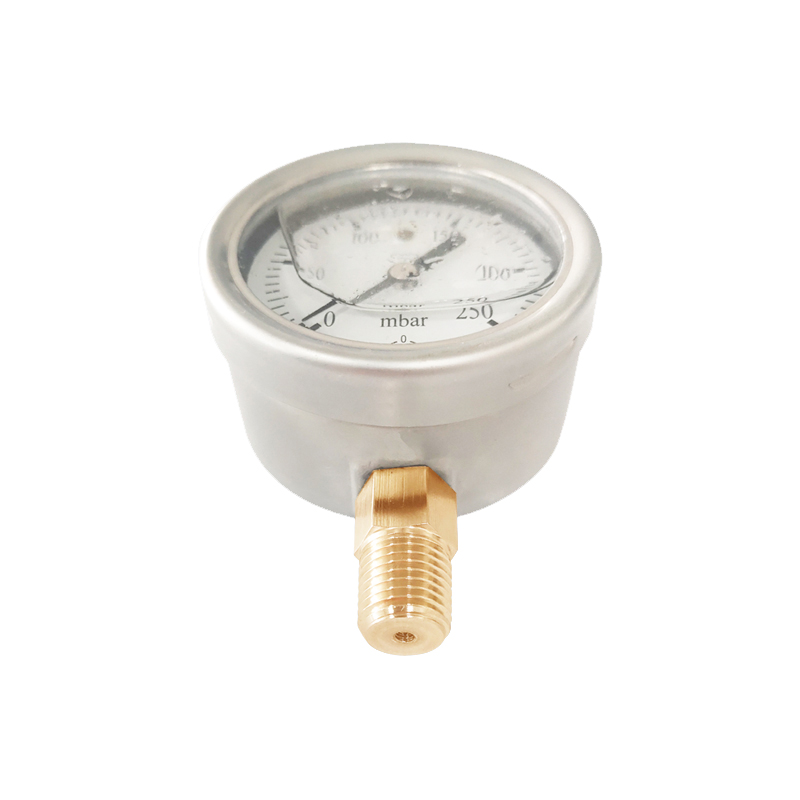
Gauge pressure, by definition, measures pressure relative to ambient atmospheric pressure. The concept of ‘negative gauge pressure’ is a common source of misunderstanding in industrial applications. It does not indicate a physical vacuum, but rather a pressure below atmospheric pressure. This guide provides an in-depth technical analysis of negative gauge pressure, its implications for industrial processes, materials compatibility, measurement techniques, failure modes and relevant industry standards. Industries reliant on precise pressure control—including pneumatics, hydraulics, vacuum packaging, and chemical processing—are particularly susceptible to issues arising from incorrect interpretation or management of negative gauge pressures. Accurate understanding is crucial for preventing equipment failure, ensuring process efficiency, and maintaining safety protocols. The core pain point addressed is the misapplication of pressure measurement tools and the failure to account for the impact of sub-atmospheric pressures on material performance and system integrity.
Material Science & Manufacturing
The materials utilized in pressure gauge construction and the systems they monitor must exhibit specific properties when subjected to negative gauge pressures. Bourdon tubes, commonly used in mechanical gauges, are typically constructed from alloys like beryllium copper, phosphor bronze, or stainless steel (304, 316). The material’s yield strength and elastic modulus are critical; excessive tension due to a large negative pressure can lead to permanent deformation or rupture. Diaphragm gauges, often employed for lower pressure ranges, utilize materials such as stainless steel, Hastelloy, or Teflon, selected for their flexibility and corrosion resistance. The manufacturing process, particularly welding and heat treatment, significantly influences material integrity. Stress concentrations introduced during welding must be minimized through appropriate techniques like annealing. For systems experiencing frequent pressure cycling, fatigue resistance is paramount. The manufacturing of seals – often using materials like Viton, Buna-N, or PTFE – is equally important. These seals must maintain a tight barrier even under tensile stress caused by the pressure differential. Key parameter control includes precise alloy composition, controlled heat treatment cycles, non-destructive testing (NDT) like ultrasonic inspection and dye penetrant testing, and rigorous quality control of seal dimensions and material properties.
Performance & Engineering
Engineering considerations for systems operating with negative gauge pressures center on structural integrity, leak prevention, and the effects of moisture ingress. Force analysis is critical; the gauge must withstand the maximum expected tensile force induced by the pressure differential. This necessitates accurate calculation of the surface area exposed to the vacuum and the maximum allowable negative pressure. Environmental resistance is also crucial. Humidity can accelerate corrosion, particularly in systems utilizing carbon steel components. The presence of corrosive gases or liquids can further exacerbate this issue. Compliance requirements dictate the need for safety factors in design, regular inspection protocols, and adherence to pressure vessel standards (e.g., ASME Boiler and Pressure Vessel Code). Functional implementation involves careful selection of pressure relief devices. Unlike positive pressure systems, negative pressure systems often require inward-acting relief valves to prevent implosion if a vacuum exceeds design limits. Furthermore, understanding fluid dynamics is essential. The viscosity and compressibility of the fluid being measured affect the gauge’s response time and accuracy. Cavitation – the formation of vapor bubbles due to rapid pressure drop – can occur in liquids, leading to erosion and inaccurate readings.
Technical Specifications
| Parameter | Units | Typical Range (Negative Gauge) | Accuracy |
|---|---|---|---|
| Pressure Range | psi | -30 to 0 | ±0.25% of span |
| Medium Compatibility | - | Stainless Steel: Most Gases & Liquids | See Material Data Sheets |
| Operating Temperature | °F | -40 to 250 | Dependent on Seal Material |
| Connection Type | - | 1/4" NPT, 1/8" NPT | Varies based on application |
| Gauge Type | - | Diaphragm, Bourdon Tube | Application Specific |
| Housing Material | - | Stainless Steel, Plastic | Corrosion Resistance Required |
Failure Mode & Maintenance
Common failure modes in systems utilizing negative gauge pressure include diaphragm rupture, Bourdon tube fatigue cracking, seal leakage, and corrosion-induced component failure. Diaphragm rupture typically occurs due to exceeding the maximum allowable negative pressure or material defects. Bourdon tube fatigue cracking develops over time due to repeated stress cycling. Seal leakage is often caused by material degradation (e.g., hardening, cracking) or improper installation. Corrosion – particularly pitting corrosion in stainless steel – can weaken components and lead to catastrophic failure. Failure analysis should involve visual inspection for cracks or deformation, non-destructive testing (NDT) to detect internal flaws, and material analysis to identify corrosion products. Preventative maintenance includes regular calibration, leak testing, and inspection of seals and diaphragms. Lubrication of moving parts (if applicable) is crucial. Scheduled replacement of components based on their service life is essential. For diaphragm gauges, ensure the diaphragm is free from damage and properly seated. For Bourdon tube gauges, check for signs of deformation or cracking. Regular monitoring of system performance – including pressure readings and leak rates – can provide early warning signs of potential failures.
Industry FAQ
Q: What is the difference between gauge pressure, absolute pressure, and vacuum?
A: Gauge pressure is relative to atmospheric pressure; positive gauge pressure is above atmospheric, while negative gauge pressure is below. Absolute pressure is referenced to a perfect vacuum (zero pressure), and is always positive. Vacuum is often expressed as the amount of pressure below atmospheric (e.g., 29.92 inches of mercury vacuum). Negative gauge pressure is a specific case within the broader concept of vacuum.
Q: Can a negative gauge pressure cause damage to equipment?
A: Yes. Excessive negative pressure can cause implosion, deformation of components, seal failure, and accelerated corrosion. Systems must be designed to withstand the maximum expected negative pressure, and appropriate pressure relief devices must be installed.
Q: What materials are best suited for use in negative pressure systems?
A: Stainless steel (304, 316), Hastelloy, and certain polymers (PTFE, PVDF) are commonly used due to their corrosion resistance and strength. Material selection should be based on the specific fluid being handled and the operating conditions.
Q: How do I calibrate a gauge measuring negative pressure?
A: Calibration requires a calibrated reference standard capable of generating and measuring negative pressures. This is often done using a vacuum pump and a precision barometer or vacuum gauge. The gauge is adjusted to match the reference standard across its operating range.
Q: What safety precautions should be taken when working with negative pressure systems?
A: Wear appropriate personal protective equipment (PPE), including safety glasses and gloves. Ensure all connections are secure and leak-tight. Be aware of the potential for implosion and avoid exceeding the maximum allowable negative pressure. Follow established lockout/tagout procedures when performing maintenance.
Conclusion
Understanding negative gauge pressure is critical for the reliable and safe operation of numerous industrial processes. The key takeaway is that it represents a pressure below atmospheric, not the absence of pressure. Correct interpretation and appropriate system design – including material selection, component specification, and implementation of preventative maintenance procedures – are essential for preventing failures and maximizing efficiency. Ignoring these factors can lead to catastrophic consequences, including equipment damage, process downtime, and safety hazards.
Future developments in pressure sensing technology, such as micro-electromechanical systems (MEMS) sensors, will likely provide more accurate and reliable measurements of negative pressures. Continued research into material science, specifically corrosion-resistant alloys and advanced sealing materials, will further enhance the durability and longevity of negative pressure systems. Adopting a proactive approach to risk assessment and implementing robust maintenance programs remain paramount for maintaining the integrity of these critical industrial components.
 English
  Arabic
  China
China  China (Taiwan)
  Danish
  Dutch
Dutch  French
  German
  Greek
Greek  Hindi
Hindi  Indonesian
  Italian
  Japanese
  Korean
  Latin
Latin  Polish
  Portuguese
  Russian
  Spanish
  Turkish