
Apr . 01, 2024 17:55 Back to list
Pressure Sensors what is the difference between gauge pressure and absolute pressure
Introduction
Pressure measurement is fundamental across numerous industrial processes, from aerospace engineering and chemical processing to oil and gas exploration and meteorological observation. Within this field, the concepts of gauge pressure and absolute pressure are often encountered, yet frequently misunderstood. Gauge pressure represents the pressure relative to ambient atmospheric pressure, while absolute pressure is measured relative to a perfect vacuum. This distinction is critical for accurate system analysis, control, and safety. Misinterpreting these values can lead to significant errors in process calculations, equipment malfunction, and potentially hazardous situations. This guide provides an in-depth exploration of gauge and absolute pressure, outlining their definitions, relationships, applications, and the engineering considerations essential for their correct implementation. The core pain point within industry is ensuring accurate process control and instrument calibration, which relies heavily on a firm grasp of these fundamental pressure concepts. Accurate readings directly impact product quality, process efficiency, and operational safety.
Material Science & Manufacturing
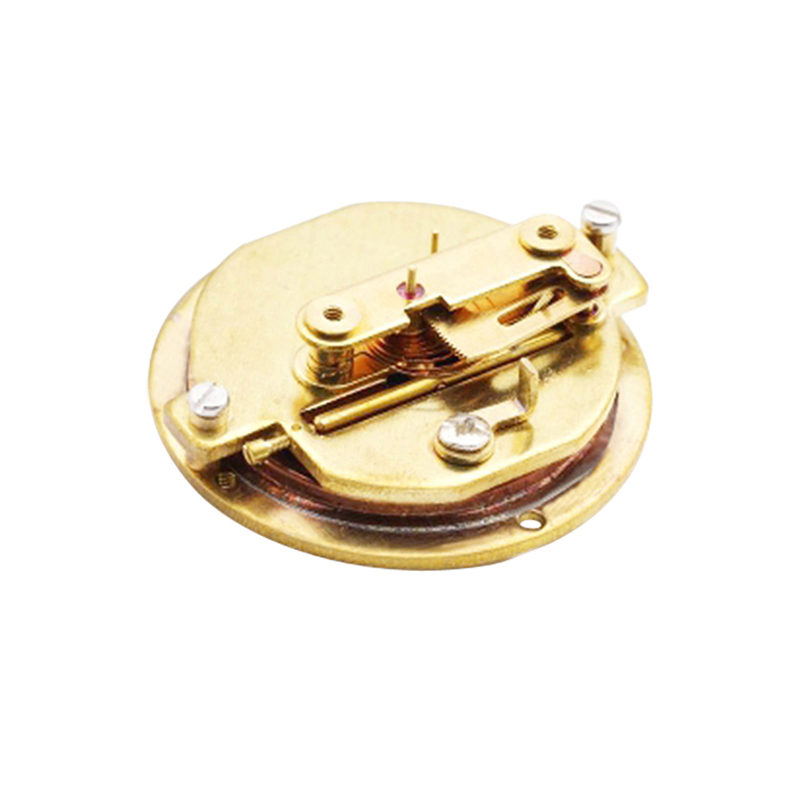
The foundation of pressure measurement lies in the material science of pressure sensors and transducers. Most commonly, these devices utilize materials exhibiting a piezoresistive or piezoelectric effect. Piezoresistive sensors, often constructed from silicon, experience a change in electrical resistance when subjected to mechanical stress caused by pressure. The manufacturing process for these sensors involves sophisticated micro-electromechanical systems (MEMS) fabrication techniques, including etching, deposition, and doping. Maintaining precise control over the silicon doping levels and the dimensions of the etched diaphragm is critical for sensor sensitivity and linearity. Piezoelectric sensors, typically using quartz or ceramics like lead zirconate titanate (PZT), generate an electrical charge proportional to the applied pressure. Their manufacturing involves precise polarization and electrode deposition processes. The atmospheric pressure itself, which serves as the reference for gauge pressure, is influenced by altitude, temperature, and humidity. Standard atmospheric pressure (101.325 kPa or 14.7 psi) is defined at sea level and 15°C. Manufacturing calibration processes must account for these variations. The physical integrity of the sensor housing is also paramount, typically fabricated from stainless steel or other corrosion-resistant alloys to withstand harsh industrial environments. The diaphragm material's yield strength and fatigue resistance are key considerations in high-pressure applications. The choice of materials and manufacturing tolerances directly impact the long-term accuracy and reliability of pressure measurements.
Performance & Engineering
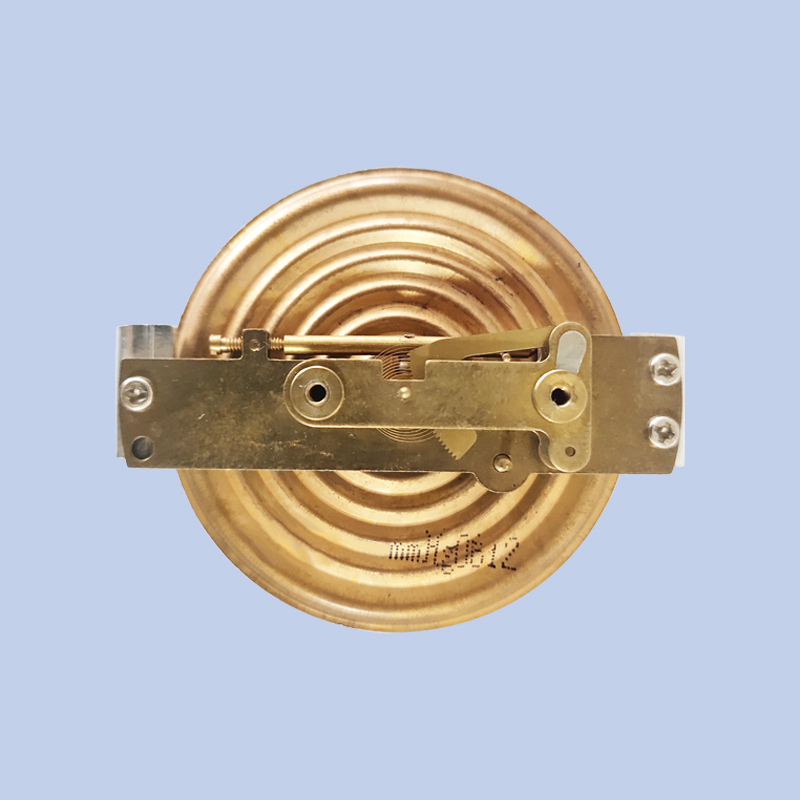
The engineering application of pressure measurement requires a detailed understanding of the forces involved and the limitations of each pressure type. Gauge pressure is useful for practical applications where the system is open to the atmosphere, such as tire pressure or compressed air systems. However, it becomes problematic in scenarios involving significant altitude changes or vacuum conditions. Absolute pressure, by referencing a perfect vacuum, remains consistent regardless of external atmospheric pressure variations. This makes it essential for applications like altitude measurement, vacuum system monitoring, and process control where precise pressure levels are critical. Force analysis in pressure systems considers the pressure force (F = P A, where P is pressure and A is area). When designing pressure vessels, engineers must calculate the stress on the vessel walls based on the absolute pressure within the vessel, including atmospheric pressure. Ignoring this can lead to structural failure. Environmental resistance is also crucial. Temperature fluctuations can affect sensor calibration and introduce errors. Compensation techniques, either through hardware or software, are necessary to maintain accuracy across a wide temperature range. Compliance requirements, such as those dictated by ASME (American Society of Mechanical Engineers) for pressure vessel design, mandate the use of absolute pressure in calculations and safety factors. For instance, pressure relief valve settings are based on absolute pressure to ensure they activate at the correct threshold, preventing overpressure events. Functional implementation often involves signal conditioning circuits to amplify and filter the sensor output, followed by analog-to-digital conversion for data acquisition and control systems.
Technical Specifications
| Parameter | Gauge Pressure | Absolute Pressure | Units |
|---|---|---|---|
| Reference Point | Ambient Atmospheric Pressure | Perfect Vacuum (0 kPa) | - |
| Typical Range (Industrial) | -100 kPa to 10 MPa | 0 kPa to 10 MPa | kPa, psi, bar |
| Accuracy (Typical) | ±0.25% of Full Scale | ±0.25% of Full Scale | %FS |
| Temperature Sensitivity | Varies by Sensor; requires compensation | Varies by Sensor; requires compensation | %FS/°C |
| Applications | Tire pressure, HVAC systems, Hydraulic systems | Altitude measurement, Vacuum systems, Scientific instrumentation | - |
| Calculation Relationship | Pabsolute = Pgauge + Patmospheric | Pgauge = Pabsolute - Patmospheric | - |
Failure Mode & Maintenance
Failure modes in pressure measurement systems stem from several sources. Diaphragm rupture, common in overpressure events, is a catastrophic failure, necessitating preventative measures like pressure relief valves. Drift in sensor calibration, often caused by contamination or temperature cycling, leads to inaccurate readings. Corrosion of sensor components, particularly in harsh chemical environments, can degrade performance and eventually cause failure. Electrical failures, such as open circuits or short circuits in the sensor wiring, can also occur. Zero shift, where the sensor output deviates from zero at zero pressure, is a frequent issue. For gauge pressure sensors, fluctuations in atmospheric pressure can be misinterpreted as process variations if not properly accounted for. Maintenance involves regular calibration against a known pressure standard, inspection for physical damage or corrosion, and cleaning of sensor ports to remove debris. Periodic testing of the entire measurement loop, including wiring and signal conditioning circuits, is essential. For high-precision applications, consider redundant sensor configurations to provide backup in case of failure. In vacuum systems, leaks are a primary concern, requiring leak detection equipment and appropriate sealing techniques. Preventive maintenance schedules should be implemented based on operating conditions and sensor specifications. Root cause analysis of failures is crucial to identify recurring issues and improve system reliability.
Industry FAQ
Q: What is the impact of altitude on gauge pressure measurements?
A: As altitude increases, atmospheric pressure decreases. Therefore, a gauge pressure reading will represent a different absolute pressure at different altitudes. For example, a gauge pressure of 10 psi at sea level corresponds to a higher absolute pressure than a gauge pressure of 10 psi at a high altitude. Applications requiring accurate absolute pressure control must use absolute pressure sensors, or compensate gauge pressure readings for altitude changes.
Q: Can I directly replace a gauge pressure sensor with an absolute pressure sensor in an existing system?
A: Generally, no. Direct replacement is not advisable without recalibrating the system and potentially modifying the control logic. Absolute pressure sensors will read differently than gauge pressure sensors even at the same process conditions. The control system needs to be adjusted to interpret the absolute pressure values correctly.
Q: What type of pressure sensor is best suited for measuring vacuum?
A: Absolute pressure sensors are essential for vacuum measurements because they reference a perfect vacuum. Gauge pressure sensors are not suitable as they would give a negative reading relative to atmospheric pressure, which is not a true vacuum representation. Capacitive manometers are also commonly used for high-accuracy vacuum measurements.
Q: How does temperature affect the accuracy of pressure measurements?
A: Temperature fluctuations can alter the sensor's zero point and span (sensitivity). Temperature compensation techniques, either built into the sensor or implemented in the signal conditioning circuitry, are necessary to minimize these errors. Regular calibration is also critical to ensure accuracy over the operating temperature range.
Q: What are some common calibration standards for pressure sensors?
A: Common calibration standards include NIST-traceable pressure standards, deadweight testers, and precision pressure calibrators. These standards provide known pressure references against which sensors can be calibrated. The calibration process should be documented and regularly repeated to maintain sensor accuracy.
Conclusion
The distinction between gauge and absolute pressure is fundamental to accurate pressure measurement and control across diverse industrial applications. Gauge pressure, while convenient for many common processes, is inherently dependent on atmospheric conditions and unsuitable for scenarios requiring a consistent, vacuum-referenced measurement. Absolute pressure provides this consistency, making it critical for applications like altitude measurement, vacuum systems, and precise process control. Understanding the relationship between these two pressure types, along with the potential failure modes and maintenance requirements of pressure sensors, is paramount for engineers and technicians.
Proper sensor selection, coupled with regular calibration and meticulous attention to environmental factors, ensures the reliability and safety of pressure-dependent systems. Future advancements in MEMS technology will likely lead to even more accurate and robust pressure sensors with integrated temperature compensation and self-calibration capabilities, further simplifying pressure measurement and control in demanding industrial environments.
 English
  Arabic
  China
China  China (Taiwan)
  Danish
  Dutch
Dutch  French
  German
  Greek
Greek  Hindi
Hindi  Indonesian
  Italian
  Japanese
  Korean
  Latin
Latin  Polish
  Portuguese
  Russian
  Spanish
  Turkish