
Apr . 01, 2024 17:55 Back to list
Supply Pressure Gauge what is a supply pressure gauge used for Performance Analysis
Introduction
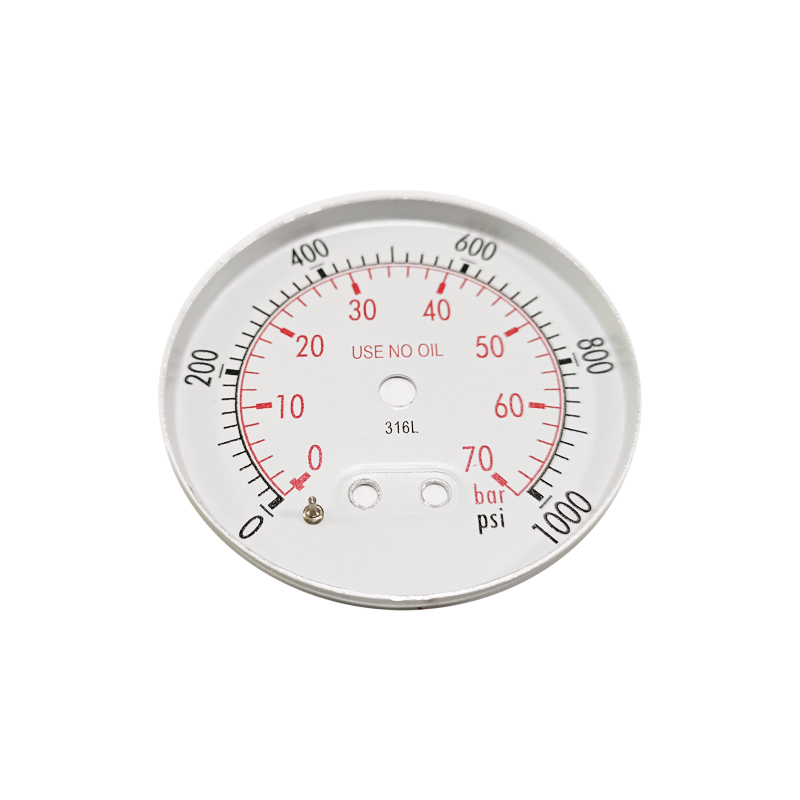
A supply pressure gauge is a vital instrument used to monitor and display the pressure of a fluid (gas or liquid) supplied to a process or system. Its primary function is to ensure accurate and consistent pressure delivery, crucial for optimal system performance and safety. In industrial settings, these gauges are integral components of broader control and monitoring systems. They differ from process pressure gauges, which measure pressure within a process, by focusing on the input pressure before it reaches the core operation. Key performance indicators for supply pressure gauges include accuracy, repeatability, responsiveness, and material compatibility with the conveyed media. Their application spans numerous industries, including chemical processing, oil & gas, power generation, HVAC, and water treatment. Maintaining appropriate supply pressure is essential for correct operation of actuators, valves, instrumentation, and other critical equipment. Improper pressure, whether too high or too low, can lead to system malfunctions, reduced efficiency, and potentially hazardous conditions.
Material Science & Manufacturing
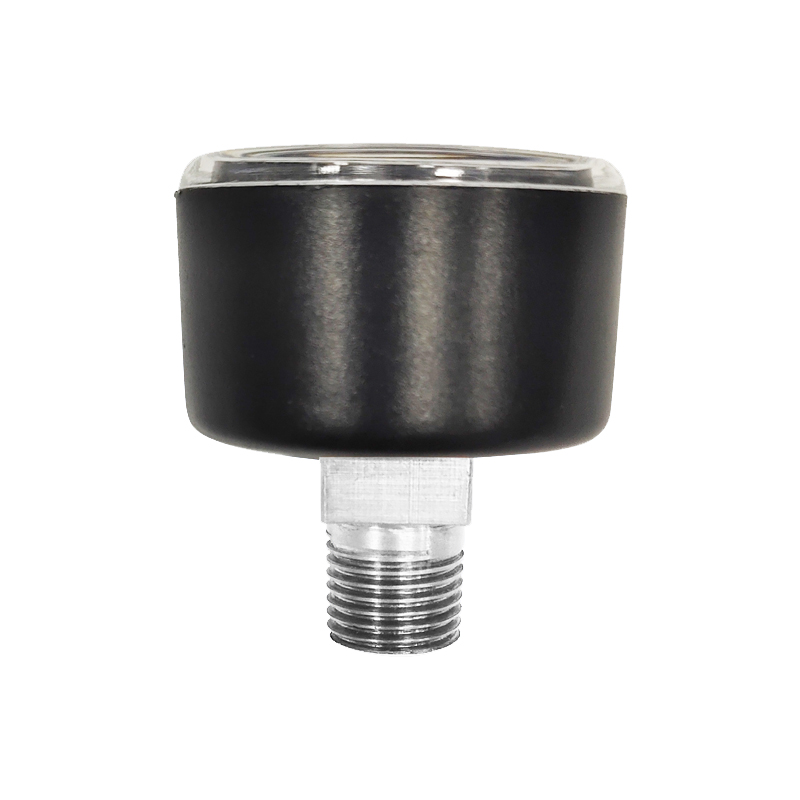
Supply pressure gauges commonly utilize several materials in their construction, each chosen for specific properties. The gauge housing is frequently manufactured from stainless steel (304, 316) due to its corrosion resistance and mechanical strength. Brass alloys are also prevalent, especially for lower-pressure applications, due to their machinability and cost-effectiveness. The Bourdon tube, the key sensing element, is typically made from beryllium copper or phosphor bronze. Beryllium copper provides excellent elasticity and fatigue resistance, allowing for accurate pressure readings over extended periods. Phosphor bronze offers a balance of cost and performance. The connection ports are often constructed from stainless steel or brass, ensuring compatibility with various piping systems. Manufacturing processes involve deep drawing for the Bourdon tube, followed by heat treatment to achieve desired mechanical properties. The gauge housing is often formed through machining or stamping. Assembly is a critical step, requiring precise calibration and leak testing. Key parameters during manufacturing include tube wall thickness, material annealing temperatures, and the precision of the movement mechanism. Manufacturing tolerances directly affect accuracy and repeatability. Surface treatments, such as passivation for stainless steel, are applied to further enhance corrosion resistance. Quality control relies heavily on dimensional inspection, pressure testing with calibrated deadweight testers, and cycle testing to simulate long-term usage.
Performance & Engineering
The performance of a supply pressure gauge is governed by several engineering principles. Force analysis centers around the stress-strain relationship within the Bourdon tube. As pressure increases, the tube attempts to straighten, generating a force proportional to the pressure. This force is transmitted through a linkage mechanism to the gauge pointer. Environmental resistance is crucial; gauges must withstand temperature fluctuations, vibration, and corrosive atmospheres. Materials selection and sealing techniques are paramount. Compliance requirements, such as those outlined by ASME B40.100 (pressure gauges) and IEC 61000-6-2 (electromagnetic compatibility), dictate accuracy classes, safety features, and testing procedures. Functional implementation involves selecting the appropriate gauge range for the application, considering the expected operating pressure and potential pressure surges. Dampening fluids (e.g., glycerin) are often used to reduce pointer flutter caused by pressure pulsations. The gauge's response time is influenced by the tube's mass, the linkage mechanism's inertia, and the dampening fluid’s viscosity. Mounting orientation can also affect accuracy; vertical mounting is generally preferred to minimize errors due to hydrostatic pressure. Regular calibration is essential to maintain accuracy, especially in critical applications. Finite element analysis (FEA) is employed during the design phase to optimize the Bourdon tube's geometry and ensure structural integrity.
Technical Specifications
| Parameter | Units | Typical Value | Tolerance |
|---|---|---|---|
| Pressure Range | psi | 0-100 | ±0.25% FS |
| Accuracy Class | - | 1.0 | As per ASME B40.100 |
| Connection Size | inches | 1/4 NPT | - |
| Case Material | - | Stainless Steel 304 | - |
| Wetted Parts Material | - | Beryllium Copper | - |
| Operating Temperature | °F | -20 to 200 | - |
Failure Mode & Maintenance
Supply pressure gauges can fail through various mechanisms. Fatigue cracking of the Bourdon tube is a common failure mode, particularly in applications with frequent pressure cycling. Corrosion, especially in environments containing corrosive gases or liquids, can weaken the tube and lead to leaks. Damage to the movement mechanism, caused by shock or vibration, can result in inaccurate readings or complete failure. Drift in calibration is a gradual failure mode, where the gauge's readings become increasingly inaccurate over time. Lens cracking can occur due to impact or thermal stress, compromising readability. Maintenance involves regular visual inspection for signs of damage or corrosion. Calibration should be performed annually, or more frequently in critical applications. If corrosion is present, the gauge should be replaced. Lubrication of the movement mechanism may be required to ensure smooth operation. When replacing a gauge, ensure that the new gauge has the same pressure range, connection size, and wetted materials as the original. Avoid over-tightening the connection, which can damage the gauge. Proper installation, including the use of a pressure-limiting valve, can help prevent overpressure conditions that can lead to gauge failure. Failure analysis should investigate the root cause of failure to prevent recurrence.
Industry FAQ
Q: What is the difference between gauge pressure, absolute pressure, and vacuum pressure, and how does this relate to selecting the correct supply pressure gauge?
A: Gauge pressure is measured relative to atmospheric pressure, absolute pressure is measured relative to a perfect vacuum, and vacuum pressure is measured relative to atmospheric pressure as a negative value. Supply pressure gauges typically measure gauge pressure, meaning they indicate the pressure above or below ambient atmospheric pressure. Selecting the correct gauge requires understanding the system’s operating pressure relative to atmosphere. If your system operates in a vacuum, a vacuum pressure gauge is needed. If absolute pressure is critical, a gauge requiring a conversion from gauge to absolute pressure or an absolute pressure gauge should be used.
Q: How does temperature affect the accuracy of a supply pressure gauge?
A: Temperature can significantly affect accuracy. Thermal expansion and contraction of the Bourdon tube and other components can introduce errors. Additionally, changes in fluid viscosity due to temperature fluctuations can alter the damping characteristics of the gauge. Gauges are typically calibrated at a specific temperature (e.g., 68°F/20°C), and accuracy will degrade as the operating temperature deviates from this calibration point. Consider specifying a gauge with temperature compensation or using a remote transmitter with temperature correction capabilities in applications with wide temperature swings.
Q: What is the significance of the “accuracy class” designation (e.g., 1.0, 1.6) on a pressure gauge?
A: The accuracy class, as defined by standards like ASME B40.100, indicates the maximum permissible error as a percentage of the span (full scale). A lower number signifies higher accuracy. For example, a Class 1.0 gauge has a maximum error of ±1.0% of the full-scale range, while a Class 1.6 gauge has a maximum error of ±1.6%. Selecting the appropriate accuracy class depends on the application's requirements; critical applications demand higher accuracy (lower class number).
Q: What type of fluid compatibility should I consider when choosing a supply pressure gauge?
A: Fluid compatibility is critical. The wetted parts of the gauge (Bourdon tube, connection) must be compatible with the media being measured to prevent corrosion, erosion, or swelling. For corrosive fluids, stainless steel (316) or other corrosion-resistant alloys are essential. For certain gases, specialized materials may be required to prevent diffusion or reaction. Refer to material compatibility charts and consult with the gauge manufacturer to ensure appropriate material selection.
Q: What is the role of a pressure snubber or pulsation dampener in conjunction with a supply pressure gauge?
A: Pressure snubbers and pulsation dampeners are used to protect the gauge from damage caused by pressure surges or pulsations. Rapid pressure fluctuations can lead to premature fatigue failure of the Bourdon tube and inaccurate readings. These devices reduce the amplitude and frequency of these fluctuations, extending the gauge's life and improving its accuracy. They are particularly important in systems with reciprocating pumps or solenoid valves.
Conclusion
Supply pressure gauges are essential components in numerous industrial processes, providing critical information for system control and safety. The selection of an appropriate gauge demands careful consideration of factors such as pressure range, accuracy, material compatibility, and environmental conditions. Understanding the underlying engineering principles, potential failure modes, and proper maintenance procedures is paramount for ensuring reliable and long-term performance.
Future advancements in pressure gauge technology focus on digitalization and integration with industrial IoT (IIoT) systems. Smart pressure gauges with digital displays, wireless communication capabilities, and remote monitoring features are becoming increasingly prevalent. These advancements offer improved data acquisition, predictive maintenance capabilities, and enhanced process control. Continued development of more robust and corrosion-resistant materials will further enhance the reliability and longevity of supply pressure gauges.
 English
  Arabic
  China
China  China (Taiwan)
  Danish
  Dutch
Dutch  French
  German
  Greek
Greek  Hindi
Hindi  Indonesian
  Italian
  Japanese
  Korean
  Latin
Latin  Polish
  Portuguese
  Russian
  Spanish
  Turkish