
Apr . 01, 2024 17:55 Back to list
Supply Pressure Gauge what is supply pressure gauge used for Performance Analysis
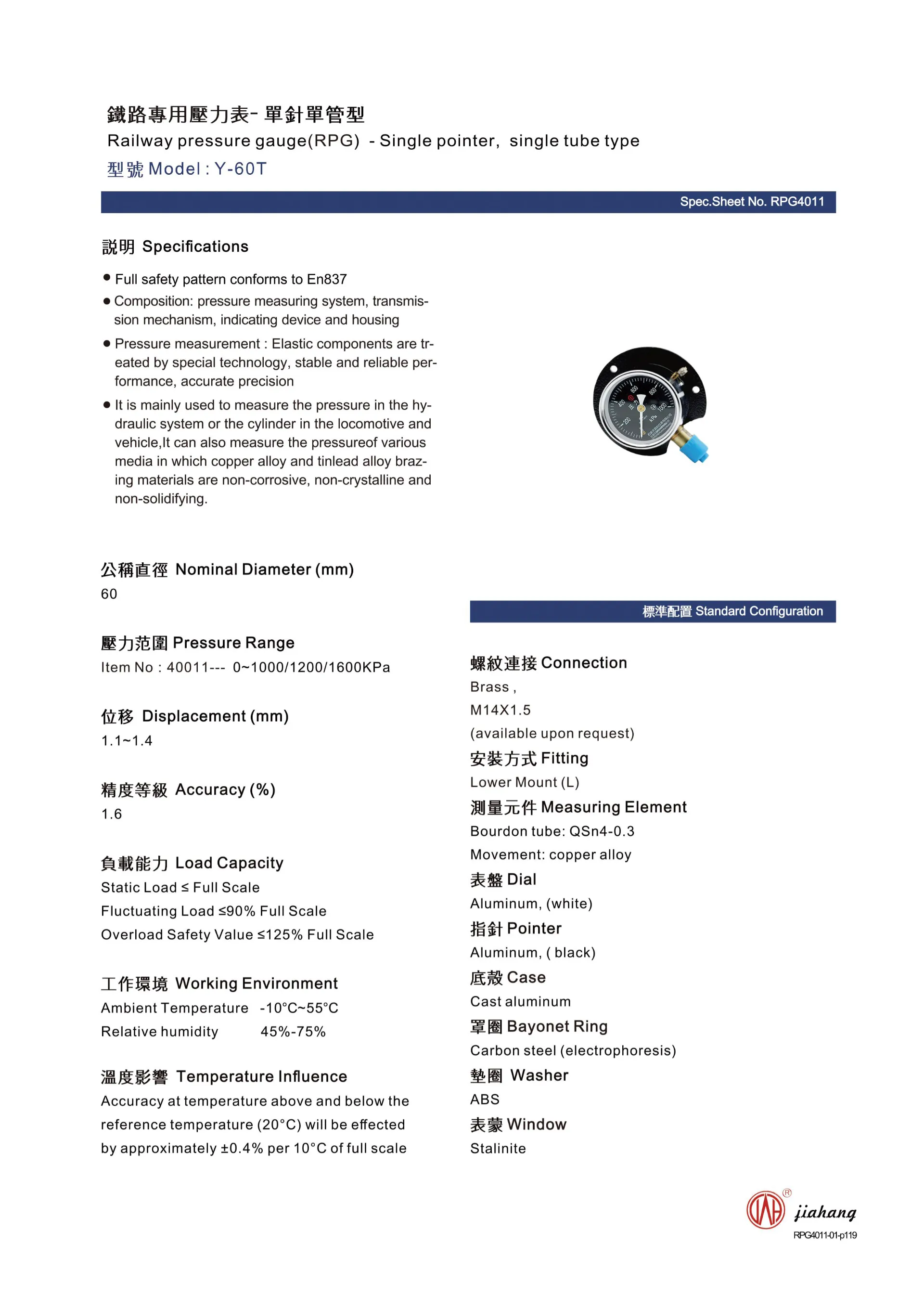
Introduction
A supply pressure gauge is a critical instrument used in industrial processes to monitor and display the pressure of a fluid or gas being supplied to a system. Its primary function is to provide a visual indication of pressure, allowing operators to ensure consistent and safe operation within specified parameters. Unlike process pressure gauges that measure pressure within a contained system, supply pressure gauges measure the pressure before it enters the process – typically in pipelines, tanks, or directly from compressors or pumps. These gauges are ubiquitous across diverse industries including chemical processing, oil and gas, manufacturing, HVAC, and water treatment. Accurate supply pressure monitoring is essential for optimal performance, preventing equipment damage, and maintaining process control. The core performance characteristics revolve around accuracy, repeatability, robustness to the measured media, and ability to withstand environmental conditions. A failure in supply pressure monitoring can result in inefficient processes, product quality deviations, or even hazardous situations, highlighting the crucial role these instruments play in maintaining operational integrity.
Material Science & Manufacturing
The construction of a supply pressure gauge involves several key materials and manufacturing processes. The gauge housing is commonly fabricated from materials like stainless steel (304, 316) or carbon steel, selected based on the application’s corrosion resistance requirements and pressure rating. Stainless steel offers superior resistance to a wider range of corrosive media, while carbon steel is suitable for less aggressive environments. The Bourdon tube, the primary sensing element, is typically made from alloys like beryllium copper, phosphor bronze, or stainless steel. Beryllium copper offers high elasticity and fatigue resistance, critical for accurate and repeatable readings over extended periods. Phosphor bronze is a cost-effective alternative for lower-pressure applications. The connection port is often constructed from brass or stainless steel, ensuring compatibility with the supply line material and preventing leaks. Manufacturing involves several stages: forming the Bourdon tube through bending and heat treatment to achieve the desired elastic properties; welding the Bourdon tube to the movement mechanism, requiring precise and robust welding techniques to ensure leak tightness and structural integrity; assembling the movement mechanism, including gears and linkages that translate the Bourdon tube’s movement to the pointer; calibrating the gauge against a known pressure standard to ensure accuracy across the entire pressure range; and finally, assembling the housing and dial face. Key parameter control during manufacturing includes precise control of the heat treatment process to optimize the Bourdon tube’s spring characteristics, stringent quality control of welding joints through non-destructive testing (e.g., dye penetrant inspection, radiographic testing), and meticulous calibration procedures performed by trained technicians using certified pressure standards. The choice of gasket material (e.g., PTFE, Viton) for sealing connections is also critical, considering chemical compatibility with the supplied fluid or gas.

Performance & Engineering
The performance of a supply pressure gauge is governed by several engineering principles. Force analysis focuses on the stress distribution within the Bourdon tube when subjected to internal pressure. The tube’s cross-sectional shape (typically C-shaped or helical) and wall thickness are engineered to withstand the maximum expected pressure without permanent deformation or failure. Environmental resistance is critical, particularly for gauges installed outdoors or in harsh industrial settings. Temperature fluctuations can affect the accuracy of the gauge due to thermal expansion and contraction of the Bourdon tube and movement mechanism. Vibration can also cause inaccuracies or premature failure. Engineering designs incorporate features like liquid filling (glycerin or silicone oil) to dampen vibration and minimize the effects of temperature changes. Compliance requirements vary by industry and region. For example, pressure gauges used in hazardous locations (e.g., oil refineries) must meet standards like ATEX or IECEx, requiring explosion-proof housings and intrinsically safe circuitry. Pressure gauges used in food and beverage applications must comply with sanitary standards (e.g., 3-A Sanitary Standards) to ensure cleanliness and prevent contamination. Functional implementation involves selecting the appropriate pressure range for the application, considering the expected operating pressure and potential pressure surges. The gauge’s accuracy class (e.g., Class 1.0, Class 1.6) determines the permissible error in pressure readings. Proper installation, including the use of appropriate fittings and minimizing pipeline vibration, is also crucial for optimal performance. The material selection directly influences the gauge’s suitability for different media. For example, gauges intended for use with corrosive gases like chlorine require wetted parts made from highly corrosion-resistant alloys like Hastelloy.
Technical Specifications
| Parameter | Unit | Typical Range | Accuracy Class (EN 837-1) |
|---|---|---|---|
| Pressure Range | psi | 0-30 to 0-10,000 | 1.0 |
| Accuracy | % of full scale | ±1% | 1.6 |
| Connection Size | NPT/BSP | 1/8", 1/4", 1/2" | 2.5 |
| Wetted Material | - | Stainless Steel 316, Brass | 3.0 |
| Housing Material | - | Carbon Steel, Stainless Steel | 5.0 |
| Operating Temperature | °F | -20 to 200 | N/A |
Failure Mode & Maintenance
Supply pressure gauges are susceptible to several failure modes. Fatigue cracking of the Bourdon tube, particularly under cyclical pressure fluctuations, is a common issue. This can be exacerbated by corrosion or excessive vibration. Delamination of the dial face or pointer can occur due to adhesive failure or exposure to harsh chemicals. Drift in accuracy can result from wear and tear of the movement mechanism, temperature effects, or internal corrosion. Leaks can develop at the connection port due to damaged threads or degraded gaskets. Oxidation of wetted parts, especially in environments with high humidity or corrosive gases, can lead to inaccurate readings and eventual failure. Maintenance solutions include regular visual inspection for leaks, corrosion, or physical damage. Periodic calibration against a certified pressure standard (typically every 6-12 months) is crucial to ensure accuracy. Lubrication of the movement mechanism may be required to maintain smooth operation. For gauges exposed to harsh environments, periodic replacement of the wetted parts or liquid filling is recommended. Preventive maintenance programs should include training for operators on proper gauge handling and installation procedures. If fatigue cracking is suspected, the gauge should be immediately removed from service and replaced. When troubleshooting accuracy issues, consider potential sources of error such as temperature effects, vibration, or blocked impulse lines. Proper record-keeping of calibration and maintenance activities is essential for tracking gauge performance and identifying potential problems.
Industry FAQ
Q: What is the impact of pulsation on the lifespan of a supply pressure gauge?
A: Pulsation significantly reduces the lifespan of a pressure gauge. The continuous cyclic stress on the Bourdon tube leads to fatigue failure over time. Mitigation strategies include installing a pulsation dampener upstream of the gauge, using a liquid-filled gauge to dampen the pulsations, and selecting a gauge with a robust Bourdon tube material and construction.
Q: How do I select the correct pressure range for my application?
A: The selected pressure range should encompass the normal operating pressure with a safety margin, but not exceed the maximum expected pressure. Ideally, the operating pressure should fall within 25-75% of the gauge's full-scale range for optimal accuracy and longevity. Oversizing the gauge reduces accuracy, while undersizing it risks damage.
Q: What is the difference between gauge pressure and absolute pressure measurements?
A: Gauge pressure measures pressure relative to atmospheric pressure, while absolute pressure measures pressure relative to a perfect vacuum. Most supply pressure gauges measure gauge pressure. If absolute pressure is required, a conversion calculation must be applied, accounting for the local atmospheric pressure.
Q: Can I use a supply pressure gauge for measuring the pressure within a process?
A: While technically possible in some cases, it is generally not recommended. Supply pressure gauges are designed to monitor pressure before it enters the process. Process pressure gauges are typically more robust and have features like restricted orifices to protect the gauge from process fluid surges and corrosive media.
Q: What are the limitations of digital pressure gauges compared to analog gauges in a supply pressure application?
A: Digital pressure gauges offer increased accuracy and features like data logging, but they rely on electronic components which can be susceptible to electromagnetic interference and power failures. Analog gauges are simpler, more reliable in harsh environments, and do not require external power. The choice depends on the specific application requirements.
Conclusion
Supply pressure gauges are indispensable components in countless industrial applications, playing a critical role in process control, equipment protection, and ensuring operational safety. Their design and manufacturing involve a complex interplay of material science, mechanical engineering, and adherence to stringent industry standards. Understanding the performance characteristics, potential failure modes, and proper maintenance procedures is paramount for maximizing their reliability and longevity.
The continued development of pressure gauge technology focuses on improving accuracy, durability, and integration with digital control systems. The trend towards smart gauges with wireless communication capabilities will further enhance process monitoring and predictive maintenance capabilities. Selecting the appropriate gauge for a specific application, considering the operating conditions, media compatibility, and required accuracy, remains a fundamental aspect of ensuring optimal system performance and minimizing downtime.
 English
  Arabic
  China
China  China (Taiwan)
  Danish
  Dutch
Dutch  French
  German
  Greek
Greek  Hindi
Hindi  Indonesian
  Italian
  Japanese
  Korean
  Latin
Latin  Polish
  Portuguese
  Russian
  Spanish
  Turkish