
Apr . 01, 2024 17:55 Back to list
Tire Air Pressure Gauge how to use Performance Analysis
Introduction
Tire pressure gauges are critical instruments for vehicle maintenance, falling squarely within the automotive aftermarket and preventative maintenance sectors. Their primary function is to accurately measure the air pressure within pneumatic tires, a parameter directly impacting vehicle handling, fuel efficiency, and tire lifespan. The gauge itself is a relatively simple device, but its accurate operation and understanding of its readings are essential for safe and efficient vehicle operation. This guide provides an in-depth technical overview of tire pressure gauge functionality, material science, performance considerations, failure modes, and best practices for maintenance and utilization. The core performance metric for a tire pressure gauge is accuracy, typically measured in PSI (pounds per square inch), kPa (kilopascals), or BAR. Industry pain points include gauge drift, mechanical wear leading to inaccurate readings, and user error due to unfamiliarity with different gauge types and units of measurement.
Material Science & Manufacturing
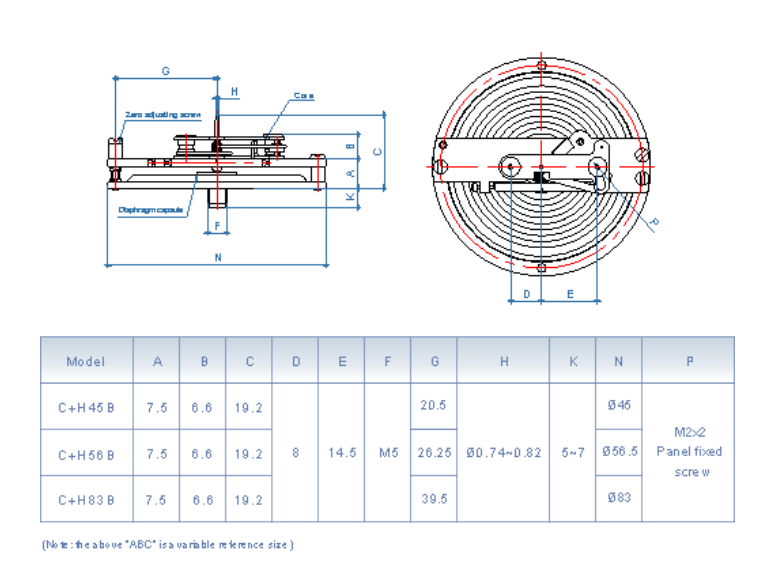
The majority of analog tire pressure gauges utilize a Bourdon tube as their primary sensing element. Bourdon tubes are typically constructed from beryllium copper, brass, or steel alloys. Beryllium copper offers superior elasticity and corrosion resistance but is more expensive. Brass provides a cost-effective alternative, while steel offers high strength but can be susceptible to corrosion. The manufacturing process begins with forming the tube into a curved shape – often a C-shape or spiral – via precise bending and drawing processes. Heat treatment is then applied to impart the desired spring characteristics to the metal. Digital gauges employ pressure sensors, commonly utilizing piezoresistive or capacitive technology. Piezoresistive sensors consist of silicon diaphragms with embedded resistors that change resistance in proportion to applied pressure. Capacitive sensors measure changes in capacitance resulting from diaphragm deflection. The casings of both analog and digital gauges are often manufactured from ABS plastic, polypropylene, or aluminum. ABS and polypropylene provide impact resistance and lightweight characteristics. Aluminum offers durability and a premium feel. Critical parameter control during manufacturing includes dimensional accuracy of the Bourdon tube (for analog gauges), calibration of the pressure sensor (for digital gauges), and ensuring airtight seals to prevent leakage and maintain measurement integrity. Surface treatments like chrome plating or powder coating are applied to protect against corrosion and abrasion.
Performance & Engineering
The performance of a tire pressure gauge is directly related to its ability to accurately translate pneumatic pressure into a readable output. For analog gauges, this relies on the linear deformation of the Bourdon tube and the precision of the mechanical linkage to the needle indicator. Engineering considerations include minimizing hysteresis (the difference in readings when pressure is increasing vs. decreasing) and ensuring repeatability. Digital gauges depend on the accuracy and stability of the pressure sensor, the analog-to-digital conversion process, and the calibration algorithm. Environmental factors such as temperature can significantly impact performance. Temperature fluctuations affect the elasticity of the Bourdon tube and the sensitivity of pressure sensors, requiring temperature compensation circuitry in high-precision gauges. Compliance requirements, such as SAE J1926, specify the accuracy standards that tire pressure gauges must meet. Force analysis focuses on the pressure exerted on the sensing element and the stresses within the structural components. Fatigue analysis is critical to ensure long-term reliability. The gauge’s design must also account for potential shock and vibration during use. Proper sealing is paramount to prevent air leakage and maintain accurate readings. Materials selection must consider chemical compatibility with potential contaminants like tire sealant.
Technical Specifications
| Parameter | Analog Gauge (Typical) | Digital Gauge (Typical) | Units |
|---|---|---|---|
| Pressure Range | 0-60 PSI | 0-100 PSI | PSI |
| Accuracy | ±2 PSI | ±0.5 PSI | PSI |
| Resolution | 1 PSI | 0.1 PSI | PSI |
| Operating Temperature | -20°F to 150°F | -10°F to 140°F | °F |
| Housing Material | ABS Plastic/Steel | ABS Plastic | - |
| Sensing Element | Bourdon Tube (Steel/Brass) | Piezoresistive/Capacitive Sensor | - |
Failure Mode & Maintenance
Common failure modes for analog tire pressure gauges include Bourdon tube rupture due to overpressure or fatigue cracking, mechanical linkage binding, and needle sticking. Corrosion of the Bourdon tube can also lead to inaccurate readings. For digital gauges, failure modes include pressure sensor drift, battery depletion, LCD screen failure, and circuit board damage. Delamination of the pressure sensor diaphragm can occur over time, leading to inaccurate readings. Oxidation of electrical contacts can also cause intermittent operation. Maintenance for analog gauges involves periodic visual inspection for damage, gentle tapping to free a stuck needle, and avoiding exposure to extreme temperatures. Digital gauges require battery replacement and protection from moisture. Calibration is critical for both types of gauges. Calibration should be performed regularly using a calibrated reference pressure source. To prevent premature failure, avoid dropping the gauge, exposing it to harsh chemicals, or exceeding its pressure range. Regular cleaning with a mild detergent can help prevent corrosion.
Industry FAQ
Q: What is the difference between a pencil-type gauge and a digital gauge, and which is more accurate?
A: Pencil-type gauges are analog, relying on a Bourdon tube mechanism, and are generally less expensive but also less accurate, typically ±2 PSI. Digital gauges use electronic pressure sensors, offering higher accuracy (typically ±0.5 PSI or better) and features like digital displays and memory functions. While digital gauges are generally more accurate, a well-maintained and regularly calibrated pencil-type gauge can still provide acceptable readings for many applications.
Q: How often should a tire pressure gauge be calibrated?
A: Calibration frequency depends on usage and required accuracy. For professional use, calibration should be performed every 6-12 months. For personal use, annual calibration is recommended. Any time a gauge is dropped or subjected to extreme conditions, it should be recalibrated.
Q: What causes a tire pressure gauge to give inconsistent readings?
A: Inconsistent readings can be caused by several factors, including a damaged Bourdon tube (analog gauges), a failing pressure sensor (digital gauges), a loose connection, air leaks, or temperature fluctuations. It's also important to ensure the gauge is being used correctly – applied firmly and perpendicularly to the valve stem.
Q: Can temperature affect the accuracy of a tire pressure gauge?
A: Yes, temperature can significantly impact accuracy. Temperature changes affect the elasticity of the Bourdon tube in analog gauges and the sensitivity of the pressure sensor in digital gauges. High-quality gauges incorporate temperature compensation circuitry to minimize this effect, but some error is inevitable.
Q: What is the proper technique for using a tire pressure gauge?
A: To ensure an accurate reading, remove the valve cap, press the gauge firmly and perpendicularly onto the valve stem until the hissing sound stops. For analog gauges, hold the gauge steady until the needle stabilizes. For digital gauges, wait for the reading to appear on the display. Check the reading and repeat the process to verify consistency. Replace the valve cap securely.
Conclusion
The tire pressure gauge, despite its apparent simplicity, is a vital tool for maintaining vehicle safety and performance. Understanding the underlying material science, manufacturing processes, and performance characteristics of these instruments is crucial for ensuring accurate readings and preventing premature failure. Selecting the appropriate gauge type—analog or digital—depends on the required level of accuracy, budget constraints, and specific application needs.
Regular calibration, proper maintenance, and adherence to best practices for use are essential for maximizing the lifespan and reliability of a tire pressure gauge. As automotive technology advances, the demand for increasingly precise and durable tire pressure measurement solutions will continue to drive innovation in materials, sensor technology, and calibration methods.
 English
  Arabic
  China
China  China (Taiwan)
  Danish
  Dutch
Dutch  French
  German
  Greek
Greek  Hindi
Hindi  Indonesian
  Italian
  Japanese
  Korean
  Latin
Latin  Polish
  Portuguese
  Russian
  Spanish
  Turkish