
Apr . 01, 2024 17:55 Back to list
Tire Pressure Gauge how do you read a tire pressure gauge Performance Analysis
Introduction
A tire pressure gauge is a critical instrument for vehicle safety and performance, providing a precise measurement of the air pressure within a tire. Its technical position within the automotive maintenance chain is fundamental – improper tire inflation is a leading cause of tire wear, reduced fuel efficiency, and potential vehicle instability. These gauges typically measure pressure in pounds per square inch (PSI), bar, or kilopascals (kPa). Understanding how to accurately read and interpret these readings is paramount. Core performance revolves around the accuracy and repeatability of the measurement, influenced by gauge type (digital, dial, pencil), calibration, and user technique. Maintaining correct tire pressure optimizes handling, braking, and tire lifespan, directly impacting overall vehicle operating costs and safety. This guide details the principles of operation, reading methods, potential error sources, and maintenance practices for common tire pressure gauges.
Material Science & Manufacturing
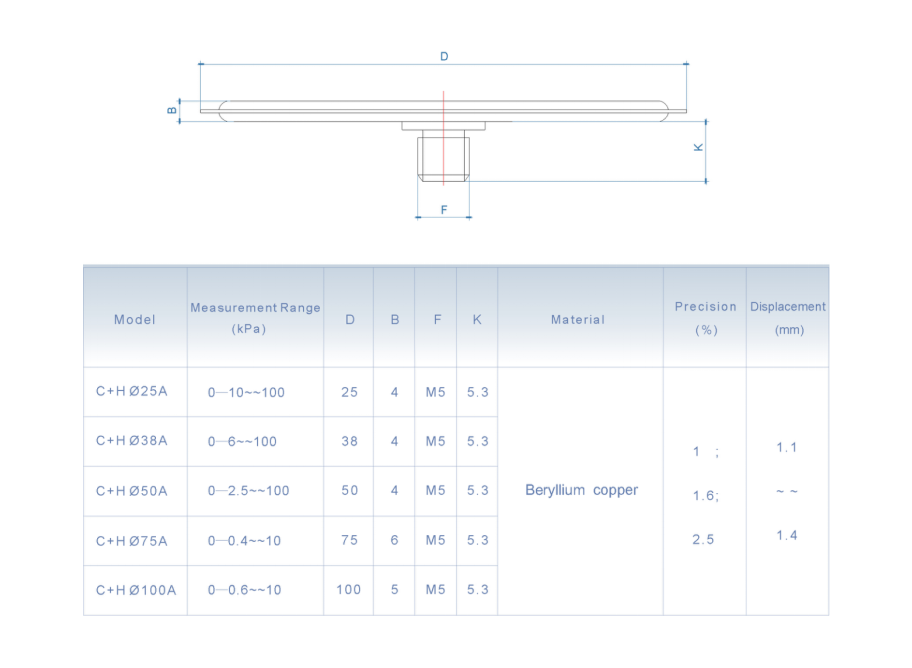
Tire pressure gauges employ varying materials depending on their construction. Pencil-type gauges utilize a spring mechanism housed within a steel or brass casing, chosen for its corrosion resistance and durability. The spring itself is typically manufactured from high-carbon steel, heat-treated for elasticity and resistance to permanent deformation. Digital gauges rely on strain gauge sensors – small resistive elements bonded to a flexible diaphragm, often made of stainless steel or aluminum alloy. The sensor's resistance changes proportionally to applied pressure. Dial gauges employ a Bourdon tube, commonly made from beryllium copper alloy or steel, selected for its elasticity and ability to withstand cyclical stress. Manufacturing processes differ significantly. Pencil gauges involve precision machining of the casing, spring calibration, and assembly. Digital gauges require semiconductor fabrication of the strain gauge sensor, circuit board assembly, and software calibration. Dial gauges involve forming the Bourdon tube through specialized bending processes, followed by mechanical linkage assembly and dial calibration. Key parameter control includes spring constant in pencil gauges, sensor linearity in digital gauges, and tube forming precision in dial gauges. Material compatibility, particularly with exposure to road salts and moisture, is crucial for long-term reliability. Calibration standards, detailed later, are vital during and after manufacturing.
Performance & Engineering
The performance of a tire pressure gauge is governed by several engineering principles. Force analysis centers on converting the pneumatic pressure within the tire into a mechanical displacement, whether via spring compression (pencil), strain gauge resistance change (digital), or Bourdon tube deflection (dial). Environmental resistance is critical; gauges must maintain accuracy across a wide temperature range (-20°C to 60°C), and resist degradation from UV exposure and road contaminants. Compliance requirements stem from automotive safety standards (SAE J1926 for pencil gauges, SAE J2178 for digital gauges) that define accuracy tolerances and repeatability. Functional implementation varies by gauge type. Pencil gauges rely on a simple spring-and-plunger system, where the plunger extends proportionally to tire pressure. Digital gauges employ analog-to-digital conversion to display pressure on an LCD screen. Dial gauges use a mechanical linkage to translate tube deflection into pointer movement on the dial. A key performance metric is hysteresis – the difference in readings obtained when approaching a pressure from above versus below. Minimizing hysteresis ensures consistent and reliable measurements. The sealing mechanism, where the gauge connects to the tire valve stem, must provide a leak-proof seal during measurement.
Technical Specifications
| Gauge Type | Accuracy | Pressure Range (PSI) | Resolution (PSI) |
|---|---|---|---|
| Pencil | ±2 PSI | 0-60 PSI | 1 PSI |
| Digital | ±0.5 PSI | 0-100 PSI | 0.1 PSI |
| Dial | ±1.5 PSI | 0-70 PSI | 0.5 PSI |
| Digital (High Accuracy) | ±0.2 PSI | 0-150 PSI | 0.01 PSI |
| Heavy Duty Pencil | ±3 PSI | 0-80 PSI | 1 PSI |
| Truck/RV Dial | ±2 PSI | 0-120 PSI | 1 PSI |
Failure Mode & Maintenance
Tire pressure gauges are susceptible to several failure modes. Pencil gauges can experience spring fatigue, leading to inaccurate readings or a stuck plunger. Corrosion within the mechanism is also common. Digital gauges can fail due to battery depletion, sensor drift, or circuit board damage from moisture ingress. Dial gauges are prone to Bourdon tube rupture from overpressure, mechanical linkage wear, and dial face damage. Failure analysis reveals that inaccurate readings often stem from calibration drift, particularly after exposure to extreme temperatures or shocks. Leakage around the valve stem connection can also introduce errors. Preventative maintenance includes regular calibration (at least annually), battery replacement for digital gauges, and physical inspection for damage. For pencil gauges, lubricating the plunger with silicone grease can improve smoothness. For dial gauges, avoid dropping the gauge, as this can damage the delicate internal mechanism. Storage in a clean, dry environment minimizes corrosion. If a gauge consistently provides inaccurate readings after calibration, it should be replaced. Understanding the limitations of each gauge type and performing regular checks are crucial for reliable performance.
Industry FAQ
Q: What is the impact of temperature on tire pressure gauge readings?
A: Temperature significantly affects both tire pressure and gauge accuracy. Colder temperatures decrease tire pressure, while warmer temperatures increase it. Gauge accuracy can also be affected; digital gauges may exhibit drift at extreme temperatures, and mechanical gauges can experience changes in spring tension or tube elasticity. It's best to check tire pressure when tires are cold (before driving) to obtain a baseline reading and account for temperature variations later.
Q: How often should a tire pressure gauge be calibrated?
A: A tire pressure gauge should be calibrated at least annually, or more frequently if it’s used heavily or exposed to harsh conditions. Calibration ensures the gauge meets its specified accuracy tolerances. Professional calibration services utilize NIST-traceable standards for precise verification and adjustment.
Q: What's the difference between PSI, bar, and kPa and how do I convert between them?
A: PSI (pounds per square inch), bar, and kPa (kilopascals) are different units of pressure. 1 PSI is approximately equal to 0.06895 bar or 6.895 kPa. Most digital gauges allow you to switch between these units. Conversion charts are readily available online for manual calculations.
Q: What causes a tire pressure gauge to give inconsistent readings?
A: Inconsistent readings can be caused by several factors, including a faulty gauge, a leaking valve stem on the tire, improper gauge seating on the valve stem, or a temporary pressure fluctuation within the tire. Ensure a tight seal between the gauge and valve stem and repeat the measurement several times to verify consistency.
Q: Are digital tire pressure gauges always more accurate than analog (dial or pencil) gauges?
A: Not necessarily. While digital gauges can offer higher accuracy and resolution, a well-maintained and calibrated analog gauge can be perfectly reliable. The accuracy of any gauge depends on its manufacturing quality, calibration, and overall condition. A cheap digital gauge may be less accurate than a high-quality dial gauge.
Conclusion
Accurately reading a tire pressure gauge is a fundamental skill for vehicle maintenance and safety. The principles governing gauge operation, from the mechanical displacement in pencil and dial gauges to the electronic transduction in digital gauges, demand an understanding of material science, force analysis, and calibration procedures. Selecting the appropriate gauge for the application, based on pressure range, accuracy requirements, and environmental conditions, is crucial.
Regular maintenance, including calibration and physical inspection, ensures long-term reliability. By adhering to best practices and understanding potential failure modes, technicians and vehicle owners can maintain optimal tire inflation, maximizing fuel efficiency, enhancing vehicle handling, and prolonging tire lifespan. The continued development of more accurate and durable tire pressure gauge technologies will further contribute to improved vehicle safety and performance.
 English
  Arabic
  China
China  China (Taiwan)
  Danish
  Dutch
Dutch  French
  German
  Greek
Greek  Hindi
Hindi  Indonesian
  Italian
  Japanese
  Korean
  Latin
Latin  Polish
  Portuguese
  Russian
  Spanish
  Turkish