
Apr . 01, 2024 17:55 Back to list
Tire Pressure Gauge how does tire pressure gauge work Performance Analysis
Introduction
Tire pressure gauges are fundamental tools in automotive maintenance and safety, employed to accurately measure the air pressure within pneumatic tires. Their technical position lies within the broader vehicle maintenance and diagnostics chain, impacting fuel efficiency, tire lifespan, and overall vehicle handling. These devices range from simple, mechanical designs to sophisticated digital instruments, all operating on the principle of pressure equalization. Core performance metrics revolve around accuracy, repeatability, and durability under diverse operating conditions – varying temperatures, exposure to road contaminants, and repeated use. Historically, gauges relied solely on mechanical indicators; contemporary gauges often incorporate electronic pressure sensors and digital displays, offering enhanced precision and features like memory recall and unit switching (PSI, BAR, kPa). A critical pain point in the industry is ensuring gauge accuracy remains consistent over time and across different operating environments, as inaccurate readings can lead to under- or over-inflation, both detrimental to tire health and safety.
Material Science & Manufacturing
The construction of tire pressure gauges relies on a variety of materials, each selected for specific properties. The gauge body is commonly manufactured from brass (C36000 – free-cutting brass is prevalent due to its machinability) or stainless steel (304/316 series for corrosion resistance). The Bourdon tube, the core sensing element in mechanical gauges, is typically made from spring steel (e.g., AISI 1095) which exhibits high elasticity and yield strength. The internal mechanisms, including gears and linkages, are generally constructed from hardened steel alloys for wear resistance. Digital gauges incorporate silicon piezoresistive pressure sensors, encapsulated in stainless steel housings for protection. Manufacturing processes vary depending on the gauge type. Mechanical gauges involve precision bending and forming of the Bourdon tube, followed by annealing to relieve stress and enhance elasticity. Critical parameter control during Bourdon tube manufacturing includes dimensional accuracy (tube diameter, wall thickness) and heat treatment temperatures. Digital gauges require semiconductor fabrication processes for the pressure sensor, followed by assembly and calibration. Surface treatments like nickel plating are common on brass components to inhibit corrosion. Calibration is paramount; gauges are typically calibrated against a traceable standard (National Institute of Standards and Technology - NIST) to ensure accuracy within specified tolerances. Quality control includes leak testing, linearity checks, and hysteresis assessments.
Performance & Engineering
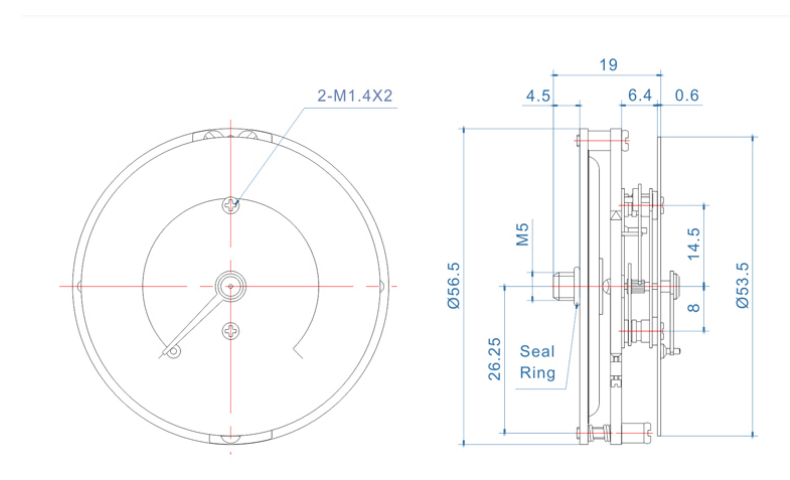
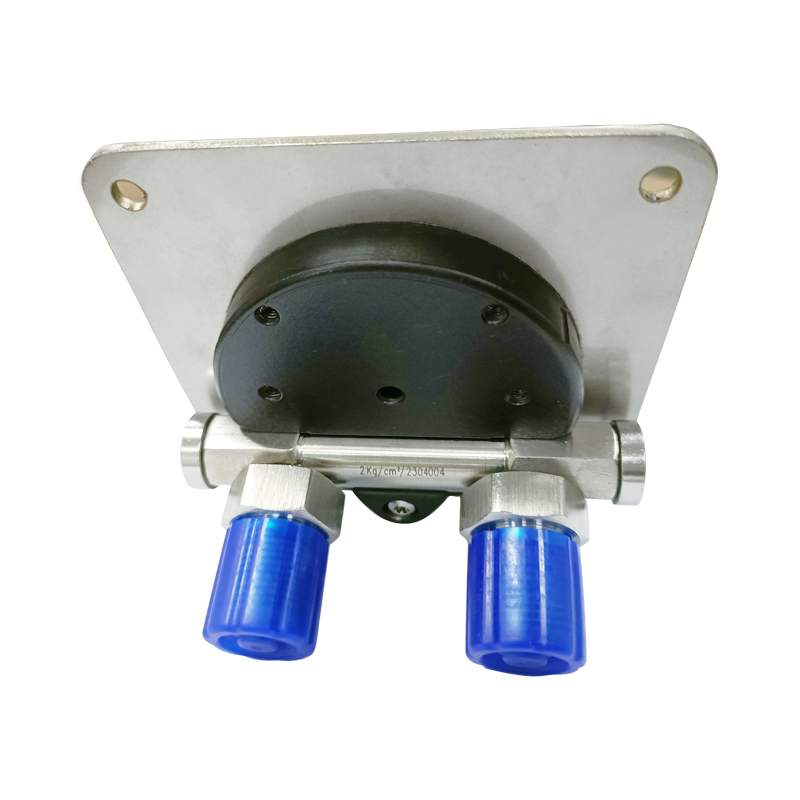
The performance of a tire pressure gauge is fundamentally governed by the principles of fluid mechanics and material science. In mechanical gauges, the applied tire pressure exerts a force on the Bourdon tube, causing it to straighten. This movement is mechanically linked to a pointer that indicates the pressure on a calibrated scale. The engineering challenge lies in ensuring a linear relationship between tube deflection and pressure, minimizing hysteresis (the difference in readings for increasing and decreasing pressure), and compensating for temperature effects. Force analysis focuses on the stress distribution within the Bourdon tube, ensuring it remains within its elastic limit to prevent permanent deformation. Environmental resistance is a key consideration. Gauges must withstand temperature fluctuations (-20°C to 80°C is common), exposure to moisture, and potential impacts. Digital gauges leverage the piezoresistive effect of silicon: pressure deforms the silicon diaphragm, altering its electrical resistance, which is then converted to a digital pressure reading. Compliance requirements vary by region, with standards dictating accuracy classes and test methods. For example, automotive manufacturers often specify gauges meeting specific SAE (Society of Automotive Engineers) standards. Functional implementation includes considerations for display readability, user interface design, and battery life (for digital gauges). The sealing mechanism where the gauge connects to the tire valve stem must prevent air leakage and maintain a reliable pressure equalization pathway.
Technical Specifications
| Parameter | Mechanical Gauge (Typical) | Digital Gauge (Typical) | Units |
|---|---|---|---|
| Pressure Range | 0 – 60 PSI | 0 – 100 PSI | PSI |
| Accuracy | ±2% of full scale | ±0.5% of full scale | % |
| Resolution | 1 PSI | 0.1 PSI | PSI |
| Operating Temperature | -10°C to 60°C | -20°C to 80°C | °C |
| Housing Material | Brass/Stainless Steel | ABS Plastic/Stainless Steel | - |
| Bourdon Tube Material (Mechanical) | Spring Steel (AISI 1095) | N/A | - |
Failure Mode & Maintenance
Tire pressure gauges are susceptible to various failure modes. Mechanical gauges can experience Bourdon tube fatigue cracking due to repeated flexing, leading to inaccurate readings or complete failure. Gear train wear and lubrication failure can also cause inaccuracies. Leakage around the valve stem connection is a common issue, often caused by damaged or worn seals (typically rubber or nitrile). Digital gauges can fail due to sensor drift, battery depletion, or electronic component failure. Corrosion of internal contacts can also lead to intermittent or inaccurate readings. A common failure is the sticking of the mechanical linkage in a mechanical gauge, preventing accurate readings. Maintenance for mechanical gauges involves periodic calibration (at least annually) and lubrication of moving parts. Valve stem seals should be inspected and replaced if damaged. For digital gauges, battery replacement is essential. Avoid dropping or subjecting the gauge to severe impacts. Regularly cleaning the gauge with a mild detergent can prevent corrosion. Calibration should be performed using a NIST-traceable standard. When storing gauges, avoid exposing them to extreme temperatures or direct sunlight. If a gauge consistently provides readings significantly different from a known standard, it should be discarded or professionally repaired.
Industry FAQ
Q: What is the significance of gauge accuracy and how is it determined?
A: Gauge accuracy directly impacts tire safety and performance. Incorrect pressure readings can lead to over- or under-inflation. Accuracy is typically expressed as a percentage of the full scale range (e.g., ±2%). It's determined by calibrating the gauge against a known pressure standard traceable to NIST and comparing the gauge's readings to the standard across its entire range.
Q: How does temperature affect tire pressure gauge readings?
A: Temperature affects both the tire pressure and the gauge itself. Cold temperatures decrease tire pressure, while warmer temperatures increase it. Mechanical gauges can also experience dimensional changes due to temperature, affecting the Bourdon tube's elasticity. Digital gauges are typically temperature-compensated, but extreme temperatures can still introduce minor errors.
Q: What is the typical lifespan of a tire pressure gauge?
A: The lifespan varies depending on usage and quality. Mechanical gauges, if properly maintained, can last for many years. Digital gauges typically have a lifespan of 3-5 years, limited by battery life and potential electronic component failure. Regular calibration is crucial for extending the lifespan and ensuring accuracy.
Q: What materials are best suited for tire pressure gauge construction in corrosive environments?
A: Stainless steel (316 series) is the preferred material for components exposed to corrosive environments, such as those near saltwater or road salt. Nickel plating on brass components can also provide enhanced corrosion resistance. Avoid gauges with significant amounts of aluminum, as it’s prone to corrosion.
Q: What is the difference between a pencil tire gauge and a digital tire gauge in terms of reliability?
A: Pencil tire gauges are simple and inexpensive but less accurate and reliable. They're susceptible to parallax errors and mechanical wear. Digital gauges generally offer higher accuracy, repeatability, and features like memory recall, but rely on battery power and electronic components which can fail. For critical applications, a calibrated digital gauge is preferred.
Conclusion
Tire pressure gauges, despite their apparent simplicity, are critical instruments requiring careful consideration of material science, manufacturing precision, and performance characteristics. The selection of appropriate materials – from spring steel for Bourdon tubes to silicon for digital sensors – directly impacts accuracy and durability. Understanding potential failure modes, such as fatigue cracking, corrosion, and calibration drift, is vital for ensuring reliable operation and maintaining optimal tire performance and safety.
Looking forward, advancements in sensor technology and materials science will likely lead to even more accurate, robust, and user-friendly tire pressure gauges. Integration with vehicle telematics systems and automated tire inflation technologies is also expected to increase, further enhancing vehicle safety and efficiency. Regular calibration and adherence to industry standards remain paramount for maximizing the lifespan and ensuring the reliability of these essential tools.
 English
  Arabic
  China
China  China (Taiwan)
  Danish
  Dutch
Dutch  French
  German
  Greek
Greek  Hindi
Hindi  Indonesian
  Italian
  Japanese
  Korean
  Latin
Latin  Polish
  Portuguese
  Russian
  Spanish
  Turkish