
Apr . 01, 2024 17:55 Back to list
Tire Pressure Gauge how to check tire pressure with gauge Performance Analysis
Introduction
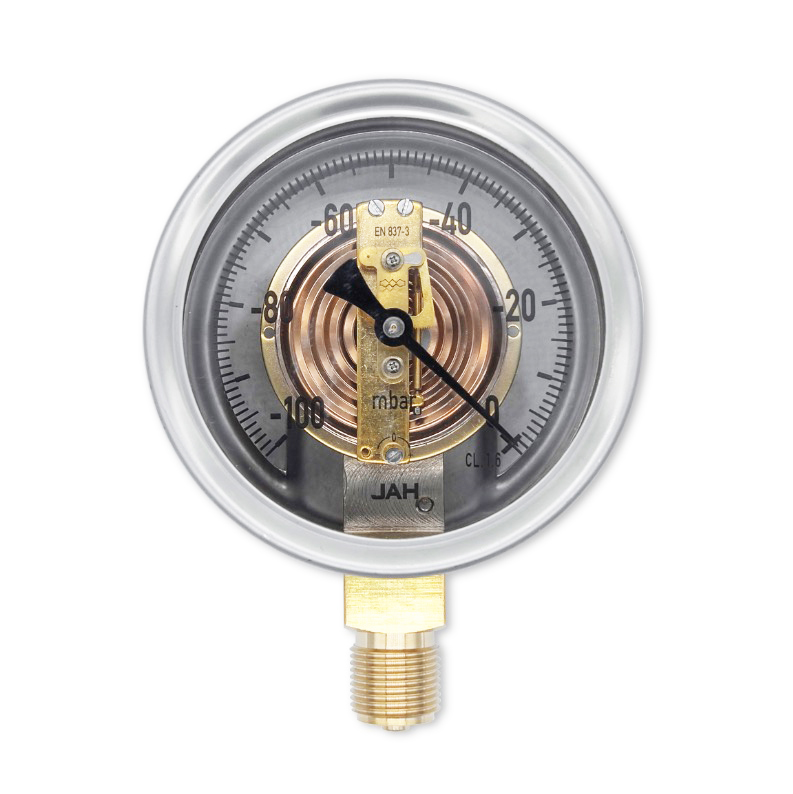
Tire pressure gauges are critical instruments used to assess the air pressure within pneumatic tires. Their technical position within the automotive maintenance chain is foundational – accurate tire inflation directly impacts vehicle safety, fuel efficiency, and tire lifespan. While seemingly simple, these gauges rely on established principles of pneumatics and material science. The core performance characteristic, accuracy, is typically measured in PSI (pounds per square inch), kPa (kilopascals), or Bar, and is paramount for effective tire management. Underinflation leads to increased rolling resistance, reduced fuel economy, and accelerated tire wear, increasing the risk of tire failure due to heat buildup. Overinflation results in a harsh ride, reduced traction, and increased susceptibility to impact damage. The selection of an appropriate gauge, understanding its operating principles, and implementing a consistent checking procedure are all vital for maintaining optimal tire performance and safety.
Material Science & Manufacturing
The construction of tire pressure gauges incorporates a variety of materials selected for specific properties. Gauge housings are commonly manufactured from stainless steel, aluminum alloys, or durable polymers like ABS. Stainless steel provides corrosion resistance and structural integrity. Aluminum alloys offer a lighter weight alternative. Polymers provide impact resistance and cost-effectiveness. The internal mechanisms utilize materials like beryllium copper, phosphor bronze, and specialized elastomers. Beryllium copper is often used in Bourdon tubes (in analog gauges) due to its high elasticity and resistance to fatigue. Phosphor bronze is employed in diaphragms and other sensing elements. Elastomers, specifically nitrile rubber or EPDM, are critical for sealing components and ensuring accurate readings. The manufacturing process for analog gauges involves forming the Bourdon tube through a precise bending and heat-treating process. Digital gauges rely on semiconductor pressure sensors, fabricated using micro-electromechanical systems (MEMS) technology. This involves etching pressure-sensitive diaphragms onto silicon wafers. Calibration is a critical step in manufacturing, utilizing NIST-traceable standards to ensure accuracy across the measurement range. Key parameter control includes maintaining tight tolerances on component dimensions, material hardness, and surface finish. Quality control involves leak testing, accuracy verification, and durability testing.
Performance & Engineering
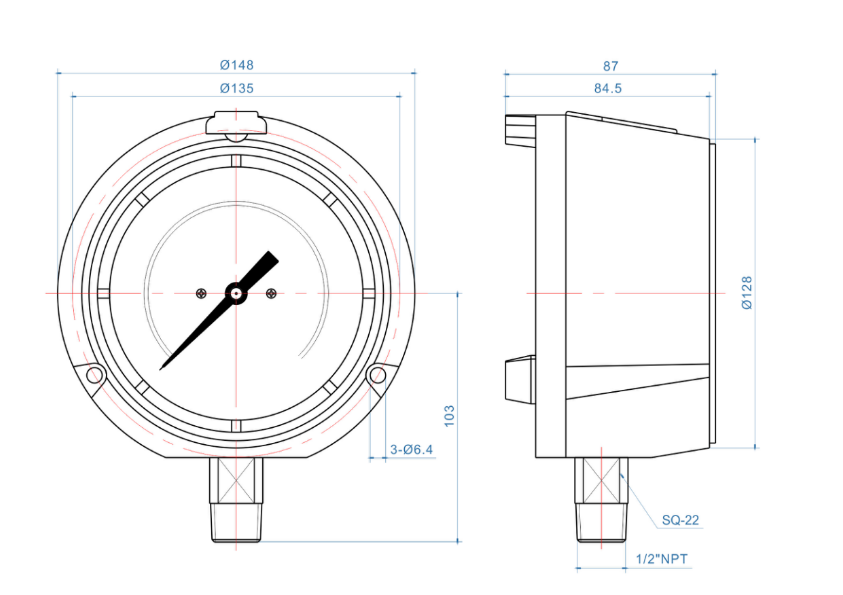
The fundamental principle behind tire pressure gauge operation is the conversion of pneumatic pressure into a quantifiable mechanical or electrical signal. Analog gauges utilize a Bourdon tube – a curved, flattened tube that straightens proportionally to the internal pressure. This movement is mechanically linked to a pointer indicating the pressure on a calibrated scale. Digital gauges employ pressure transducers, often utilizing MEMS technology. These transducers convert pressure into an electrical signal, which is then digitized and displayed on an LCD screen. Force analysis focuses on the stress distribution within the Bourdon tube or diaphragm, ensuring they remain within their elastic limits to prevent permanent deformation and inaccurate readings. Environmental resistance is critical, as gauges are often used in outdoor conditions. Considerations include temperature sensitivity (pressure readings are affected by temperature), humidity resistance (to prevent corrosion), and protection against dust and debris. Compliance requirements vary by region but generally involve adherence to industry standards for accuracy and safety. Functional implementation requires a secure connection to the tire valve stem to prevent air leakage during measurement. The gauge must also be designed to withstand the typical pressures encountered in automotive tires (typically 30-50 PSI, but can exceed 100 PSI in certain applications).
Technical Specifications
| Parameter | Analog Gauge (Typical) | Digital Gauge (Typical) | Accuracy |
|---|---|---|---|
| Pressure Range | 0-60 PSI / 0-4.14 Bar | 0-150 PSI / 0-10.34 Bar | ± 1.5% of full scale |
| Resolution | 1 PSI | 0.1 PSI | N/A |
| Housing Material | Stainless Steel / ABS Plastic | ABS Plastic / Aluminum | N/A |
| Operating Temperature | -20°C to 60°C (-4°F to 140°F) | -10°C to 50°C (14°F to 122°F) | N/A |
| Power Source | None (Mechanical) | Button Cell Battery (e.g., CR2032) | N/A |
| Connection Type | Schrader Valve Compatible | Schrader Valve Compatible | N/A |
Failure Mode & Maintenance
Common failure modes for tire pressure gauges include mechanical failure of the Bourdon tube (in analog gauges), sensor drift (in digital gauges), and leakage around the valve stem connection. Fatigue cracking in the Bourdon tube can occur due to repeated stress cycles, leading to inaccurate readings. Corrosion can also affect the tube’s integrity. Sensor drift in digital gauges is often caused by temperature fluctuations or exposure to harsh chemicals. Leakage around the valve stem connection is typically due to worn or damaged seals. Delamination of the diaphragm within a digital sensor can result in complete failure. Oxidation of internal components can also occur over time, particularly in gauges exposed to humid environments. Maintenance for analog gauges is limited to periodic calibration checks. Digital gauges require battery replacement and occasional cleaning of the sensor port. Proper storage is crucial – avoid exposing gauges to extreme temperatures or direct sunlight. Regularly inspect the gauge for physical damage and ensure the valve stem connection is secure during use. Calibration should be performed annually or whenever accuracy is suspected to be compromised. For digital gauges, avoid prolonged exposure to moisture and ensure the battery compartment is sealed.
Industry FAQ
Q: What is the difference between PSI, kPa, and Bar, and why does it matter for tire pressure?
A: PSI (pounds per square inch), kPa (kilopascals), and Bar are all units of pressure. PSI is commonly used in the US, while kPa and Bar are more prevalent internationally. 1 PSI equals approximately 6.895 kPa and 0.06895 Bar. It matters because using the incorrect unit can lead to significant under or overinflation. Always ensure the pressure indicated on the tire sidewall and the gauge reading are in the same units.
Q: How often should a tire pressure gauge be calibrated?
A: A tire pressure gauge should be calibrated at least annually, or more frequently if it is used extensively or exposed to harsh conditions. Calibration ensures the gauge provides accurate readings, which is vital for maintaining optimal tire performance and safety. NIST-traceable standards should be used for calibration.
Q: What causes a tire pressure gauge to read inaccurately?
A: Several factors can cause inaccuracies, including mechanical damage (Bourdon tube bending or cracking), sensor drift (digital gauges), temperature fluctuations, and corrosion. Also, a poor seal between the gauge and the valve stem can lead to inaccurate readings.
Q: Can a digital tire pressure gauge be affected by extreme temperatures?
A: Yes, extreme temperatures can affect the accuracy of digital gauges. Most digital gauges have an operating temperature range specified by the manufacturer. Outside of this range, the sensor readings may be unreliable. The internal electronics can also be affected by extreme heat or cold.
Q: What is the proper technique for checking tire pressure with a gauge?
A: First, ensure the tires are cold (not driven on for at least three hours). Remove the valve cap, firmly press the gauge onto the valve stem ensuring a tight seal, and hold it in place until the reading stabilizes. Read the pressure displayed on the gauge and compare it to the recommended pressure indicated on the tire sidewall or vehicle door jamb. Replace the valve cap securely.
Conclusion
Accurate tire pressure measurement, facilitated by reliable tire pressure gauges, is foundational to vehicle safety, operational efficiency, and tire longevity. The interplay of material science – from the elasticity of beryllium copper in analog gauges to the sensitivity of silicon MEMS sensors in digital versions – dictates gauge performance. Understanding the principles of operation, the potential failure modes, and the importance of regular calibration is paramount for professionals and consumers alike.
Future developments in tire pressure gauge technology will likely focus on increased accuracy, wireless connectivity (e.g., Bluetooth integration with vehicle monitoring systems), and improved durability. The integration of smart features, such as automatic pressure adjustment and real-time data logging, could further enhance tire management practices. Adherence to international standards and rigorous quality control procedures will remain critical for ensuring the reliability and safety of these essential instruments.
 English
  Arabic
  China
China  China (Taiwan)
  Danish
  Dutch
Dutch  French
  German
  Greek
Greek  Hindi
Hindi  Indonesian
  Italian
  Japanese
  Korean
  Latin
Latin  Polish
  Portuguese
  Russian
  Spanish
  Turkish