
Apr . 01, 2024 17:55 Back to list
Tire Pressure Gauge how to read tire pressure gauge Performance Analysis
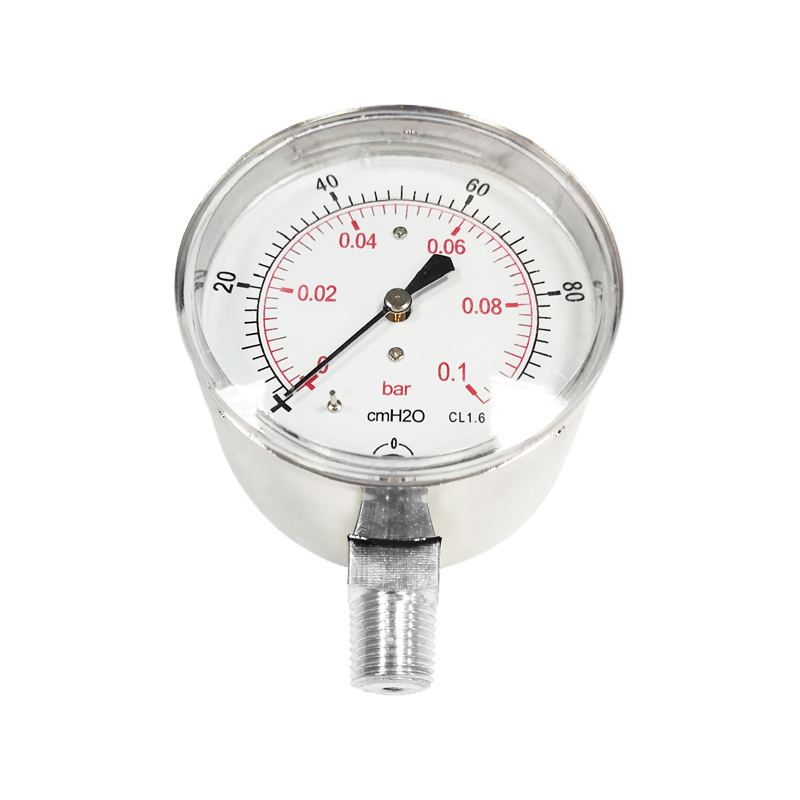
Introduction
A tire pressure gauge is an instrument used to measure the air pressure within pneumatic tires. Its technical position within the automotive maintenance chain is foundational, directly impacting vehicle safety, fuel efficiency, and tire longevity. Accurate tire pressure is critical for maintaining optimal contact patch, minimizing rolling resistance, and preventing premature tire wear. Gauges range from simple mechanical designs to sophisticated digital models. Core performance metrics center around accuracy (typically ±1 PSI), repeatability, and durability under frequent use and potential environmental stressors. Underinflation and overinflation are significant concerns within the automotive industry, leading to compromised handling, increased fuel consumption, and elevated risk of tire failure. The prevalence of Tire Pressure Monitoring Systems (TPMS) has increased the demand for reliable and accurate tire pressure measurement, both for system validation and routine maintenance checks. Proper gauge operation and interpretation are paramount, as errors can negate the benefits of a correctly functioning TPMS or skilled manual inspection.
Material Science & Manufacturing
The construction of a typical tire pressure gauge involves several materials and manufacturing processes. Mechanical gauges commonly utilize a Bourdon tube, fabricated from spring steel (typically high-carbon steel, such as SAE 1095) known for its elasticity and resistance to permanent deformation. The Bourdon tube's material selection is critical; the steel undergoes heat treatment – hardening and tempering – to achieve a specific yield strength and tensile strength necessary for accurate pressure transduction. The gauge casing is often manufactured from brass (CZ132, a leaded brass) or aluminum alloy (6061-T6) via die-casting or CNC machining. These materials provide corrosion resistance and structural integrity. The gauge face, often featuring printed markings, is typically made of polycarbonate or acrylic for clarity and durability. Digital gauges incorporate a pressure sensor, frequently utilizing piezoresistive silicon technology. The silicon chip undergoes microfabrication techniques involving doping and etching to create the sensitive element. The sensor is encapsulated in a protective housing made of ABS plastic or a similar polymer. Manufacturing processes include calibration against NIST-traceable standards to ensure accuracy. Sealing is crucial, utilizing O-rings made of nitrile rubber (NBR) or Viton (fluoroelastomer) to prevent air leakage and maintain gauge functionality. Quality control encompasses pressure testing, leak detection, and visual inspection at various stages of production. The spring steel's metallurgical structure is paramount, influencing its hysteresis and long-term accuracy. The manufacturing precision of the Bourdon tube dictates the linear relationship between pressure and gauge deflection.
Performance & Engineering
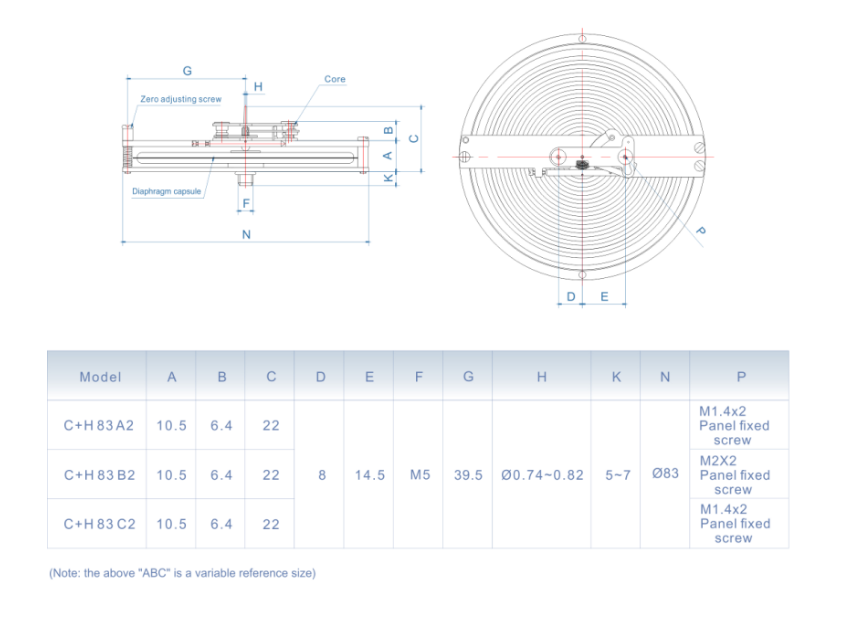
The core engineering principle behind a tire pressure gauge is the conversion of pneumatic pressure into a measurable mechanical or electrical signal. In mechanical gauges, the expanding and contracting motion of the Bourdon tube is directly linked to the gauge pointer via a series of gears and linkages. Force analysis reveals that the force exerted by the pressurized air within the tube is proportional to the pressure. The linkage system is engineered to amplify this force and translate it into angular displacement of the pointer. Digital gauges employ a pressure transducer to convert pressure into an electrical signal, typically a change in resistance (piezoresistive effect). This signal is then amplified, digitized, and displayed on an LCD screen. Environmental resistance is a critical performance factor. Gauges must operate accurately across a wide temperature range (-20°C to 60°C) and withstand exposure to moisture, dust, and automotive fluids. Compliance requirements vary by region. In the US, adherence to SAE J1926 standards is common. European standards include EN 13146. Functional implementation relies on careful calibration. Calibration involves applying known pressures and adjusting the gauge's mechanism or software to ensure accurate readings. Accuracy is often specified as a percentage of full scale, with higher-quality gauges exhibiting lower error margins. Fatigue analysis is vital for mechanical gauges, assessing the Bourdon tube's resistance to repeated flexing and stress. The materials used in the gauge’s construction are selected based on their fatigue strength and corrosion resistance.
Technical Specifications
| Parameter | Typical Range (PSI) | Accuracy (±PSI) | Resolution (PSI) | Operating Temperature (°C) | Housing Material |
|---|---|---|---|---|---|
| Mechanical Pencil Gauge | 0-60 | 1 | 0.5 | -10 to 50 | Brass/Plastic |
| Digital Stick Gauge | 0-100 | 0.5 | 0.1 | -20 to 60 | ABS Plastic |
| High-Pressure Digital Gauge | 0-150 | 1 | 0.1 | -10 to 50 | ABS Plastic/Aluminum |
| Heavy-Duty Mechanical Gauge | 0-80 | 2 | 1 | -20 to 60 | Steel/Rubber |
| Pencil Type Digital Gauge | 0-50 | 0.3 | 0.1 | -10 to 50 | ABS Plastic |
| Truck/Heavy Vehicle Gauge | 0-120 | 1.5 | 0.5 | -20 to 60 | Steel/Rubber |
Failure Mode & Maintenance
Common failure modes in tire pressure gauges include mechanical failure of the Bourdon tube (in mechanical gauges), sensor drift (in digital gauges), leakage through seals, and inaccurate calibration. Fatigue cracking of the Bourdon tube can occur due to repeated flexing, especially if the gauge is subjected to excessive pressure or vibration. Delamination of the gauge face or degradation of the LCD screen can also occur over time. For mechanical gauges, loss of lubrication within the linkage mechanism can lead to sticking or inaccurate readings. Digital gauges are susceptible to battery failure and corrosion of electronic components. Oxidation of internal metal parts can also contribute to failure. Maintenance typically involves periodic calibration against a known standard. For mechanical gauges, this may involve adjusting the linkage mechanism. For digital gauges, recalibration may require specialized software and equipment. Regular inspection of seals and replacement when necessary is crucial to prevent leaks. Avoid dropping or subjecting the gauge to impact, as this can damage the internal components. Storage in a dry environment prevents corrosion. Digital gauges require careful battery management; remove batteries when not in use for extended periods to prevent leakage. Regularly clean the gauge with a soft cloth to remove dirt and debris. For digital gauges, avoid exposing the sensor to harsh chemicals or solvents.
Industry FAQ
Q: What is the difference between a pencil-type gauge and a stick-type gauge?
A: Pencil-type gauges are typically mechanical and compact, often featuring a sliding scale. They’re generally less expensive but potentially less accurate. Stick-type gauges are often digital, providing a larger, easier-to-read display and often higher accuracy, albeit at a greater cost.
Q: How often should a tire pressure gauge be calibrated?
A: Calibration frequency depends on usage and required accuracy. For professional automotive technicians, annual calibration is recommended. For personal use, calibration every 2-3 years is generally sufficient, or whenever discrepancies are suspected.
Q: What does "PSI" stand for, and why is it the common unit of measurement?
A: PSI stands for Pounds per Square Inch. It is the standard unit of pressure measurement in the United States automotive industry due to its historical prevalence and ease of understanding. Other units, such as Bar and kPa, are used in other parts of the world.
Q: Can temperature affect the accuracy of a tire pressure gauge?
A: Yes, temperature can influence accuracy. Both mechanical and digital gauges are affected by temperature fluctuations. Extreme temperatures can alter the elasticity of the Bourdon tube (mechanical) or affect the sensitivity of the pressure sensor (digital). Gauges are typically calibrated at a specific temperature (e.g., 20°C or 68°F).
Q: How can I verify the accuracy of my tire pressure gauge without a calibration standard?
A: While a professional calibration is the most accurate method, you can compare readings with a known reliable gauge. Inflate a tire to a known pressure using a calibrated source (e.g., a professional air compressor with a calibrated display) and then check the reading on your gauge. Consistent discrepancies indicate a need for calibration.
Conclusion
The tire pressure gauge, despite its seemingly simple design, is a crucial instrument for vehicle safety and performance. Understanding the underlying material science, manufacturing processes, and engineering principles is paramount for selecting a gauge appropriate for the application and ensuring accurate readings. Regular calibration and proper maintenance are essential for maintaining gauge reliability and preventing premature failure. The continued development of digital gauges, utilizing advanced sensor technology and improved accuracy, reflects the evolving demands of the automotive industry.
Future advancements in tire pressure gauge technology will likely focus on wireless connectivity, integration with vehicle TPMS, and enhanced data logging capabilities. The increasing adoption of electric vehicles (EVs) will also drive demand for gauges capable of accurately measuring the higher tire pressures often used in EV tires. Standardization of calibration procedures and the development of more robust and durable materials will further enhance the reliability and longevity of these essential instruments. Ultimately, a commitment to precision and quality in the design, manufacture, and maintenance of tire pressure gauges is critical for ensuring road safety and optimizing vehicle performance.
 English
  Arabic
  China
China  China (Taiwan)
  Danish
  Dutch
Dutch  French
  German
  Greek
Greek  Hindi
Hindi  Indonesian
  Italian
  Japanese
  Korean
  Latin
Latin  Polish
  Portuguese
  Russian
  Spanish
  Turkish