
Apr . 01, 2024 17:55 Back to list
Tire Pressure Gauge how to use a tire pressure gauge Performance Analysis

Introduction
A tire pressure gauge is an essential tool for vehicle maintenance, used to measure the air pressure within pneumatic tires. Its technical position within the automotive aftermarket chain resides as a critical component of preventative maintenance, impacting tire lifespan, fuel efficiency, and vehicle safety. Gauges range from simple, analog designs to sophisticated digital models. Core performance characteristics include accuracy, repeatability, and durability, all of which are paramount in ensuring reliable readings. Underinflation leads to increased rolling resistance, reduced fuel economy, and premature tire wear, while overinflation can result in a harsh ride, decreased traction, and increased susceptibility to impact damage. Maintaining correct tire pressure, as specified by the vehicle manufacturer, is therefore vital. This guide provides an in-depth exploration of tire pressure gauge functionality, material science, performance engineering, failure modes, and maintenance procedures.
Material Science & Manufacturing
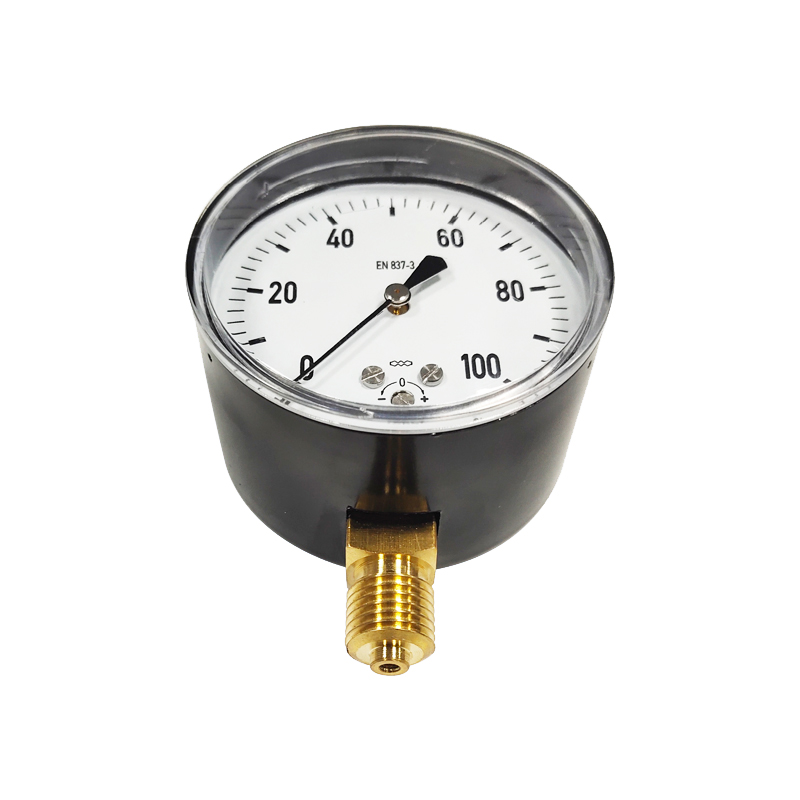
Tire pressure gauges are typically constructed from a combination of materials selected for their durability, elasticity, and resistance to corrosion. The gauge housing is commonly manufactured from stainless steel (304 or 316 grade) or high-impact ABS plastic. Stainless steel provides superior strength and corrosion resistance, particularly important in environments exposed to road salts and moisture. ABS plastic offers a lighter-weight and more cost-effective alternative, often with a textured surface for improved grip. The internal sensing element, crucial for accurate pressure measurement, is usually a Bourdon tube (in analog gauges) or a piezoresistive pressure sensor (in digital gauges). Bourdon tubes are formed from beryllium copper or phosphor bronze, alloys chosen for their elastic properties and ability to return to their original shape after deformation. Piezoresistive sensors utilize silicon-based microelectromechanical systems (MEMS) technology. Manufacturing processes vary depending on the gauge type. Analog gauges involve precision bending and welding of the Bourdon tube, followed by calibration and assembly. Digital gauges require semiconductor fabrication for the sensor, electronic circuit board assembly, and software integration. Parameter control during manufacturing focuses on maintaining tight tolerances in the dimensions of the sensing element and ensuring accurate calibration against a traceable pressure standard. The diaphragm material used in some gauges needs to be chemically compatible with atmospheric constituents and any potential contaminants.
Performance & Engineering
The performance of a tire pressure gauge is fundamentally governed by principles of fluid mechanics and material stress-strain relationships. Force analysis centers on the relationship between tire pressure and the resulting deformation of the sensing element. In Bourdon tubes, the internal pressure exerts a force on the tube walls, causing it to straighten. This movement is mechanically linked to a pointer, indicating the pressure on a calibrated scale. The accuracy of the gauge depends on the precise calibration of this linkage and the elasticity of the tube material. Digital gauges employ a piezoresistive sensor, where pressure-induced stress alters the electrical resistance of the silicon material. This change in resistance is measured by a circuit and converted into a digital readout. Environmental resistance is a critical performance factor. Gauges must operate reliably across a wide temperature range (-40°C to 85°C is typical) and withstand exposure to moisture, dust, and vibrations. Compliance requirements include adherence to SAE J1926 standards for accuracy and repeatability. Functional implementation involves ensuring the gauge provides a clear and unambiguous pressure reading, ideally with both psi and bar scales for international compatibility. The gauge's construction must also minimize parallax error, ensuring accurate readings from various viewing angles.
Technical Specifications
| Parameter | Analog Gauge (Typical) | Digital Gauge (Typical) | Accuracy |
|---|---|---|---|
| Pressure Range | 0-60 psi (0-4.14 bar) | 0-150 psi (0-10.34 bar) | ± 2% of full scale |
| Resolution | 1 psi (0.07 bar) | 0.1 psi (0.007 bar) | Dependent on sensor resolution |
| Housing Material | Stainless Steel / ABS Plastic | ABS Plastic / Aluminum Alloy | N/A |
| Sensing Element | Bourdon Tube (BeCu or PBr) | Piezoresistive MEMS Sensor (Silicon) | N/A |
| Operating Temperature | -20°C to 60°C (-4°F to 140°F) | -10°C to 50°C (14°F to 122°F) | N/A |
| Display Type | Analog Pointer & Scale | LCD Digital Display | N/A |
Failure Mode & Maintenance
Tire pressure gauges are susceptible to several failure modes. Analog gauges can experience Bourdon tube fatigue cracking due to repeated flexing, leading to inaccurate readings or complete failure. Corrosion of the Bourdon tube, especially in harsh environments, can also compromise its elasticity and accuracy. Digital gauges are prone to sensor drift over time, requiring recalibration. Battery failure is a common issue with digital models. Another failure mode is leakage around the air chuck connection, causing pressure loss and inaccurate readings. Maintenance procedures for analog gauges involve periodic visual inspection for damage to the Bourdon tube and housing. If the gauge is dropped, it should be recalibrated. Digital gauges require battery replacement and periodic sensor recalibration. The air chuck should be cleaned regularly to remove dirt and debris. To prevent corrosion, gauges should be stored in a dry environment. Regular calibration against a certified pressure standard is crucial for maintaining accuracy, especially in professional automotive environments. A significant failure mode is the inaccurate reading caused by a damaged or malfunctioning internal mechanism, which can lead to incorrect tire inflation and compromise vehicle safety.
Industry FAQ
Q: What is the difference between a pencil-type gauge and a digital gauge in terms of accuracy and long-term reliability?
A: Pencil-type gauges, while affordable and portable, generally exhibit lower accuracy (±3-5% of full scale) and are more susceptible to mechanical damage and calibration drift. Digital gauges, utilizing piezoresistive sensors, typically offer higher accuracy (±1-2% of full scale) and greater stability over time. However, they rely on battery power and electronic components, which can be prone to failure. For critical applications demanding precise and consistent readings, a calibrated digital gauge is recommended, but regular battery checks and recalibration are essential.
Q: How often should a tire pressure gauge be calibrated, and what is the calibration process?
A: Calibration frequency depends on usage and application. For personal use, annual calibration is recommended. In professional settings, calibration should be performed every six months or after any significant impact. The calibration process involves comparing the gauge's readings against a certified pressure standard using a calibrated pressure controller. Adjustments are made internally to ensure the gauge's output matches the standard across its entire pressure range.
Q: What materials are best suited for the gauge's housing to prevent corrosion in harsh environments?
A: Stainless steel (304 or 316 grade) provides the best corrosion resistance, especially in environments exposed to road salts, moisture, and chemicals. Aluminum alloys offer good corrosion resistance but are more susceptible to galvanic corrosion when in contact with dissimilar metals. ABS plastic is lightweight and cost-effective but provides limited corrosion protection. A protective coating or plating can enhance the corrosion resistance of aluminum alloys.
Q: What are the limitations of using a tire pressure gauge at extremely high or low temperatures?
A: Extreme temperatures can affect the accuracy of both analog and digital gauges. At low temperatures, the viscosity of the fluids within analog gauges can increase, affecting the movement of the Bourdon tube. Digital gauges may experience reduced battery performance and sensor drift. High temperatures can cause thermal expansion of the gauge components, leading to inaccurate readings. Gauge specifications typically include an operating temperature range; exceeding this range can compromise accuracy.
Q: How does the type of air chuck connection (e.g., threaded, clip-on) affect the accuracy and ease of use of the gauge?
A: Threaded chucks generally provide a more secure and leak-proof connection, ensuring accurate readings. However, they can be time-consuming to attach and detach. Clip-on chucks are quicker to use but may be more prone to leakage, especially if the clip is worn or damaged. The chuck’s material and design also influence its durability and resistance to corrosion. A high-quality, properly sealed chuck is essential for accurate pressure measurements.
Conclusion
In conclusion, the tire pressure gauge, despite its seemingly simple function, is a sophisticated instrument governed by fundamental principles of material science, fluid mechanics, and precision engineering. Its accurate operation directly impacts vehicle safety, fuel efficiency, and tire longevity. Understanding the materials used in its construction, the manufacturing processes involved, and the potential failure modes is crucial for selecting a reliable gauge and ensuring its long-term performance. Regular calibration and adherence to recommended maintenance procedures are paramount for maintaining accuracy and preventing premature failure.
The future of tire pressure gauge technology will likely see further integration of wireless connectivity and data logging capabilities, enabling real-time tire pressure monitoring and predictive maintenance alerts. Advanced sensor technologies, such as micro-machined capacitive sensors, may offer improved accuracy and stability. Furthermore, the development of self-calibrating gauges could significantly reduce maintenance requirements and improve user convenience. Continued innovation in materials science will also lead to the development of more durable and corrosion-resistant gauge housings.
 English
  Arabic
  China
China  China (Taiwan)
  Danish
  Dutch
Dutch  French
  German
  Greek
Greek  Hindi
Hindi  Indonesian
  Italian
  Japanese
  Korean
  Latin
Latin  Polish
  Portuguese
  Russian
  Spanish
  Turkish