
Apr . 01, 2024 17:55 Back to list
Tire Pressure Gauge what is the most accurate tire pressure gauge Performance Analysis
Introduction
Tire pressure gauges are critical instruments in automotive maintenance, influencing vehicle safety, fuel efficiency, and tire longevity. While numerous gauges are available, achieving precise and repeatable measurements requires understanding the underlying technologies and potential error sources. This technical guide details the design, material science, performance characteristics, and failure modes of high-accuracy tire pressure gauges, focusing on digital and high-precision analog gauges. The industry faces persistent challenges related to calibration drift, temperature sensitivity, and the impact of gauge construction on measurement accuracy. This guide addresses these concerns, providing a comprehensive understanding for procurement managers, maintenance engineers, and automotive professionals. Core performance is defined by accuracy (±0.5 PSI or better), repeatability (consistent readings within 0.1 PSI), and durability under typical operating conditions.
Material Science & Manufacturing
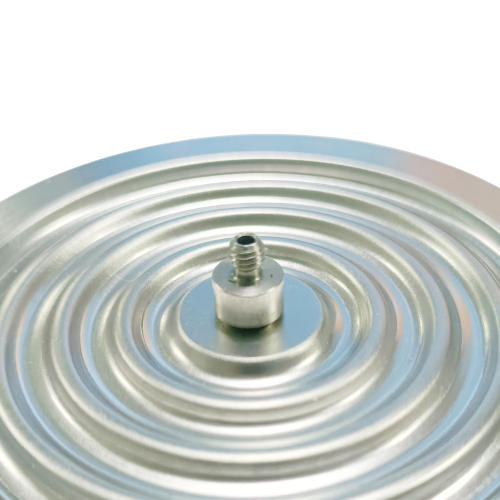
The construction of accurate tire pressure gauges relies on careful material selection and precision manufacturing. Analog gauges typically employ a Bourdon tube, manufactured from beryllium copper or spring steel. Beryllium copper is preferred for its superior elasticity and resistance to fatigue, critical for maintaining calibration over extended use. The tube’s internal diameter and wall thickness are precisely controlled during drawing and annealing processes to ensure linearity and responsiveness. Digital gauges utilize strain gauge technology. These gauges typically use silicon-based strain gauges bonded to a stainless-steel diaphragm. Silicon is selected for its high piezoresistive coefficient – its ability to change electrical resistance under stress. Manufacturing involves semiconductor fabrication techniques including etching, doping, and metallization. The gauge housing is often constructed from ABS plastic or aluminum alloy. Aluminum provides superior durability and shielding against electromagnetic interference. Key manufacturing parameters include the precise calibration of the pressure sensor (either the Bourdon tube’s flex or the strain gauge’s resistance change), assembly tolerances, and rigorous quality control testing at multiple pressure points.
Performance & Engineering
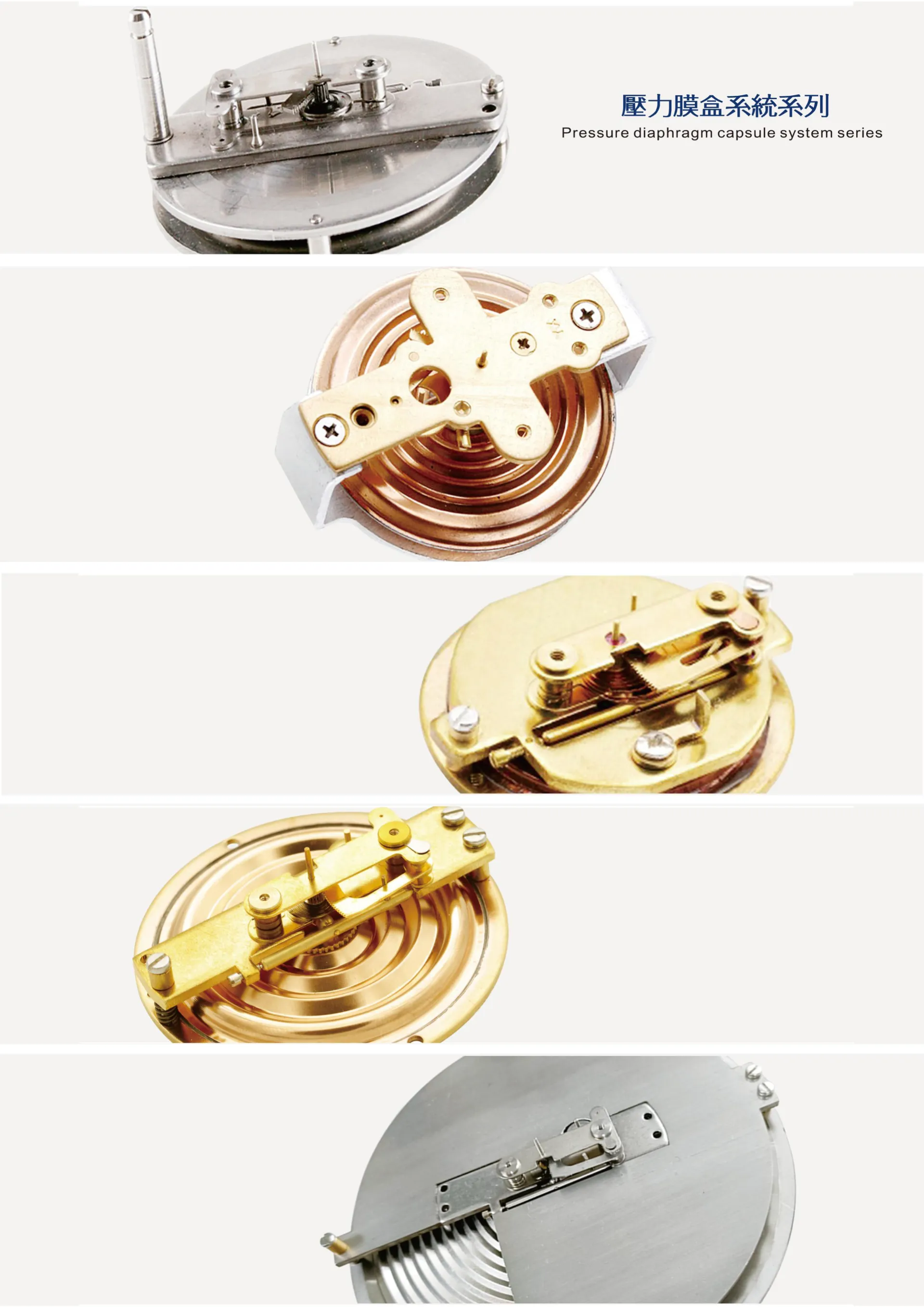
Performance of a tire pressure gauge is dictated by several engineering factors. Force analysis focuses on the relationship between applied pressure and the resulting deformation of the sensing element (Bourdon tube or diaphragm). Finite Element Analysis (FEA) is used during design to optimize the geometry and material properties for maximum sensitivity and linearity. Environmental resistance is crucial, with gauges needing to function accurately across a wide temperature range (-20°C to 60°C). Temperature compensation circuits are employed in digital gauges to minimize drift caused by thermal expansion or contraction of the sensor and electronics. Compliance requirements, such as adherence to SAE J1926 standards, necessitate rigorous testing for accuracy, repeatability, and long-term stability. Digital gauges benefit from incorporating analog-to-digital converters (ADCs) with high resolution (at least 12-bit) to minimize quantization errors. Signal processing algorithms are used to filter noise and improve the stability of the readings. The chuck design – the interface between the gauge and the tire valve stem – is also critical to prevent air leakage and ensure a secure seal.
Technical Specifications
| Parameter | Digital Gauge (High Accuracy) | Analog Gauge (Precision) | Standard Gauge |
|---|---|---|---|
| Accuracy | ±0.5 PSI (0.034 bar) | ±1.0 PSI (0.069 bar) | ±2.0 PSI (0.138 bar) |
| Resolution | 0.1 PSI (0.007 bar) | 0.5 PSI (0.034 bar) | 1.0 PSI (0.069 bar) |
| Pressure Range | 0-60 PSI (0-4.14 bar) | 0-60 PSI (0-4.14 bar) | 0-50 PSI (0-3.45 bar) |
| Operating Temperature | -10°C to 50°C (14°F to 122°F) | -20°C to 60°C (-4°F to 140°F) | 0°C to 40°C (32°F to 104°F) |
| Sensor Type | Silicon Strain Gauge | Bourdon Tube (Beryllium Copper) | Bourdon Tube (Spring Steel) |
| Housing Material | ABS Plastic with Rubber Boot/Aluminum Alloy | Aluminum Alloy/ABS Plastic | ABS Plastic |
Failure Mode & Maintenance
Tire pressure gauges can fail through several mechanisms. Analog gauges are susceptible to fatigue cracking of the Bourdon tube due to repeated flexing. Corrosion, particularly in humid environments, can weaken the tube and affect its calibration. Digital gauges can experience drift in the zero point due to aging of the strain gauges or changes in the amplifier circuitry. Battery failure is a common issue. Electromagnetic interference (EMI) can also introduce noise into the readings. Common failure modes include: 1) Calibration drift – leading to inaccurate readings; 2) Leakage at the chuck – causing pressure loss during measurement; 3) Display malfunction (digital gauges) – due to component failure; 4) Bourdon tube rupture (analog gauges) – rendering the gauge unusable; 5) Corrosion of internal components – impacting accuracy and lifespan. Maintenance includes periodic calibration against a certified pressure standard (traceable to NIST or equivalent), inspection of the chuck for damage or wear, replacement of batteries (digital gauges), and protection from extreme temperatures and corrosive environments. Avoid dropping the gauge, as this can damage the internal sensor.
Industry FAQ
Q: What is the typical calibration cycle for a high-accuracy digital tire pressure gauge?
A: A typical calibration cycle for a high-accuracy digital tire pressure gauge is every 6-12 months, or after a significant impact or exposure to extreme temperatures. Calibration should be performed by a certified calibration laboratory using equipment traceable to national or international standards (e.g., NIST in the US).
Q: How does temperature affect the accuracy of tire pressure readings?
A: Temperature affects tire pressure readings in two ways. First, the air inside the tire expands and contracts with temperature changes, altering the pressure. Second, the gauge itself can be affected by temperature, causing drift in the sensor or electronics. High-quality digital gauges employ temperature compensation to mitigate this effect.
Q: What is the difference between PSI, bar, and kPa units, and why is conversion accuracy important?
A: PSI (pounds per square inch), bar, and kPa (kilopascals) are different units of pressure. 1 PSI ≈ 0.069 bar ≈ 6.895 kPa. Accurate conversion is critical because incorrect conversions can lead to under- or over-inflation of tires, impacting safety and performance. Digital gauges often allow switching between units.
Q: What are the limitations of using a low-cost, analog tire pressure gauge for critical applications?
A: Low-cost, analog tire pressure gauges typically have lower accuracy, repeatability, and durability compared to digital or precision analog gauges. They are more susceptible to calibration drift, temperature effects, and mechanical damage. For critical applications like motorsport or aviation, these limitations are unacceptable.
Q: How can I verify the accuracy of my tire pressure gauge without access to a calibration lab?
A: While a professional calibration is recommended, you can perform a rudimentary check by comparing readings with a known accurate gauge (e.g., a gauge recently calibrated). You can also test the gauge's repeatability by taking multiple readings on the same tire under stable conditions.
Conclusion
Selecting the appropriate tire pressure gauge hinges on understanding the inherent trade-offs between cost, accuracy, and durability. For routine automotive maintenance, a mid-range digital gauge offering ±1 PSI accuracy is often sufficient. However, for applications demanding high precision – such as motorsport, aviation, or performance vehicle tuning – a high-accuracy digital gauge with silicon strain gauge technology and temperature compensation is essential. Regular calibration and proper maintenance are critical to ensuring long-term accuracy and reliability regardless of the gauge type.
The future of tire pressure gauge technology will likely focus on integrating wireless connectivity (Bluetooth or Wi-Fi) for real-time data logging and integration with vehicle monitoring systems. Improvements in sensor technology, such as micro-electromechanical systems (MEMS) pressure sensors, will further enhance accuracy and reduce size and cost. The development of self-calibrating gauges represents another potential avenue for innovation, reducing the need for manual calibration and improving ease of use.
 English
  Arabic
  China
China  China (Taiwan)
  Danish
  Dutch
Dutch  French
  German
  Greek
Greek  Hindi
Hindi  Indonesian
  Italian
  Japanese
  Korean
  Latin
Latin  Polish
  Portuguese
  Russian
  Spanish
  Turkish