
Apr . 01, 2024 17:55 Back to list
Water Pressure Gauge how to read a water pressure gauge Performance Analysis
Introduction
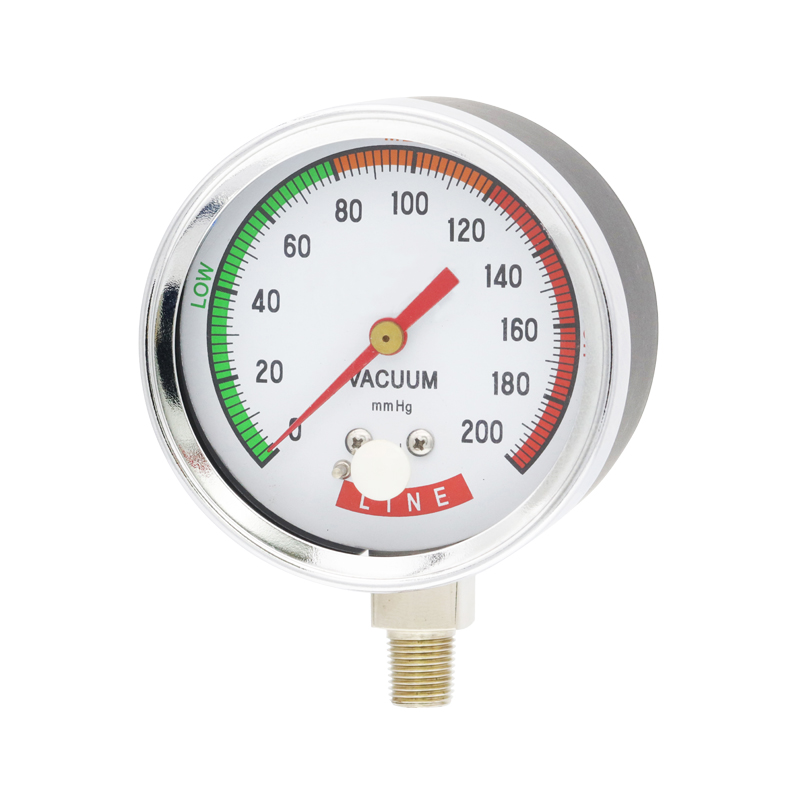
Water pressure gauges are critical instruments in numerous industrial, commercial, and residential applications, providing a visual indication of fluid pressure. They are integral to systems ranging from municipal water distribution and HVAC systems to hydraulic machinery and oil & gas processing. The accurate interpretation of a water pressure gauge reading is paramount for ensuring system efficiency, preventing damage, and maintaining safety. This technical guide provides an in-depth exploration of water pressure gauges, covering their operating principles, common types, reading techniques, potential error sources, and applicable industry standards. A core pain point in many facilities is inaccurate pressure monitoring leading to premature component failure, increased energy consumption, and potential safety hazards. Understanding gauge limitations and proper reading methodology is crucial for mitigating these risks.
Material Science & Manufacturing
Water pressure gauges rely on a combination of materials engineered for durability and accuracy. The Bourdon tube, the core sensing element in many common gauges, is typically manufactured from alloys like beryllium copper, phosphor bronze, or stainless steel (304, 316). Beryllium copper provides excellent elasticity and corrosion resistance, ideal for higher pressure applications. Phosphor bronze offers good corrosion resistance and is cost-effective for lower pressure ranges. Stainless steel provides superior corrosion resistance in harsh environments. The gauge case is commonly constructed from steel, aluminum, or reinforced polymers. Manufacturing processes for the Bourdon tube involve forming a flat metal strip into a curved, flattened tube, followed by heat treatment to relieve stresses and enhance elasticity. Precise annealing is critical for achieving consistent performance. The dial and pointer assembly require precise machining and calibration. The glass or acrylic lens must be sufficiently robust to withstand pressure surges and environmental factors. Sealing materials, like nitrile or Viton o-rings, are vital to prevent leakage and maintain gauge integrity. Chemical compatibility between the sealing material and the process fluid is crucial. Gauge manufacturing requires stringent quality control, including hydrostatic testing to verify leak tightness and accuracy against calibrated standards.
Performance & Engineering
The performance of a water pressure gauge is fundamentally linked to its ability to accurately translate pressure into a measurable deflection. This relies on Hooke's Law, relating stress to strain within the elastic limit of the Bourdon tube material. Gauge accuracy is typically expressed as a percentage of the full-scale range (e.g., ±1% FS). Environmental factors significantly influence performance. Temperature fluctuations can affect the elasticity of the Bourdon tube and the viscosity of the fill fluid (if present), leading to drift in the reading. Vibration can cause parallax errors and premature wear of the movement mechanism. Pressure surges and pulsations can induce fatigue stress on the Bourdon tube, leading to eventual failure. Dampening fluids (e.g., silicone oil or glycerin) are often employed to mitigate the effects of vibration and pulsations. Gauge selection must consider the process fluid's characteristics, including viscosity, corrosivity, and temperature. For viscous fluids, a gauge with a modified Bourdon tube profile or a diaphragm seal may be necessary. Corrosive fluids require gauges constructed from compatible materials (e.g., stainless steel Bourdon tube, PTFE seals). Proper installation is crucial; the gauge should be mounted securely and protected from direct sunlight and extreme temperatures. The system’s force analysis considers the maximum anticipated pressure, including water hammer effects, to ensure the gauge’s capacity is adequate.
Technical Specifications
| Parameter | Units | Typical Range | Accuracy (Full Scale) |
|---|---|---|---|
| Pressure Range | PSI / kPa / Bar | 0-30 PSI / 0-200 kPa / 0-2 Bar to 0-10,000 PSI / 0-690 kPa / 0-690 Bar | ±1% to ±3% |
| Connection Size | NPT / BSP / SAE | 1/8", 1/4", 1/2" | - |
| Case Material | - | Steel, Aluminum, ABS Plastic | - |
| Wetted Material | - | Brass, Stainless Steel (304, 316), Beryllium Copper | - |
| Temperature Range (Process) | °F / °C | -40°F to 250°F / -40°C to 121°C | - |
| Temperature Range (Ambient) | °F / °C | -40°F to 180°F / -40°C to 82°C | - |
Failure Mode & Maintenance
Water pressure gauges are susceptible to several failure modes. Fatigue cracking of the Bourdon tube is common in systems with frequent pressure fluctuations. Corrosion, particularly in aggressive environments, can weaken the Bourdon tube and lead to leaks. Drift in calibration can occur due to temperature effects, aging of the elastic elements, or damage to the movement mechanism. Leakage around the connection can result from worn or damaged seals. Parallax errors due to improper viewing angle are a frequent source of inaccurate readings, although not a 'failure' in the mechanical sense. Maintenance includes regular visual inspection for leaks, corrosion, or physical damage. Periodic calibration against a known pressure standard is essential to ensure accuracy. For gauges filled with fluid, check the fill level and replenish if necessary. Clean the gauge case with a mild detergent to remove dirt and debris. Avoid subjecting the gauge to excessive vibration or shock. If a gauge is found to be inaccurate or damaged, it should be replaced immediately. Preventative maintenance schedules should be implemented based on the operating environment and application criticality.
Industry FAQ
Q: What is the impact of water hammer on pressure gauge accuracy and lifespan?
A: Water hammer, the pressure surge caused by rapid valve closure, can severely impact pressure gauge accuracy and lifespan. The sudden pressure spike exceeds the gauge's normal operating range, potentially causing immediate damage to the Bourdon tube or accelerating fatigue cracking. Repeated water hammer events drastically reduce the gauge’s operational life. Mitigation strategies include installing pressure relief valves, using slow-closing valves, and incorporating surge suppressors into the system.
Q: How does ambient temperature affect pressure gauge readings?
A: Ambient temperature significantly impacts pressure gauge readings. Increased temperatures can cause the Bourdon tube to expand, leading to a slightly higher reading. Conversely, lower temperatures can cause contraction, resulting in a lower reading. Gauges filled with fluid are less susceptible to temperature effects, as the fluid compensates for the expansion and contraction of the Bourdon tube. Calibration should account for the expected operating temperature range.
Q: What are the advantages of using a liquid-filled pressure gauge in a vibrating environment?
A: Liquid-filled pressure gauges (glycerin or silicone oil) offer significant advantages in vibrating environments. The liquid dampens the movement of the internal components, reducing wear and tear and minimizing parallax errors caused by pointer oscillation. This results in more stable readings and extends the gauge's lifespan. Liquid filling also provides lubrication and corrosion protection.
Q: What is the proper technique for reading a pressure gauge to minimize parallax error?
A: To minimize parallax error, view the gauge face directly perpendicular to the gauge scale. Avoid viewing the gauge from an angle, as this will distort the reading. Ensure your line of sight is aligned with the pointer, and read the value at the point where the pointer intersects the scale. Using a mirror behind the gauge can also aid in achieving a perpendicular viewing angle.
Q: What materials should be specified for a pressure gauge used in a corrosive chemical application?
A: For corrosive chemical applications, select a pressure gauge with a wetted material (Bourdon tube, connection) specifically resistant to the chemical. Stainless steel (316) is a common choice for many corrosive fluids, but PTFE-lined gauges or gauges constructed entirely from exotic alloys (e.g., Hastelloy) may be necessary for highly aggressive chemicals. The gauge case and seals should also be constructed from chemically compatible materials.
Conclusion
Accurate and reliable water pressure measurement is critical for maintaining the integrity and efficiency of fluid systems. Understanding the underlying principles of pressure gauge operation, including material science, manufacturing processes, and potential failure modes, is essential for proper selection, installation, and maintenance. Regularly calibrating gauges, considering environmental factors, and implementing preventative maintenance programs are crucial for ensuring long-term accuracy and preventing costly downtime.
The choice of gauge type and materials should be carefully aligned with the specific application requirements, considering fluid compatibility, temperature, pressure range, and vibration levels. Continued advancements in pressure gauge technology, such as digital gauges with enhanced accuracy and remote monitoring capabilities, offer opportunities to further improve system performance and optimize maintenance practices.
 English
  Arabic
  China
China  China (Taiwan)
  Danish
  Dutch
Dutch  French
  German
  Greek
Greek  Hindi
Hindi  Indonesian
  Italian
  Japanese
  Korean
  Latin
Latin  Polish
  Portuguese
  Russian
  Spanish
  Turkish