
Apr . 01, 2024 17:55 Back to list
Water Pressure Gauge how to use a water pressure gauge Performance Analysis
Introduction
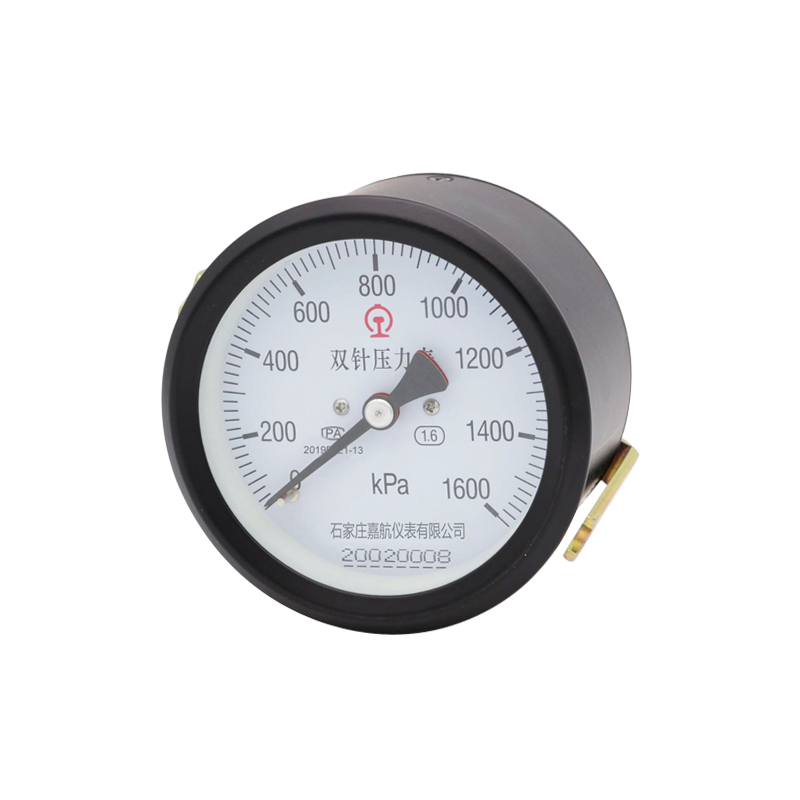
A water pressure gauge is a crucial instrument employed in a multitude of industrial, commercial, and residential applications to measure the static pressure exerted by fluids – primarily water, but also applicable to oils, gases, and other compatible liquids. Its technical position within the water distribution chain is fundamental; it provides essential data for system monitoring, leak detection, pump performance evaluation, and ensuring adherence to operational safety parameters. Modern gauges range from simple analog bourdon tube designs to sophisticated digital models incorporating data logging and remote communication capabilities. Core performance characteristics include accuracy, repeatability, resolution, and resistance to corrosion and pressure surges. The optimal selection and proper use of a water pressure gauge are critical for maintaining system integrity, preventing equipment failure, and optimizing operational efficiency. Understanding the limitations of each gauge type, and appropriate installation practices are key to accurate readings and long-term reliability.
Material Science & Manufacturing
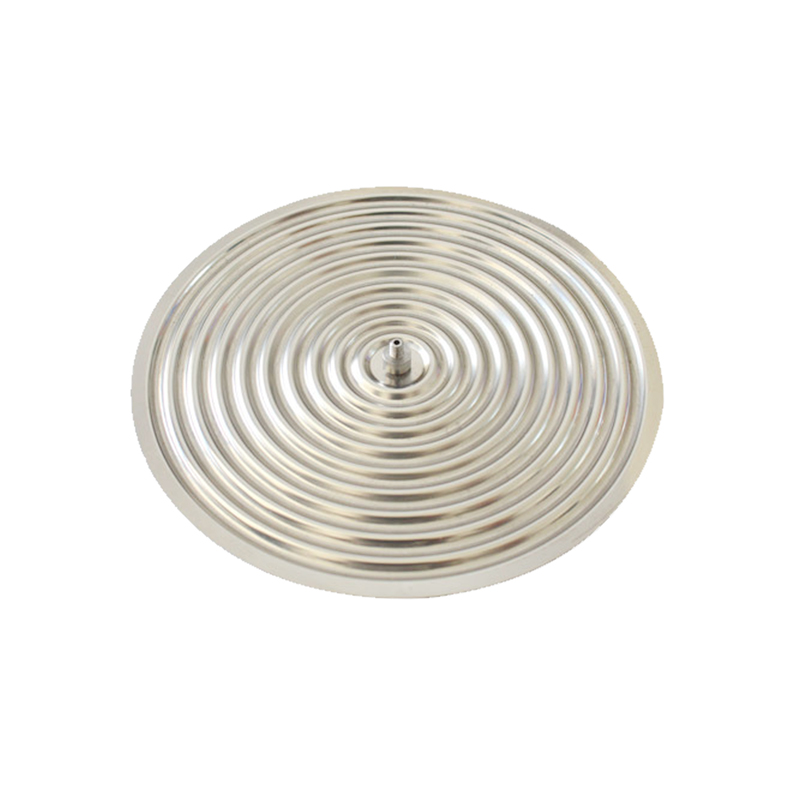
The construction of a typical water pressure gauge involves several key materials. The Bourdon tube, the primary sensing element, is typically manufactured from alloys of copper, beryllium copper, or stainless steel (304 or 316). Copper alloys offer excellent corrosion resistance in many water environments and possess high elasticity. Beryllium copper enhances strength and fatigue life, essential for gauges subjected to cyclical pressure changes. Stainless steel provides superior corrosion resistance, especially in aggressive water conditions or when handling corrosive fluids. The gauge case is often constructed from steel or reinforced plastics. The dial face is typically made of aluminum or plastic, often with a protective lens of polycarbonate or tempered glass. Manufacturing processes vary depending on the gauge type. Bourdon tubes are created through a cold-forming process where a flattened tube is bent into a C-shape or spiral. This shaping induces stress within the material, allowing it to deflect proportionally to the applied pressure. The connection port (typically brass or stainless steel) is often brazed or welded to the Bourdon tube. Assembly involves calibrating the gauge to a known pressure standard, typically using a deadweight tester. Key parameter control during manufacturing includes precise material composition, tube wall thickness uniformity, and accurate calibration to ensure consistent and reliable readings. Manufacturing tolerances directly impact the gauge’s accuracy and lifespan.
Performance & Engineering
The performance of a water pressure gauge is governed by several engineering principles. Force analysis centers on the relationship between the applied pressure, the Bourdon tube’s cross-sectional area, and the resulting stress within the tube. This stress causes the tube to deflect, which is mechanically linked to the pointer mechanism. Environmental resistance is critical; gauges must withstand temperature fluctuations, humidity, and potential vibration. Materials selection plays a key role in mitigating these effects. Compliance requirements, dictated by industry standards (detailed in the footer), specify accuracy classes, testing procedures, and safety standards. Functional implementation requires proper installation – minimizing vibration and ensuring the gauge is oriented correctly to minimize parallax error. Pressure surges (water hammer) can damage gauges; therefore, implementing pulsation dampeners or snubber valves is often necessary in systems prone to rapid pressure changes. Regular calibration is crucial for maintaining accuracy; drift can occur over time due to material fatigue or environmental factors. The gauge’s response time (how quickly it registers pressure changes) is also a key performance metric, especially in dynamic systems.
Technical Specifications
| Pressure Range (psi) | Accuracy (% of full scale) | Connection Size (NPT) | Operating Temperature (°F) |
|---|---|---|---|
| 0-30 | ±3% | 1/8" | -20 to 140 |
| 0-60 | ±2.5% | 1/4" | -40 to 176 |
| 0-100 | ±2% | 1/2" | -20 to 212 |
| 0-200 | ±1.5% | 3/4" | -4 to 248 |
| 0-300 | ±1% | 1" | 20 to 250 |
| 0-500 | ±0.5% | 1.5" | 0 to 284 |
Failure Mode & Maintenance
Water pressure gauges are susceptible to several failure modes. Fatigue cracking of the Bourdon tube is a common issue, particularly in systems experiencing frequent pressure cycles. This is often initiated at stress concentration points, such as the tube bends or weld joints. Corrosion, especially galvanic corrosion if dissimilar metals are used in the construction, can lead to tube failure or obstruction of the sensing mechanism. Delamination of the dial face coating can occur due to UV exposure or chemical attack. Leakage around the connection port is often caused by improper sealing or thread damage. Drift in calibration can result from temperature changes, mechanical shock, or material creep. Maintenance procedures include regular visual inspection for leaks, corrosion, or physical damage. Periodic calibration (annually or as required by specific applications) is essential. The connection port should be tightened appropriately, avoiding over-tightening which can damage the threads. Protecting the gauge from extreme temperatures and vibrations will extend its lifespan. For gauges in harsh environments, consider using protective covers or purging the gauge with a compatible fluid to prevent corrosion. If a gauge exhibits erratic readings or is suspected to be damaged, it should be removed from service immediately and replaced or repaired by a qualified technician.
Industry FAQ
Q: What is the difference between a glycerin-filled and a dry gauge, and when should each be used?
A: Glycerin-filled gauges contain a viscous liquid that dampens the effects of pressure pulsations and vibrations, providing a more stable reading and extending the gauge's lifespan in applications with frequent pressure fluctuations. Dry gauges are simpler and less expensive, suitable for applications with minimal vibration and stable pressure. Glycerin-filled gauges are recommended for pumps, compressors, and hydraulic systems, while dry gauges are often sufficient for general water distribution monitoring.
Q: How does the accuracy class of a pressure gauge affect its suitability for different applications?
A: Accuracy class, expressed as a percentage of full scale, defines the allowable error in the gauge’s reading. Higher accuracy classes (e.g., ±0.25%) are required for critical applications where precise measurement is essential, such as calibration standards or process control. Lower accuracy classes (e.g., ±3%) are acceptable for general monitoring applications where minor variations are not critical.
Q: What steps should be taken to ensure accurate readings from a water pressure gauge?
A: Ensure the gauge is installed correctly – vertically with the connection port facing downwards to prevent sediment buildup. Minimize vibration and pressure pulsations with dampeners or snubbers. Regularly calibrate the gauge against a known standard. Avoid parallax error by viewing the dial face directly. Protect the gauge from extreme temperatures and corrosive environments.
Q: What materials are best suited for a pressure gauge used in a highly corrosive water environment?
A: For highly corrosive environments, gauges constructed with stainless steel (316) for the Bourdon tube, case, and connection port are recommended. Consider a PTFE coating on internal components for added protection. Avoid gauges with brass or copper components that are susceptible to corrosion.
Q: What is the typical lifespan of a water pressure gauge, and what factors can reduce it?
A: The typical lifespan of a well-maintained water pressure gauge is 5-10 years. Factors that can reduce its lifespan include exposure to extreme temperatures, pressure surges, vibration, corrosion, improper installation, and lack of regular calibration and maintenance.
Conclusion
The water pressure gauge remains a vital component in numerous fluid handling systems. Its selection and implementation are predicated on a nuanced understanding of material science, manufacturing processes, and engineering principles. Choosing the appropriate gauge, accounting for the specific application requirements regarding pressure range, accuracy, and environmental conditions, is paramount to ensuring reliable operation and process control. Regular maintenance, including calibration and visual inspection, is essential for maximizing lifespan and preventing costly failures.
Future advancements in pressure gauge technology are likely to focus on wireless connectivity, improved sensor accuracy, and integration with data analytics platforms for predictive maintenance. The trend towards smart gauges capable of self-calibration and remote monitoring will further enhance their utility in complex industrial environments, optimizing performance and reducing downtime. A continued emphasis on materials research and corrosion resistance will also contribute to the longevity and reliability of these critical instruments.
 English
  Arabic
  China
China  China (Taiwan)
  Danish
  Dutch
Dutch  French
  German
  Greek
Greek  Hindi
Hindi  Indonesian
  Italian
  Japanese
  Korean
  Latin
Latin  Polish
  Portuguese
  Russian
  Spanish
  Turkish