
Apr . 01, 2024 17:55 Back to list
Water Pressure Gauge how to use Performance Analysis
Introduction
Water pressure gauges are vital instruments used to measure the hydrostatic pressure exerted by fluids, predominantly water, within a closed system. Their application spans diverse industries including municipal water distribution, industrial process control, HVAC systems, plumbing, and boiler operations. Positioned within the broader instrumentation and control chain, these gauges translate physical pressure into a readable mechanical indication. Core performance characteristics are defined by accuracy (expressed as a percentage of full scale), range (the minimum and maximum pressure the gauge can measure), and connection type (NPT, BSPT, etc.). The gauge’s fundamental principle relies on the deformation of a Bourdon tube, diaphragm, or pressure sensor in response to applied pressure, which is then mechanically linked to a pointer on a calibrated dial. A critical pain point in industrial settings is ensuring consistent and accurate readings to prevent system failures, optimize efficiency, and maintain safety protocols. Incorrect readings can lead to equipment damage, process upsets, and potentially hazardous situations. Selecting the appropriate gauge for the specific application, understanding its limitations, and implementing a regular calibration schedule are paramount.
Material Science & Manufacturing
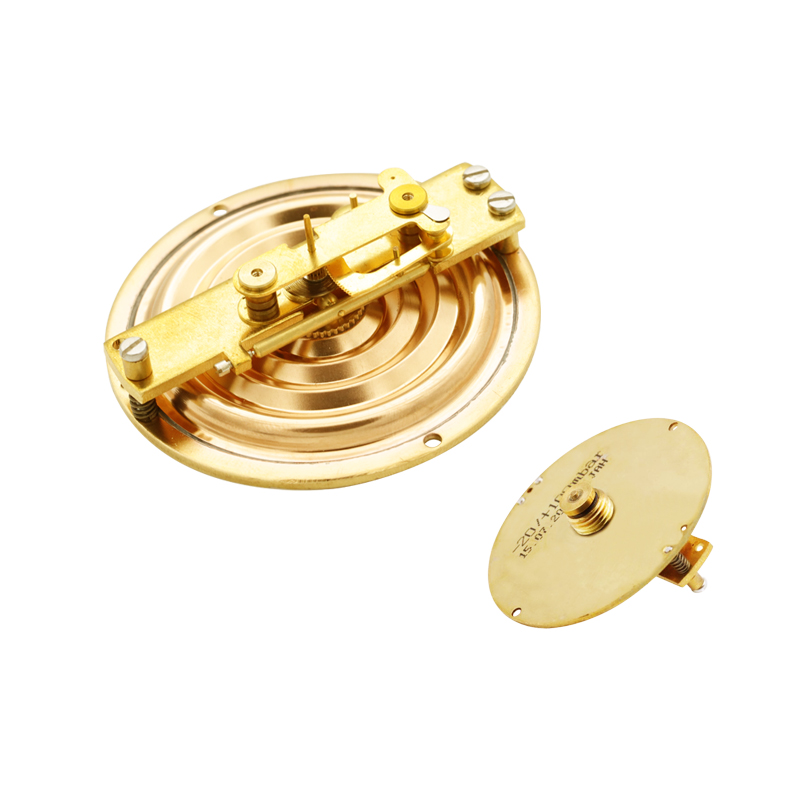
The construction of a typical water pressure gauge involves several key materials, each selected for specific properties. The Bourdon tube, the primary sensing element, is commonly manufactured from beryllium copper, phosphor bronze, or stainless steel (316L being prevalent for corrosive environments). Beryllium copper offers excellent elasticity and fatigue resistance, vital for cyclical pressure measurements. Phosphor bronze balances cost-effectiveness with reasonable corrosion resistance. Stainless steel provides superior resistance to corrosive fluids, albeit with a slightly lower elastic modulus. The gauge case is typically constructed from steel, often with a protective coating (epoxy or polyester powder coating) to resist corrosion. The dial face is usually made from aluminum or a durable plastic. The connection fitting (typically NPT or BSPT) is usually brass or stainless steel.
Manufacturing processes vary depending on the component. Bourdon tubes are created through a cold-forming process, where flat metal strips are shaped into a curved, flattened oval. This process requires precise control of bending radius and wall thickness to ensure linearity and accuracy. Heat treatment is then applied to relieve stress and enhance the material's elastic properties. The gauge case is typically manufactured through deep drawing or stamping, followed by machining for threaded connections and openings for the Bourdon tube and movement. The dial face is created using printing and coating techniques, applying calibrated scales and markings. Rigorous quality control measures, including leak testing, accuracy verification, and visual inspection, are implemented throughout the manufacturing process to ensure adherence to industry standards. Key parameter control focuses on material composition, heat treatment temperatures, dimensional accuracy of the Bourdon tube, and the calibration of the movement mechanism.
Performance & Engineering
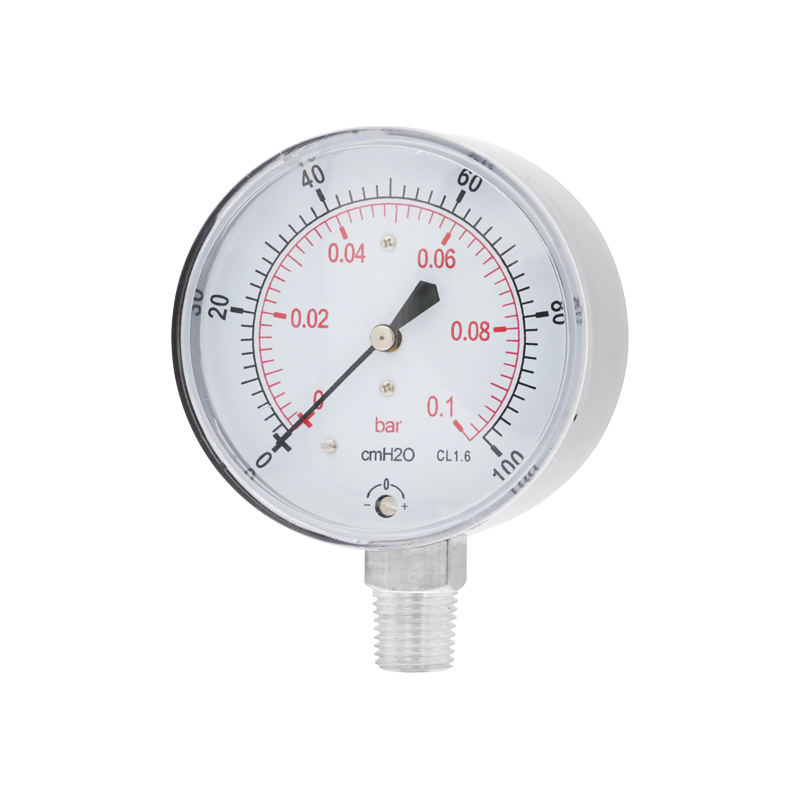
The performance of a water pressure gauge is governed by several engineering principles. Force analysis centers on the relationship between the applied pressure, the cross-sectional area of the Bourdon tube, and the resulting stress within the material. The Bourdon tube's deformation is directly proportional to the applied pressure, following Hooke's Law within its elastic limit. Environmental resistance is a critical consideration, particularly regarding temperature fluctuations and exposure to corrosive fluids. Temperature variations can affect the material's elasticity and cause drift in the readings. Corrosive fluids can attack the Bourdon tube and connection fittings, leading to failure. Selecting materials with appropriate corrosion resistance and employing protective coatings are crucial mitigating strategies. Compliance requirements vary depending on the application. For potable water systems, gauges must comply with NSF/ANSI 61 standards to ensure the materials do not leach harmful contaminants into the water supply. In industrial applications, gauges may need to meet ASME B40.100 standards for accuracy and safety. Functional implementation requires proper installation, including the use of appropriate thread sealant and minimizing vibration. Dampening fluids (glycerin or silicone oil) are often incorporated into the gauge mechanism to reduce pointer flutter and enhance readability.
Technical Specifications
| Parameter | Typical Value/Range | Unit | Tolerance |
|---|---|---|---|
| Pressure Range | 0-30 | PSI | ±3% of Full Scale |
| Accuracy | 2 | % of Full Scale | ASME B40.100 Class 2A |
| Connection Size | 1/4 | NPT | - |
| Case Material | Steel with Epoxy Coating | - | - |
| Bourdon Tube Material | Phosphor Bronze | - | - |
| Operating Temperature | -20 to 60 | °C | - |
Failure Mode & Maintenance
Water pressure gauges are susceptible to several failure modes. Fatigue cracking of the Bourdon tube is a common issue, particularly in applications with frequent pressure fluctuations. This is exacerbated by material defects or corrosion. Delamination of the protective coating on the case can lead to corrosion of the steel case. Degradation of the dampening fluid can reduce its effectiveness and cause pointer flutter. Oxidation of the connection fittings can create leaks. Another failure mode is the sticking or binding of the movement mechanism, leading to inaccurate readings or a frozen pointer.
Preventive maintenance is crucial for extending the gauge’s lifespan and ensuring accurate readings. Regular visual inspection for leaks, corrosion, and physical damage is essential. Periodic calibration (typically annually) is recommended to verify accuracy. Calibration involves comparing the gauge’s readings to a known pressure standard and adjusting the mechanism if necessary. Avoid exposing the gauge to excessive vibration or shock, which can damage the Bourdon tube and movement. If the gauge is used in a corrosive environment, consider using a gauge with a corrosion-resistant Bourdon tube and case material. In cases of detected leaks, replace the gauge immediately. If the pointer is sticking, attempt to gently clean the movement mechanism, but if the problem persists, replace the gauge. Proper handling during installation and operation is vital to avoid damage.
Industry FAQ
Q: What is the impact of water hammer on the lifespan of a pressure gauge?
A: Water hammer, the sudden pressure surge caused by rapid valve closure, introduces significant stress on the Bourdon tube. Repeated exposure to water hammer drastically reduces the gauge’s lifespan, accelerating fatigue cracking and potentially leading to catastrophic failure. Implementing slow-closing valves, pressure relief valves, and air chambers can mitigate the effects of water hammer.
Q: How does fluid temperature affect pressure gauge accuracy?
A: Fluid temperature influences the elasticity of the Bourdon tube. Higher temperatures generally decrease elasticity, potentially causing a slight decrease in the reading. Conversely, lower temperatures increase elasticity. Gauges are typically calibrated at a specific temperature (e.g., 20°C), and significant deviations from this temperature can introduce errors. Temperature compensation mechanisms are available in some gauges for critical applications.
Q: What is the significance of the gauge's connection type (NPT vs. BSPT)?
A: NPT (National Pipe Tapered) and BSPT (British Standard Pipe Tapered) are different threading standards. Using the incorrect connection type can result in leaks or damage to the threads. NPT threads are 60-degree tapered, while BSPT threads are 55-degree tapered. Ensure compatibility between the gauge's connection and the system's piping.
Q: What is the recommended calibration frequency for water pressure gauges in a municipal water treatment plant?
A: For critical applications like municipal water treatment plants, a calibration frequency of every six months is generally recommended to ensure compliance with regulatory requirements and maintain accurate readings. This frequency may be adjusted based on operating conditions and historical performance data.
Q: Can a digital pressure gauge replace an analog gauge in all applications?
A: While digital pressure gauges offer advantages like increased accuracy, remote monitoring capabilities, and data logging, they are not always a direct replacement for analog gauges. Digital gauges require a power source, and their electronic components are susceptible to electromagnetic interference. Analog gauges are simpler, more robust, and do not require power, making them suitable for applications where reliability and simplicity are paramount.
Conclusion
The accurate measurement of water pressure is fundamental to the safe and efficient operation of numerous industrial and municipal systems. Water pressure gauges, despite their seemingly simple design, rely on sophisticated material science, precise manufacturing processes, and adherence to stringent engineering principles. Understanding the materials used in their construction, the potential failure modes, and the importance of regular calibration is crucial for maximizing their lifespan and ensuring reliable performance.
Selecting the appropriate gauge for a specific application, considering factors such as pressure range, fluid compatibility, and environmental conditions, is paramount. Furthermore, integrating best practices for installation, maintenance, and calibration will mitigate the risks associated with inaccurate readings and potential system failures. Continuous advancements in sensor technology and digital instrumentation are shaping the future of pressure measurement, offering opportunities for enhanced accuracy, remote monitoring, and predictive maintenance capabilities.
 English
  Arabic
  China
China  China (Taiwan)
  Danish
  Dutch
Dutch  French
  German
  Greek
Greek  Hindi
Hindi  Indonesian
  Italian
  Japanese
  Korean
  Latin
Latin  Polish
  Portuguese
  Russian
  Spanish
  Turkish