
Apr . 01, 2024 17:55 Back to list
Absolute gauge pressure Performance Analysis
Introduction
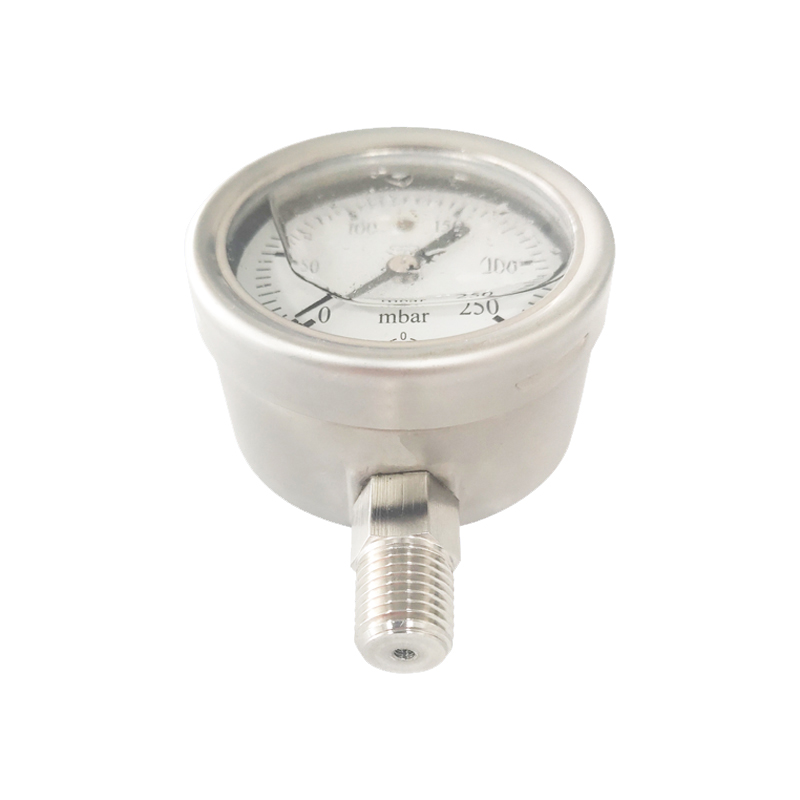
Absolute gauge pressure represents the total pressure exerted by a fluid, measured relative to a perfect vacuum. Unlike gauge pressure, which measures pressure relative to atmospheric pressure, absolute pressure is a fundamental thermodynamic property crucial for accurate process control and safety in numerous industrial applications. Its technical position within the industry chain is foundational to instrumentation, particularly in sectors like oil and gas, chemical processing, aerospace, and vacuum systems. Core performance indicators include accuracy, repeatability, and long-term stability, directly impacting process efficiency and reliability. A precise understanding of absolute pressure is essential for calculating fluid flow rates, material stress analysis, and ensuring compliance with safety regulations. The industry's primary pain points revolve around ensuring accurate measurement in harsh environments, minimizing drift over time, and selecting materials compatible with corrosive process fluids.
Material Science & Manufacturing
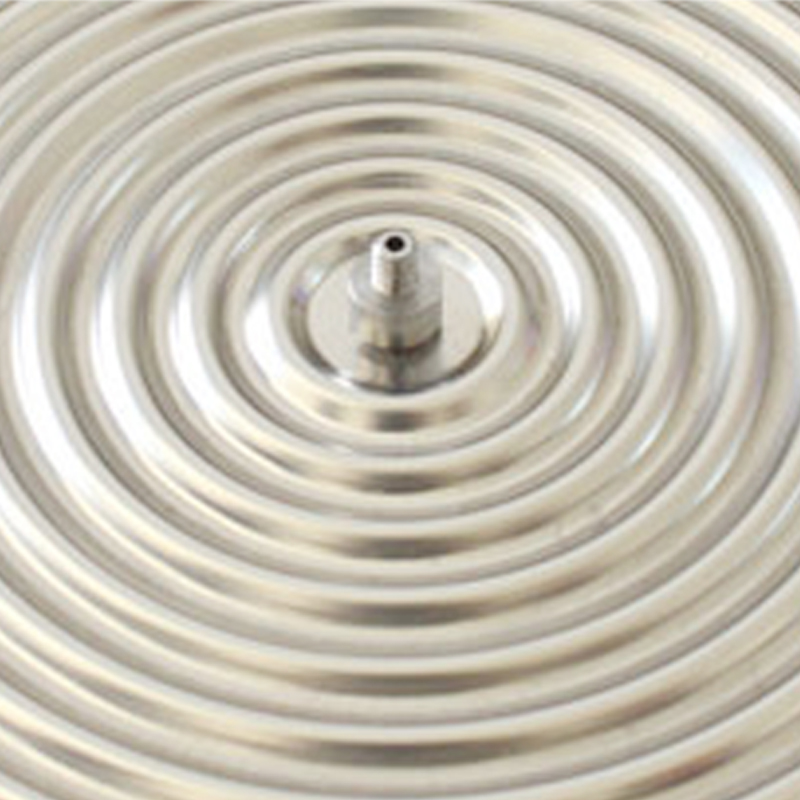
The production of absolute pressure sensors and transducers relies heavily on materials science and precision manufacturing techniques. Diaphragms, the core sensing element, are commonly constructed from stainless steel (316L, 17-4PH) for corrosion resistance and mechanical strength. Silicon, due to its piezoresistive properties, is also widely used in MEMS (Micro-Electro-Mechanical Systems) based sensors. Manufacturing processes vary depending on the sensor type. For stainless steel diaphragms, deep drawing and subsequent machining are employed to achieve precise dimensions and controlled thickness. MEMS sensors utilize semiconductor fabrication techniques including photolithography, etching, and deposition. Key parameter control includes maintaining diaphragm flatness (critical for linearity), minimizing surface roughness, and ensuring precise doping profiles in silicon sensors. Welding processes, particularly laser welding, are crucial for hermetically sealing the sensor housing, protecting internal components from environmental contaminants and maintaining pressure integrity. Material compatibility is paramount; the wetted parts (those in contact with the process fluid) must be selected based on the fluid’s chemical composition, temperature, and pressure to prevent corrosion or degradation. Annealing processes are used to relieve stress in metallic diaphragms, enhancing long-term stability.
Performance & Engineering
Performance analysis of absolute pressure sensors centers around force analysis of the diaphragm under applied pressure, environmental resistance testing, and compliance with industry standards. The relationship between applied pressure and output signal (typically mV/V for piezoresistive sensors or current for smart transmitters) is governed by the diaphragm's stiffness and material properties. Finite Element Analysis (FEA) is extensively used to optimize diaphragm design for linearity and minimize stress concentrations. Environmental resistance tests include thermal shock, vibration, and shock testing to assess the sensor's performance under harsh operating conditions. Humidity testing is critical to evaluate long-term stability in moist environments. Compliance requirements often involve certifications such as intrinsic safety (ATEX, IECEx) for hazardous areas, electromagnetic compatibility (EMC) testing, and adherence to specific industry regulations (e.g., FDA requirements for pharmaceutical applications). Signal conditioning circuitry plays a vital role in amplifying, filtering, and compensating for temperature effects to ensure accurate and reliable measurements. Calibration procedures, traceable to national standards, are essential for maintaining measurement accuracy.
Technical Specifications
| Pressure Range (psia) | Accuracy (%FS) | Operating Temperature (°C) | Media Compatibility |
|---|---|---|---|
| 0-1 psia | ±0.25 | -40 to +85 | Dry Gas, Non-Corrosive |
| 0-10 psia | ±0.5 | -20 to +120 | Stainless Steel (316L) |
| 0-100 psia | ±1.0 | -10 to +150 | Compatible with most industrial gases |
| 0-500 psia | ±1.5 | -20 to +100 | Stainless Steel, Hastelloy C-276 (optional) |
| 0-1000 psia | ±2.0 | -20 to +85 | Stainless Steel, Monel 400 (optional) |
| 0-5000 psia | ±2.5 | -20 to +60 | High-Strength Alloy Steel |
Failure Mode & Maintenance
Absolute pressure sensors are susceptible to several failure modes. Diaphragm fatigue cracking can occur due to cyclical pressure fluctuations, particularly at high pressures and temperatures. Corrosion, induced by incompatible process fluids, can lead to diaphragm rupture or signal drift. Drift can also result from temperature variations, affecting the piezoresistive elements or signal conditioning circuitry. Delamination can occur in MEMS sensors due to stress induced during manufacturing or operation. Oxidation of metallic components, especially at elevated temperatures, can alter material properties and degrade performance. Contamination of the sensor housing can lead to inaccurate readings or complete failure. Preventative maintenance includes regular calibration (at least annually), visual inspection for corrosion or physical damage, and verification of signal output using a calibrated pressure source. Periodic replacement of the sensor may be necessary, especially in critical applications. Proper installation, ensuring adequate vibration isolation and protection from extreme temperatures, is crucial for extending sensor life. For MEMS sensors, avoiding mechanical shock and static discharge is essential.
Industry FAQ
Q: What is the difference between absolute, gauge, and differential pressure measurement and when would I use each?
A: Absolute pressure is referenced to a perfect vacuum, gauge pressure to atmospheric pressure, and differential pressure measures the difference between two pressures. Absolute pressure is used when knowing the total pressure is critical, such as in vacuum systems or altitude measurements. Gauge pressure is common in many industrial processes where relative pressure is sufficient. Differential pressure is used to measure flow rates, liquid levels, and pressure drops across filters.
Q: How does temperature affect the accuracy of an absolute pressure sensor?
A: Temperature affects most pressure sensors. Changes in temperature can alter the sensor’s zero point and span. High-quality sensors incorporate temperature compensation circuitry to minimize these effects. Material thermal expansion also contributes to error; selecting materials with low thermal coefficients of expansion is crucial.
Q: What materials are best suited for absolute pressure sensors used in corrosive environments?
A: For corrosive environments, materials like Hastelloy C-276, Monel 400, and chemically resistant polymers (e.g., PTFE) are often used for the wetted parts. Stainless steel (316L) provides good corrosion resistance in many applications but may not be suitable for highly aggressive chemicals.
Q: What is the typical lifespan of an absolute pressure sensor in a typical industrial application?
A: The lifespan varies widely depending on operating conditions and the quality of the sensor. A well-maintained, high-quality sensor can last 5-10 years or more. Harsh environments, corrosive fluids, and frequent pressure cycling can significantly reduce lifespan.
Q: How often should an absolute pressure sensor be calibrated?
A: Calibration should be performed at least annually, or more frequently if the sensor is used in critical applications or exposed to harsh conditions. Anytime there is a reason to suspect the sensor’s accuracy, recalibration is recommended.
Conclusion
Absolute gauge pressure measurement is a fundamental cornerstone of numerous industrial processes, demanding precise and reliable instrumentation. The selection of appropriate materials, manufacturing techniques, and calibration procedures are critical for ensuring accurate measurements and long-term stability. Understanding the potential failure modes and implementing preventative maintenance programs are essential for maximizing sensor lifespan and minimizing downtime.
Future advancements in absolute pressure sensing will likely focus on further miniaturization using MEMS technology, improved temperature compensation algorithms, and the development of sensors with enhanced corrosion resistance and higher accuracy. Wireless pressure monitoring and integration with Industry 4.0 platforms will also play an increasing role, enabling real-time data analysis and predictive maintenance capabilities.
 English
  Arabic
  China
China  China (Taiwan)
  Danish
  Dutch
Dutch  French
  German
  Greek
Greek  Hindi
Hindi  Indonesian
  Italian
  Japanese
  Korean
  Latin
Latin  Polish
  Portuguese
  Russian
  Spanish
  Turkish