
Apr . 01, 2024 17:55 Back to list
air con pressure gauge Performance Engineering

Introduction
Air conditioning (AC) pressure gauges are critical instrumentation employed in the diagnosis, service, and maintenance of vapor-compression refrigeration systems. Functionally, these gauges measure the pressure of refrigerant circulating within the AC system, providing essential data for assessing system performance and identifying potential faults. Positioned within the HVAC/R industry chain, they represent a vital link between field service technicians and the operational health of the air conditioning unit. Core performance characteristics are defined by accuracy, range, resolution, and durability – directly influencing diagnostic precision and operational efficiency. A key pain point in the industry is the need for gauges with high accuracy and resistance to the corrosive effects of various refrigerants, coupled with reliable long-term stability to minimize recalibration frequency. This guide details the material science, manufacturing processes, performance engineering, failure modes, and maintenance protocols for AC pressure gauges.
Material Science & Manufacturing
AC pressure gauges rely on a combination of materials selected for their mechanical properties, corrosion resistance, and compatibility with refrigerants. The Bourdon tube, the primary sensing element, is typically constructed from beryllium copper alloys (e.g., CuBe) or stainless steel (316L). Beryllium copper provides excellent spring characteristics and corrosion resistance to common refrigerants like R-134a and R-410A, while 316L stainless steel offers superior resistance to more aggressive refrigerants and high-pressure applications. The gauge case is generally manufactured from aluminum alloys (6061-T6) for lightweight durability, or from reinforced polymers for cost-effective solutions. The gauge face is often acrylic or polycarbonate for clarity and impact resistance.
Manufacturing involves several key processes. Bourdon tube formation typically uses cold drawing and annealing to achieve the desired curvature and elastic properties. Precise heat treatment is critical for establishing the correct spring rate and ensuring accuracy. The tube is then sealed to the gauge movement – a crucial step requiring leak-tight brazing or welding with silver solder. Gauge movements are often assembled using automated machinery to maintain consistent accuracy. Case manufacturing involves CNC machining for aluminum cases and injection molding for polymer cases. Calibration is performed using precision pressure testing rigs traceable to national standards. Parameter control during Bourdon tube heat treatment, welding processes, and calibration is paramount. Deviation from optimal parameters results in inaccuracies and potential premature failure. Regular QC checks throughout the manufacturing process, including leak tests, accuracy verifications, and material certifications, are vital for quality control.
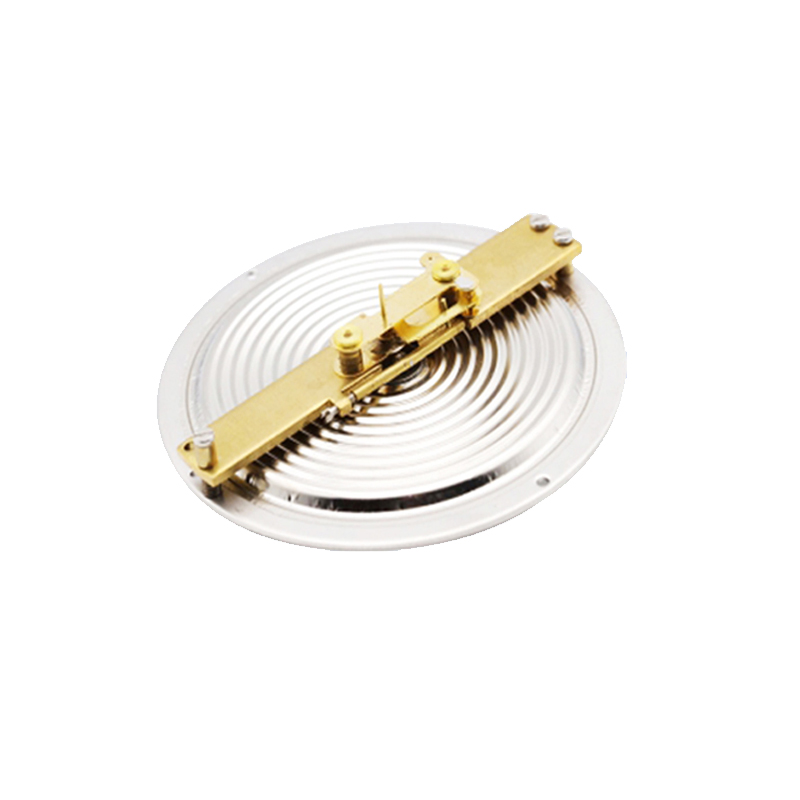
Performance & Engineering
The performance of an AC pressure gauge is governed by several engineering principles. Force analysis centers on the stress-strain relationship of the Bourdon tube. As pressure increases, the tube undergoes elastic deformation, translating force to the gauge movement. The movement amplifies this force and translates it into a rotational motion driving the pointer. Accuracy is directly related to the linearity and hysteresis of this force-displacement relationship. Environmental resistance is a key concern. Gauges must withstand temperature fluctuations, vibration, and exposure to various refrigerants and oils. Temperature compensation mechanisms are often incorporated into the gauge movement to minimize errors caused by thermal expansion. Compliance requirements, such as EN 388 for mechanical resistance and ASHRAE standards for HVAC/R equipment, dictate design and testing protocols. Functional implementation focuses on the pressure range and accuracy required for specific applications. High-side gauges require robust Bourdon tubes and movements capable of handling high pressures, while low-side gauges require higher sensitivity for detecting small pressure changes. The selection of appropriate wetted materials (those in contact with the refrigerant) is crucial to prevent corrosion and ensure long-term reliability. Leak tightness is also paramount, assessed through helium leak testing to ensure a hermetically sealed system.
Technical Specifications
| Parameter | Unit | Typical Value | Tolerance |
|---|---|---|---|
| Pressure Range (Low Side) | PSI | 0-50 | ±1% of Full Scale |
| Pressure Range (High Side) | PSI | 0-250 | ±1% of Full Scale |
| Accuracy | % of Full Scale | 2 | ±0.5% |
| Resolution | PSI | 1 | N/A |
| Operating Temperature | °F | -40 to 176 | N/A |
| Connection Type | 1/4" SAE | N/A |
Failure Mode & Maintenance
AC pressure gauges are susceptible to several failure modes. Fatigue cracking of the Bourdon tube is common, particularly under conditions of high pressure cycling and vibration. Corrosion, especially from exposure to acidic refrigerants or contaminants, can lead to leaks and inaccuracies. Delamination of the gauge face material can obscure the reading. Degradation of the internal lubricating oils within the gauge movement can increase friction and reduce accuracy. Oxidation of metallic components can also contribute to corrosion and malfunction.
Preventative maintenance is crucial for extending gauge life. Regular visual inspection for physical damage, leaks, and corrosion is recommended. Periodically checking the gauge's accuracy against a calibrated standard is essential. Avoid over-pressurizing the gauge beyond its specified range. Clean the gauge face and case with a mild detergent and water. Do not use abrasive cleaners or solvents. If the gauge exhibits significant inaccuracies or leaks, it should be replaced or professionally recalibrated. Proper storage in a clean, dry environment also helps to prevent corrosion and degradation. When handling refrigerants, adherence to industry best practices for refrigerant recovery and handling is essential to minimize contamination.
Industry FAQ
Q: What is the typical lifespan of a high-quality AC pressure gauge?
A: A high-quality AC pressure gauge, properly maintained and operated within its specified limits, typically has a lifespan of 5-10 years. However, factors such as refrigerant type, frequency of use, and environmental conditions can significantly impact its longevity.
Q: How does refrigerant type affect gauge selection and lifespan?
A: Different refrigerants have varying levels of corrosivity. For example, refrigerants containing chlorides can accelerate corrosion of metallic components. Gauges intended for use with specific refrigerants should be constructed from materials compatible with those refrigerants (e.g., stainless steel for refrigerants with higher chloride content).
Q: What are the implications of using a gauge with incorrect accuracy?
A: Using a gauge with incorrect accuracy can lead to misdiagnosis of AC system faults, incorrect refrigerant charging, and ultimately, inefficient system operation or component failure. It can also result in safety hazards due to improper system pressures.
Q: What steps can be taken to minimize the risk of corrosion within the gauge?
A: Ensure proper refrigerant handling practices, including the use of driers and filters to remove moisture and contaminants. Select gauges constructed from corrosion-resistant materials. Regularly inspect the gauge for signs of corrosion and replace it if necessary.
Q: How often should an AC pressure gauge be recalibrated?
A: Recalibration is recommended at least annually, or more frequently if the gauge is subjected to harsh conditions or heavy use. Recalibration ensures the gauge continues to provide accurate readings and maintains its reliability.
Conclusion
AC pressure gauges represent a fundamental component in HVAC/R diagnostics and maintenance. Their accuracy, durability, and material compatibility are paramount for reliable system performance. Understanding the underlying material science, manufacturing processes, and potential failure modes is crucial for selecting, operating, and maintaining these instruments effectively. The selection of appropriate materials, rigorous quality control during manufacturing, and adherence to preventative maintenance practices are all essential for maximizing gauge lifespan and minimizing diagnostic errors.
Future development in AC pressure gauge technology may focus on incorporating digital sensors and wireless communication capabilities for enhanced data logging and remote monitoring. Increased emphasis on environmentally friendly refrigerants will also necessitate the development of gauges with improved corrosion resistance. Continued refinement of calibration techniques and the implementation of advanced manufacturing processes will further enhance the accuracy and reliability of these critical instruments, contributing to more efficient and sustainable HVAC/R systems.
 English
  Arabic
  China
China  China (Taiwan)
  Danish
  Dutch
Dutch  French
  German
  Greek
Greek  Hindi
Hindi  Indonesian
  Italian
  Japanese
  Korean
  Latin
Latin  Polish
  Portuguese
  Russian
  Spanish
  Turkish