
Apr . 01, 2024 17:55 Back to list
air pressure gauge for bike Material Science
Introduction
The bicycle air pressure gauge is a critical component in maintaining optimal tire performance and rider safety. Functionally, it measures the air pressure within a bicycle tire, typically expressed in pounds per square inch (PSI) or bars. Positioned within the bicycle maintenance and repair industry chain, the gauge serves as an essential tool for cyclists of all levels, from recreational riders to professional racers, and is integral to bicycle shops and service centers. Core performance characteristics include accuracy, durability, readability, and compatibility with various valve types (Presta, Schrader, and Dunlop). Maintaining correct tire pressure minimizes rolling resistance, enhances handling, reduces the risk of punctures (pinch flats), and extends tire lifespan. The growing emphasis on cycling for both fitness and transportation has driven demand for increasingly precise and reliable air pressure gauges.
Material Science & Manufacturing
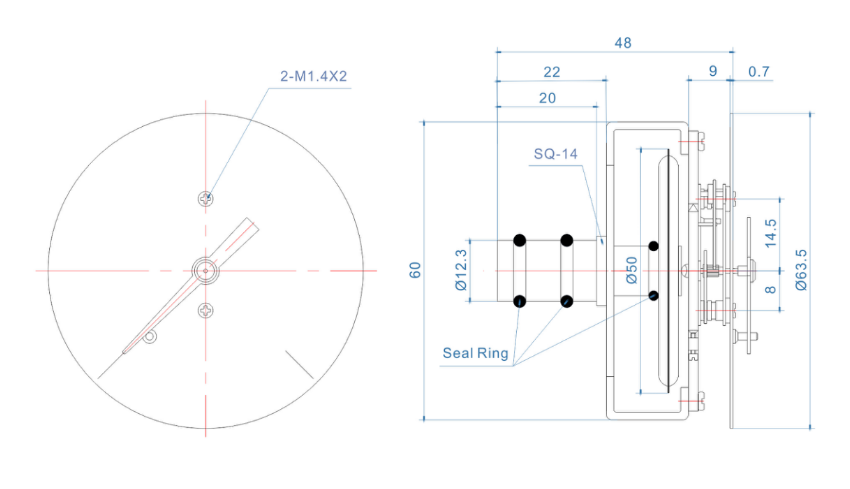
The construction of bicycle air pressure gauges typically involves several key materials. The gauge housing is commonly manufactured from reinforced polymers (ABS, Polycarbonate) or aluminum alloys (6061-T6) due to their balance of lightweight properties, impact resistance, and cost-effectiveness. The internal mechanism relies on a Bourdon tube – a curved, flattened tube that straightens proportionally to the pressure applied. Bourdon tubes are frequently constructed from beryllium copper or spring steel, materials chosen for their high elasticity and ability to withstand repeated flexing without permanent deformation. The dial face is often made of polycarbonate with printed graduations. Manufacturing processes vary depending on the gauge type. Analog gauges involve the assembly of the Bourdon tube, linkage mechanism, and dial within the housing, requiring precise calibration. Digital gauges incorporate a pressure sensor (piezoelectric or strain gauge), an analog-to-digital converter, and a liquid crystal display (LCD). Key parameter control during manufacturing includes ensuring dimensional accuracy of the Bourdon tube, precise calibration of the measurement range, and rigorous testing for linearity and hysteresis. Quality control also focuses on leak testing of the housing and verifying the robustness of the valve connector. Valve connector material is generally brass or stainless steel to ensure compatibility and prevent corrosion. The spring within the valve connector is typically manufactured from stainless steel for sustained elastic performance.
Performance & Engineering
The performance of a bicycle air pressure gauge is governed by principles of fluid mechanics and material science. The Bourdon tube, central to analog gauges, operates based on Hooke's Law, relating stress to strain. The tube's curvature and wall thickness are engineered to provide a specific pressure range and sensitivity. Digital gauges rely on the principles of transduction, converting pressure into an electrical signal. Force analysis centers on the stresses experienced by the Bourdon tube or pressure sensor during operation, ensuring they remain within the material's yield strength. Environmental resistance is a significant concern; gauges are often subjected to temperature fluctuations, humidity, and exposure to UV radiation. Materials selection must account for these factors to prevent degradation and maintain accuracy. Compliance requirements vary by region but often involve adherence to metrological standards regarding accuracy and repeatability. The valve connector design is critical for maintaining a secure, airtight seal during pressure readings. Engineering considerations include minimizing parallax error in analog gauges through proper dial design and optimizing LCD contrast and viewing angle in digital gauges. The gauge's ergonomic design impacts usability; a comfortable grip and clear readability are essential for convenient operation. The long-term durability also relies on the resistance of the internal spring against creep and fatigue.
Technical Specifications
| Parameter | Analog Gauge (Typical) | Digital Gauge (Typical) | Unit |
|---|---|---|---|
| Pressure Range | 0-120 PSI / 0-8.3 Bar | 0-120 PSI / 0-8.3 Bar | PSI/Bar |
| Accuracy | ±2% of Full Scale | ±0.5% of Full Scale | % |
| Resolution | 1 PSI / 0.1 Bar | 0.1 PSI / 0.01 Bar | PSI/Bar |
| Valve Compatibility | Presta, Schrader, Dunlop (with adapters) | Presta, Schrader, Dunlop (with adapters) | Type |
| Housing Material | ABS Plastic / Aluminum Alloy | ABS Plastic / Aluminum Alloy | Material |
| Operating Temperature | -10°C to 50°C (14°F to 122°F) | -10°C to 50°C (14°F to 122°F) | °C/°F |
Failure Mode & Maintenance
Common failure modes in bicycle air pressure gauges include inaccurate readings, leakage, and mechanical damage. Analog gauges are susceptible to Bourdon tube fatigue cracking due to repeated flexing, leading to drift in calibration. Corrosion of the Bourdon tube, particularly in humid environments, can also affect accuracy. Digital gauges can fail due to battery depletion, sensor drift, or LCD damage. The valve connector is prone to wear and tear, resulting in air leakage during inflation or deflation. Delamination of the dial face or cracking of the housing can occur due to impact or prolonged UV exposure. Maintenance recommendations include regular calibration against a known standard (certified pressure source). For analog gauges, avoiding over-pressurization and protecting the gauge from extreme temperatures can prolong its lifespan. Digital gauges require battery replacement as needed. Periodically cleaning the valve connector and lubricating it with a silicone-based lubricant can prevent leaks. Inspecting the housing for cracks or damage and replacing the gauge if necessary are crucial for ensuring continued safe and accurate operation. Proper storage in a dry environment also minimizes corrosion risks. If the Bourdon tube is visibly damaged, the gauge should be replaced rather than repaired.
Industry FAQ
Q: What is the typical accuracy I should expect from a bicycle air pressure gauge?
A: A typical analog bicycle air pressure gauge offers an accuracy of ±2% of the full scale. Digital gauges generally provide higher accuracy, around ±0.5% of the full scale. It’s important to note that accuracy can be affected by calibration and environmental factors.
Q: How often should I calibrate my air pressure gauge?
A: It's recommended to calibrate your air pressure gauge at least once a year, or more frequently if you rely on precise measurements for racing or performance cycling. Calibration ensures the gauge provides accurate readings and maintains consistency.
Q: What are the differences between Presta and Schrader valves, and which gauges are compatible?
A: Presta valves are typically found on higher-end road bikes and require unscrewing a locking nut before inflation. Schrader valves are similar to those found on car tires and have a spring-loaded pin. Most gauges are compatible with both valve types, often requiring an adapter for Presta valves. Dunlop valves, less common, also require an adapter.
Q: My digital gauge is displaying inconsistent readings. What could be the cause?
A: Inconsistent readings on a digital gauge could be caused by a low battery, a failing pressure sensor, or internal electronic interference. Try replacing the battery first. If the problem persists, the gauge may require repair or replacement.
Q: What materials are best for a gauge’s housing to maximize durability?
A: Aluminum alloy housings offer excellent durability and impact resistance, although they are generally more expensive. Reinforced polymers, such as ABS or Polycarbonate, provide a good balance of durability and cost-effectiveness. The choice depends on the intended use and budget.
Conclusion
The bicycle air pressure gauge, though seemingly simple, is a technologically refined instrument essential for optimal cycling performance and safety. Its accurate and reliable operation relies on a precise interplay of material science, mechanical engineering, and adherence to metrological standards. Understanding the underlying principles of Bourdon tube mechanics and pressure transduction, along with potential failure modes and appropriate maintenance practices, is crucial for both manufacturers and end-users.
Looking forward, innovations in sensor technology and wireless connectivity may lead to the development of more sophisticated digital gauges with features such as automatic tire pressure monitoring and integration with cycling computers. Continued research into material science will also drive the creation of more durable and lightweight gauges capable of withstanding harsh environmental conditions. Prioritizing quality control and rigorous testing throughout the manufacturing process remains paramount for ensuring the long-term reliability of this vital cycling component.
 English
  Arabic
  China
China  China (Taiwan)
  Danish
  Dutch
Dutch  French
  German
  Greek
Greek  Hindi
Hindi  Indonesian
  Italian
  Japanese
  Korean
  Latin
Latin  Polish
  Portuguese
  Russian
  Spanish
  Turkish