
Apr . 01, 2024 17:55 Back to list
air pressure gauge for tires Performance Analysis
Introduction
Air pressure gauges for tires are critical components in vehicle maintenance and safety systems, functioning as transducers that convert tire pressure into a readable indication. These gauges, ranging from simple mechanical designs to sophisticated digital systems, serve a foundational role in ensuring optimal tire performance, extending tire lifespan, and enhancing fuel efficiency. Their technical position within the automotive aftermarket and vehicle manufacturing supply chain is significant, directly impacting road safety and operational costs for commercial fleets. Core performance characteristics are centered on accuracy, repeatability, durability, and the ability to withstand the environmental conditions associated with vehicular operation. The selection of an appropriate gauge hinges on the application – passenger vehicles, light trucks, heavy-duty trucks, or specialized equipment – each demanding varying levels of precision and robustness. A primary industry pain point centers on the inconsistency of accuracy across different gauge types, coupled with the potential for user error in interpreting readings, leading to under- or over-inflation, both of which compromise safety and efficiency. Furthermore, long-term calibration drift and resistance to corrosive environments are ongoing challenges for manufacturers and end-users.
Material Science & Manufacturing
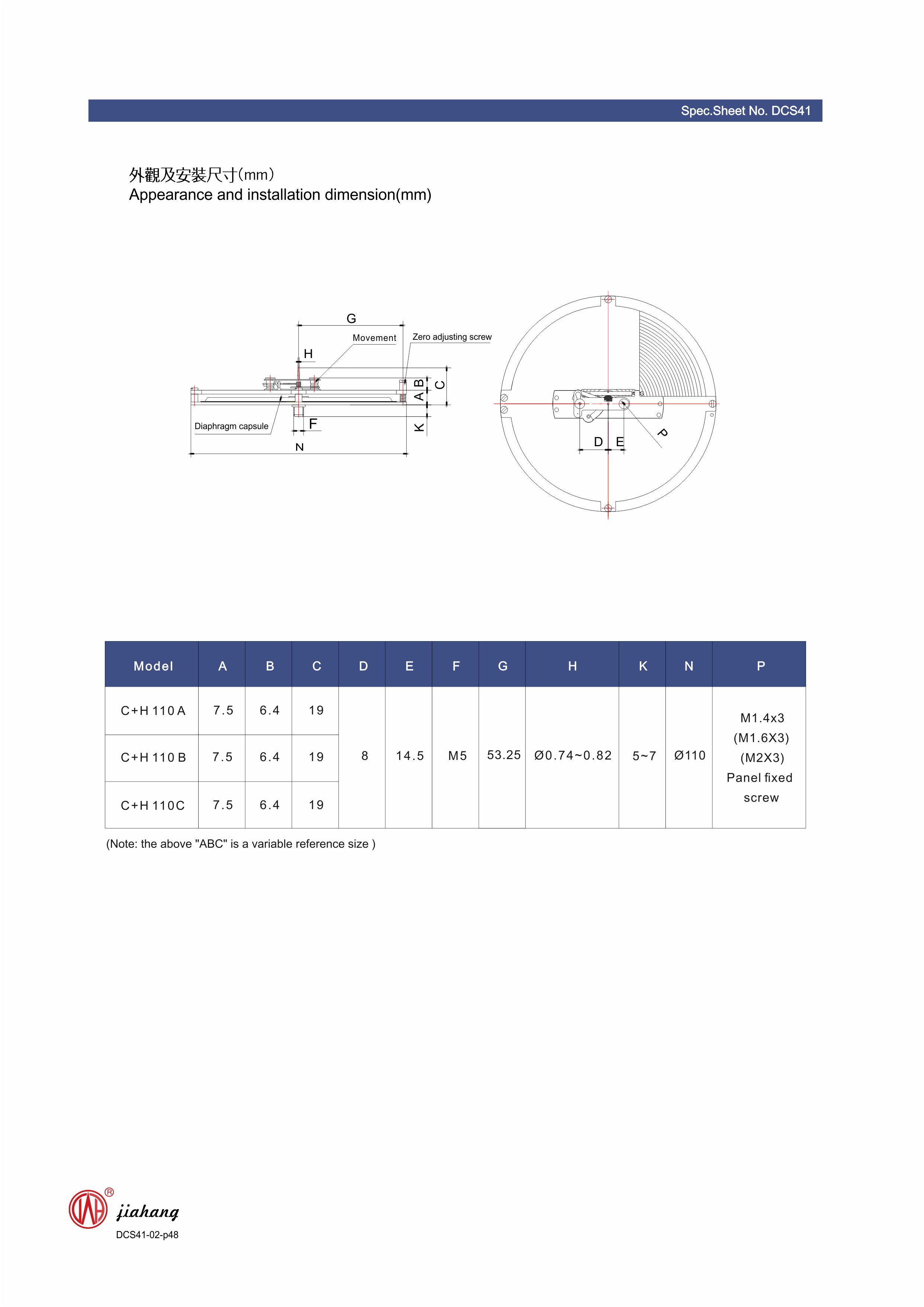
The materials utilized in air pressure gauge construction significantly influence performance and longevity. Bourdon tubes, central to mechanical gauges, are typically manufactured from beryllium copper or spring steel alloys. Beryllium copper offers superior corrosion resistance and elastic properties, crucial for maintaining accuracy over repeated cycles. Spring steel, while more economical, requires protective coatings to mitigate oxidation. Gauge housings commonly employ materials like aluminum alloy, stainless steel, or high-impact polymers (ABS, Polycarbonate). Aluminum provides a lightweight and corrosion-resistant solution, while stainless steel offers exceptional durability in harsh environments. Polymers are favored for their cost-effectiveness and design flexibility. Digital gauges incorporate silicon pressure sensors, characterized by their high sensitivity and linearity. Manufacturing processes vary based on gauge type. Mechanical gauges involve the precise bending and heat treatment of Bourdon tubes, followed by assembly with a movement mechanism and dial face. Digital gauges require semiconductor fabrication for the pressure sensor, coupled with electronic circuit board assembly and calibration. Key parameter control during manufacturing includes stringent dimensional tolerances for Bourdon tube curvature, accurate calibration of the movement mechanism (for mechanical gauges), and precise sensor signal conditioning (for digital gauges). Welding processes, when utilized for housing construction, require robust quality control to prevent porosity and ensure structural integrity. The sealing of pressure connections relies on materials like Viton or nitrile rubber, selected for their compatibility with compressed air and resistance to degradation.
Performance & Engineering
Performance evaluation of air pressure gauges encompasses several critical engineering considerations. Force analysis centers on the stress distribution within the Bourdon tube or silicon sensor under varying pressure loads. Finite Element Analysis (FEA) is routinely employed to optimize component geometry and minimize stress concentrations, preventing premature failure. Environmental resistance testing includes exposure to temperature extremes, humidity, vibration, and corrosive agents (road salt, brake fluid). Compliance requirements are dictated by regulatory bodies such as the National Highway Traffic Safety Administration (NHTSA) and industry standards organizations. Accuracy, typically expressed as a percentage of full scale (%FS), is a primary performance metric. Repeatability, the ability of the gauge to provide consistent readings under identical conditions, is equally important. Digital gauges often incorporate temperature compensation circuitry to minimize drift due to ambient temperature variations. Hysteresis, the difference in readings during pressurization and depressurization, must be minimized for precise measurements. Functional implementation involves the integration of the gauge into a tire inflation system or dashboard display. For digital gauges, signal processing algorithms are employed to filter noise and enhance accuracy. Long-term stability requires meticulous calibration procedures and the use of high-quality materials resistant to creep and fatigue.
Technical Specifications
| Parameter | Mechanical Gauge | Digital Gauge (Basic) | Digital Gauge (High Precision) |
|---|---|---|---|
| Pressure Range (PSI) | 0-60 / 0-100 | 0-120 | 0-150 |
| Accuracy (%FS) | ±3% | ±1% | ±0.5% |
| Resolution (PSI) | 1 | 0.1 | 0.01 |
| Operating Temperature (°F) | -40 to 176 | -4 to 149 | -4 to 158 |
| Housing Material | Aluminum / Steel | ABS Plastic | Aluminum Alloy |
| Connection Type | 1/8" NPT | 1/8" NPT | 1/8" NPT / Quick Connect |
Failure Mode & Maintenance
Air pressure gauges are susceptible to several failure modes. Mechanical gauges can experience fatigue cracking of the Bourdon tube due to repeated flexing, leading to inaccurate readings or complete failure. Corrosion, particularly in environments exposed to road salt, can weaken the tube and impair its elasticity. Gear train wear within the movement mechanism can introduce hysteresis and reduce accuracy. Digital gauges can fail due to sensor drift, circuit board component failure (resistors, capacitors), or damage to the display. Moisture ingress can cause corrosion and short circuits. A common failure mode across both types is leakage at the pressure connection, resulting in inaccurate readings. Preventive maintenance for mechanical gauges involves periodic calibration and visual inspection for signs of corrosion or damage. Lubrication of the movement mechanism can reduce wear. Digital gauges require battery replacement and periodic functional testing. Regular cleaning of the gauge housing prevents debris buildup and ensures accurate readings. Calibration should be performed using a certified pressure standard. When a gauge exhibits consistent inaccuracies or fails to hold pressure, replacement is typically recommended. Proper storage, protected from extreme temperatures and humidity, extends the lifespan of both mechanical and digital gauges.
Industry FAQ
Q: What is the significance of accuracy specifications (e.g., ±3%FS) and how does it relate to real-world tire inflation?
A: The accuracy specification, expressed as a percentage of full scale (%FS), defines the maximum allowable deviation from the true pressure value. For example, a gauge with ±3%FS on a 60 PSI range could be off by up to 1.8 PSI. This deviation can significantly impact tire performance; even small discrepancies can lead to uneven wear, reduced fuel efficiency, and compromised handling. It’s critical to select a gauge with an accuracy appropriate for the application. High-performance vehicles and commercial fleets typically require gauges with tighter tolerances (±1% or better).
Q: How do temperature variations affect the performance of digital air pressure gauges, and what mitigation techniques are employed?
A: Temperature changes can cause drift in the silicon sensor output, leading to inaccurate readings. Silicon sensors exhibit a temperature coefficient, meaning their sensitivity changes with temperature. Mitigation techniques include incorporating temperature compensation circuitry within the gauge's electronics. This circuitry uses a temperature sensor to measure the ambient temperature and applies a correction factor to the pressure reading, minimizing drift. High-precision digital gauges typically employ more sophisticated temperature compensation algorithms.
Q: What materials are most resistant to corrosion in air pressure gauge construction, particularly in environments exposed to road salt?
A: Beryllium copper is highly resistant to corrosion, making it a preferred material for Bourdon tubes in demanding environments. Stainless steel (304 or 316 grades) provides excellent corrosion resistance for gauge housings and internal components. For plastic housings, Polycarbonate offers superior chemical resistance compared to ABS. Coatings like epoxy or polyurethane can further enhance corrosion protection on metal components. Selection of Viton or EPDM O-rings and seals also minimizes chemical degradation.
Q: What is the typical lifespan of a mechanical air pressure gauge, and what factors influence its longevity?
A: The lifespan of a mechanical gauge typically ranges from 5 to 10 years, depending on usage frequency, environmental conditions, and maintenance practices. Factors influencing longevity include the quality of the Bourdon tube material, the precision of the movement mechanism, and the level of corrosion protection. Frequent exposure to vibration, extreme temperatures, and corrosive substances will shorten the lifespan. Regular calibration and lubrication can extend its service life.
Q: What are the key differences between NPT and quick-connect fittings, and which is preferred for high-pressure applications?
A: NPT (National Pipe Tapered) fittings create a sealed connection using tapered threads. They are reliable but require thread sealant tape for leak-proof operation. Quick-connect fittings offer faster connection and disconnection but rely on precision-machined surfaces and internal seals. For high-pressure applications (above 100 PSI), NPT fittings are generally preferred due to their robust sealing capability and ability to withstand higher pressures. Quick-connect fittings are suitable for lower-pressure applications where convenience is a priority.
Conclusion
Air pressure gauges, whether mechanical or digital, are indispensable tools for maintaining optimal tire performance and vehicle safety. The selection of an appropriate gauge requires careful consideration of accuracy requirements, environmental conditions, and the specific application. Material science plays a crucial role in determining gauge durability and resistance to corrosion, while manufacturing processes directly impact precision and repeatability. Understanding potential failure modes and implementing preventive maintenance practices are essential for maximizing gauge lifespan and ensuring reliable operation.
Future advancements in air pressure gauge technology will likely focus on enhanced sensor miniaturization, improved wireless connectivity for data logging and remote monitoring, and the integration of artificial intelligence for predictive maintenance. The development of self-calibrating gauges and materials with increased resistance to extreme environments will further enhance performance and reliability. Continued adherence to stringent industry standards and a commitment to quality control will remain paramount in ensuring the safety and efficiency of vehicular operations.
 English
  Arabic
  China
China  China (Taiwan)
  Danish
  Dutch
Dutch  French
  German
  Greek
Greek  Hindi
Hindi  Indonesian
  Italian
  Japanese
  Korean
  Latin
Latin  Polish
  Portuguese
  Russian
  Spanish
  Turkish