
Apr . 01, 2024 17:55 Back to list
air tyre pressure gauge Performance Analysis
Introduction
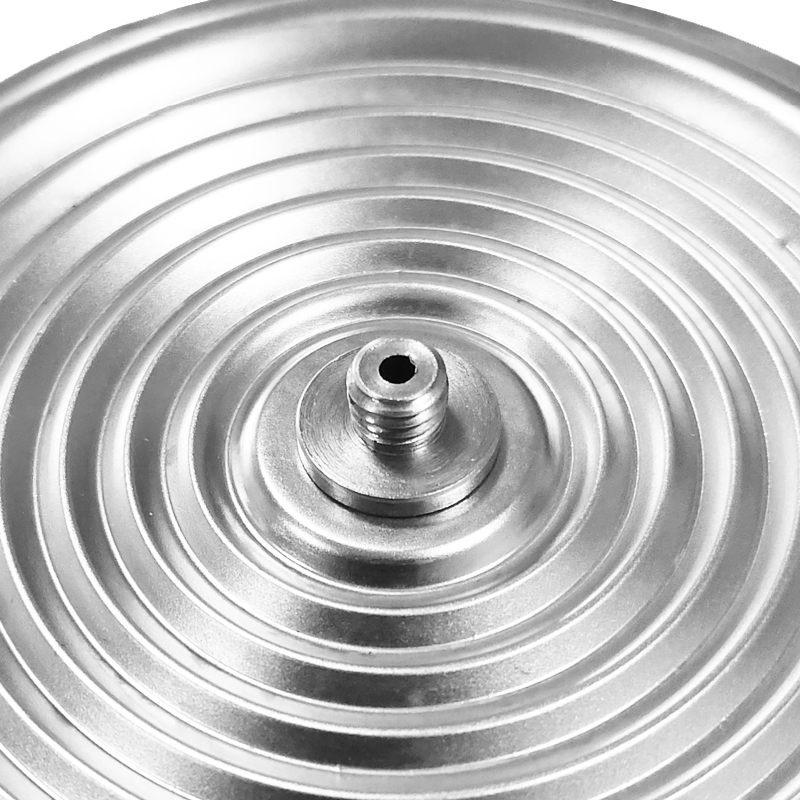
Air tyre pressure gauges are critical instruments used to measure and display the air pressure within pneumatic tires, primarily in automotive, aviation, and heavy machinery applications. These gauges occupy a key position in vehicle maintenance and safety protocols, ensuring optimal tire performance, fuel efficiency, and preventing premature tire failure. They operate on principles of mechanics, utilizing Bourdon tubes, diaphragms, or digital sensors to translate pressure into a readable format, typically in PSI, BAR, or kPa. Core performance characteristics center on accuracy, repeatability, durability, and the ability to withstand the rigors of field use. The industry faces ongoing pressure to improve accuracy, reduce calibration drift, and integrate digital connectivity for data logging and predictive maintenance.
Material Science & Manufacturing
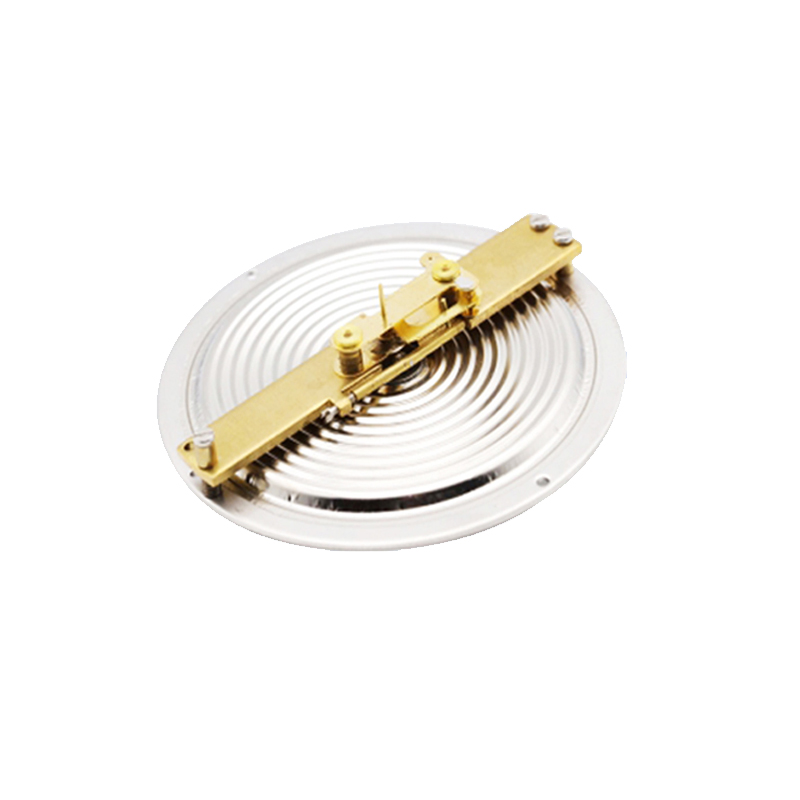
The construction of air tyre pressure gauges involves several key materials. Bourdon tubes are commonly fabricated from beryllium copper alloys (C17200) due to their excellent spring characteristics, corrosion resistance, and fatigue strength. The case body is often manufactured from brass (C36000) or stainless steel (304/316) for durability and resistance to environmental factors. Diaphragm gauges utilize materials such as nitrile rubber (NBR) or fluorocarbon elastomers (Viton) for the diaphragm itself, selected based on chemical compatibility with the measured medium. Digital gauges incorporate silicon pressure sensors and require printed circuit boards (PCBs) made from FR-4 epoxy laminate. Manufacturing processes vary depending on the gauge type. Bourdon tube gauges involve forming the tube via deep drawing or hydraulic bending, followed by heat treatment to achieve the desired spring properties. Assembly requires precision soldering and sealing to maintain pressure integrity. Diaphragm gauges employ injection molding for the diaphragm and automated assembly processes. Digital gauges demand surface mount technology (SMT) for PCB assembly and rigorous calibration procedures. Key parameter control focuses on dimensional accuracy of the Bourdon tube, diaphragm thickness consistency, and sensor linearity during calibration. Material selection for seals (typically nitrile or EPDM) is critical to prevent leaks and ensure long-term reliability.
Performance & Engineering
Performance evaluation of air tyre pressure gauges centers around accuracy, hysteresis, linearity, and repeatability. Accuracy is paramount, often specified as a percentage of full scale (e.g., ±1% FS). Hysteresis refers to the difference in readings when approaching a set pressure from increasing versus decreasing pressure. Linearity assesses the deviation from a straight-line relationship between applied pressure and gauge reading. Repeatability quantifies the consistency of readings under identical conditions. Environmental resistance is crucial; gauges must withstand temperature variations (-40°C to +85°C) and exposure to fluids such as oils and solvents. Force analysis considers the stress distribution within the Bourdon tube or diaphragm under pressure, influencing material selection and design geometry. Compliance requirements necessitate adherence to standards like SAE J1222 (for automotive tyre gauges) and ISO 8106 (for general-purpose pressure gauges). Functional implementation involves careful calibration using traceable pressure standards and incorporating features like shock-resistant movements and protective housings to enhance durability. The use of dampening fluids (e.g., silicone oil) minimizes pointer oscillation and improves readability.
Technical Specifications
| Pressure Range | Accuracy | Resolution | Operating Temperature |
|---|---|---|---|
| 0-60 PSI | ±1.5% FS | 0.5 PSI | -20°C to 60°C |
| 0-100 PSI | ±1% FS | 1 PSI | -10°C to 80°C |
| 0-200 PSI | ±2% FS | 2 PSI | -30°C to 100°C |
| 0-300 PSI | ±2.5% FS | 5 PSI | -20°C to 70°C |
| 0-6 BAR | ±1% FS | 0.1 BAR | -10°C to 80°C |
| 0-10 BAR | ±1.5% FS | 0.5 BAR | -20°C to 60°C |
Failure Mode & Maintenance
Common failure modes in air tyre pressure gauges include Bourdon tube rupture due to overpressure or fatigue cracking, diaphragm failure from age or chemical attack, and calibration drift caused by temperature fluctuations or physical shock. Leakage can occur through seals or at connection points. Digital gauges are susceptible to sensor drift, PCB component failure, and battery depletion. Failure analysis reveals that corrosion, particularly in environments with high humidity or salt spray, significantly accelerates component degradation. Preventive maintenance involves regular calibration against a traceable pressure standard (at least annually). Visual inspection should identify any physical damage, leaks, or corrosion. Lubrication of moving parts (in mechanical gauges) is essential to reduce friction and wear. For digital gauges, battery replacement and firmware updates are crucial. In the event of a Bourdon tube rupture, the gauge must be replaced entirely. Diaphragm replacement may be possible depending on the gauge design. Proper storage in a dry, clean environment minimizes corrosion and extends service life. Avoid dropping or subjecting the gauge to excessive vibration.
Industry FAQ
Q: What is the typical lifespan of a high-quality analogue tyre pressure gauge?
A: A well-maintained, high-quality analogue tyre pressure gauge, utilizing a beryllium copper Bourdon tube and robust construction, typically has a lifespan of 5-10 years, provided it’s calibrated annually and handled with care. However, exposure to harsh environments or frequent overpressure events can significantly reduce this lifespan.
Q: How do digital tyre pressure gauges compare to analogue gauges in terms of accuracy and long-term stability?
A: Digital gauges generally offer higher initial accuracy and better repeatability than analogue gauges, particularly over a wider temperature range. However, digital gauges are more susceptible to electronic component drift and require periodic recalibration to maintain accuracy. Analogue gauges, while potentially less precise initially, exhibit greater long-term stability if properly maintained.
Q: What are the critical considerations when selecting a tyre pressure gauge for heavy-duty truck applications?
A: For heavy-duty trucks, prioritize a gauge with a higher pressure range (up to 200-300 PSI), robust construction (stainless steel case, reinforced Bourdon tube), and excellent resistance to vibration and shock. Accuracy is paramount to ensure proper tyre inflation for load-bearing capacity and fuel efficiency.
Q: What impact does temperature have on the accuracy of a tyre pressure gauge?
A: Temperature affects both analogue and digital gauges. In analogue gauges, temperature changes can cause the Bourdon tube to expand or contract, altering its spring characteristics and influencing the reading. Digital gauges rely on temperature compensation algorithms within the sensor; however, extreme temperatures can still introduce errors. Always calibrate gauges at a stable temperature.
Q: Are there specific calibration standards or procedures recommended for tyre pressure gauges?
A: Calibration should be performed using a traceable pressure standard, such as a calibrated deadweight tester or a precision digital pressure calibrator. The gauge should be calibrated at multiple points within its operating range, and a calibration certificate documenting the results should be maintained. SAE J1222 provides guidance for automotive tyre gauge calibration.
Conclusion
Air tyre pressure gauges remain indispensable tools for maintaining vehicle safety and optimizing tyre performance. The selection of an appropriate gauge necessitates a thorough understanding of the application requirements, including pressure range, accuracy needs, and environmental conditions. Modern gauges increasingly incorporate digital technology to enhance accuracy, data logging capabilities, and integration with vehicle monitoring systems. Continued advancements in sensor technology and material science promise to deliver even more robust, reliable, and precise pressure measurement solutions.
Future developments will likely focus on wireless connectivity, predictive maintenance algorithms based on tyre pressure data, and self-calibrating gauges that minimize the need for manual calibration. Furthermore, addressing the need for cost-effective, high-precision gauges for emerging markets will be crucial for expanding access to this essential safety technology. Standardization of digital communication protocols will facilitate seamless integration with vehicle telematics systems and enable advanced tyre management strategies.
 English
  Arabic
  China
China  China (Taiwan)
  Danish
  Dutch
Dutch  French
  German
  Greek
Greek  Hindi
Hindi  Indonesian
  Italian
  Japanese
  Korean
  Latin
Latin  Polish
  Portuguese
  Russian
  Spanish
  Turkish