
Apr . 01, 2024 17:55 Back to list
ashcroft pressure gauges Performance and Engineering
Introduction
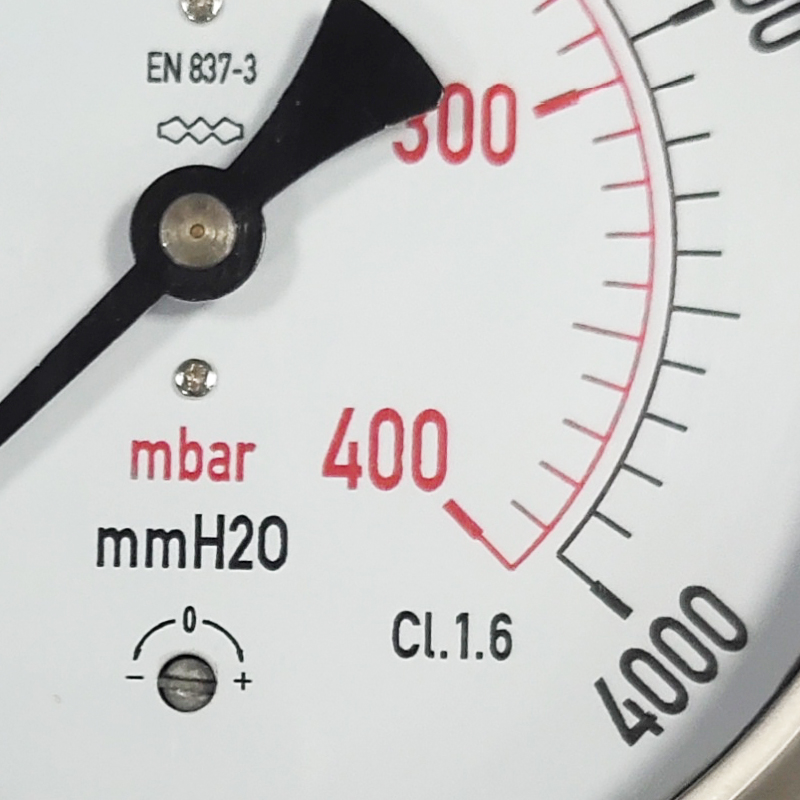
Ashcroft pressure gauges represent a critical component in numerous industrial processes, serving as essential instruments for monitoring and controlling fluid pressure. Positioned within the broader measurement and control instrumentation industry, these gauges provide visual indication of pressure levels, enabling safe and efficient operation across diverse applications including oil and gas, chemical processing, power generation, and HVAC systems. Core performance characteristics of Ashcroft gauges revolve around accuracy, reliability, and robustness, stemming from their Bourdon tube, diaphragm, and digital sensor technologies. The consistent demand for precise and dependable pressure measurement drives the ongoing development of advanced gauge features, such as enhanced safety mechanisms, digital connectivity for data logging, and improved resistance to corrosive environments. The primary industry pain point addressed by Ashcroft gauges is ensuring process safety and preventing costly downtime due to inaccurate pressure readings or instrument failure.
Material Science & Manufacturing
The construction of Ashcroft pressure gauges relies heavily on specific material properties to withstand operational stresses and corrosive media. Bourdon tubes, the core sensing element in many models, are frequently manufactured from alloys like beryllium copper (CuBe), spring steel (typically high-carbon steel), and stainless steel (304, 316, 321). Beryllium copper offers excellent elasticity and corrosion resistance, ideal for applications with fluctuating pressures and moderate corrosivity. Spring steel provides high yield strength and fatigue resistance but requires protective coatings for corrosion prevention. Stainless steels offer superior corrosion resistance, crucial in aggressive chemical environments. Cases are commonly produced from aluminum, stainless steel, or polymer materials. Glass for the window is often tempered glass or polycarbonate for impact resistance.
Manufacturing processes vary based on gauge type. Bourdon tube gauges involve forming a flattened, curved tube through processes like hot forming and cold drawing. The tube is heat-treated to impart specific spring characteristics. Diaphragm gauges employ processes like deep drawing and machining to create diaphragms from materials like stainless steel or Hastelloy. Assembly includes calibrating the mechanism using precision testing equipment. Digital gauges incorporate surface mount technology (SMT) for circuit board assembly and rigorous testing for accuracy and linearity. Key parameter control during manufacturing focuses on dimensional accuracy of the sensing element, material hardness and tensile strength, weld integrity (if applicable), and leak testing. Proper heat treatment is critical to achieve the desired elastic properties in Bourdon tubes.
Performance & Engineering
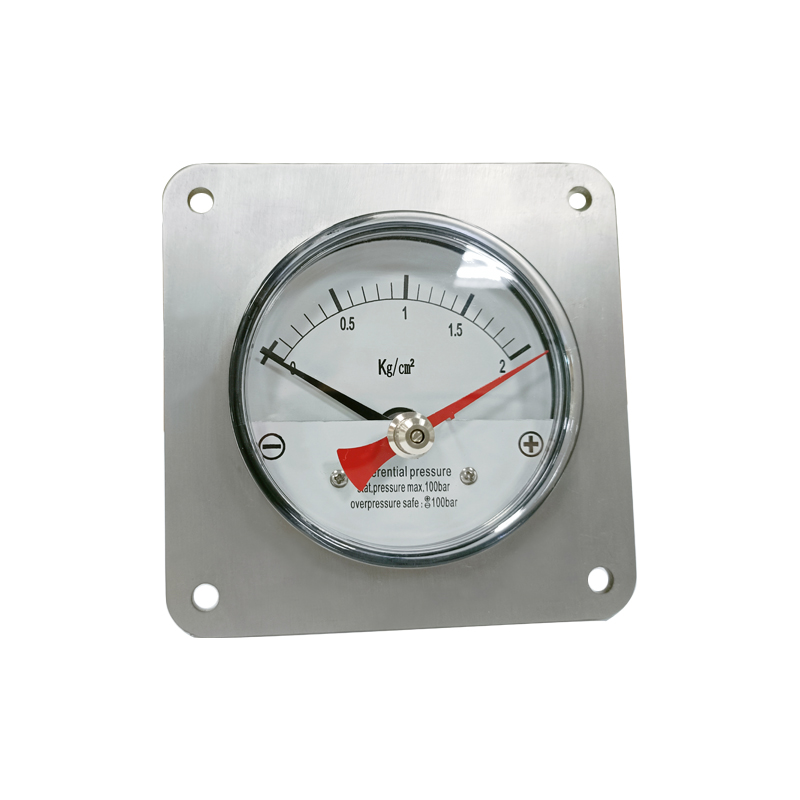
The performance of Ashcroft pressure gauges is governed by fundamental engineering principles, notably stress analysis and material fatigue. The Bourdon tube, under pressure, undergoes bending stress proportional to the applied pressure. Engineers carefully calculate tube thickness and geometry to ensure stress levels remain within acceptable limits, preventing permanent deformation or rupture. Fatigue life is a critical consideration, particularly in applications with cyclic pressure variations. Factors influencing fatigue life include material properties, stress concentration points (e.g., bends and welds), and the frequency and amplitude of pressure cycles.
Environmental resistance is paramount. Gauges are designed to withstand temperature fluctuations, vibration, shock, and corrosive atmospheres. Materials are selected based on their compatibility with the process fluid. Coatings (e.g., epoxy, PTFE) are applied to protect against corrosion. Compliance requirements are addressed through adherence to industry standards like ASME B40.100 (pressure gauges), IEC 61000-6-2 (electromagnetic compatibility), and potentially ATEX/IECEx directives for intrinsically safe gauges in hazardous areas. Functional implementation involves selecting the appropriate gauge range, accuracy class, and connection type to meet the specific application requirements. Accurate calibration procedures are implemented to ensure gauge readings correlate with traceable standards.
Technical Specifications
| Parameter | Accuracy (Full Scale) | Pressure Range (Typical) | Operating Temperature | Connection Size (Common) |
|---|---|---|---|---|
| Bourdon Tube Gauge | ±1.0% or ±0.5% | 0-30 inH2O to 0-10,000 psi | -40°F to 180°F (-40°C to 82°C) | 1/8” NPT, 1/4” NPT |
| Diaphragm Gauge | ±0.25% or better | 0-10 inH2O to 0-500 psi | -20°F to 200°F (-29°C to 93°C) | 1/8” NPT, 1/4” NPT |
| Digital Pressure Gauge | ±0.1% or better | 0-1 psi to 0-15,000 psi | -10°F to 150°F (-23°C to 66°C) | 1/4” NPT, 1/2” NPT |
| Case Material (Typical) | N/A | N/A | N/A | Aluminum, Stainless Steel, Plastic |
| Wetted Parts Material (Typical) | N/A | N/A | N/A | Stainless Steel (304, 316), Brass |
| Ingress Protection | N/A | N/A | N/A | IP65, IP67 |
Failure Mode & Maintenance
Ashcroft pressure gauges, while robust, are susceptible to several failure modes. Fatigue cracking in Bourdon tubes occurs due to repeated stress cycles exceeding the material’s endurance limit. Corrosion, especially in aggressive environments, can lead to tube rupture or blockage of sensing elements. Leakage through connections is common due to improper tightening or degradation of sealing materials. Zero drift, a gradual shift in the zero reading, can result from calibration errors, temperature effects, or internal component wear. Diaphragm gauges may experience diaphragm rupture due to overpressure or fatigue. Digital gauges are susceptible to electronic component failure and sensor drift.
Preventative maintenance is crucial. Regular visual inspections should check for leaks, damaged cases, and corroded components. Calibration should be performed annually or more frequently in critical applications. Connections should be tightened appropriately. Process fluid compatibility must be verified to prevent corrosion. For diaphragm gauges, protecting the diaphragm from direct impact is essential. Digital gauges require periodic battery replacement and software updates. In cases of fatigue cracking, tube replacement is necessary. If corrosion is present, cleaning and applying protective coatings can extend gauge life. Proper handling during installation and operation can minimize shock and vibration damage.
Industry FAQ
Q: What is the impact of process fluid viscosity on the accuracy of an Ashcroft pressure gauge?
A: Highly viscous fluids can introduce a damping effect, slowing the response time of the gauge and potentially causing a slight under-reading, particularly in dynamic pressure applications. The gauge is calibrated assuming a specific fluid density; significant deviations in viscosity can alter the effective pressure being measured. For viscous fluids, consider using a gauge with a dampened movement or applying a viscosity correction factor.
Q: How does temperature affect the accuracy of a Bourdon tube pressure gauge?
A: Temperature fluctuations can cause expansion or contraction of the Bourdon tube, leading to zero drift and affecting accuracy. The thermal coefficient of expansion of the tube material is a key factor. Gauges are typically calibrated at a specific temperature; significant deviations from that temperature require compensation or recalibration. Bimetallic Bourdon tubes are sometimes used to minimize temperature effects.
Q: What are the advantages of using a digital pressure gauge over a mechanical gauge?
A: Digital gauges offer higher accuracy, improved resolution, and advanced features like data logging, digital communication (e.g., Modbus, HART), and remote monitoring capabilities. They are less susceptible to parallax errors and can often compensate for temperature effects. However, they require a power supply and may be more complex to troubleshoot than mechanical gauges.
Q: What is the recommended practice for selecting a gauge range for a specific application?
A: The gauge range should be selected such that the normal operating pressure falls within the middle 25% to 75% of the gauge’s scale. This provides optimal accuracy and prevents over-ranging, which can damage the gauge. Avoid selecting a range that is too wide, as this will reduce accuracy and resolution.
Q: How can I ensure proper grounding of a digital pressure gauge to prevent electromagnetic interference?
A: Proper grounding is essential to minimize the effects of electromagnetic interference (EMI). Connect the gauge’s grounding terminal to a reliable earth ground. Use shielded cables for signal transmission and ensure the shielding is properly connected to ground. Avoid running signal cables in close proximity to sources of EMI, such as power cables or variable frequency drives.
Conclusion
Ashcroft pressure gauges stand as essential tools for precise pressure measurement across a multitude of industrial applications. Their performance is intrinsically linked to careful material selection, meticulous manufacturing processes, and a deep understanding of engineering principles relating to stress analysis, fatigue, and environmental resistance. Maintaining accurate calibration, implementing proactive preventative maintenance routines, and recognizing potential failure modes are critical for ensuring reliable and safe operation.
The continuing evolution of pressure gauge technology focuses on enhancing accuracy, expanding digital connectivity, and developing intrinsically safe designs for hazardous environments. Selecting the appropriate gauge type and range, coupled with proper installation and maintenance, will maximize instrument longevity and minimize operational risks. As process complexity increases, the demand for dependable and sophisticated pressure measurement solutions, like those offered by Ashcroft, will only continue to grow.
 English
  Arabic
  China
China  China (Taiwan)
  Danish
  Dutch
Dutch  French
  German
  Greek
Greek  Hindi
Hindi  Indonesian
  Italian
  Japanese
  Korean
  Latin
Latin  Polish
  Portuguese
  Russian
  Spanish
  Turkish