
Apr . 01, 2024 17:55 Back to list
auto air conditioning pressure gauge Performance Engineering
Introduction
The auto air conditioning pressure gauge is a critical diagnostic tool utilized within the automotive maintenance and repair industry. Positioned within the refrigerant circuit of a vehicle’s air conditioning system, its primary function is to accurately measure and display the high- and low-side refrigerant pressures. This data is essential for technicians to assess system performance, identify potential faults like compressor inefficiencies, blockages, or refrigerant leaks, and ensure optimal cooling capacity. The gauge is not merely an indicator; it’s a key component in a systematic diagnostic process. Historically, gauges were analog; modern iterations increasingly feature digital displays and connectivity for data logging and integration with diagnostic scan tools. Effective operation relies on precise calibration and a thorough understanding of the thermodynamic principles governing refrigerant behavior. Poorly maintained or misinterpreted readings can lead to incorrect diagnoses and costly repairs. The accuracy and reliability of these gauges directly impact both customer satisfaction and the efficient operation of automotive air conditioning systems.
Material Science & Manufacturing
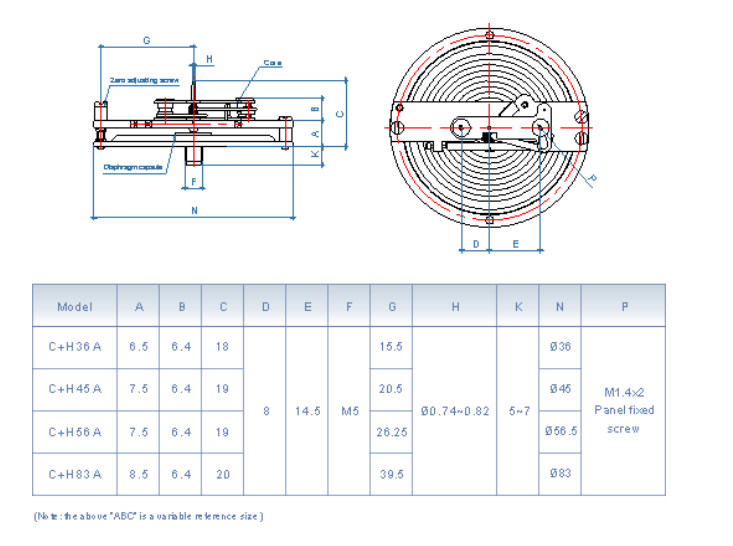
The construction of an auto air conditioning pressure gauge involves a selection of materials designed for durability, chemical compatibility with refrigerants, and accurate pressure transduction. Gauge housings are commonly manufactured from brass or stainless steel alloys (304 or 316 stainless) for corrosion resistance and mechanical strength. The Bourdon tube, the core sensing element, is typically made from beryllium copper or phosphor bronze, chosen for its high elasticity, fatigue resistance, and ability to undergo repeated deformation without permanent set. Diaphragm-type gauges utilize materials like nickel alloys (Monel) or stainless steel diaphragms, selected for their resilience and resistance to refrigerant permeation. The connecting fittings, crucial for interfacing with the AC system, are usually brass or steel with NPT (National Pipe Thread) or SAE (Society of Automotive Engineers) connections. Manufacturing processes vary. Bourdon tube gauges involve forming the tube via bending and annealing, followed by heat treatment to optimize its spring characteristics. Diaphragm gauges require precise diaphragm forming and welding techniques. Assembly involves meticulous calibration against NIST-traceable pressure standards. Critical parameter control during manufacturing includes maintaining tight tolerances on tube diameter and wall thickness, ensuring leak-proof welding, and applying protective coatings to prevent corrosion. Refrigerant compatibility testing is essential to verify resistance to R-134a, R-1234yf, and other common refrigerants. Material selection must also account for temperature extremes experienced within the engine compartment.
Performance & Engineering
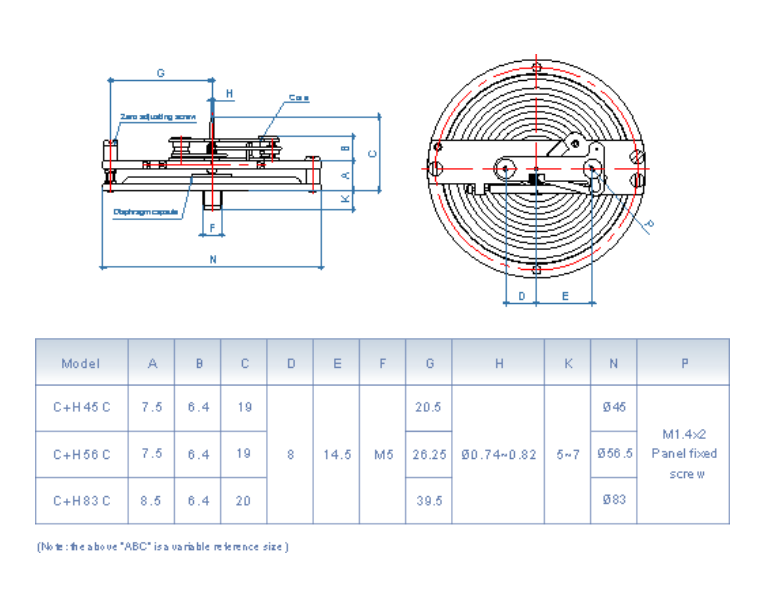
The performance of an auto air conditioning pressure gauge is determined by several key engineering principles. Accuracy is paramount, typically specified within ±1% of full scale. This is achieved through precise calibration and maintaining linearity across the operating pressure range. The gauge must also exhibit good repeatability, meaning consistent readings under identical conditions. Hysteresis, the difference in readings during increasing and decreasing pressure, should be minimized. Response time—how quickly the gauge reacts to pressure changes—is critical for dynamic diagnostics. Engineers consider factors like the damping fluid within the gauge (typically silicone oil) to optimize response without excessive oscillation. Environmental resistance is also a key design consideration. Gauges are subjected to vibration testing (simulating vehicle operation), temperature cycling (to mimic engine bay extremes), and humidity exposure to ensure long-term reliability. Furthermore, the gauge must be designed to withstand the maximum system pressures specified by SAE J684 and other relevant standards. Force analysis focuses on the stresses within the Bourdon tube or diaphragm under pressure, ensuring structural integrity. Finite Element Analysis (FEA) is often employed to optimize the design and predict stress concentrations. Proper venting is necessary to prevent pressure buildup within the gauge casing in case of internal failure.
Technical Specifications
| Parameter | Specification (R-134a System) | Specification (R-1234yf System) | Accuracy |
|---|---|---|---|
| Pressure Range (Low Side) | 30 – 55 psi | 30 – 65 psi | ±1% Full Scale |
| Pressure Range (High Side) | 150 – 250 psi | 180 – 280 psi | ±1% Full Scale |
| Resolution | 1 psi | 1 psi | N/A |
| Operating Temperature Range | -40°F to 158°F (-40°C to 70°C) | -40°F to 158°F (-40°C to 70°C) | N/A |
| Connection Type | 1/4" SAE Male Flare | 1/4" SAE Male Flare | N/A |
| Burst Pressure | 400 psi | 450 psi | N/A |
Failure Mode & Maintenance
Auto air conditioning pressure gauges are susceptible to several failure modes. Bourdon tube gauges can experience fatigue cracking due to repeated pressure cycling, particularly if subjected to excessive vibration or overpressure events. Leakage around the connections is common, often caused by thread damage or improper sealing. Diaphragm gauges can suffer from diaphragm rupture, leading to inaccurate readings and potential refrigerant release. Sensor drift, particularly in digital gauges, can occur over time due to component aging or exposure to harsh chemicals. Corrosion, especially in environments with high salt content, can degrade the gauge housing and internal components. Common maintenance practices include regular visual inspection for leaks and physical damage. Periodic calibration against a known pressure standard is crucial to ensure accuracy. Connections should be tightened to the correct torque specification. Avoid subjecting the gauge to excessive shock or vibration. If the gauge exhibits erratic readings or fails to respond, it should be removed from service and either repaired or replaced. Proper storage in a clean, dry environment can extend the gauge’s lifespan. The use of dielectric grease on electrical connections (for digital gauges) can prevent corrosion. Never attempt to disassemble a sealed gauge; this should only be performed by qualified personnel.
Industry FAQ
Q: What is the significance of a fluctuating pressure reading on the low side?
A: A fluctuating low-side pressure reading often indicates a restricted orifice tube or expansion valve, causing intermittent refrigerant flow. It can also be a sign of a low refrigerant charge or air and moisture contamination within the system. Further diagnostics, including checking the receiver-drier and performing a system evacuation, are necessary.
Q: How does the type of refrigerant affect the pressure readings?
A: Different refrigerants have different saturation pressures at the same temperature. R-1234yf, for example, operates at significantly higher pressures than R-134a. Therefore, using a gauge calibrated for R-134a on an R-1234yf system will result in inaccurate readings. It is crucial to use a gauge specifically designed for the refrigerant type being tested.
Q: What could cause a consistently high high-side pressure reading?
A: A consistently high high-side pressure can indicate a blocked condenser, a failing condenser fan, or an overcharged system. It could also signify a restriction in the liquid line. Inspecting the condenser for debris and verifying proper fan operation are essential diagnostic steps.
Q: How often should an auto AC pressure gauge be calibrated?
A: Calibration frequency depends on usage and environmental conditions. As a general guideline, gauges should be calibrated annually, or after any significant impact or exposure to extreme temperatures. Calibration should be traceable to NIST standards to ensure accuracy.
Q: What safety precautions should be taken when using an AC pressure gauge?
A: Always wear safety glasses when working with refrigerant systems. Ensure the system is properly evacuated before disconnecting any lines. Never exceed the maximum pressure rating of the gauge. Be aware of the potential for refrigerant burns. Dispose of refrigerant responsibly, in accordance with EPA regulations.
Conclusion
The auto air conditioning pressure gauge remains an indispensable tool for accurate diagnosis and repair of automotive AC systems. Its function hinges on precise material selection, meticulous manufacturing processes, and adherence to stringent performance standards. Understanding the principles of pressure transduction, refrigerant behavior, and potential failure modes is crucial for effective utilization and maintenance. Continued advancements in sensor technology and digital integration are enhancing the capabilities of these gauges, providing technicians with more comprehensive data for efficient troubleshooting.
Looking forward, we can expect to see increased integration of pressure gauges with onboard diagnostic systems, providing real-time data and predictive maintenance capabilities. Development of more durable and corrosion-resistant materials will further enhance gauge lifespan. Emphasis on operator training and proper calibration procedures will remain paramount to ensure accurate and reliable performance in the field, contributing to the longevity and efficiency of automotive climate control systems.
 English
  Arabic
  China
China  China (Taiwan)
  Danish
  Dutch
Dutch  French
  German
  Greek
Greek  Hindi
Hindi  Indonesian
  Italian
  Japanese
  Korean
  Latin
Latin  Polish
  Portuguese
  Russian
  Spanish
  Turkish