
Apr . 01, 2024 17:55 Back to list
barometric pressure gauge Performance Analysis
Introduction
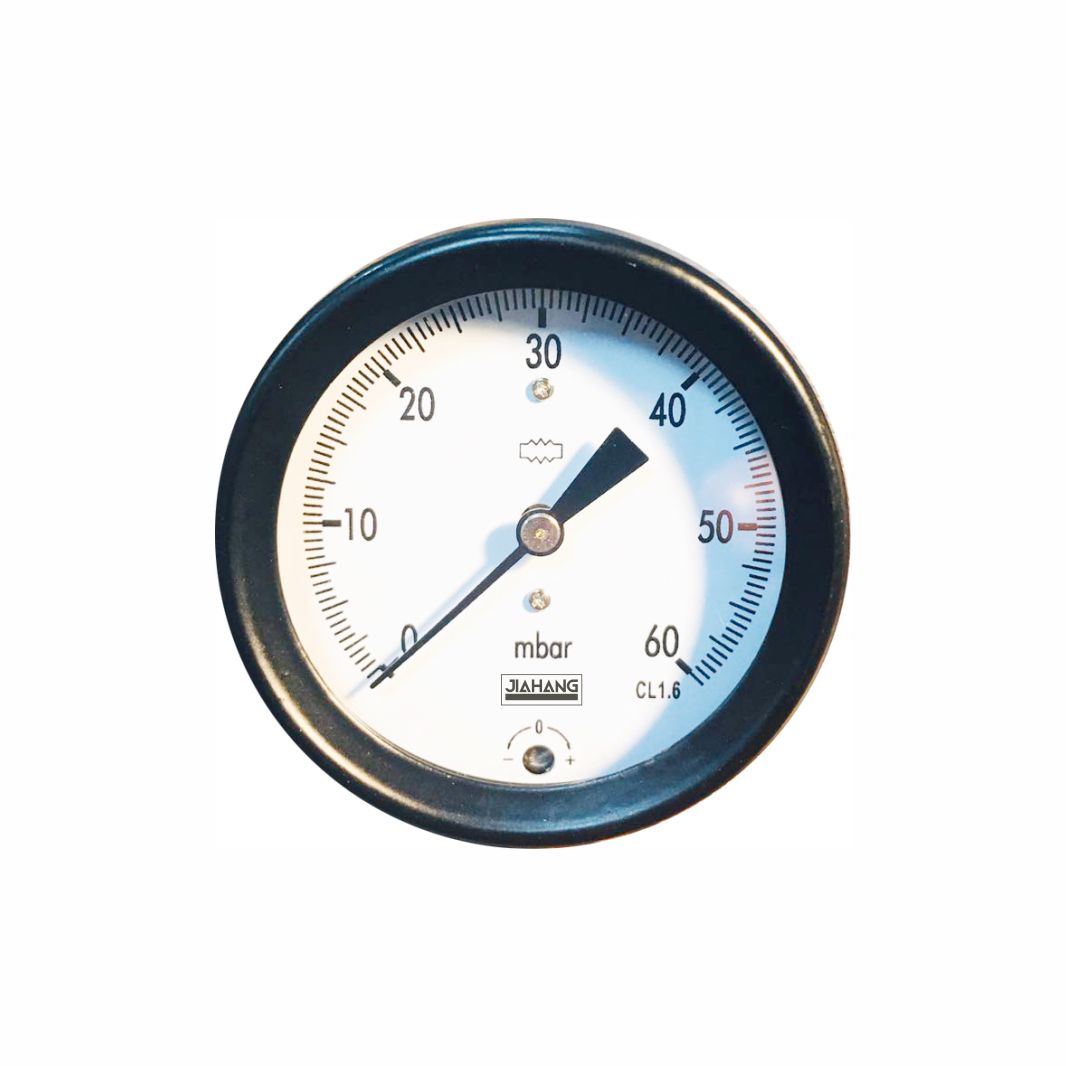
The barometric pressure gauge is a vital instrument for measuring atmospheric pressure, finding application across diverse sectors including meteorology, aviation, industrial process control, and altitude determination. Its core functionality relies on detecting the force exerted by the weight of air, providing a quantifiable value typically expressed in inches of mercury (inHg), millimeters of mercury (mmHg), Pascals (Pa), or millibars (mb). Unlike differential pressure gauges measuring pressure differences, barometric gauges quantify absolute pressure relative to a perfect vacuum. The accuracy and reliability of barometric pressure measurements are paramount in applications demanding precise environmental monitoring or safety-critical operations. This guide provides an in-depth technical overview of barometric pressure gauges, encompassing material science, manufacturing processes, performance characteristics, failure modes, and relevant industry standards. Core industry pain points include drift over time due to temperature fluctuations, susceptibility to mechanical damage impacting calibration, and the need for frequent, traceable calibration to ensure data integrity.
Material Science & Manufacturing
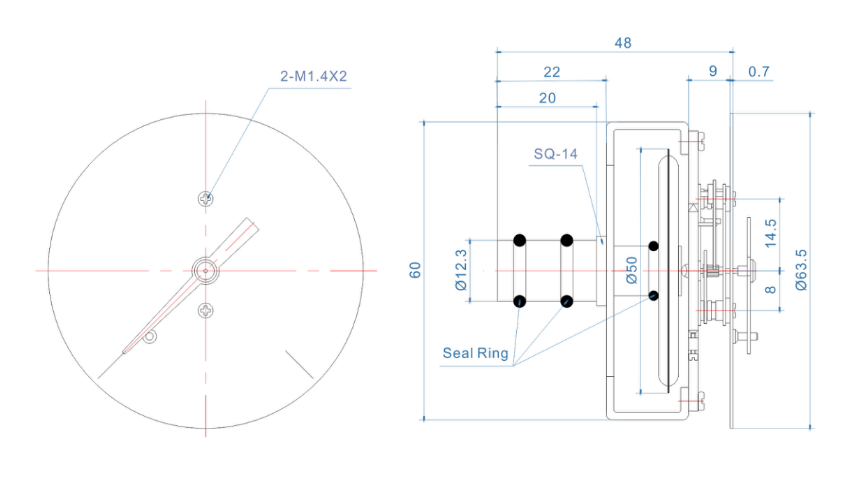
Barometric pressure gauges utilize a variety of materials depending on the specific design – aneroid, digital, or mercury-based (though mercury-based are increasingly restricted due to environmental concerns). Aneroid gauges, the most prevalent type, rely on a partially evacuated metal bellows, typically constructed from beryllium-copper alloy or stainless steel (304 or 316). Beryllium-copper offers exceptional elasticity and fatigue resistance, crucial for repeatedly expanding and contracting with pressure changes. Stainless steel provides superior corrosion resistance in harsh environments. The bellows material’s yield strength and elastic modulus directly impact gauge sensitivity and linearity. Manufacturing involves deep drawing, heat treatment (to achieve desired spring characteristics), and careful welding of the bellows. Digital gauges incorporate pressure sensors based on silicon piezoresistive technology or capacitive sensing. These sensors require high-purity silicon substrates and micro-electromechanical systems (MEMS) fabrication techniques, including photolithography, etching, and thin-film deposition. The housing of both aneroid and digital gauges is commonly made from aluminum, brass, or plastic (ABS or polycarbonate), chosen for their machinability, weight, and resistance to environmental factors. Critical parameters during manufacturing include maintaining vacuum integrity within the bellows, precise calibration of the sensing element, and ensuring dimensional accuracy of mechanical linkages.
Performance & Engineering
The performance of a barometric pressure gauge is governed by several key engineering considerations. Accuracy, defined as the deviation between the indicated pressure and the true pressure, is paramount. This is typically specified as a percentage of full scale (e.g., ±1% FS). Linearity refers to the gauge's ability to provide a consistent output across the entire pressure range. Hysteresis, the difference in readings for increasing and decreasing pressure, must be minimized. Resolution, the smallest change in pressure the gauge can detect, is another critical factor. Environmental resistance is crucial; gauges must withstand temperature fluctuations, humidity, vibration, and shock without significant performance degradation. Temperature compensation is often incorporated into the design, using bimetallic strips or electronic circuitry to counteract the thermal expansion/contraction of the bellows or sensor. For aviation applications, gauges must meet stringent altitude accuracy requirements and be resistant to rapid pressure changes. Force analysis focuses on the stresses within the bellows and mechanical linkages, ensuring they remain within acceptable limits to prevent fatigue failure. Calibration is performed using a standardized reference pressure source, and traceability to national standards (e.g., NIST in the US) is essential. Compliance requirements vary by industry, with aviation requiring certification under FAA regulations and meteorological applications adhering to WMO guidelines.
Technical Specifications
| Parameter | Aneroid Gauge (Standard) | Digital Gauge (High Precision) | Mercury Barometer (Historical) |
|---|---|---|---|
| Pressure Range | 950 - 1050 mbar (28-31 inHg) | 300 - 1100 mbar (9-32.5 inHg) | Variable, dependent on tube length |
| Accuracy | ±2% FS | ±0.1% FS | ±0.5 mm Hg (ideal) |
| Resolution | 1 mbar | 0.1 mbar | 0.1 mm Hg |
| Operating Temperature | -30°C to +60°C (-22°F to 140°F) | -20°C to +85°C (-4°F to 185°F) | 10°C to 30°C (50°F to 86°F) |
| Housing Material | Aluminum or Plastic | ABS or Polycarbonate | Glass, Brass, or Wood |
| Power Supply | None (Mechanical) | 3V Lithium Battery (typical) | None (Gravity-Based) |
Failure Mode & Maintenance
Barometric pressure gauges are susceptible to several failure modes. Aneroid gauges can experience bellows fatigue cracking due to repeated cyclical stress, leading to inaccurate readings or complete failure. Corrosion of internal components, particularly in humid environments, can also impair performance. Mechanical linkages can become loose or jammed, resulting in sluggish response or erratic readings. Digital gauges can fail due to sensor drift, component degradation, or power supply issues. Moisture ingress is a common cause of failure in both types. Mercury barometers are prone to breakage, releasing hazardous mercury vapor. Maintenance for aneroid gauges involves periodic cleaning to remove dust and debris and careful visual inspection for damage. Digital gauges require battery replacement and occasional recalibration. Regular calibration against a traceable standard is crucial for both types. When troubleshooting, check for leaks in the bellows or housing, ensure the mechanical linkages are moving freely, and verify the power supply (for digital gauges). For damaged bellows, replacement is typically required. Proper storage in a dry, stable environment can significantly extend the lifespan of these instruments. Avoid subjecting gauges to excessive shock or vibration.
Industry FAQ
Q: What is the typical lifespan of an aneroid barometric pressure gauge?
A: A properly maintained aneroid barometric pressure gauge typically has a lifespan of 5-10 years. However, this can vary significantly depending on the quality of construction, operating environment, and frequency of use. Factors like exposure to extreme temperatures, humidity, and vibration can accelerate wear and tear, shortening the lifespan.
Q: How does temperature affect the accuracy of a barometric pressure gauge?
A: Temperature changes can significantly impact the accuracy of a barometric pressure gauge. In aneroid gauges, temperature fluctuations cause the metal bellows to expand or contract, leading to reading errors. Digital gauges are generally more stable but can still exhibit temperature-induced drift. Temperature compensation mechanisms are often incorporated to mitigate these effects.
Q: What is the recommended calibration frequency for a barometric pressure gauge used in a meteorological station?
A: For meteorological applications, a barometric pressure gauge should be calibrated at least annually, and ideally semi-annually. This ensures the accuracy of weather data and compliance with WMO standards. More frequent calibration may be necessary in harsh environments or if the gauge is subjected to frequent shock or vibration.
Q: What are the advantages of a digital barometric pressure gauge over an analog (aneroid) gauge?
A: Digital barometric pressure gauges offer several advantages, including higher accuracy, better resolution, temperature compensation, and the ability to interface with data logging systems. They are also less susceptible to mechanical damage than analog gauges. However, they require a power source and can be more expensive.
Q: Are mercury barometers still used, and what are the safety concerns associated with them?
A: While historically prevalent, mercury barometers are now less common due to environmental and safety concerns. Mercury is a highly toxic substance, and breakage can release hazardous vapor. Regulations increasingly restrict the use of mercury-based instruments. If a mercury barometer is used, strict safety protocols must be followed to prevent spills and exposure.
Conclusion
The barometric pressure gauge, in its various forms, remains a critical instrument for accurate atmospheric pressure measurement across a multitude of industries. The choice between aneroid, digital, and historically mercury-based gauges depends on the specific application requirements, balancing factors such as accuracy, cost, environmental constraints, and data integration needs. Understanding the underlying material science, manufacturing processes, and potential failure modes is paramount for ensuring reliable and long-term performance.
Continued advancements in MEMS technology and sensor design are driving improvements in digital barometric pressure gauges, offering higher precision and enhanced functionality. Regular calibration, adherence to relevant industry standards, and proper maintenance practices are essential for maximizing the lifespan and accuracy of these vital instruments. Future developments may focus on integrating barometric pressure sensors with IoT platforms for real-time data monitoring and predictive maintenance applications.
 English
  Arabic
  China
China  China (Taiwan)
  Danish
  Dutch
Dutch  French
  German
  Greek
Greek  Hindi
Hindi  Indonesian
  Italian
  Japanese
  Korean
  Latin
Latin  Polish
  Portuguese
  Russian
  Spanish
  Turkish