
Apr . 01, 2024 17:55 Back to list
basketball pressure gauge Performance and Engineering
Introduction
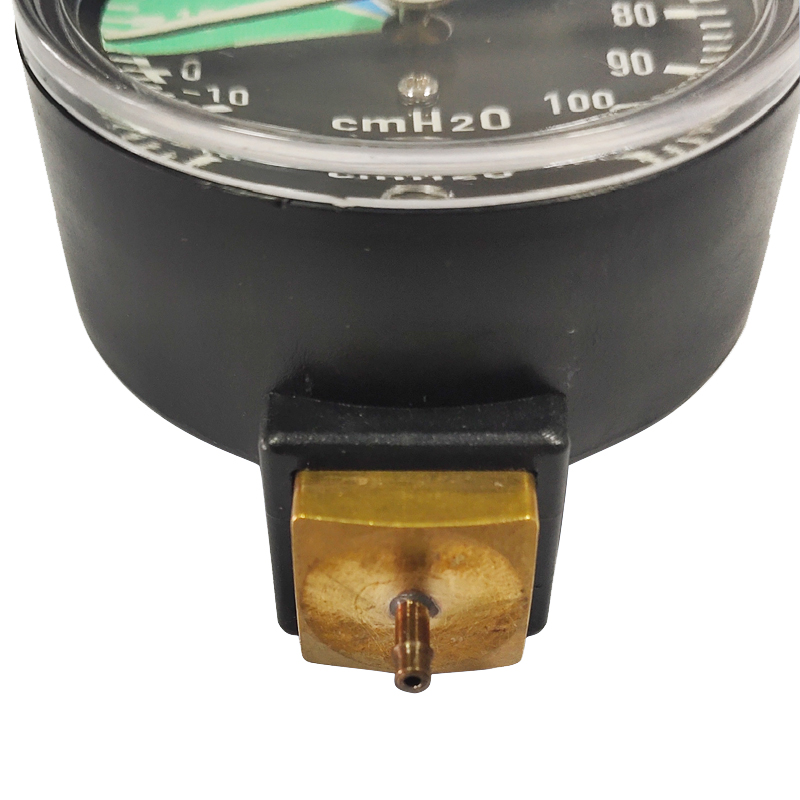
Basketball pressure gauges are precision instruments used to measure the internal air pressure of basketballs, conforming to National Basketball Association (NBA) and Women’s National Basketball Association (WBA) specifications. They are critical in maintaining optimal ball performance, influencing bounce consistency, player control, and game fairness. These gauges are essential tools for coaches, referees, athletic trainers, and serious basketball players. Commercially available gauges range from simple analog dial types to more sophisticated digital models, employing varying sensor technologies. A primary industry challenge centers on ensuring accuracy and repeatability across a wide temperature range, and preventing long-term calibration drift. The gauge’s position within the basketball equipment supply chain is post-manufacturing, providing a final quality control step and enabling consistent performance during gameplay.
Material Science & Manufacturing
The construction of a basketball pressure gauge involves several materials, each selected for specific properties. The gauge housing is commonly manufactured from ABS plastic or aluminum alloy, chosen for their impact resistance and lightweight characteristics. The pressure sensor, the critical component, typically utilizes a Bourdon tube, piezoelectric crystal, or MEMS (Micro-Electro-Mechanical Systems) technology. Bourdon tubes, typically made from beryllium copper or stainless steel, rely on the principle of elastic deformation in response to internal pressure. Piezoelectric sensors utilize crystals that generate an electrical charge proportional to applied pressure. MEMS sensors are silicon-based micro-machines providing high sensitivity and miniaturization. Manufacturing processes vary. ABS housings are created via injection molding, requiring precise temperature and pressure control to achieve dimensional accuracy and surface finish. Aluminum housings are typically machined or die-cast. Bourdon tube manufacturing involves forming, heat treatment, and calibration. Sensor calibration is paramount, utilizing precision pressure standards traceable to NIST (National Institute of Standards and Technology). A critical manufacturing parameter is ensuring a hermetic seal around the sensor to prevent environmental contamination and maintain accuracy. Post-assembly quality control includes leak testing and functional verification across the entire pressure range.
Performance & Engineering
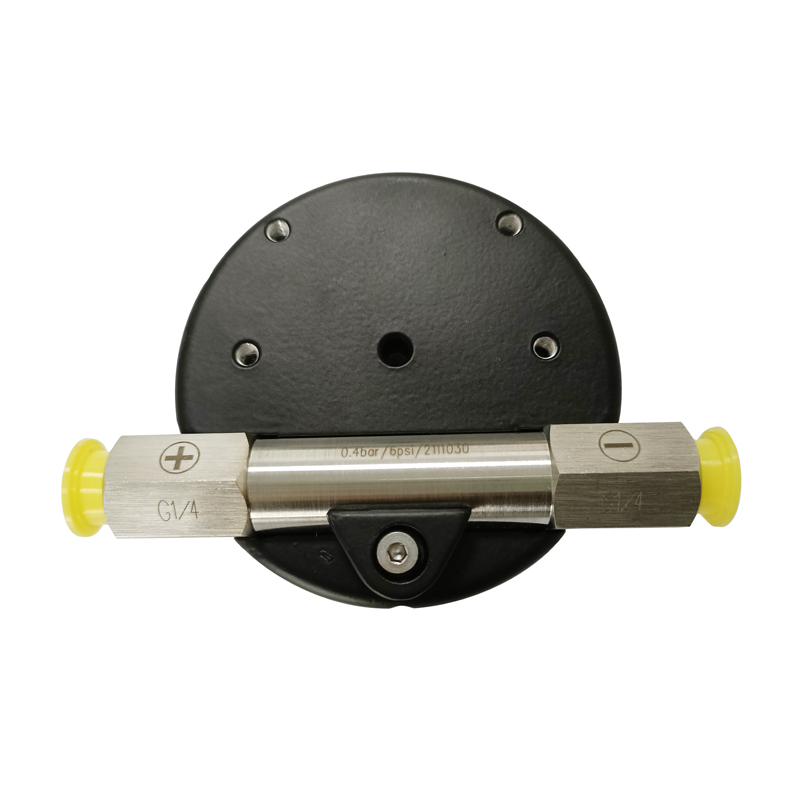
The performance of a basketball pressure gauge is fundamentally governed by its accuracy, precision, linearity, and hysteresis. Accuracy refers to the difference between the measured pressure and the true pressure. Precision indicates the repeatability of measurements. Linearity describes how consistently the output changes with pressure variations. Hysteresis represents the difference in readings when approaching a given pressure from above versus below. Engineering considerations focus on minimizing these errors. Force analysis is essential in designing the Bourdon tube or MEMS sensor to withstand maximum operating pressures without permanent deformation or failure. Environmental resistance is crucial; gauges must maintain accuracy across a broad temperature range (-10°C to 50°C) and humidity levels. Compliance with NBA/WBA specifications (typically 7.5 to 8.5 PSI) necessitates rigorous testing and calibration procedures. Digital gauges incorporate analog-to-digital converters (ADCs) and microcontrollers to process sensor signals and display readings. Power consumption is a key design parameter for battery-powered models. The gauge's mechanical design must protect the sensor from shock and vibration during handling and transport. Fatigue analysis is performed on the Bourdon tube to ensure its longevity under cyclic loading.
Technical Specifications
| Pressure Range (PSI) | Accuracy (PSI) | Resolution (PSI) | Operating Temperature (°C) |
|---|---|---|---|
| 0-10 | ±0.1 | 0.1 | -10 to 50 |
| 0-12 | ±0.15 | 0.05 | 0 to 40 |
| 0-15 | ±0.2 | 0.1 | -20 to 60 |
| 0-20 | ±0.25 | 0.1 | -10 to 50 |
| 0-30 | ±0.5 | 0.1 | 0 to 40 |
| 0-60 | ±1.0 | 0.1 | -10 to 50 |
Failure Mode & Maintenance
Common failure modes in basketball pressure gauges include sensor drift, mechanical damage to the Bourdon tube, battery depletion (for digital gauges), and display malfunction. Sensor drift occurs over time due to material creep and environmental factors, leading to inaccurate readings. Mechanical damage can result from dropping the gauge or subjecting it to excessive shock. Battery depletion is self-explanatory, while display failures can stem from component failure or corrosion. Failure analysis often reveals that corrosion within the sensor assembly contributes significantly to long-term inaccuracy. Preventive maintenance involves regular calibration (at least annually) using a NIST-traceable pressure standard. Avoid exposing the gauge to extreme temperatures or humidity. Protect the gauge from physical impact. For digital gauges, replace batteries promptly. If the Bourdon tube is visibly damaged, the gauge should be replaced. To mitigate drift, store the gauge in a stable environment and avoid prolonged exposure to direct sunlight. Regular functional checks, comparing readings to a known standard, can identify early signs of deterioration. Proper handling and storage significantly extend the service life of the instrument.
Industry FAQ
Q: What is the acceptable tolerance for pressure measurement in a professional basketball game?
A: The NBA and WBA stipulate a pressure range of 7.5 to 8.5 PSI. The acceptable tolerance is typically ±0.1 PSI to ensure consistency and fairness. Referees rely on calibrated gauges to verify compliance before and during games.
Q: How does temperature affect the accuracy of a basketball pressure gauge?
A: Temperature variations can significantly impact accuracy. Temperature affects the elasticity of the Bourdon tube and the sensitivity of piezoelectric or MEMS sensors. Gauges are typically calibrated at a specific temperature (e.g., 25°C), and accuracy degrades as the operating temperature deviates from this calibration point. Temperature compensation circuitry is used in some digital gauges to mitigate this effect.
Q: What are the advantages of a digital basketball pressure gauge over an analog gauge?
A: Digital gauges generally offer higher accuracy, improved readability, and additional features such as data logging and temperature compensation. They also tend to be less susceptible to parallax errors inherent in analog dial readings. However, they require batteries and may be more expensive.
Q: How often should a basketball pressure gauge be calibrated?
A: Annual calibration is recommended for gauges used in professional settings or where high accuracy is critical. For recreational use, calibration every two years is generally sufficient. Calibration should be performed by a qualified laboratory using NIST-traceable standards.
Q: What materials are most resistant to corrosion within the pressure sensor?
A: Beryllium copper and 316 stainless steel are commonly used for Bourdon tubes due to their excellent corrosion resistance. However, even these materials can be susceptible to corrosion in harsh environments. Protective coatings and hermetic sealing are crucial for preventing sensor degradation.
Conclusion
Basketball pressure gauges are essential tools for maintaining consistent ball performance and ensuring fair play. Their accuracy is paramount, relying on precise material selection, meticulous manufacturing processes, and regular calibration. Understanding the underlying principles of pressure measurement, sensor technologies, and potential failure modes is crucial for selecting and maintaining these critical instruments.
Continued advancements in MEMS technology and digital signal processing promise to yield even more accurate, reliable, and feature-rich basketball pressure gauges in the future. Focusing on improved temperature compensation, reduced hysteresis, and extended calibration intervals will be key areas of development. The industry trend is towards more sophisticated digital instruments offering greater functionality and ease of use.
 English
  Arabic
  China
China  China (Taiwan)
  Danish
  Dutch
Dutch  French
  German
  Greek
Greek  Hindi
Hindi  Indonesian
  Italian
  Japanese
  Korean
  Latin
Latin  Polish
  Portuguese
  Russian
  Spanish
  Turkish