
Apr . 01, 2024 17:55 Back to list
best air pressure gauge Performance Analysis
Introduction
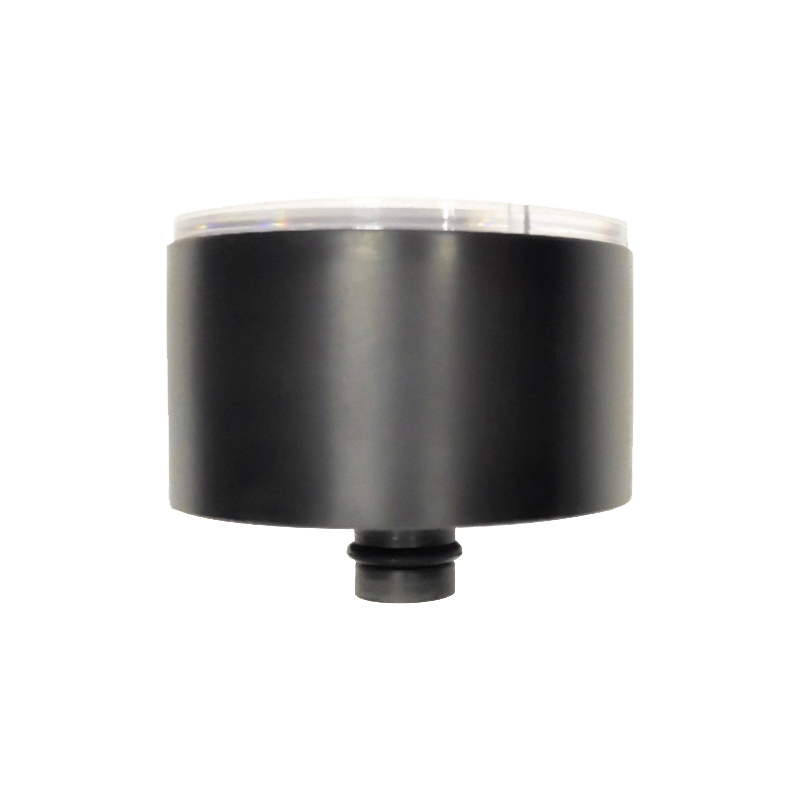
Air pressure gauges are fundamental instruments within a vast spectrum of industrial and commercial applications, serving as critical components in pneumatic systems, process control, and safety monitoring. Their primary function is the precise measurement of gaseous pressure, converting it into a readable indication, typically displayed on a dial or digital screen. This guide provides a comprehensive technical overview of air pressure gauges, focusing on their underlying material science, manufacturing processes, performance characteristics, potential failure modes, and relevant industry standards. Unlike simple pressure indicators, modern high-performance gauges are engineered to withstand harsh environments, resist corrosion, and provide consistently accurate readings crucial for optimizing efficiency and preventing catastrophic failures in connected systems. A critical pain point within the industry centers on gauge accuracy drifting over time, leading to miscalibration and potential operational hazards. This necessitates a thorough understanding of gauge construction, performance parameters, and proactive maintenance protocols.
Material Science & Manufacturing
The construction of a high-quality air pressure gauge hinges on the selection of appropriate materials and precise manufacturing techniques. The Bourdon tube, the core sensing element, is commonly fabricated from alloys of copper, beryllium copper, or stainless steel (304, 316L). Copper alloys offer excellent elasticity and corrosion resistance in many environments, while beryllium copper provides enhanced strength and conductivity. Stainless steel is preferred for highly corrosive applications or where magnetic compatibility is essential. The gauge case is typically constructed from steel, aluminum, or reinforced polymers. Manufacturing processes vary depending on the gauge type. Bourdon tubes are formed through a cold-forming process involving bending and annealing, which imparts the necessary elastic properties. Welding, brazing, or silver soldering are utilized to join the Bourdon tube to the movement mechanism. Diaphragm gauges employ a thin, flexible diaphragm (often stainless steel or Hastelloy) that deflects under pressure. The manufacturing of diaphragms requires precise etching or forming techniques to ensure uniform thickness and sensitivity. Accuracy is heavily influenced by the heat treatment process applied to the Bourdon tube and diaphragm, controlling residual stresses and ensuring dimensional stability. Critical parameters monitored during manufacturing include material composition verification, dimensional tolerances (measured using coordinate measuring machines – CMMs), leak testing, and calibration against certified pressure standards.
Performance & Engineering
The performance of an air pressure gauge is defined by several key engineering parameters. Accuracy, typically expressed as a percentage of full scale (%FS), indicates the deviation between the indicated pressure and the actual pressure. Linearity describes how consistently the gauge outputs a proportional signal across its measurement range. Hysteresis quantifies the difference in output for increasing versus decreasing pressure. Repeatability assesses the gauge's ability to provide consistent readings under identical conditions. The gauge’s response time, reflecting its dynamic performance, is crucial in applications involving rapidly fluctuating pressures. Environmental resistance is paramount; gauges must withstand temperature variations, humidity, vibration, and shock without compromising accuracy. Force analysis on the Bourdon tube involves evaluating stress distribution under pressure, ensuring it operates within its elastic limit to prevent permanent deformation. Safety considerations include the implementation of overpressure protection mechanisms (blow-out disc or solid-front case) to mitigate risks in case of system failure. Compliance requirements, such as those stipulated by OSHA and specific industry regulations, dictate material traceability, performance testing, and documentation standards. Proper selection of the gauge’s wetted materials is essential to ensure compatibility with the process fluid and prevent corrosion or contamination.
Technical Specifications
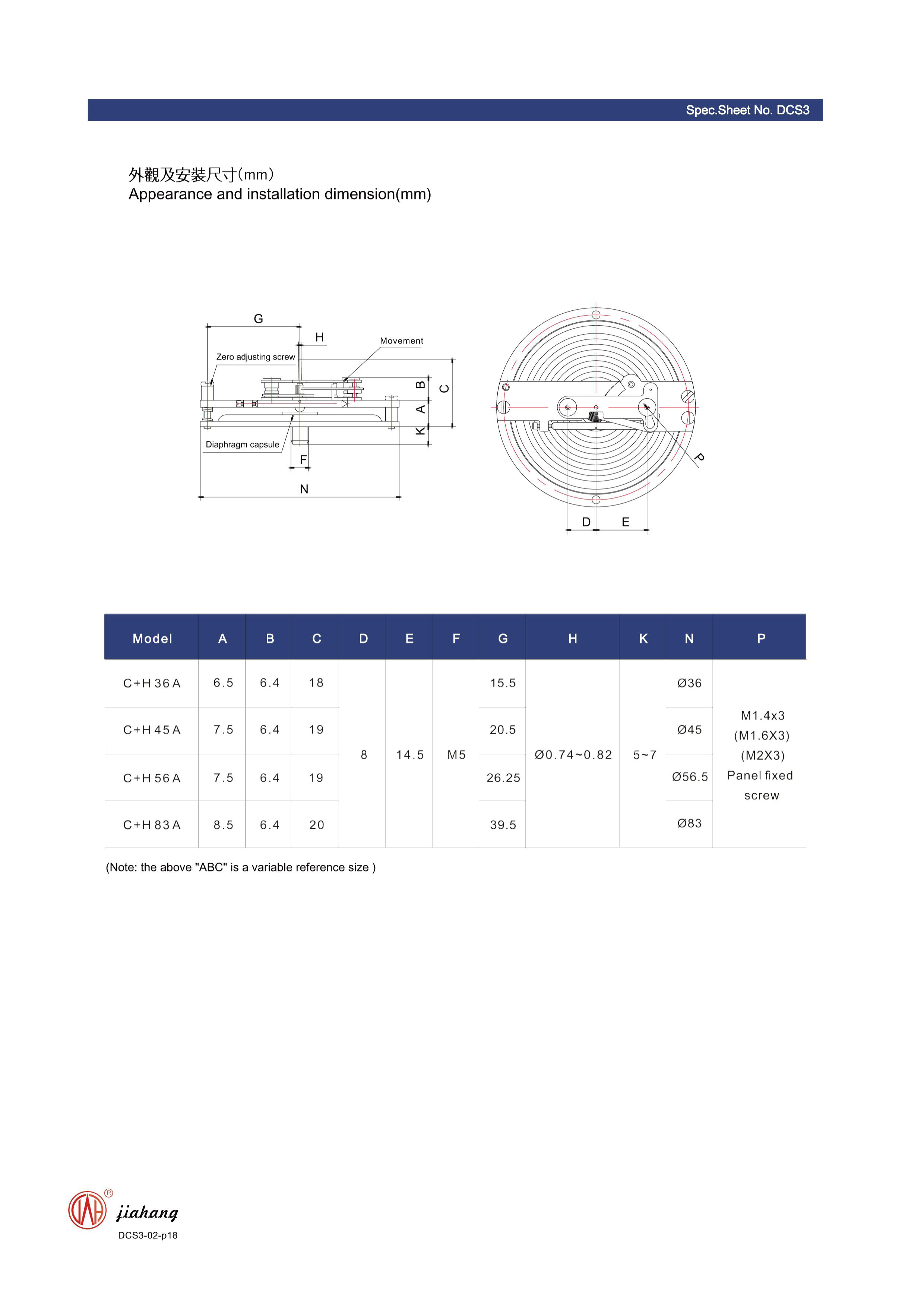
| Parameter | Unit | Typical Value | Tolerance |
|---|---|---|---|
| Pressure Range | psi | 0-100 | ±0.25% FS |
| Accuracy | %FS | 1.0 | ±0.5% FS |
| Connection Size | NPT | 1/4" | Variable |
| Case Material | - | Steel | Aluminum Available |
| Wetted Material | - | Stainless Steel 304 | 316L Available |
| Operating Temperature | °F | -40 to 180 | Dependent on seal material |
Failure Mode & Maintenance
Air pressure gauges are susceptible to several failure modes. Fatigue cracking of the Bourdon tube, often initiated at stress concentration points (welds or bends), can lead to catastrophic failure. Corrosion, particularly in harsh environments, can weaken the tube and cause leakage. Hysteresis and drift can occur due to material creep or damage to the movement mechanism. Overpressure events exceeding the gauge’s rated capacity can cause permanent deformation or rupture. External factors, such as vibration and shock, can loosen connections or damage the internal components. Maintenance involves regular visual inspection for leaks, corrosion, or physical damage. Calibration against a certified pressure standard should be performed periodically (typically annually or more frequently in critical applications) to verify accuracy. Lubrication of the movement mechanism may be required to ensure smooth operation. Preventative maintenance should also include protecting the gauge from extreme temperatures, vibration, and corrosive environments. For diaphragm gauges, damage to the diaphragm itself is a common failure point, often requiring full gauge replacement. Failure analysis, involving metallurgical examination and non-destructive testing, can help identify the root cause of failures and implement corrective actions.
Industry FAQ
Q: What is the impact of process fluid compatibility on gauge lifespan?
A: Process fluid compatibility is paramount. Incompatible fluids can cause corrosion, erosion, or swelling of internal components, leading to inaccurate readings and premature failure. Selecting a gauge with wetted materials specifically rated for the process fluid is essential. For example, gauges used with corrosive chemicals require stainless steel 316L or Hastelloy components.
Q: How often should air pressure gauges be calibrated?
A: Calibration frequency depends on the criticality of the application and the operating environment. Generally, annual calibration is recommended. However, in applications with high accuracy requirements or exposure to severe conditions (vibration, temperature fluctuations), more frequent calibration (e.g., quarterly or even monthly) may be necessary.
Q: What are the advantages of digital air pressure gauges over analog gauges?
A: Digital gauges offer several advantages, including higher accuracy, improved readability, and the ability to transmit data remotely. They also often incorporate advanced features such as data logging, alarm settings, and self-calibration capabilities. However, they typically require a power source and may be more expensive than analog gauges.
Q: What is the function of a snubber in an air pressure gauge system?
A: A snubber is a flow restrictor installed upstream of the gauge. It dampens pressure pulsations and spikes, protecting the gauge from damage and improving reading stability. Snubbers are particularly important in applications with reciprocating compressors or pneumatic tools.
Q: How do I interpret the accuracy specification (%FS)?
A: %FS (percent of full scale) indicates the maximum allowable error as a percentage of the gauge’s largest reading. For example, a gauge with an accuracy of ±1%FS on a 100 psi range has a maximum allowable error of ±1 psi.
Conclusion
Air pressure gauges, while seemingly simple devices, are complex engineered instruments critical for safe and efficient operation across numerous industries. Understanding the interplay between material science, manufacturing processes, performance parameters, and potential failure modes is crucial for selecting the appropriate gauge for a specific application and ensuring its long-term reliability. The prevention of inaccuracies stemming from corrosion, drift, and overpressure events relies heavily on material selection, regular calibration, and proactive maintenance procedures.
Future developments in air pressure gauge technology will likely focus on miniaturization, wireless connectivity, and the integration of advanced sensing technologies. The trend towards Industry 4.0 and predictive maintenance will drive demand for gauges with enhanced data logging and remote monitoring capabilities, allowing for real-time performance analysis and proactive identification of potential failures. Continued research into novel materials and manufacturing techniques will further improve gauge accuracy, durability, and resistance to harsh environments.
 English
  Arabic
  China
China  China (Taiwan)
  Danish
  Dutch
Dutch  French
  German
  Greek
Greek  Hindi
Hindi  Indonesian
  Italian
  Japanese
  Korean
  Latin
Latin  Polish
  Portuguese
  Russian
  Spanish
  Turkish