
Apr . 01, 2024 17:55 Back to list
bike tire pressure gauge Performance Analysis
Introduction
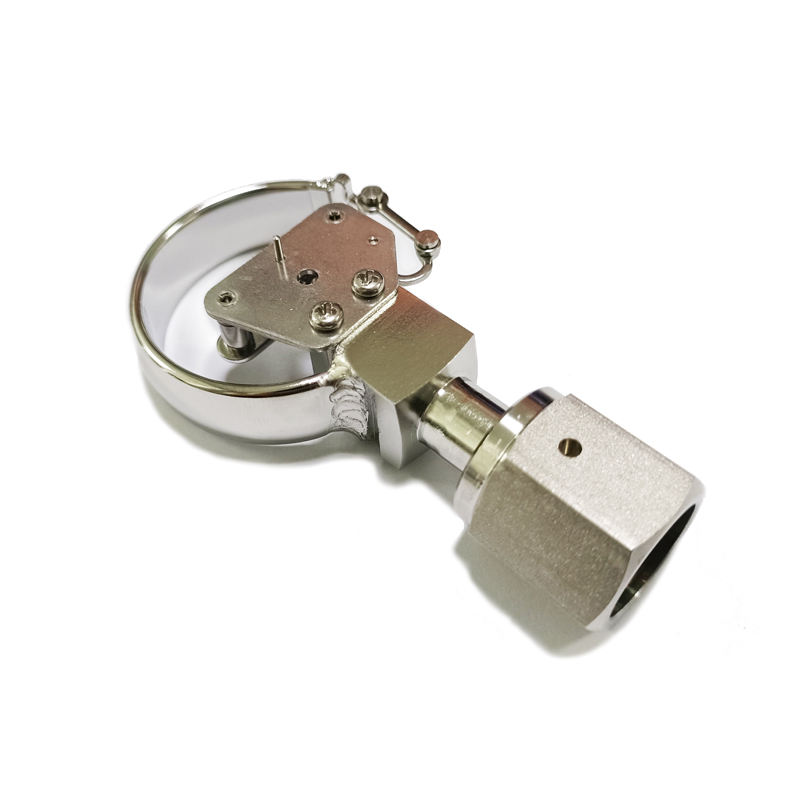
Bike tire pressure gauges are precision instruments used to measure the air pressure within pneumatic tires, primarily for bicycles. Functionally, they fall within the broader category of pressure transducers and are critical for optimizing tire performance, rider safety, and tire longevity. These gauges are essential in maintaining optimal rolling resistance, enhancing handling, and preventing premature tire wear and potential rim damage. The industry chain positions the gauge as a post-manufacturing accessory, reliant on tire, valve, and pump manufacturing. Core performance metrics include accuracy, repeatability, and durability, directly impacting the user’s ability to maintain consistent and safe tire inflation.
Material Science & Manufacturing
The majority of bike tire pressure gauges utilize a Bourdon tube or a digital sensor as the primary pressure-sensing element. Bourdon tubes are typically constructed from beryllium copper or spring steel, chosen for their high elasticity and resistance to permanent deformation. The manufacturing process involves cold forming the metal tube into a C-shape, heat treating to enhance spring properties, and precise calibration. Digital gauges employ piezoresistive or capacitive pressure sensors, typically made of silicon, fabricated using micro-electromechanical systems (MEMS) technology. These sensors require stringent quality control during wafer production and assembly. The gauge housing is commonly manufactured from impact-resistant ABS plastic or aluminum alloy via injection molding or CNC machining, respectively. Critical parameters during manufacturing include ensuring tight tolerances on the Bourdon tube diameter and wall thickness for analog gauges, and sensor calibration for digital models. The sealing of the housing is also vital, often achieved through o-rings made from nitrile rubber or silicone, ensuring resistance to moisture and atmospheric pressure. The gauge face utilizes polycarbonate for clarity and durability, often with printed graduations requiring accurate screen printing and protective coatings.
Performance & Engineering
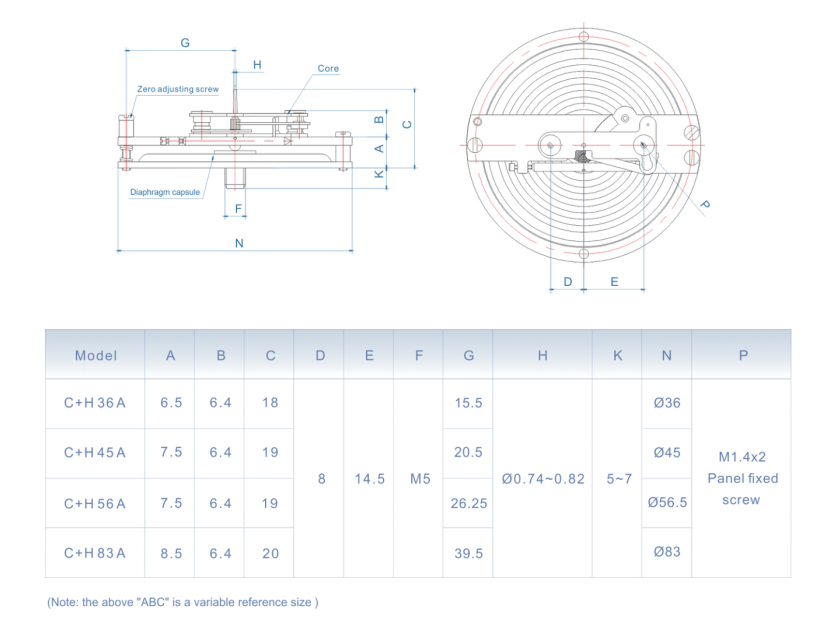
The performance of a tire pressure gauge is fundamentally governed by the principles of elastic deformation and pressure transduction. In Bourdon tube gauges, applied pressure causes the tube to straighten, and the movement is mechanically linked to a pointer indicating pressure on a calibrated scale. Engineering considerations include minimizing hysteresis (the difference in readings for increasing and decreasing pressure) and ensuring linearity of the scale. Digital gauges convert pressure into an electrical signal, which is then processed and displayed numerically. Force analysis involves understanding the stresses within the sensing element, particularly under peak pressure conditions. Environmental resistance is paramount; gauges must maintain accuracy across a wide temperature range (-10°C to 50°C is typical) and resist degradation from UV exposure and moisture. Compliance requirements often necessitate adherence to standards like EN 13687 for bicycle components and calibration traceability to national metrology institutes. The choice of lubricating fluids within mechanical gauges affects friction and responsiveness. Furthermore, the valve connector’s design must minimize air loss during pressure measurement.
Technical Specifications
| Pressure Range (PSI) | Accuracy (PSI) | Resolution (PSI) | Housing Material |
|---|---|---|---|
| 0-120 PSI | ±2 PSI | 1 PSI | ABS Plastic |
| 0-160 PSI | ±3 PSI | 0.5 PSI | Aluminum Alloy |
| 0-80 PSI | ±1.5 PSI | 0.25 PSI | ABS Plastic |
| 0-200 PSI | ±4 PSI | 1 PSI | Stainless Steel |
| 0-60 PSI | ±1 PSI | 0.5 PSI | ABS Plastic |
| 0-100 PSI | ±2.5 PSI | 0.5 PSI | Aluminum Alloy |
Failure Mode & Maintenance
Common failure modes in bike tire pressure gauges include mechanical fatigue in Bourdon tubes leading to inaccurate readings or complete failure, degradation of o-rings causing air leaks and inaccurate pressure retention, and electronic component failure in digital gauges. Fatigue cracking in the Bourdon tube is often initiated at stress concentration points, particularly near the welded connections. Delamination of the gauge face’s protective coating can occur due to UV exposure. Digital gauges can fail due to corrosion of electrical contacts, battery depletion, or sensor drift. Oxidation of metal components, especially in humid environments, can contribute to performance degradation. Maintenance involves periodic calibration against a known pressure standard (traceable to NIST or equivalent), cleaning the gauge with a mild solvent to remove dirt and grime, and replacing o-rings if leaks are detected. For digital gauges, regular battery replacement is crucial. Impact damage should be avoided, and gauges should be stored in a clean, dry environment. Regular visual inspection for cracks, leaks, or damaged components is recommended.
Industry FAQ
Q: What is the typical accuracy requirement for a tire pressure gauge used in professional cycling?
A: Professional cycling demands high accuracy. Typically, a gauge with an accuracy of ±1 PSI or even ±0.5 PSI is required, especially for time trials and road races where precise tire pressure optimization is critical for performance. Calibration traceability is also essential.
Q: How does temperature affect the accuracy of a tire pressure gauge?
A: Temperature affects the elasticity of the Bourdon tube (in analog gauges) and the sensitivity of the sensors (in digital gauges). Extreme temperatures can cause the gauge to drift, resulting in inaccurate readings. High-quality gauges are designed to minimize this effect, but calibration at the operating temperature is ideal.
Q: What is the difference between a pencil gauge and a dial gauge?
A: A pencil gauge is typically a compact, analog gauge with a spring-loaded plunger. Dial gauges use a Bourdon tube and a rotating dial for displaying pressure. Pencil gauges are generally more portable, while dial gauges are often considered more accurate and easier to read, particularly for higher pressures.
Q: What materials are most resistant to corrosion in a tire pressure gauge used in coastal environments?
A: In coastal environments, gauges constructed from stainless steel or aluminum alloy with a protective coating (e.g., anodizing) are the most resistant to corrosion. The use of corrosion-resistant lubricants and seals is also important. Avoid gauges with significant amounts of carbon steel.
Q: How often should a tire pressure gauge be recalibrated?
A: The frequency of recalibration depends on the usage and environment. For regular use, annual recalibration is recommended. For professional use or in harsh conditions, recalibration every six months or even more frequently may be necessary. A sudden change in readings indicates an immediate need for recalibration.
Conclusion
Bike tire pressure gauges, though seemingly simple instruments, rely on sophisticated material science and precision engineering to deliver accurate and reliable pressure readings. Understanding the underlying principles of pressure transduction, material properties, and potential failure modes is crucial for selecting a gauge appropriate for the intended application and ensuring its long-term performance. The selection process necessitates careful consideration of accuracy requirements, environmental factors, and the gauge’s intended use – from recreational cycling to professional racing.
Future development trends may focus on integrating wireless connectivity (Bluetooth, ANT+) for data logging and seamless integration with cycling computers, further enhancing the ability to optimize tire performance. Miniaturization of digital sensors and improved battery technology will also contribute to more compact and long-lasting gauges. Ultimately, a well-maintained and accurately calibrated tire pressure gauge remains a fundamental tool for any cyclist prioritizing safety, performance, and tire longevity.
 English
  Arabic
  China
China  China (Taiwan)
  Danish
  Dutch
Dutch  French
  German
  Greek
Greek  Hindi
Hindi  Indonesian
  Italian
  Japanese
  Korean
  Latin
Latin  Polish
  Portuguese
  Russian
  Spanish
  Turkish