
Apr . 01, 2024 17:55 Back to list
Boiler Gauge Pressure Performance Analysis
Introduction
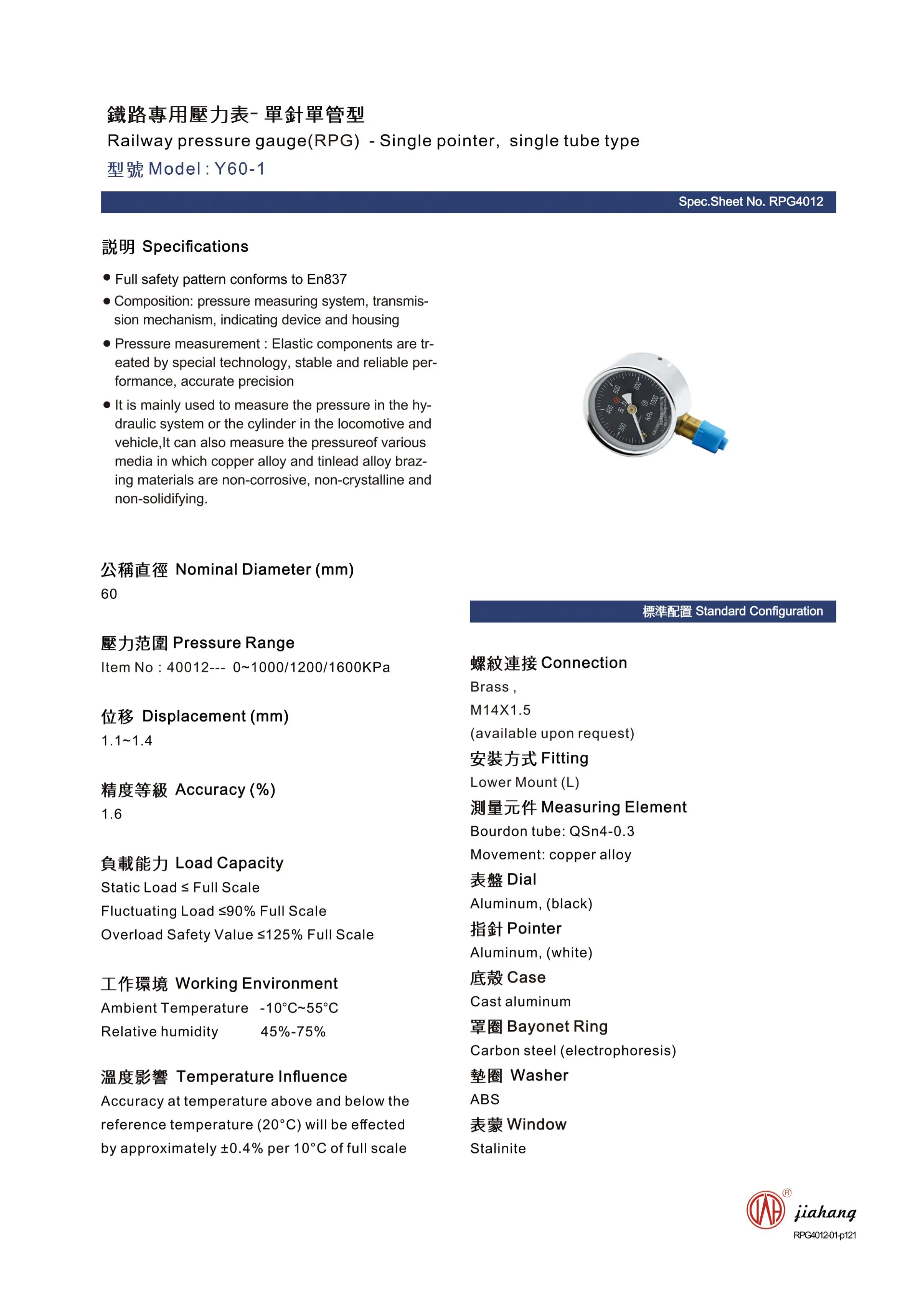
Boiler gauge pressure, a critical parameter in power generation, industrial heating, and numerous process applications, represents the measurement of steam or water pressure within a boiler system. Positioned centrally within the energy conversion chain, accurate gauge pressure monitoring dictates operational efficiency, safety, and regulatory compliance. Boiler gauges are not merely indicators; they are integral components of feedback control loops, safety interlocks, and data logging systems. The core performance characteristic – precision and reliability of pressure indication – directly impacts the boiler’s ability to maintain optimal operating conditions and prevent catastrophic failures. This guide provides an in-depth technical analysis of boiler gauge pressure, encompassing material science, manufacturing processes, performance engineering, failure modes, and relevant industry standards. The rising demand for higher boiler efficiency and stricter emissions control necessitates an advanced understanding of gauge pressure technology beyond traditional mechanical designs, driving innovation in digital and wireless sensor technologies.
Material Science & Manufacturing
The construction of boiler gauge pressure elements relies on a carefully selected suite of materials designed to withstand high temperatures, pressures, and potentially corrosive environments. Bourdon tubes, the core sensing element in many gauges, are typically fabricated from alloys of copper, beryllium copper, or stainless steel (304, 316). Copper alloys are favoured for their excellent corrosion resistance and high fatigue strength, suitable for lower-pressure applications. Beryllium copper enhances elasticity and resistance to stress corrosion cracking. Stainless steels provide superior high-temperature strength and corrosion resistance, essential for high-pressure, high-temperature boilers. The manufacturing process begins with cold drawing or seamless tubing extrusion to achieve the desired bore and wall thickness. Following forming, the tubes undergo heat treatment (annealing or stress relieving) to optimize mechanical properties and dimensional stability. The gauge case materials commonly include carbon steel with protective coatings (e.g., epoxy powder coating) or stainless steel. Diaphragm gauges utilize materials like Hastelloy or Inconel for diaphragms exposed to aggressive media. Welding processes, primarily TIG (Tungsten Inert Gas) welding, are employed for joining components, ensuring high weld integrity and minimal porosity. Critical parameters controlled during manufacturing include material composition verification via spectroscopy, dimensional accuracy through precision machining, leak testing using helium or nitrogen, and calibration against certified pressure standards. The selection of gasket materials (e.g., PTFE, Viton) is also crucial to maintain a sealed pressure boundary, with compatibility assessed based on process fluid chemistry and operating temperature.
Performance & Engineering
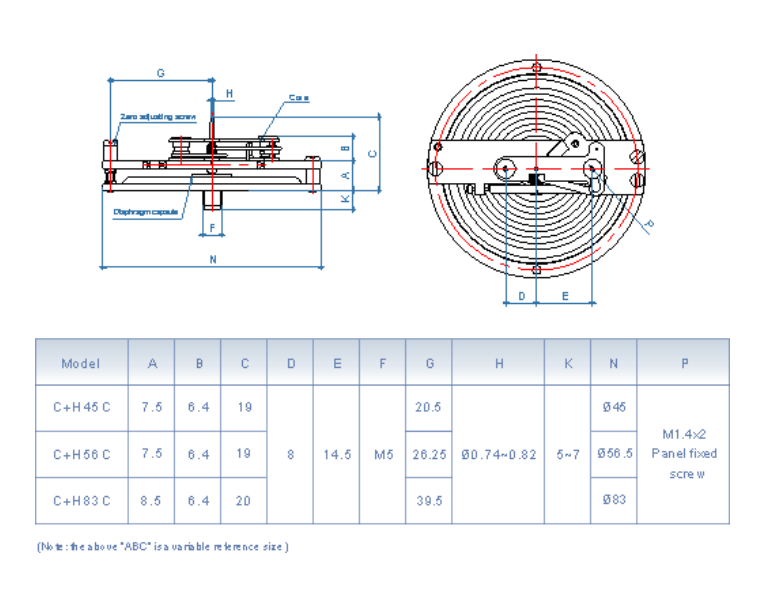
The performance of a boiler gauge pressure system is dictated by several engineering considerations. Stress analysis is paramount in Bourdon tube design, ensuring the tube’s elastic deformation is proportional to the applied pressure, and that the material remains within its elastic limit to prevent permanent set. Finite Element Analysis (FEA) is routinely used to model stress distribution under various pressure loads. Accuracy is influenced by hysteresis (the difference in readings during increasing and decreasing pressure), linearity (the consistency of the pressure-deformation relationship), and repeatability (the consistency of readings under identical conditions). Environmental factors, such as temperature fluctuations, can introduce errors due to thermal expansion and contraction of components. Compensation mechanisms, such as bimetallic strips or temperature sensors coupled with electronic correction, are often integrated to mitigate these effects. Response time, or the speed at which the gauge reacts to pressure changes, is critical for dynamic process control. This is governed by the gauge’s internal damping characteristics – typically filled with glycerine or silicone oil to dampen pointer oscillations. Compliance requirements, such as ASME Section I for power boilers, dictate specific accuracy classes, testing procedures, and material traceability requirements. Safety features, like blow-out discs or back panels, are incorporated to relieve pressure in the event of tube rupture, protecting personnel from injury. Digital pressure gauges integrate micro-electromechanical systems (MEMS) pressure sensors, offering higher accuracy, digital communication capabilities (e.g., Modbus, HART), and remote monitoring functionality.
Technical Specifications
| Pressure Range (psi) | Accuracy (±% of span) | Temperature Range (°F) | Connection Type |
|---|---|---|---|
| 0-30 | ±1.0 | -40 to 140 | 1/8" NPT (Male) |
| 0-100 | ±0.5 | -40 to 176 | 1/4" NPT (Male) |
| 0-300 | ±0.5 | -4 to 176 | 1/2" NPT (Male) |
| 0-600 | ±0.5 | -4 to 212 | 1/2" NPT (Male) |
| 0-1000 | ±0.5 | -4 to 248 | 1/2" NPT (Male) |
| 0-2000 | ±0.5 | -4 to 248 | 1/2" NPT (Male) |
Failure Mode & Maintenance
Boiler gauge pressure systems are susceptible to several failure modes. Tube rupture, a critical failure, typically occurs due to exceeding the pressure limit, fatigue cracking from prolonged cyclic loading, or corrosion-induced weakening of the tube wall. Corrosion, particularly pitting corrosion from chlorides in the steam or water, can compromise the tube's structural integrity. Leakage around the connection threads is a common issue, often stemming from improper sealing, damaged threads, or material incompatibility. Drift in calibration, a gradual deviation from the true pressure reading, can result from hysteresis, temperature effects, or internal component wear. Digital gauges can experience sensor drift, signal noise, or communication failures. Preventative maintenance is crucial. Regular visual inspection for leaks, corrosion, and physical damage is essential. Calibration, traceable to NIST standards, should be performed at least annually, or more frequently in critical applications. Periodic cleaning removes deposits that can impede gauge movement. For mechanical gauges, lubrication of moving parts (e.g., the movement mechanism) ensures smooth operation. Digital gauges require battery replacement and periodic firmware updates. If a tube rupture occurs, the entire gauge assembly should be replaced. Addressing corrosion requires proper water treatment and the selection of corrosion-resistant materials. Documenting maintenance records, including calibration dates and any repairs performed, is vital for tracking gauge performance and identifying potential issues.
Industry FAQ
Q: What is the impact of steam quality on gauge pressure accuracy?
A: Poor steam quality, containing excessive moisture or non-condensable gases, can induce pulsations and water hammer, leading to gauge oscillations and inaccuracies. Additionally, corrosive components in the steam can accelerate internal corrosion, affecting long-term reliability. Steam traps and separators should be employed to ensure high steam quality before the pressure reaches the gauge.
Q: How do I select the appropriate gauge pressure range for my application?
A: The gauge pressure range should be selected to cover the normal operating pressure with a sufficient margin (typically 20-30%) to accommodate pressure fluctuations. Avoid selecting a range that is excessively large, as this reduces accuracy. Consider the maximum possible pressure the system could experience, including potential overpressure events.
Q: What are the advantages of using a digital pressure gauge over a mechanical gauge?
A: Digital gauges offer higher accuracy, improved long-term stability, digital communication capabilities for remote monitoring and data logging, and often include features like temperature compensation and data storage. They are less susceptible to parallax errors compared to mechanical gauges.
Q: How often should a boiler gauge be calibrated?
A: Calibration frequency depends on the criticality of the application and the severity of the operating environment. As a general guideline, annual calibration is recommended. Critical applications, or those exposed to harsh conditions, may require more frequent calibration (e.g., every 6 months).
Q: What are the consequences of using a faulty boiler gauge?
A: A faulty boiler gauge can lead to inaccurate process control, potentially resulting in inefficient operation, equipment damage, or even catastrophic boiler failure. Incorrect pressure readings can compromise safety interlocks and trigger false alarms, posing a safety hazard.
Conclusion
Accurate and reliable boiler gauge pressure measurement is fundamental to safe, efficient, and compliant boiler operation. The selection, installation, and maintenance of these instruments demand a comprehensive understanding of material science, manufacturing processes, performance characteristics, and potential failure modes. Advancements in digital pressure sensing technology offer improved accuracy, connectivity, and diagnostic capabilities, but a thorough understanding of the underlying principles remains crucial for proper implementation.
Looking forward, the integration of wireless sensor networks and predictive maintenance algorithms, driven by real-time gauge pressure data, will revolutionize boiler monitoring and control. Continuous advancements in materials science will lead to more durable and corrosion-resistant gauges, extending their operational life and minimizing maintenance requirements. By prioritizing these considerations, industries can optimize boiler performance, reduce downtime, and enhance overall safety.
 English
  Arabic
  China
China  China (Taiwan)
  Danish
  Dutch
Dutch  French
  German
  Greek
Greek  Hindi
Hindi  Indonesian
  Italian
  Japanese
  Korean
  Latin
Latin  Polish
  Portuguese
  Russian
  Spanish
  Turkish