
Apr . 01, 2024 17:55 Back to list
bourdon tube pressure gauge Performance Analysis
Introduction
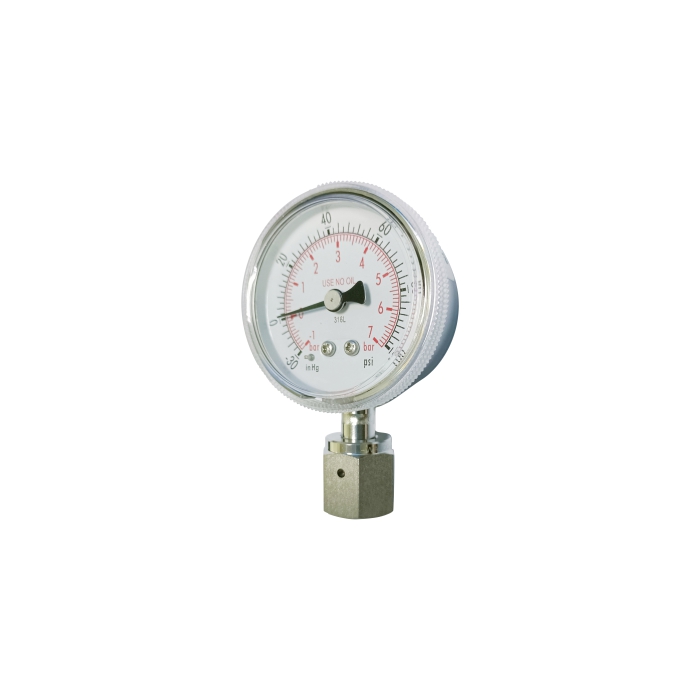
The bourdon tube pressure gauge is a mechanical device used to measure pressure. It utilizes a curved, flattened tube, sealed at one end, that straightens slightly as internal pressure increases. This movement is mechanically linked to a pointer which indicates the pressure on a calibrated dial. Widely deployed across industrial, commercial, and residential applications, bourdon tube gauges represent a foundational element in process control, safety systems, and pressure monitoring. Their robustness, relative simplicity, and ability to measure a wide range of pressures without requiring external power contribute to their continued prevalence despite the emergence of electronic pressure sensors. Core performance characteristics include accuracy, repeatability, hysteresis, and resistance to environmental factors like temperature and vibration. A key industry pain point revolves around drift in calibration over time, susceptibility to shock and vibration-induced damage, and the limited ability to provide remote monitoring capabilities compared to digital alternatives. The gauge’s performance is critically dependent on material selection and manufacturing precision, impacting its lifespan and reliability.
Material Science & Manufacturing
The core material for the bourdon tube is typically beryllium copper (CuBe), spring steel (typically AISI 1095 or similar high-carbon grades), or stainless steel (304, 316). Beryllium copper is favored for its superior elasticity, corrosion resistance, and ability to maintain accuracy over extended periods, though it is more expensive. Spring steel offers a cost-effective solution but is prone to corrosion if not properly treated. Stainless steel provides a balance between cost and corrosion resistance, suitable for many industrial environments. The manufacturing process begins with the formation of the tube through processes like deep drawing or hydraulic forming. Critical parameters during tube formation include wall thickness uniformity, ovality control, and precise bending radius. Heat treatment, such as stress relieving and annealing, is crucial to eliminate residual stresses introduced during forming. The tube is then subjected to rigorous quality control checks, including dimensional inspection, non-destructive testing (NDT) like eddy current testing for detecting flaws, and leak testing. The dial mechanism is typically manufactured from brass or stainless steel, employing precise machining and assembly techniques. Movement amplification is achieved through a series of linkages, requiring tight tolerances and careful calibration. The gauge case is often constructed from steel or aluminum, with a protective glass or acrylic window. Surface treatments like passivation (for stainless steel) and painting (for steel) enhance corrosion resistance and aesthetics. Welding processes, if utilized in assembly, must adhere to standards like AWS D1.1 to ensure joint integrity and prevent failure.
Performance & Engineering
The performance of a bourdon tube gauge is heavily influenced by force analysis related to the tube's deflection under pressure. The relationship between pressure and deflection is not perfectly linear, exhibiting a slight curvature that must be accounted for during calibration. The maximum pressure the gauge can withstand is determined by the material's yield strength and the tube's geometry (wall thickness, diameter, and radius of curvature). Environmental resistance is crucial; temperature fluctuations can affect the material's elastic properties, leading to drift in readings. Vibration can cause premature fatigue failure, particularly at the weld points connecting the tube to the movement. The gauge must comply with relevant industry standards, such as ASME B40.100 for pressure gauges and their accessories, which specify requirements for accuracy, repeatability, and safety. The design must also consider the effects of hysteresis – the difference in readings when approaching the maximum pressure from below versus from above. Damping mechanisms, often employing a fluid-filled case, are incorporated to minimize pointer oscillations due to vibration or pulsations in the measured pressure. Careful consideration of the linkage geometry and pivot point placement is critical for optimizing the transmission of movement from the bourdon tube to the pointer, maximizing accuracy and minimizing backlash. Proper selection of the dial range is also crucial, ensuring the operating pressure falls within the optimal portion of the scale to maximize reading precision.
Technical Specifications
| Pressure Range (PSI) | Accuracy (Class) | Temperature Range (°F) | Material (Tube) |
|---|---|---|---|
| 0-30 | 1.0% FS | -40 to 140 | Beryllium Copper |
| 0-100 | 0.5% FS | -20 to 120 | Spring Steel |
| 0-300 | 1.5% FS | -40 to 160 | Stainless Steel 304 |
| 0-500 | 2.0% FS | -20 to 140 | Spring Steel |
| 0-1000 | 2.5% FS | -40 to 180 | Stainless Steel 316 |
| 0-2000 | 3.0% FS | -20 to 160 | Beryllium Copper |
Failure Mode & Maintenance
Common failure modes in bourdon tube pressure gauges include fatigue cracking at the tube's root (the fixed end), particularly under cyclic pressure loading. Corrosion, especially in environments with corrosive gases or liquids, can lead to weakening of the tube and eventual rupture. Overpressure events exceeding the gauge's rated capacity can cause permanent deformation or catastrophic failure. Hysteresis increases with age and repeated cycling, reducing accuracy. Damage to the movement mechanism, such as worn pivots or broken linkages, can result in erratic readings. Failure analysis often reveals that corrosion is exacerbated by galvanic corrosion if dissimilar metals are used in contact without proper isolation. Maintenance typically involves periodic calibration against a known pressure standard. Visual inspection for signs of corrosion, damage, or leaks is essential. Lubrication of the movement mechanism (if applicable) can reduce friction and improve accuracy. For gauges exposed to harsh environments, regular cleaning and protective coatings can extend their lifespan. Replacement of the gauge is necessary if the tube is cracked, severely corroded, or if the movement is irreparably damaged. Preventive maintenance programs, including routine inspection and calibration, are crucial for ensuring reliable performance and preventing unexpected failures.
Industry FAQ
Q: What is the impact of media compatibility on bourdon tube selection?
A: Media compatibility is paramount. Corrosive fluids or gases can rapidly degrade the bourdon tube material. For example, hydrochloric acid will attack stainless steel, necessitating a more resistant alloy like Hastelloy or a PTFE-lined gauge. Even seemingly benign fluids can cause issues – prolonged exposure to certain oils can swell rubber components within the gauge. Always consult a compatibility chart and consider the entire fluid composition, including potential contaminants.
Q: How does vibration affect gauge accuracy and longevity?
A: Vibration introduces dynamic stresses that can lead to premature fatigue failure, especially at weld points. It also causes pointer oscillations, making accurate readings difficult. Using a liquid-filled gauge (glycerin or silicone oil) provides damping to mitigate these effects. Furthermore, employing vibration isolators between the gauge and the mounting surface can significantly reduce vibration transmission.
Q: What is the difference between Class A and Class 1.0% accuracy gauges?
A: These are different accuracy specifications based on different standards. Class A refers to accuracy defined by EN 837 (European standard), while 1.0% FS (Full Scale) refers to accuracy as a percentage of the gauge’s full-scale range, commonly used in ASME B40.100 (US standard). They are not directly interchangeable, and you need to understand the underlying standard when comparing specifications.
Q: Can a bourdon tube gauge be used to measure pulsating pressures?
A: While a bourdon tube gauge can indicate pulsating pressures, it's not ideal without mitigation. The rapid fluctuations can cause pointer flutter and wear on the mechanism. Using a snubber or pulsation dampener upstream of the gauge can smooth out the pressure waves and provide a more stable reading, protecting the gauge from damage.
Q: What is the recommended calibration frequency for bourdon tube gauges?
A: The recommended calibration frequency depends on the application, operating conditions, and criticality of the measurement. As a general guideline, annual calibration is recommended for most industrial applications. However, gauges used in critical safety systems or exposed to harsh environments may require more frequent calibration – quarterly or even monthly.
Conclusion
The bourdon tube pressure gauge remains a cornerstone of pressure measurement due to its simplicity, robustness, and cost-effectiveness. While newer digital technologies offer advanced features like remote monitoring and data logging, the bourdon tube gauge provides a reliable and often more practical solution for many applications. The key to maximizing performance and longevity lies in careful material selection, precise manufacturing, proper installation, and regular maintenance.
Looking ahead, advancements in material science and manufacturing techniques will continue to refine bourdon tube gauge designs, potentially enhancing accuracy, expanding pressure ranges, and improving resistance to harsh environments. Hybrid solutions, combining the mechanical simplicity of the bourdon tube with digital signal processing for improved accuracy and data transmission, may also emerge. Understanding the fundamental principles of operation, failure modes, and relevant industry standards remains crucial for engineers and procurement professionals alike.
 English
  Arabic
  China
China  China (Taiwan)
  Danish
  Dutch
Dutch  French
  German
  Greek
Greek  Hindi
Hindi  Indonesian
  Italian
  Japanese
  Korean
  Latin
Latin  Polish
  Portuguese
  Russian
  Spanish
  Turkish