
Apr . 01, 2024 17:55 Back to list
differential pressure gauge Performance Analysis
Introduction
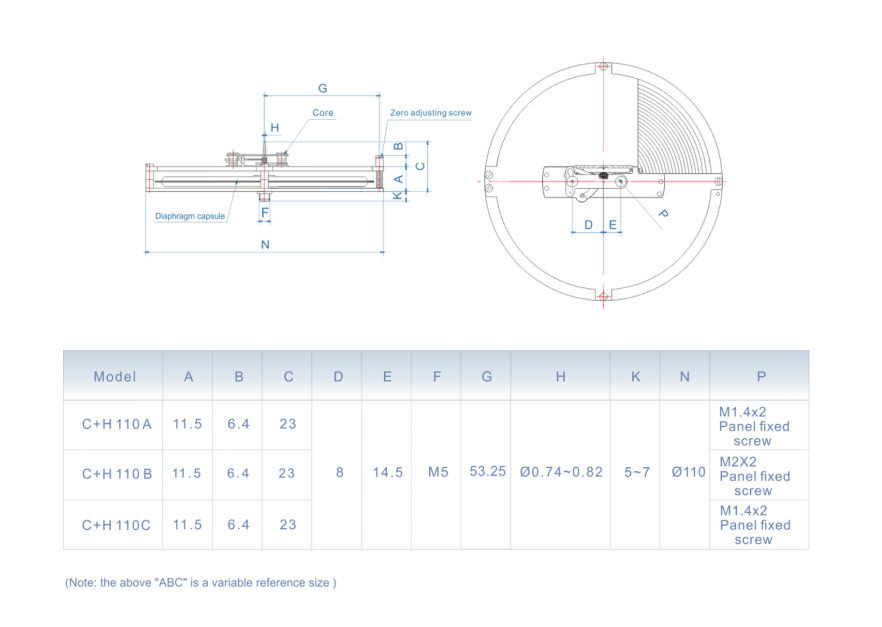
The differential pressure gauge is a precision instrument used to measure the difference in pressure between two points in a system. Its core function is to detect and quantify this pressure differential, making it critical in various industrial applications including flow rate measurement, level detection, and filter monitoring. Positioned within the broader instrumentation and control chain, it provides vital data for process optimization, safety systems, and regulatory compliance. Modern differential pressure gauges utilize various sensing technologies, most commonly diaphragms, capsules, or resonant silicon sensors, transducing the pressure difference into a measurable signal, often displayed visually via an analog dial or digitally through a connected system. Accurate and reliable differential pressure measurement is fundamental to maintaining process stability and efficiency across a wide spectrum of industries.
Material Science & Manufacturing
Differential pressure gauges are constructed from a variety of materials selected for their compatibility with process fluids, pressure ranges, and environmental conditions. Common wetted parts – those in direct contact with the process medium – include 316L stainless steel (for corrosion resistance), Hastelloy C-276 (for highly corrosive environments), Monel 400 (for resistance to seawater and acids), and specialized polymers like PTFE (Teflon) and PVDF for chemically aggressive applications. The gauge housing often utilizes carbon steel with a protective coating (e.g., epoxy powder coating) or aluminum for lighter applications. Diaphragms, the critical sensing element, are typically manufactured from stainless steel alloys or, for low-differential pressure applications, from specialized elastomers.
Manufacturing processes vary based on the gauge type and complexity. Metal components often undergo precision machining, including CNC turning and milling. Diaphragms are formed through deep drawing and subsequent heat treatment to achieve desired mechanical properties. Welding, utilizing techniques like TIG (Tungsten Inert Gas) welding, is essential for creating leak-tight seals. Polymeric components are typically injection molded. Critical parameters controlled during manufacturing include material purity, surface finish, weld quality (assessed via radiography and dye penetrant inspection), and diaphragm thickness. Calibration is a crucial final step, typically performed using a precision pressure calibrator against NIST-traceable standards. The accuracy and repeatability of the gauge are directly dependent on the precision of these manufacturing processes and rigorous quality control measures.
Performance & Engineering
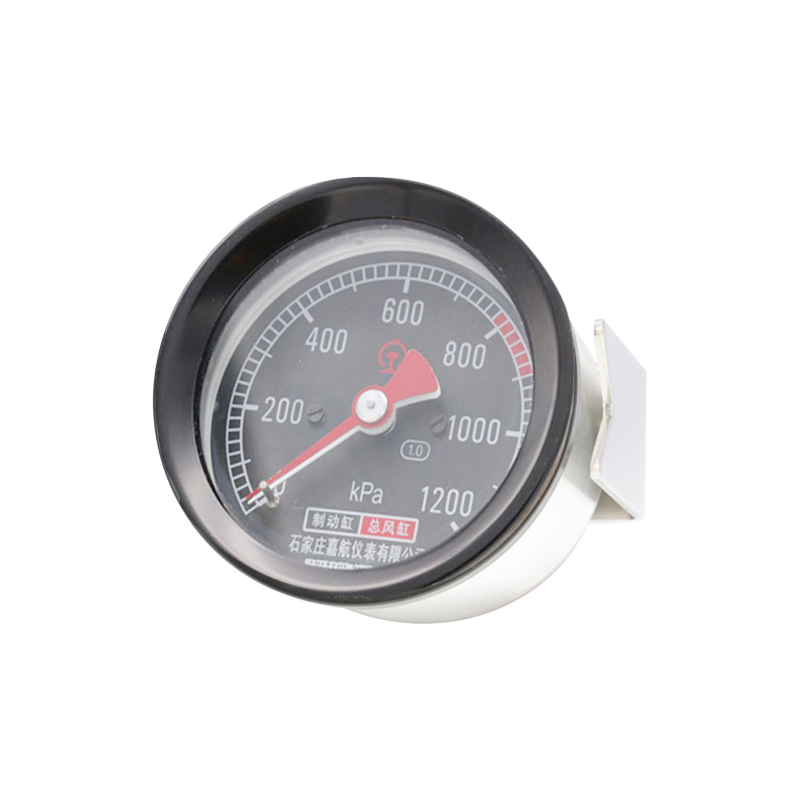
The performance of a differential pressure gauge is governed by several key engineering principles. Force balance is fundamental; the pressure difference creates a deflection in the sensing element (diaphragm or capsule), which is then translated into a measurable output. Accuracy, linearity, and hysteresis are critical performance parameters. Accuracy refers to the deviation between the measured value and the actual pressure difference. Linearity describes how consistently the output changes with respect to the input. Hysteresis quantifies the difference in output for the same input pressure when approached from increasing or decreasing pressure values. Environmental factors significantly impact performance. Temperature variations can cause thermal drift, requiring temperature compensation mechanisms. Vibration can induce noise and affect accuracy.
Engineering considerations also encompass material selection to ensure chemical compatibility and prevent corrosion. Pressure ratings must be carefully calculated based on the maximum expected differential pressure and the material strength. Compliance with relevant industry standards, such as ASME B40.100 for pressure gauges, is paramount. For applications involving hazardous fluids, explosion-proof (Ex) certification is essential. Furthermore, understanding the fluid dynamics of the process connection is crucial to minimize errors caused by flow-induced effects. This involves selecting appropriate impulse lines, ensuring proper venting, and minimizing restrictions in the pressure taps.
Technical Specifications
| Parameter | Unit | Typical Value | Tolerance |
|---|---|---|---|
| Pressure Range | inH2O | 0-10 | ±0.5% FS |
| Accuracy | % FS | 1 | ±0.25% FS |
| Temperature Range (Process) | °F | -20 to 250 | - |
| Temperature Range (Ambient) | °F | 32 to 140 | - |
| Wetted Material | - | 316L Stainless Steel | - |
| Connection Type | - | 1/4" NPT | - |
Failure Mode & Maintenance
Differential pressure gauges are susceptible to several failure modes. Diaphragm rupture or fatigue cracking is a common issue, particularly under cyclical loading or overpressure conditions. Corrosion, stemming from incompatible process fluids, can lead to weakening and eventual failure of wetted parts. Plugged impulse lines can create erroneous readings or induce excessive stress on the diaphragm. Zero drift, a gradual shift in the output even at zero pressure difference, can occur due to sensor degradation or temperature effects. Hysteresis can increase over time due to wear and tear on the sensing element.
Preventive maintenance is crucial for maximizing gauge lifespan and reliability. Regular inspection of impulse lines for blockages and corrosion is essential. Periodic calibration, typically every 6-12 months, ensures accuracy. Protecting the gauge from excessive vibration and temperature fluctuations extends its operational life. For gauges used with abrasive fluids, implementing filtration systems can mitigate diaphragm wear. If a gauge exhibits erratic readings, significant drift, or visible signs of damage, it should be removed from service and either repaired or replaced. Proper storage conditions – protected from moisture and extreme temperatures – are vital when gauges are not in use. Detailed maintenance logs should be maintained to track calibration history and any repairs performed.
Industry FAQ
Q: What is the impact of pulsation on differential pressure gauge readings?
A: Pulsation can cause significant errors and premature failure. The rapid pressure fluctuations introduce dynamic stress on the diaphragm, leading to fatigue and inaccurate readings. To mitigate this, pulsation dampeners should be installed upstream of the gauge. These dampeners reduce the amplitude and frequency of pulsations, providing a more stable pressure signal.
Q: How do I select the appropriate pressure range for my application?
A: The pressure range should be selected to encompass the expected operating conditions while providing sufficient margin. Aim for an operating point between 25% and 75% of the gauge’s full scale. Selecting a range that is too narrow can lead to over-ranging and potential damage, while a range that is too wide reduces accuracy.
Q: What is the significance of the 'FS' specification in accuracy ratings?
A: 'FS' stands for Full Scale. An accuracy rating of ±1% FS means that the maximum error in the reading will be ±1% of the gauge’s total range. For example, on a gauge with a range of 0-100 psi, the maximum error would be ±1 psi.
Q: What are the considerations for using a differential pressure gauge with a viscous fluid?
A: Viscous fluids can cause significant lag and damping, impacting response time and potentially leading to inaccurate readings. Impulse lines should be as short and direct as possible, with a large diameter to minimize pressure drop. Heated impulse lines may be necessary to maintain fluid fluidity, especially in cold environments.
Q: Can a differential pressure gauge be used to measure flow rate?
A: Yes, differential pressure gauges are commonly used in flow rate measurement, often in conjunction with orifice plates, venturi tubes, or flow nozzles. The pressure drop across these primary flow elements is proportional to the flow rate, and the differential pressure gauge measures this pressure difference, allowing for flow rate calculation.
Conclusion
The differential pressure gauge remains a cornerstone of industrial process measurement, providing essential data for control, safety, and optimization. Its robust design, coupled with advancements in sensor technology, ensures reliable performance across a diverse range of applications. Understanding the core principles of material science, manufacturing processes, and potential failure modes is critical for selecting, installing, and maintaining these instruments effectively.
Future trends in differential pressure gauge technology are focused on increased digitalization, incorporating smart features such as wireless communication, remote monitoring, and predictive maintenance capabilities. The integration of micro-electromechanical systems (MEMS) technology is also driving down gauge size and cost while enhancing accuracy and responsiveness. Continued adherence to rigorous industry standards and a commitment to ongoing research and development will ensure the continued relevance and reliability of differential pressure gauges in the evolving landscape of industrial automation.
 English
  Arabic
  China
China  China (Taiwan)
  Danish
  Dutch
Dutch  French
  German
  Greek
Greek  Hindi
Hindi  Indonesian
  Italian
  Japanese
  Korean
  Latin
Latin  Polish
  Portuguese
  Russian
  Spanish
  Turkish