
Apr . 01, 2024 17:55 Back to list
digital pressure gauge Performance Analysis
Introduction
Digital pressure gauges represent a significant advancement in pressure measurement technology, evolving from traditional mechanical designs to electronically driven systems. Positioned as a critical component within process instrumentation loops, these gauges facilitate accurate and reliable pressure monitoring across diverse industrial applications, including oil and gas, chemical processing, pharmaceuticals, and HVAC systems. Unlike their analog counterparts, digital pressure gauges offer improved readability, enhanced accuracy, data logging capabilities, and often, integrated communication protocols for remote monitoring and control. Their core performance characteristics revolve around accuracy (expressed as a percentage of span), resolution, response time, and long-term stability, directly impacting process control efficiency and safety. A key industry pain point addressed by digital gauges is the need for minimizing human error in reading and recording pressure data, and enabling predictive maintenance based on performance trends.
Material Science & Manufacturing
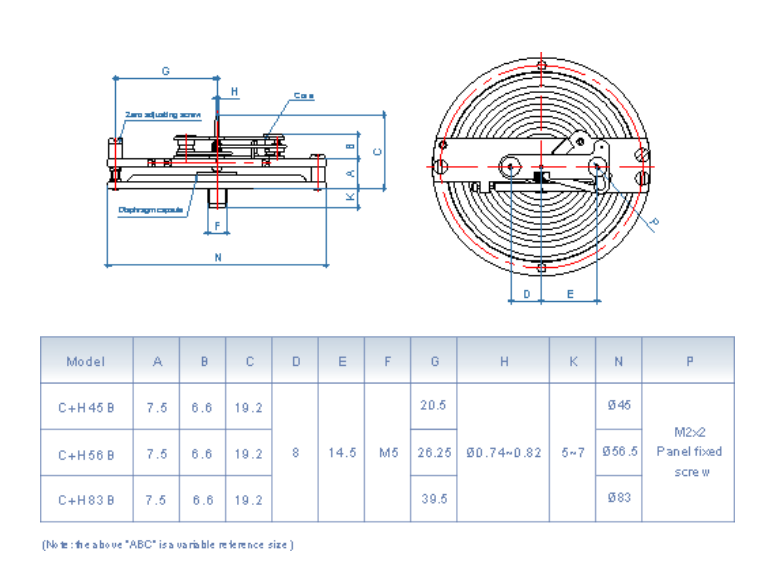
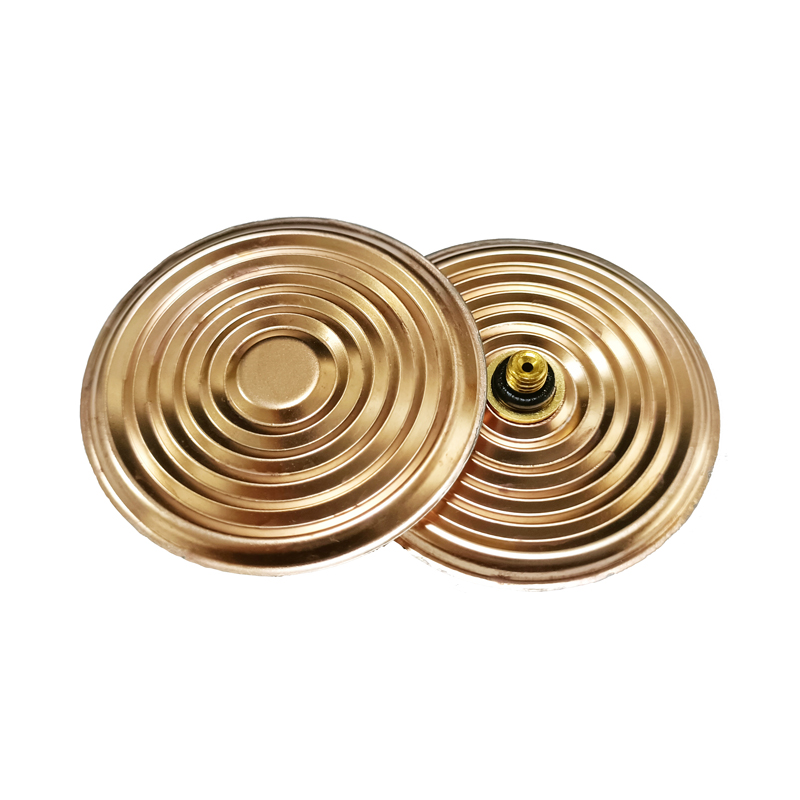
The construction of a digital pressure gauge involves a sophisticated interplay of material science and precision manufacturing. The pressure sensing element typically employs a piezoresistive silicon diaphragm, chosen for its sensitivity to pressure-induced strain. Silicon, owing to its crystalline structure and predictable elastic properties, provides a linear and repeatable response. The diaphragm is often bonded to a stainless steel housing (316L or 304 stainless steel are common due to their corrosion resistance) utilizing high-strength adhesives designed to withstand significant thermal cycling and mechanical stress. The electronic components, including the Application-Specific Integrated Circuit (ASIC) responsible for signal conditioning and analog-to-digital conversion, are encapsulated in a robust plastic or metal enclosure to protect against harsh environments. Manufacturing processes include silicon etching for diaphragm fabrication, wire bonding for electrical connections, and laser welding for sealing the housing. Precise calibration is crucial, often involving automated systems that apply known pressures and adjust the ASIC’s parameters to ensure accuracy. Key parameter control during manufacturing focuses on minimizing thermal drift, hysteresis, and non-linearity in the sensor output. The welding process must be carefully monitored to prevent distortion of the sensing element and ensure hermetic sealing, critical for preventing ingress of moisture and corrosive substances.
Performance & Engineering
The performance of a digital pressure gauge is fundamentally governed by principles of solid-state physics and mechanical engineering. Force analysis focuses on the stresses induced within the silicon diaphragm under applied pressure, adhering to Hooke’s Law within the elastic limit of the material. Environmental resistance is paramount; gauges must withstand temperature fluctuations, vibration, shock, and exposure to corrosive media. Design considerations include thermal compensation techniques to minimize temperature-induced errors and vibration damping mechanisms to prevent erroneous readings. Compliance requirements, dictated by standards like IEC 61000-4-x for electromagnetic compatibility (EMC) and NEMA ratings for ingress protection, are crucial for ensuring safe and reliable operation. Functional implementation involves signal conditioning circuitry that amplifies the weak signal from the piezoresistive sensor, followed by analog-to-digital conversion and digital signal processing to display the pressure reading accurately. Accuracy is often specified as a percentage of full scale (FS) and includes considerations for linearity, hysteresis, and repeatability. Long-term stability is assessed through rigorous testing protocols, monitoring drift in output over extended periods and under varying environmental conditions. The selection of materials and components is also heavily influenced by the intended operating pressure range and the media being measured.
Technical Specifications
| Pressure Range | Accuracy (%FS) | Operating Temperature | Media Compatibility |
|---|---|---|---|
| 0-100 PSI | ±0.25% | -20°C to 85°C | Water, Oil, Air |
| 0-500 PSI | ±0.5% | -10°C to 60°C | Hydraulic Oil, Nitrogen |
| 0-1000 PSI | ±1.0% | 0°C to 70°C | Process Fluids, Gases |
| 0-5000 PSI | ±1.5% | -20°C to 50°C | High-Pressure Fluids, Gases |
| 0-10000 PSI | ±2.0% | -10°C to 40°C | Specialty Fluids, Gases |
| Vacuum (0-30 inHg) | ±0.5% | -20°C to 60°C | Air, Inert Gases |
Failure Mode & Maintenance
Digital pressure gauges, while robust, are susceptible to specific failure modes. Fatigue cracking of the diaphragm can occur under prolonged cyclic pressure loading, particularly at the points of maximum stress concentration. Delamination of the adhesive bonding between the diaphragm and the housing can lead to inaccurate readings or complete failure. Degradation of the electronic components due to temperature extremes or humidity can cause signal drift or malfunction. Oxidation of electrical contacts can result in intermittent signal loss. A common failure point is the ASIC, susceptible to damage from electrostatic discharge (ESD) during handling or power surges. Maintenance typically involves periodic calibration checks against a known pressure standard. Visual inspection for physical damage, such as cracks or leaks, is crucial. Proper cleaning with a mild solvent can remove contaminants that may affect performance. Preventive maintenance should include verifying the integrity of electrical connections and ensuring proper grounding to prevent ESD damage. Regular data logging and trend analysis can help identify early signs of degradation, allowing for proactive replacement before a catastrophic failure occurs. In the event of a complete failure, replacement of the entire unit is often the most cost-effective solution, given the complexity of repairing the internal electronics.
Industry FAQ
Q: What is the typical long-term drift observed in high-precision digital pressure gauges?
A: Typical long-term drift in high-precision digital pressure gauges, those with accuracies of ±0.25% FS or better, is generally less than 0.1% FS per year. However, this can be influenced by factors such as operating temperature, exposure to corrosive media, and the quality of the internal components. Regular calibration is recommended to mitigate drift and ensure accuracy over extended periods.
Q: How do I select a digital pressure gauge for compatibility with a specific process fluid?
A: Compatibility is paramount. First, identify the chemical composition of the process fluid. Then, verify that the wetted materials (diaphragm and housing) of the gauge are resistant to corrosion or degradation by that fluid. Stainless steel (316L) is a good general-purpose material, but specific fluids may require more specialized alloys like Hastelloy or Monel.
Q: What is the significance of the Ingress Protection (IP) rating for a digital pressure gauge?
A: The IP rating defines the gauge's level of protection against dust and water ingress. IP65 indicates dust-tight protection and protection against water jets from any direction. IP67 provides dust-tight protection and immersion protection up to 1 meter. IP68 offers dust-tight protection and sustained immersion in water beyond 1 meter. The appropriate IP rating depends on the environmental conditions of the application.
Q: Can digital pressure gauges be used in hazardous areas, such as those with flammable gases?
A: Yes, but only if the gauge is specifically certified for use in hazardous areas. Certification typically involves compliance with standards like ATEX or IECEx, which ensure the gauge is designed to prevent ignition of flammable atmospheres. These gauges incorporate features such as intrinsic safety or explosion-proof enclosures.
Q: How does the output signal type (e.g., 4-20mA, HART, Modbus) impact integration with a process control system?
A: The output signal type dictates how the gauge communicates pressure data to a PLC, DCS, or other control system. 4-20mA is an analog signal widely used for transmitting process variables. HART combines 4-20mA with digital communication for advanced diagnostics and configuration. Modbus is a digital protocol commonly used for industrial networking, allowing for multiple gauges to be connected to a single communication bus.
Conclusion
Digital pressure gauges represent a significant technological leap over traditional mechanical designs, offering superior accuracy, reliability, and functionality. Their widespread adoption across various industries stems from their ability to address critical pain points related to process control, data integrity, and predictive maintenance. The core of their performance lies in the synergistic interplay of materials science, precision manufacturing, and sophisticated signal processing techniques.
Looking ahead, advancements in micro-electromechanical systems (MEMS) technology promise even smaller, more accurate, and more cost-effective digital pressure gauges. Integration with wireless communication protocols and cloud-based data analytics platforms will further enhance their capabilities, enabling real-time remote monitoring, predictive maintenance, and optimized process control. Continued adherence to rigorous industry standards and a focus on material compatibility will remain essential for ensuring the long-term reliability and safety of these critical instruments.
 English
  Arabic
  China
China  China (Taiwan)
  Danish
  Dutch
Dutch  French
  German
  Greek
Greek  Hindi
Hindi  Indonesian
  Italian
  Japanese
  Korean
  Latin
Latin  Polish
  Portuguese
  Russian
  Spanish
  Turkish