
Apr . 01, 2024 17:55 Back to list
gas pressure gauge Performance Analysis
Introduction
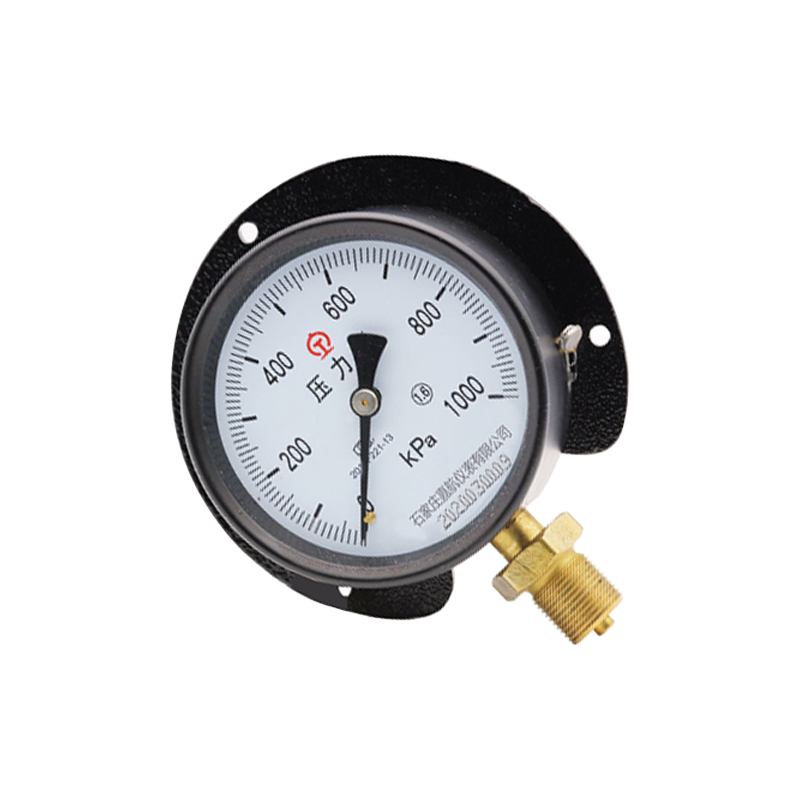
Gas pressure gauges are critical instruments utilized across a vast spectrum of industrial applications, serving as primary indicators of pressure within gaseous systems. Their technical position in the industrial chain is fundamental, residing between the pressure source (e.g., compressed air systems, gas cylinders, process reactors) and the control or monitoring instrumentation. These gauges don't merely indicate pressure; they facilitate safe and efficient operation, enabling precise process control and preventative maintenance. Core performance characteristics encompass accuracy, repeatability, response time, and robustness against the specific gas being measured, alongside environmental factors. Contemporary gas pressure gauges employ various technologies, including Bourdon tube, diaphragm, and digital sensing, each optimized for specific pressure ranges and application requirements. A key pain point in the industry stems from ensuring long-term accuracy and corrosion resistance, particularly when dealing with aggressive or corrosive gases. Selecting the correct gauge material and construction for the application environment is paramount to avoid failures and maintain process integrity.
Material Science & Manufacturing
The construction of a gas pressure gauge relies on a carefully selected combination of materials, each chosen for specific properties. The Bourdon tube, a common sensing element, is frequently manufactured from beryllium copper, phosphor bronze, or stainless steel alloys (304, 316). Beryllium copper provides excellent elasticity and corrosion resistance. Phosphor bronze offers good corrosion resistance and is cost-effective. Stainless steel is crucial for applications involving corrosive gases, offering superior chemical inertness. The case is often constructed from aluminum alloys, brass, or polycarbonate, providing mechanical protection and visual clarity. Manufacturing involves several key steps. Bourdon tube fabrication typically utilizes cold drawing or hot forging, followed by heat treatment to achieve desired spring characteristics. Welding techniques, such as TIG (Tungsten Inert Gas) welding, are critical for creating leak-tight connections. Diaphragm gauges rely on the formation of a thin, flexible diaphragm usually from stainless steel or Hastelloy. Parameter control during diaphragm forming is vital for achieving consistent sensitivity and linearity. Critical parameters include material tensile strength, yield strength, and elongation. Surface treatments, such as passivation for stainless steel, enhance corrosion resistance. The manufacturing process necessitates rigorous quality control checks at each stage, including dimensional inspection, leak testing, and calibration against NIST-traceable standards.
Performance & Engineering
The performance of a gas pressure gauge is governed by fundamental engineering principles. Force analysis centers on the relationship between the applied pressure, the material properties of the sensing element (Bourdon tube or diaphragm), and the resulting deflection. The deflection is mechanically linked to a pointer, providing a visual indication of pressure. Environmental resistance is a critical design consideration. Temperature fluctuations can induce errors due to thermal expansion and contraction of materials. Pressure gauges are often compensated for temperature effects through the use of bimetallic strips or electronic temperature sensors. Vibration and shock can also impact accuracy and lifespan, necessitating the incorporation of dampening mechanisms like fluid filling (glycerin or silicone oil). Compliance requirements vary depending on the application. For example, gauges used in hazardous environments must comply with ATEX or IECEx standards, demanding explosion-proof enclosures and intrinsically safe circuitry. Functional implementation depends on the gauge type. Digital gauges integrate pressure sensors with microcontrollers and display units, enabling features like data logging, remote communication, and alarm settings. Analog gauges rely on purely mechanical linkages, offering simplicity and reliability. Ensuring proper ventilation and avoiding excessive temperature gradients are vital for maintaining long-term accuracy.
Technical Specifications
| Pressure Range (PSI) | Accuracy (±% of FS) | Operating Temperature (°C) | Connection Size (NPT) |
|---|---|---|---|
| 0-30 | 1.0 | -20 to 60 | 1/8" |
| 0-100 | 0.5 | -30 to 80 | 1/4" |
| 0-300 | 0.3 | -40 to 100 | 1/2" |
| 0-1000 | 0.2 | -20 to 85 | 3/4" |
| 0-5000 | 0.1 | 0 to 120 | 1" |
| 0-10000 | 0.05 | -10 to 70 | 1 1/2" |
Failure Mode & Maintenance
Gas pressure gauges are susceptible to several failure modes. Fatigue cracking in the Bourdon tube or diaphragm is a common issue, particularly in applications involving pulsating pressure. Corrosion, especially when exposed to corrosive gases like hydrogen sulfide or chlorine, can lead to material degradation and leaks. Delamination of coatings on the sensing element can reduce accuracy and introduce errors. Oxidation can affect the mechanical properties of metal components over time. Zero drift, where the gauge consistently reads a non-zero pressure when no pressure is applied, can occur due to mechanical hysteresis or electronic drift in digital gauges. Preventative maintenance is critical. Regular visual inspection for leaks, cracks, or corrosion is essential. Periodic calibration against a known pressure standard (traceable to NIST) is recommended, typically every 6-12 months, or more frequently in demanding applications. Fluid-filled gauges require inspection of the fluid level and condition. For digital gauges, battery replacement and software updates should be performed as needed. If a gauge exhibits significant drift, erratic readings, or visible damage, it should be removed from service and either repaired or replaced. Proper handling and storage are also crucial to prevent damage.
Industry FAQ
Q: What is the impact of gas composition on the accuracy of a pressure gauge?
A: The composition of the gas significantly impacts accuracy. Different gases have varying densities and viscosities, which affect the force exerted on the sensing element. Furthermore, certain gases can react with the gauge materials, causing corrosion or degradation. It's crucial to specify the gas type when selecting a pressure gauge and to ensure the materials are compatible.
Q: How do I choose the appropriate pressure range for my application?
A: Select a pressure range that encompasses the typical operating pressure, as well as potential pressure spikes. Aim for an operating pressure that falls within the mid-range of the gauge’s scale (e.g., 25-75% of full scale) for optimal accuracy. Avoid gauges with a range that’s significantly higher than the expected pressure, as this can reduce sensitivity.
Q: What are the advantages of using a digital pressure gauge over an analog gauge?
A: Digital gauges offer several advantages, including higher accuracy, improved resolution, data logging capabilities, remote communication options (e.g., Modbus, HART), and advanced features like alarm settings and temperature compensation. However, analog gauges are generally simpler, more robust, and do not require a power source.
Q: What safety precautions should be taken when installing and maintaining a pressure gauge?
A: Always depressurize the system before removing or installing a pressure gauge. Use appropriate tools and techniques to avoid damaging the gauge or the connecting fittings. Wear appropriate personal protective equipment (PPE), such as safety glasses and gloves. If working with hazardous gases, follow all relevant safety procedures and regulations.
Q: How does temperature affect the readings of a gas pressure gauge?
A: Temperature fluctuations can cause errors due to thermal expansion and contraction of the gauge components. Most high-accuracy gauges incorporate temperature compensation mechanisms to minimize these errors. However, extreme temperatures can still affect performance. Always consider the operating temperature range specified by the manufacturer.
Conclusion
Gas pressure gauges represent a foundational element in numerous industrial processes, demanding meticulous selection and maintenance for accurate and reliable performance. The choice of materials, informed by an understanding of the specific gas being measured and the operating environment, is paramount to mitigating corrosion and ensuring longevity. Understanding the interplay between pressure range, accuracy specifications, and environmental factors enables engineers to optimize gauge selection for specific applications, improving process control and enhancing safety.
Future advancements in gas pressure gauge technology will likely focus on enhanced sensor materials, wireless communication capabilities, and integrated diagnostics. The development of self-calibrating gauges and gauges with predictive maintenance features will further streamline operations and reduce downtime. Continued adherence to industry standards and rigorous quality control procedures will remain essential for ensuring the integrity and reliability of these critical instruments.
 English
  Arabic
  China
China  China (Taiwan)
  Danish
  Dutch
Dutch  French
  German
  Greek
Greek  Hindi
Hindi  Indonesian
  Italian
  Japanese
  Korean
  Latin
Latin  Polish
  Portuguese
  Russian
  Spanish
  Turkish