
Apr . 01, 2024 17:55 Back to list
Gauge Pressure Formula Performance Analysis
Introduction
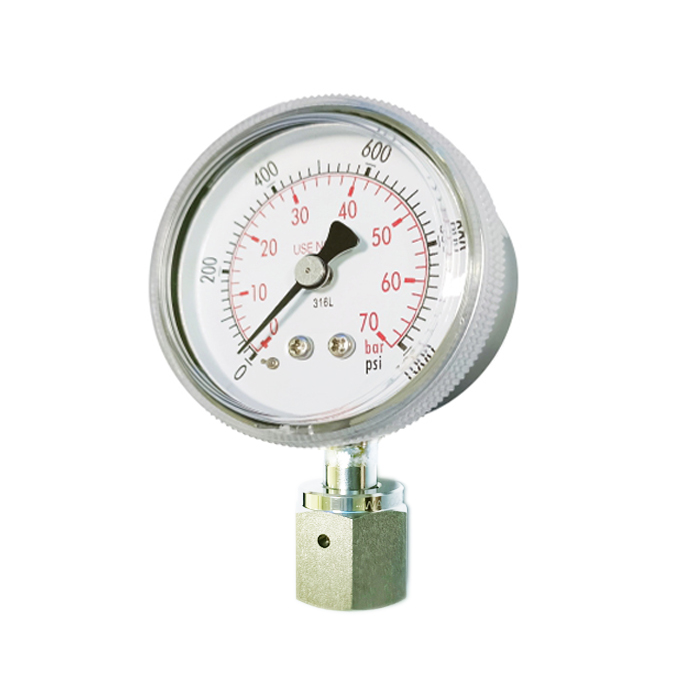
Gauge pressure, defined as the pressure relative to ambient atmospheric pressure, is a critical parameter across numerous industrial applications. This technical guide provides an in-depth exploration of the gauge pressure formula, its underlying principles, manufacturing considerations for measurement devices, performance characteristics, potential failure modes, and relevant industry standards. Gauge pressure measurements are foundational in process control, safety systems, and material characterization, particularly within the chemical, petroleum, aerospace, and manufacturing sectors. The accurate determination and control of gauge pressure are vital for optimizing process efficiency, ensuring equipment longevity, and preventing catastrophic failures. This document addresses the core challenges faced by engineers and procurement managers in understanding, specifying, and maintaining gauge pressure measurement systems, moving beyond simple formula application to encompass real-world engineering constraints and material science implications.
Material Science & Manufacturing
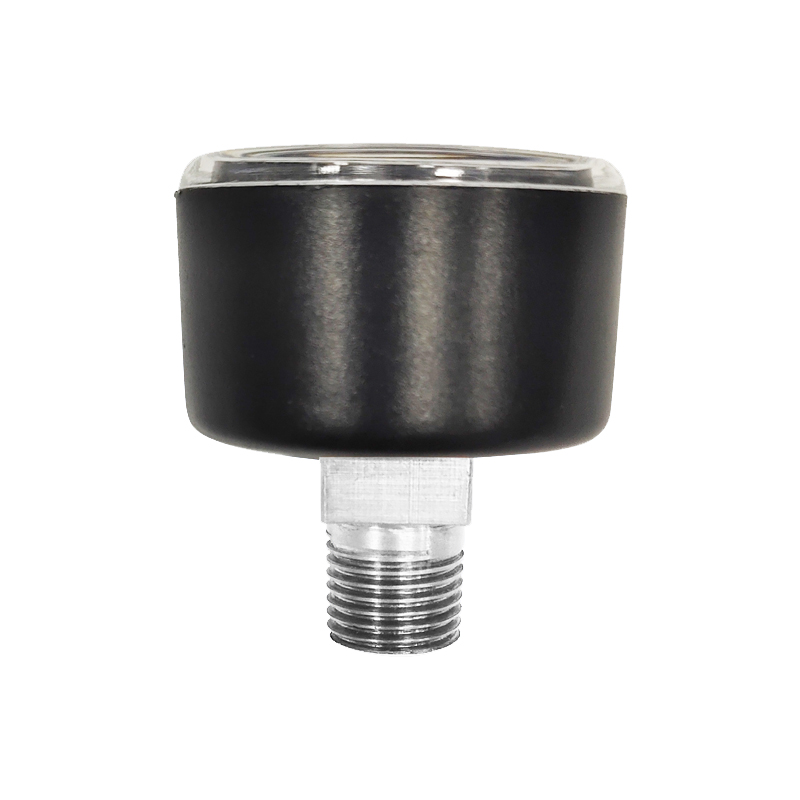
The materials utilized in gauge pressure sensing elements and housings dictate performance, accuracy, and long-term reliability. Common materials include stainless steels (304, 316, 17-4 PH) chosen for corrosion resistance, Monel alloys for highly corrosive environments, and Inconel for high-temperature applications. Diaphragms, the primary sensing component, are often manufactured from these alloys, employing processes like deep drawing, stamping, or electrochemical forming. The manufacturing process impacts the diaphragm’s stress-strain characteristics and sensitivity. Welding, if employed in sensor assembly, requires strict control of heat input to prevent distortion or sensitization of the metal, which could lead to intergranular corrosion. For silicon-based pressure sensors, the etching process to create the diaphragm is critical, demanding precise control of etchant concentration, temperature, and time to achieve the desired membrane thickness and uniformity. The selection of sealant materials (e.g., PTFE, Kalrez) for housing construction is also crucial, based on chemical compatibility with the measured fluid and operating temperature. Manufacturing tolerances must be tightly controlled, as even small variations in diaphragm geometry or material properties can significantly affect gauge pressure accuracy. The critical parameter during manufacturing is material homogeneity, to prevent localized stress concentrations.
Performance & Engineering
The fundamental gauge pressure formula, Pgauge = Pabsolute - Patmospheric, represents the core principle. However, practical application necessitates understanding several engineering considerations. Force analysis on the diaphragm is critical; the deflection is proportional to the applied pressure and inversely proportional to the diaphragm’s stiffness. Finite Element Analysis (FEA) is routinely used to optimize diaphragm geometry and material thickness for maximum sensitivity and minimal stress. Environmental resistance, particularly temperature effects, must be addressed through material selection and compensation techniques. Temperature variations can alter the diaphragm's material properties (Young’s modulus, Poisson’s ratio) and introduce thermal stresses, leading to drift in the output signal. Compliance requirements, such as those stipulated by ASME B40.100 for pressure gauges, dictate accuracy classes and testing procedures. For dynamic pressure measurements, natural frequency analysis is crucial to avoid resonance with the measured process, which could lead to inaccurate readings or even sensor damage. Proper mounting and vibration isolation are also essential to minimize external disturbances. In high-pressure systems, burst pressure considerations are paramount; safety factors are applied to ensure the sensor can withstand pressure surges beyond the expected operating range.
Technical Specifications
| Parameter | Unit | Typical Value | Accuracy Class (ASME B40.100) |
|---|---|---|---|
| Pressure Range | psi | 0-100 | 1.0% FS |
| Overpressure Limit | % FS | 150 | - |
| Operating Temperature | °C | -40 to 85 | - |
| Media Compatibility | - | Stainless Steel 316 | - |
| Accuracy | % FS | 0.25 | 0.5% FS |
| Output Signal | mV | 4-20 | - |
Failure Mode & Maintenance
Gauge pressure sensors are susceptible to several failure modes. Fatigue cracking of the diaphragm can occur due to cyclic pressure fluctuations, particularly at stress concentration points. Corrosion, both general and localized (pitting, crevice corrosion), can degrade the diaphragm and housing, leading to leaks or inaccurate readings. Delamination of coatings or adhesives used in sensor construction can also cause failures. Electrical failures, such as open circuits or short circuits, can result from damaged wiring or corrosion of electrical contacts. Drift in calibration, often caused by temperature effects or material creep, can lead to inaccurate measurements over time. Maintenance involves regular visual inspection for leaks or corrosion, calibration against a known standard, and periodic replacement of worn components. Preventative maintenance programs, including regular cleaning and inspection, can significantly extend sensor lifespan. For sensors exposed to harsh environments, protective coatings or enclosures can mitigate corrosion and other forms of degradation. Proper installation, avoiding excessive vibration or mechanical shock, is also crucial for preventing premature failure. Thorough documentation of maintenance activities is vital for tracking sensor performance and identifying potential issues.
Industry FAQ
Q: What is the impact of ambient temperature fluctuations on gauge pressure readings?
A: Ambient temperature fluctuations can induce errors due to thermal expansion or contraction of the sensor components, as well as changes in the properties of the sensing element. This is often addressed through temperature compensation techniques, either hardware-based (using bimetallic strips or thermistors) or software-based (applying correction algorithms). The degree of impact depends on the sensor’s material and design, as well as the magnitude of the temperature change.
Q: How does the choice of diaphragm material affect long-term accuracy and corrosion resistance?
A: Diaphragm material selection is critical. Stainless steel is common for general applications, but more resistant alloys like Hastelloy or Inconel are needed for corrosive fluids. Material properties like creep resistance also impact long-term accuracy; materials prone to creep will exhibit drift over time. The chemical compatibility between the diaphragm material and the process fluid is paramount to prevent corrosion.
Q: What are the key considerations when selecting a gauge pressure sensor for a high-vibration environment?
A: In high-vibration environments, consider sensors with robust housings and dampened diaphragms. Vibration isolation mounts should be used to minimize the transmission of vibrations to the sensor. Sensors with solid-state technology are generally more resistant to vibration than those with mechanical linkages. Analyzing the sensor’s natural frequency relative to the expected vibration frequencies is crucial to avoid resonance.
Q: How often should gauge pressure sensors be calibrated, and what are the consequences of not doing so?
A: Calibration frequency depends on the application, the sensor’s accuracy requirements, and the severity of the operating environment. A typical interval is 6-12 months, but critical applications may require more frequent calibration. Failure to calibrate can lead to inaccurate readings, potentially resulting in process upsets, equipment damage, or safety hazards.
Q: What are the differences between absolute, gauge, and differential pressure measurements, and when would you use each type?
A: Absolute pressure is referenced to a perfect vacuum, gauge pressure is referenced to atmospheric pressure, and differential pressure measures the difference between two pressures. Absolute pressure is used when the reference point is truly zero, like in vacuum systems. Gauge pressure is common for most industrial applications where the process is relative to the surrounding atmosphere. Differential pressure is used to measure flow rates, level, or pressure drops across filters or other components.
Conclusion
Accurate gauge pressure measurement is fundamental to a wide range of industrial processes. Understanding the underlying principles, material science considerations, and potential failure modes is critical for selecting, installing, and maintaining reliable gauge pressure sensing systems. The gauge pressure formula, while seemingly simple, is rooted in complex engineering principles requiring careful consideration of force analysis, temperature effects, and environmental factors.
Future advancements in sensor technology, such as MEMS-based sensors with integrated temperature compensation and wireless communication capabilities, will further enhance the performance and reliability of gauge pressure measurement systems. Continuous monitoring of sensor performance and implementation of robust preventative maintenance programs are essential for ensuring long-term accuracy and minimizing the risk of process disruptions or safety incidents.
 English
  Arabic
  China
China  China (Taiwan)
  Danish
  Dutch
Dutch  French
  German
  Greek
Greek  Hindi
Hindi  Indonesian
  Italian
  Japanese
  Korean
  Latin
Latin  Polish
  Portuguese
  Russian
  Spanish
  Turkish