
Apr . 01, 2024 17:55 Back to list
Gauge Pressure Performance Analysis
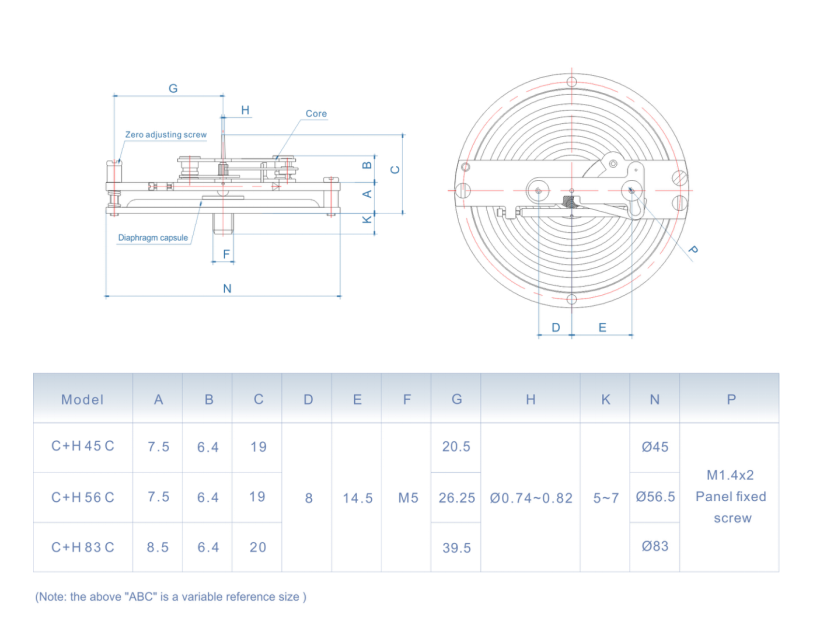
Introduction
Gauge pressure is a measure of pressure relative to ambient atmospheric pressure. It is a fundamental parameter in numerous industrial applications, including process control, fluid power systems, and safety monitoring. Unlike absolute pressure, which references a perfect vacuum, gauge pressure is commonly employed in practical scenarios where atmospheric pressure serves as the baseline. Its importance stems from its direct correlation to the force exerted by a fluid (liquid or gas) on a surface, dictating system performance, integrity, and safe operating limits. In the industrial landscape, accurate gauge pressure measurement is critical for optimizing efficiency, preventing equipment failure, and ensuring worker safety. This guide provides an in-depth exploration of gauge pressure, encompassing its material science foundations, manufacturing considerations, performance characteristics, potential failure modes, and relevant industry standards.
Material Science & Manufacturing
The construction of gauge pressure sensors and transmitters relies heavily on materials selected for their specific mechanical and chemical properties. Common materials include stainless steels (304, 316, 316L) prized for corrosion resistance, nickel alloys (Inconel, Hastelloy) used in harsh chemical environments, and beryllium copper for diaphragms requiring elasticity and conductivity. The manufacturing process varies depending on sensor type. Bourdon tube gauges are typically formed from coiled, flattened tubes, heat-treated to impart spring characteristics and resistance to deformation. Piezoresistive sensors utilize silicon diaphragms with embedded strain gauges, fabricated through micro-electromechanical systems (MEMS) processes involving etching, deposition, and doping. Diaphragm seals, often employed in aggressive media, are produced via welding or bonding techniques, ensuring leak-tight integrity. Critical parameters in manufacturing include material purity to prevent creep, surface finish to minimize hysteresis, and precise dimensional control to achieve accurate pressure readings. Welding processes require stringent control of heat input and shielding gas composition to avoid weld defects and maintain material properties. Heat treatment profiles are carefully optimized to achieve the desired tensile strength and elasticity. The choice of manufacturing process dictates the overall accuracy, reliability, and lifespan of the gauge pressure instrument.
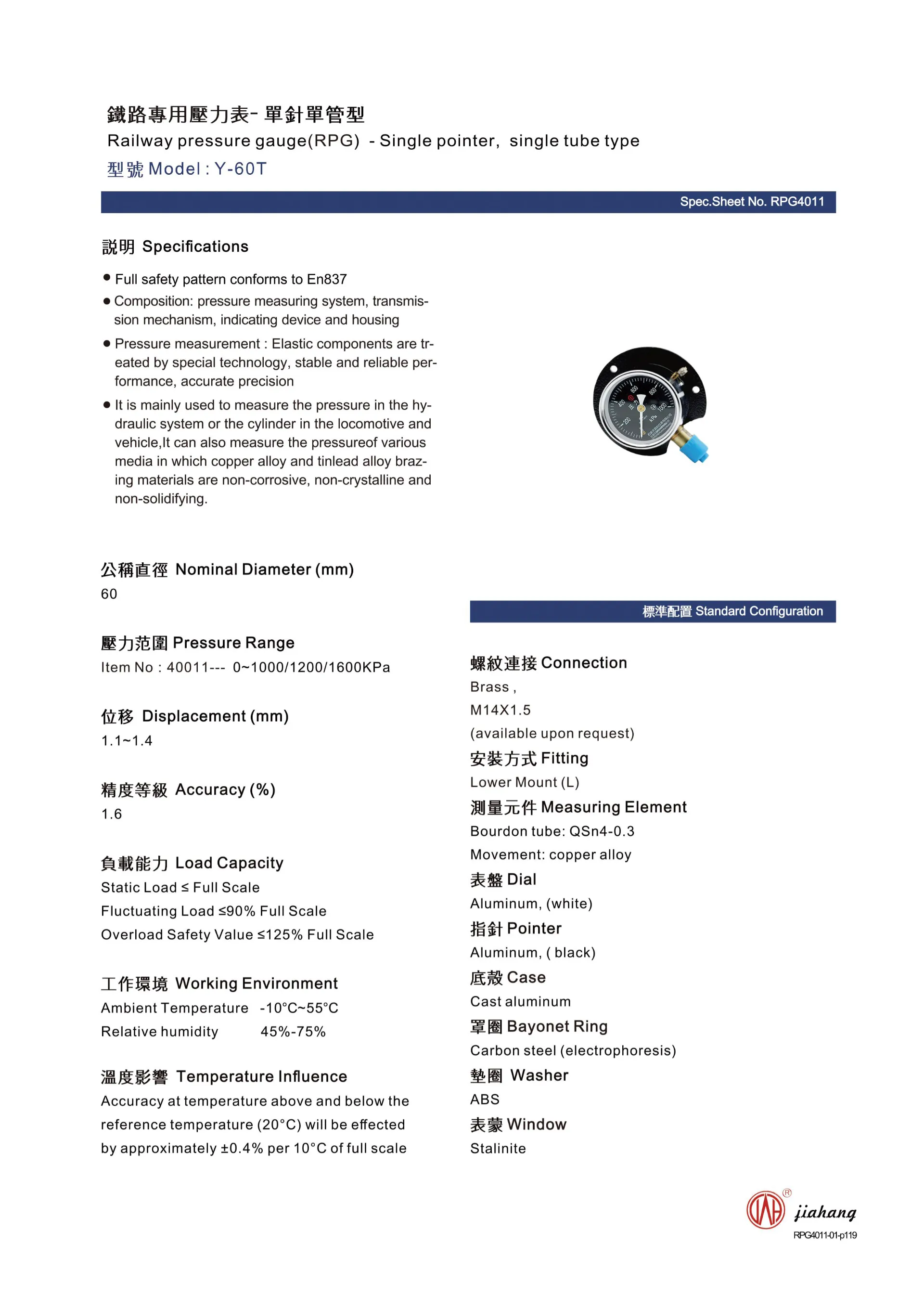
Performance & Engineering
Gauge pressure performance is assessed through several key engineering parameters. Accuracy, defined as the deviation between the indicated pressure and the actual pressure, is paramount. Non-linearity, representing the deviation from a straight-line response, must be minimized. Hysteresis, the difference in output for increasing versus decreasing pressure, affects repeatability. Response time, quantifying the speed at which the sensor reacts to pressure changes, is crucial in dynamic applications. Environmental factors significantly influence performance. Temperature variations induce drift, necessitating temperature compensation circuitry. Vibration can cause erroneous readings, requiring vibration isolation measures. Chemical compatibility dictates material selection to prevent corrosion or swelling. Force analysis is essential in Bourdon tube designs to optimize tube dimensions and material properties for desired pressure ranges. Finite element analysis (FEA) is commonly employed to simulate stress distribution and identify potential failure points. Compliance with industry standards, such as those defined by the American Society of Mechanical Engineers (ASME) and the International Organization for Standardization (ISO), ensures consistent performance and safety. Proper grounding and shielding are essential to minimize electrical noise and interference.
Technical Specifications
| Parameter | Unit | Typical Value | Tolerance |
|---|---|---|---|
| Pressure Range | psi | 0-100 | ±1% FS |
| Accuracy | % FS | 0.25 | ±0.1% FS |
| Media Compatibility | - | Stainless Steel 316 | Corrosion Resistant |
| Operating Temperature | °C | -20 to 80 | ±2°C |
| Output Signal | mV | 10-90 | Linear |
| Connection Type | - | 1/4" NPT | Leak-tight |
Failure Mode & Maintenance
Gauge pressure instruments are susceptible to several failure modes. Creep, the slow deformation of a material under sustained stress, can lead to inaccurate readings over time, particularly in high-pressure applications. Fatigue cracking, initiated by cyclic loading, affects Bourdon tubes and diaphragms. Corrosion, caused by exposure to aggressive media, weakens structural components. Zero shift, a drift in the output signal at zero pressure, is often due to thermal effects or internal stress relaxation. Diaphragm rupture, a catastrophic failure, can occur due to overpressure or material defects. Maintenance procedures include regular calibration against a traceable standard, visual inspection for corrosion or damage, and cleaning to remove contaminants. Diaphragm seals should be replaced periodically based on media compatibility and operating conditions. Proper venting of process lines is critical to prevent overpressure events. Preventive maintenance schedules should be established based on application severity and manufacturer recommendations. Root cause analysis of failures is crucial to identify systemic issues and implement corrective actions. Non-destructive testing (NDT) methods, such as ultrasonic testing, can detect internal flaws before catastrophic failure occurs.
Industry FAQ
Q: What is the difference between gauge pressure and absolute pressure, and when should each be used?
A: Gauge pressure measures pressure relative to atmospheric pressure, while absolute pressure measures pressure relative to a perfect vacuum. Gauge pressure is commonly used in most industrial applications because it reflects the pressure experienced by a system in relation to its environment. Absolute pressure is critical in applications where atmospheric pressure fluctuations are significant, such as altitude measurements or vacuum systems.
Q: How does temperature affect the accuracy of a gauge pressure sensor?
A: Temperature affects the accuracy of gauge pressure sensors in several ways. Thermal expansion and contraction of sensor components can cause drift in the output signal. Temperature gradients within the sensor can create internal stresses. Temperature compensation circuitry is essential to minimize these effects and maintain accuracy over a wide temperature range.
Q: What materials are best suited for gauge pressure sensors used in corrosive environments?
A: For corrosive environments, materials such as stainless steel (316, 316L), Hastelloy, Inconel, and Teflon are commonly used. The specific material selection depends on the nature and concentration of the corrosive media. Diaphragm seals are often employed to isolate the sensor from the corrosive process fluid.
Q: How often should gauge pressure sensors be calibrated?
A: The calibration frequency depends on the application, operating conditions, and required accuracy. Generally, annual calibration is recommended for critical applications. More frequent calibration may be necessary in harsh environments or if the sensor is subjected to frequent shocks or vibrations.
Q: What are the common causes of drift in gauge pressure readings over time?
A: Common causes of drift include creep, hysteresis, temperature effects, and material degradation. Regular calibration and proper maintenance can help mitigate drift. Selecting high-quality sensors with stable materials and robust construction can also minimize drift over the long term.
Conclusion
Gauge pressure measurement is a cornerstone of many industrial processes, demanding a thorough understanding of its underlying principles, material science, and performance characteristics. Accurate and reliable gauge pressure instrumentation is crucial for optimizing efficiency, ensuring safety, and maintaining product quality. Selecting the appropriate sensor type, materials, and manufacturing processes is paramount to achieving desired performance levels and minimizing the risk of failure.
Effective implementation of regular calibration procedures, preventive maintenance schedules, and robust failure analysis protocols are essential for prolonging sensor lifespan and maintaining process integrity. Adherence to relevant industry standards, such as those established by ISO and ASME, ensures consistent performance and facilitates interoperability. Continued advancements in sensor technology, including MEMS-based sensors and wireless communication capabilities, are poised to further enhance the capabilities and versatility of gauge pressure measurement systems.
 English
  Arabic
  China
China  China (Taiwan)
  Danish
  Dutch
Dutch  French
  German
  Greek
Greek  Hindi
Hindi  Indonesian
  Italian
  Japanese
  Korean
  Latin
Latin  Polish
  Portuguese
  Russian
  Spanish
  Turkish