
Apr . 01, 2024 17:55 Back to list
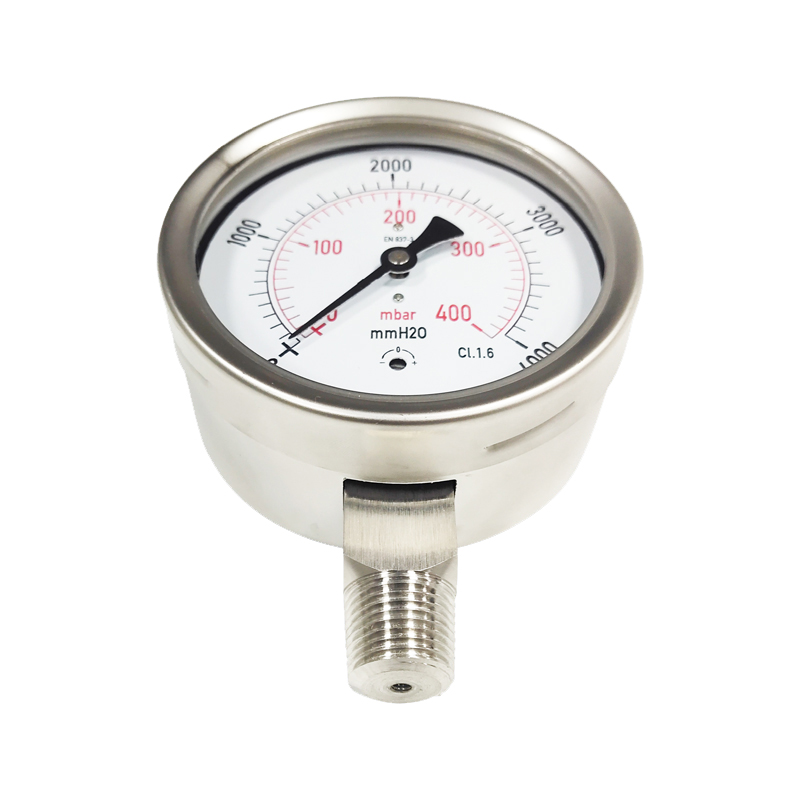
home water pressure gauge Performance Analysis
Introduction
The home water pressure gauge is a critical component in residential plumbing systems, providing a direct measurement of water pressure delivered to the point of use. Positioned within the industry chain between the municipal water supply and residential fixtures, its primary function is to monitor and indicate pressure levels, typically in pounds per square inch (PSI) or bar. Core performance characteristics include accuracy, durability, and ease of reading. Maintaining optimal water pressure is paramount for appliance longevity (dishwashers, washing machines), plumbing system integrity (preventing leaks and bursts), and ensuring efficient water usage. Fluctuations outside acceptable ranges indicate potential problems within the water supply network or the home's plumbing infrastructure. Accurate pressure monitoring allows for timely intervention, mitigating costly repairs and ensuring safe water delivery. The gauge’s internal mechanism typically employs a Bourdon tube, a curved, hollow metal tube that straightens under pressure, mechanically driving a needle across a calibrated dial.
Material Science & Manufacturing
Home water pressure gauges are constructed from several key materials, each chosen for specific properties. The Bourdon tube is typically manufactured from beryllium copper or phosphor bronze, alloys selected for their high elasticity, corrosion resistance, and ability to repeatedly withstand cyclical stress. The gauge case is commonly made of thermoplastic ABS (Acrylonitrile Butadiene Styrene) for impact resistance and affordability, or stainless steel for enhanced durability and aesthetic appeal. The dial face often utilizes polycarbonate for clarity and impact resistance. The connection fitting, which interfaces with the plumbing system, is typically brass (CA360 or similar) due to its corrosion resistance and machinability.
Manufacturing processes involve several critical steps. The Bourdon tube is formed through a cold drawing process, carefully controlling tube diameter and wall thickness to ensure accuracy and responsiveness. Following forming, the tube undergoes heat treatment to relieve stresses induced during the drawing process and optimize its elastic properties. The case is typically manufactured via injection molding. Precise mold design and temperature control are critical to ensure dimensional accuracy and surface finish. The dial face is printed with high-resolution graphics, requiring tight registration tolerances. Assembly involves calibrating the Bourdon tube mechanism, ensuring accurate needle deflection corresponding to known pressure levels. Quality control protocols include leak testing, pressure cycle testing, and visual inspection to verify functionality and aesthetic acceptability. Critical parameter control during manufacturing includes maintaining precise tolerances on Bourdon tube dimensions, ensuring proper heat treatment cycles, and controlling injection molding parameters for the case and dial.
Performance & Engineering
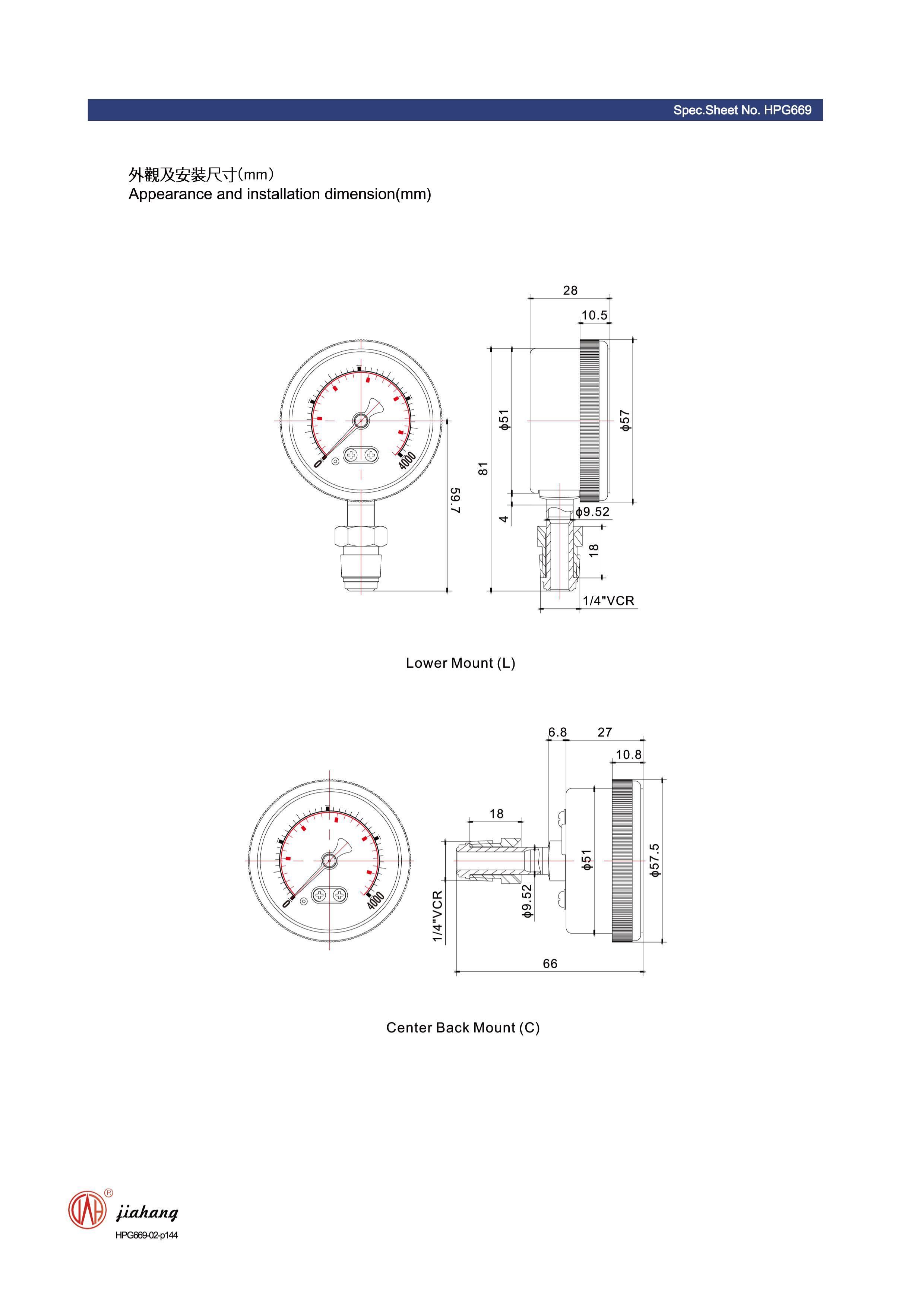
The performance of a home water pressure gauge is governed by several engineering principles. Force analysis centers on the relationship between internal water pressure and the resulting deflection of the Bourdon tube. The tube’s cross-sectional area, wall thickness, and material properties (Young's modulus) determine its sensitivity to pressure changes. Environmental resistance is critical, as gauges are exposed to varying temperatures and humidity levels. Materials must resist corrosion from residual moisture and maintain their mechanical properties across a broad temperature range. Compliance requirements dictate accuracy standards and safety regulations. Most jurisdictions require gauges to meet certain accuracy classes (e.g., Class 1.0, Class 1.6) as defined by relevant standards (see section 7).
Functional implementation relies on precise calibration and consistent manufacturing. The gauge's internal mechanism converts pressure into a mechanical displacement, which is then amplified and displayed on the dial. Gear ratios and pivot point locations within the mechanism are carefully designed to ensure accurate and linear response. Consideration must be given to hysteresis – the lag between pressure application and needle response – to minimize measurement errors. Furthermore, the gauge's mounting orientation can impact accuracy, particularly in models that rely on gravity for proper operation. Mitigation of water hammer effects (sudden pressure surges) through the use of pressure regulators upstream of the gauge is also crucial for prolonged lifespan and reliable readings.
Technical Specifications
| Parameter | Typical Value | Unit | Test Method |
|---|---|---|---|
| Pressure Range | 0-100 | PSI | ASTM E74 |
| Accuracy | ±2% | of Full Scale | EN 837-1 |
| Connection Size | 1/4 | NPT | ANSI B1.20.1 |
| Operating Temperature | -20 to 60 | °C | IEC 60068-2-1 |
| Case Material | ABS Plastic/Stainless Steel | - | ASTM D696/ ASTM A240 |
| Bourdon Tube Material | Beryllium Copper/Phosphor Bronze | - | ASTM B101/ASTM B103 |
Failure Mode & Maintenance
Common failure modes in home water pressure gauges include Bourdon tube fatigue cracking (due to cyclical stress and corrosion), connection fitting leaks (resulting from thread damage or corrosion), and dial face degradation (caused by UV exposure and physical abrasion). Delamination of the dial face laminate can occur under prolonged UV exposure. Oxidation of the Bourdon tube, particularly in environments with high chloride content, can lead to reduced elasticity and inaccurate readings.
Preventative maintenance includes periodic visual inspection for leaks, corrosion, and physical damage. Avoid exposing the gauge to extreme temperatures or direct sunlight. Consider installing a sediment filter upstream of the gauge to prevent abrasive particles from damaging the Bourdon tube. If a leak is detected at the connection fitting, carefully tighten the fitting (avoid over-tightening) or replace the sealing tape. If the gauge exhibits inaccurate readings, it should be recalibrated or replaced. Replacement is recommended if the Bourdon tube shows signs of cracking or corrosion. Professional maintenance typically involves pressure testing the gauge against a calibrated reference standard to verify accuracy. Regular cleaning with a mild detergent and water can help prevent corrosion and maintain clarity of the dial face.
Industry FAQ
Q: What is the acceptable water pressure range for a typical residential plumbing system?
A: The generally accepted range is between 40 and 60 PSI. Pressures below 40 PSI may result in inadequate water flow, while pressures above 60 PSI can strain plumbing components and appliances. Sustained pressure above 80 PSI is considered dangerously high and requires immediate attention.
Q: How often should a home water pressure gauge be replaced?
A: The lifespan of a gauge depends on operating conditions and water quality. However, as a general guideline, it is recommended to replace the gauge every 5-7 years, or sooner if it exhibits signs of damage or inaccurate readings. Regular calibration can extend its lifespan.
Q: What causes fluctuations in water pressure?
A: Fluctuations can be caused by several factors, including changes in municipal water supply pressure, water hammer (pressure surges from sudden valve closures), air in the plumbing system, or partially closed valves. A pressure reducing valve (PRV) can help maintain consistent pressure.
Q: My gauge reads zero pressure, but I have water flow. What could be the problem?
A: This typically indicates a blockage in the gauge's connection fitting or a failure of the Bourdon tube. Carefully disconnect the gauge and inspect the fitting for debris. If the fitting is clear, the gauge likely needs to be replaced.
Q: What is the difference between analog and digital water pressure gauges?
A: Analog gauges, like the type discussed here, use a mechanical Bourdon tube and dial. Digital gauges employ electronic pressure sensors and a digital display. Digital gauges often offer features like data logging and alarm functions, but are typically more expensive and require a power source.
Conclusion
The home water pressure gauge remains a vital, yet often overlooked, component of residential plumbing systems. Its accurate measurement of water pressure is critical for safeguarding appliance lifespan, preventing plumbing failures, and ensuring efficient water usage. The core functionality relies on the carefully engineered interaction between material properties, manufacturing precision, and adherence to established industry standards.
Ongoing advancements in sensor technology may lead to increased adoption of digital pressure gauges in the future. However, the simplicity, reliability, and cost-effectiveness of traditional analog gauges ensure their continued relevance in the home market. Proactive maintenance, including regular inspection and timely replacement, remains paramount for maintaining accurate pressure monitoring and mitigating potential risks.
 English
  Arabic
  China
China  China (Taiwan)
  Danish
  Dutch
Dutch  French
  German
  Greek
Greek  Hindi
Hindi  Indonesian
  Italian
  Japanese
  Korean
  Latin
Latin  Polish
  Portuguese
  Russian
  Spanish
  Turkish