
Apr . 01, 2024 17:55 Back to list
liquid filled pressure gauge Performance Analysis
Introduction
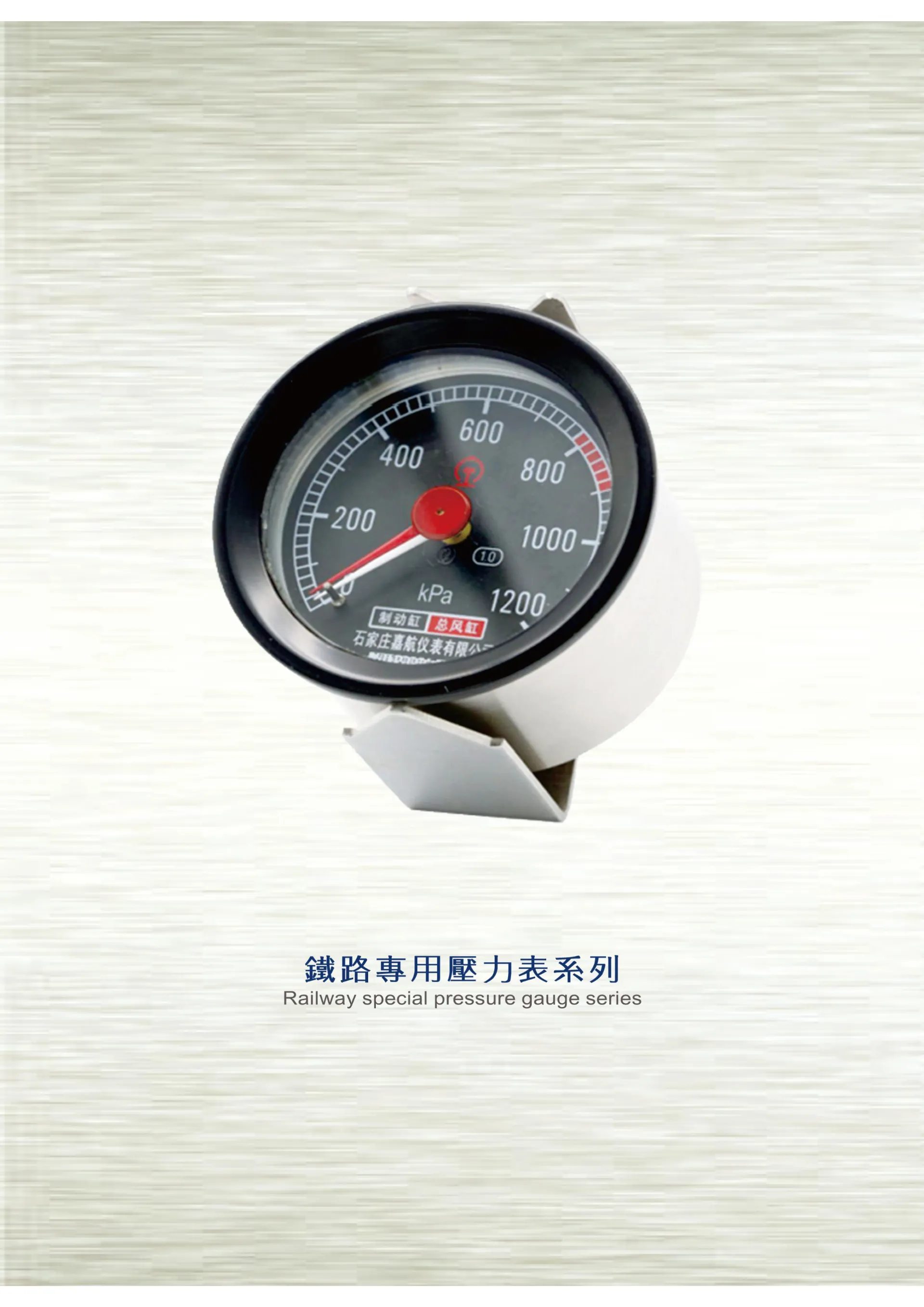
Liquid filled pressure gauges are precision instruments utilized extensively across industrial and commercial applications for the measurement of static or dynamic pressure. Distinct from dry gauges, these instruments employ a liquid – typically glycerin, silicone oil, or a halogenated hydrocarbon – to fill the gauge case, providing superior performance in applications involving vibration, pulsation, or shock. Their technical position within the broader pressure measurement chain lies between the pressure source and the control/monitoring system, functioning as a crucial element in process control, safety systems, and equipment monitoring. Core performance characteristics include accuracy, repeatability, long-term stability, and resistance to media corrosion and external environmental factors. These gauges are essential where precise and reliable pressure indication is paramount, particularly in harsh operating conditions where dry gauges would exhibit shortened lifespans or inaccurate readings. The choice of fill fluid directly impacts performance, influencing viscosity, temperature range, and compatibility with the measured medium.
Material Science & Manufacturing
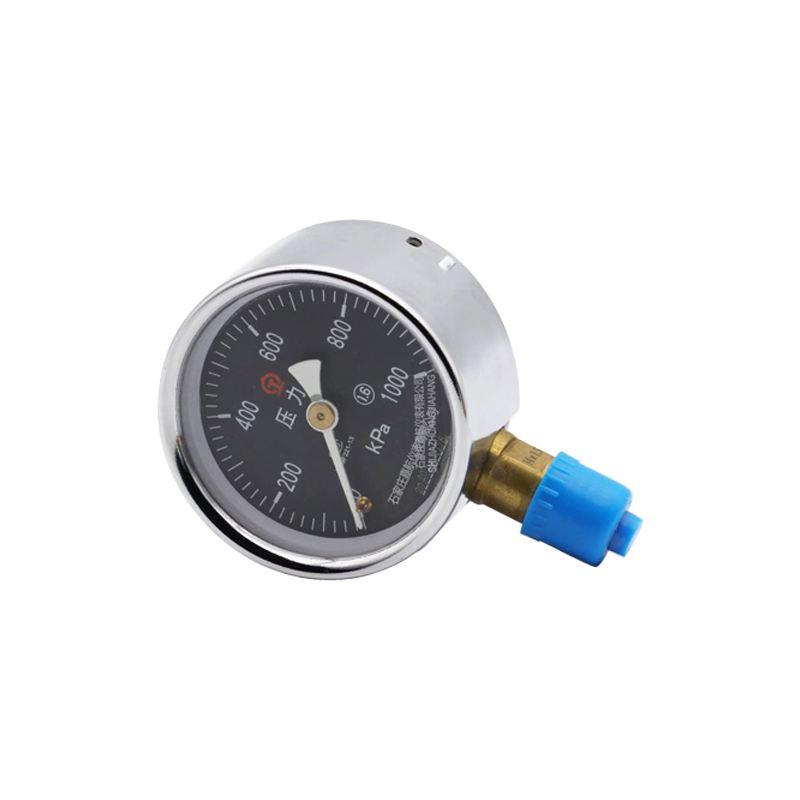
The construction of a liquid filled pressure gauge relies on a combination of materials chosen for their mechanical strength, corrosion resistance, and compatibility with the chosen fill fluid and process medium. The gauge case is frequently constructed from stainless steel (304, 316L) or carbon steel with a protective coating (epoxy, polyurethane) to prevent corrosion. The Bourdon tube, the pressure-sensing element, is typically manufactured from beryllium copper alloy, spring steel, or stainless steel, undergoing precise heat treatment to achieve the desired elasticity and strength. The movement mechanism, responsible for translating Bourdon tube deflection into a readable indication, incorporates brass or stainless steel gears and linkages. The fill fluid itself is carefully selected based on application requirements. Glycerin is common for general-purpose applications, providing excellent damping and lubrication. Silicone oil offers wider temperature range capabilities. Halogenated hydrocarbons (e.g., fluorosilicone) provide enhanced chemical resistance. The manufacturing process involves several key steps: Bourdon tube forming (hydroforming or machining), heat treatment, case fabrication (stamping, machining, welding), movement assembly, and fill/seal operation. Precise control of parameters such as heat treatment temperature, welding parameters (shielding gas composition, current, voltage), and fill volume is critical to ensure gauge accuracy and longevity. Material compatibility studies are vital to prevent degradation of components due to chemical reactions with the fill fluid or process medium. A key pain point in the industry is ensuring consistent fill levels and preventing fluid leakage, which requires advanced sealing techniques and quality control procedures.
Performance & Engineering
The performance of a liquid filled pressure gauge is governed by a complex interplay of factors, including the material properties of the Bourdon tube, the viscosity of the fill fluid, and the external operating environment. Force analysis is critical in designing the Bourdon tube to withstand maximum operating pressures without permanent deformation or failure. Finite element analysis (FEA) is often employed to optimize the tube's geometry and material selection. Environmental resistance, particularly to temperature variations, is a major consideration. The coefficient of thermal expansion of the fill fluid and gauge components must be carefully matched to minimize zero drift (shift in the zero point of the gauge) over the operating temperature range. Compliance requirements vary depending on the application and industry. For example, applications in the oil and gas industry require compliance with standards such as NACE MR0175/ISO 15156 to ensure resistance to sulfide stress cracking. Functional implementation involves accurately translating the pressure-induced deflection of the Bourdon tube into a visible indication on the gauge dial. The gear ratio between the Bourdon tube and the pointer is a key parameter influencing the gauge’s resolution and accuracy. Damping provided by the fill fluid is essential for mitigating the effects of vibration and pulsation, ensuring a stable and readable indication. A common engineering challenge is minimizing hysteresis – the difference in readings obtained when approaching a given pressure from increasing versus decreasing directions. Proper selection of the Bourdon tube material and meticulous calibration procedures are crucial for minimizing hysteresis.
Technical Specifications
| Parameter | Typical Value | Unit | Test Standard |
|---|---|---|---|
| Pressure Range | 0-100 | psi | ASME B40.100 |
| Accuracy | ±1.0 | % FS (Full Scale) | EN 837-1 |
| Operating Temperature | -20 to 80 | °C | IEC 60751 |
| Fill Fluid | Glycerin | - | Manufacturer Specification |
| Case Material | Stainless Steel 304 | - | ASTM A240 |
| Bourdon Tube Material | Beryllium Copper | - | ASTM B194 |
Failure Mode & Maintenance
Liquid filled pressure gauges, while more robust than dry gauges, are still susceptible to failure. Common failure modes include: 1) Bourdon tube rupture due to overpressure or fatigue cracking; 2) Window breakage due to impact or thermal shock; 3) Fill fluid leakage due to seal degradation or case corrosion; 4) Movement mechanism failure (gear wear, linkage breakage); 5) Zero drift due to temperature fluctuations or material creep. Failure analysis often reveals that rupture originates from pre-existing defects in the Bourdon tube or corrosion at stress concentration points. Leakage is frequently caused by degradation of elastomeric seals (e.g., nitrile, Viton) due to exposure to incompatible fluids or UV radiation. Preventive maintenance is crucial for maximizing gauge lifespan. This includes regular visual inspection for leaks, cracks, or damage to the window and case. Periodic calibration against a traceable standard is essential to ensure accuracy. If leakage is detected, the gauge should be removed from service and either repaired (seal replacement) or replaced. For gauges exposed to corrosive environments, periodic cleaning and application of a protective coating can extend their service life. When replacing a gauge, it’s vital to select a model with a compatible fill fluid and case material for the specific application. A key pain point for users is understanding the root cause of failure, requiring thorough investigation and potentially metallurgical analysis of failed components.
Industry FAQ
Q: What is the primary advantage of using a liquid filled pressure gauge over a dry gauge in a vibrating environment?
A: The primary advantage is the damping effect provided by the liquid. This fluid cushions the movement, significantly reducing the impact of vibration and pulsation on the gauge pointer, leading to more stable and accurate readings and extending the lifespan of the mechanism. Dry gauges, lacking this damping, are prone to pointer flutter and premature wear.
Q: How do I select the appropriate fill fluid for my application?
A: Fill fluid selection depends on the process medium, temperature range, and desired chemical resistance. Glycerin is suitable for general-purpose applications. Silicone oil extends the temperature range. Fluorosilicone offers superior chemical compatibility for aggressive media. Always consult the manufacturer’s compatibility chart to ensure the fill fluid is compatible with both the process medium and gauge materials.
Q: What are the common causes of zero drift in liquid filled pressure gauges?
A: Zero drift can be caused by temperature fluctuations, material creep in the Bourdon tube, or changes in the fill fluid’s viscosity. Proper temperature compensation, utilizing materials with low coefficients of thermal expansion, and periodic calibration can minimize zero drift.
Q: What safety precautions should be taken when handling a damaged liquid filled pressure gauge?
A: If the gauge window is broken or there’s a significant leak, treat the fill fluid as a potentially hazardous substance. Wear appropriate personal protective equipment (gloves, eye protection) and contain any spilled fluid. Dispose of the damaged gauge and fluid according to local regulations.
Q: How often should a liquid filled pressure gauge be calibrated?
A: Calibration frequency depends on the application criticality and operating conditions. As a general guideline, annual calibration is recommended for most industrial applications. More frequent calibration may be necessary in high-precision applications or harsh environments.
Conclusion
Liquid filled pressure gauges represent a vital component in countless industrial processes, offering enhanced durability and accuracy compared to traditional dry gauges, particularly in challenging environments. Their performance is intrinsically linked to the careful selection of materials – from the Bourdon tube alloy to the fill fluid – and the precision of the manufacturing process. Understanding the potential failure modes, and implementing a proactive maintenance schedule, are essential for maximizing operational lifespan and ensuring reliable pressure measurement.
Future developments in this field will likely focus on the integration of digital sensing technology and wireless communication capabilities, enabling remote monitoring and predictive maintenance. Further research into novel fill fluids with enhanced temperature stability and chemical resistance will also broaden the application range of these instruments. Continued adherence to stringent industry standards and quality control procedures will remain paramount to ensure the safety and reliability of liquid filled pressure gauges in critical applications.
 English
  Arabic
  China
China  China (Taiwan)
  Danish
  Dutch
Dutch  French
  German
  Greek
Greek  Hindi
Hindi  Indonesian
  Italian
  Japanese
  Korean
  Latin
Latin  Polish
  Portuguese
  Russian
  Spanish
  Turkish