
Apr . 01, 2024 17:55 Back to list
oil pressure gauge Performance Engineering
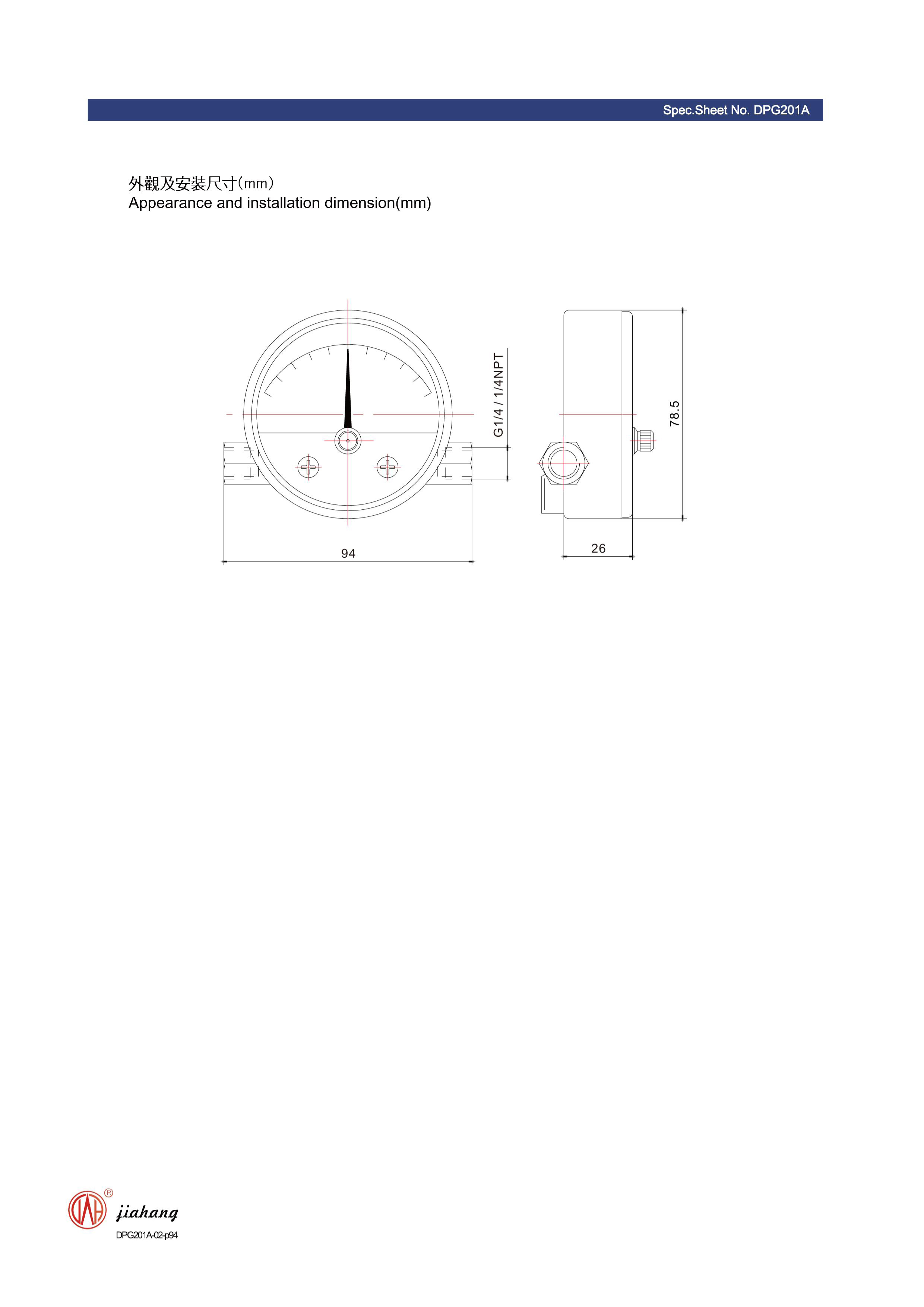
Introduction
The oil pressure gauge is a critical instrument used in internal combustion engine systems to display the oil pressure being delivered throughout the engine. Functioning on principles of either mechanical or electronic transduction, these gauges provide vital data for assessing engine health and preventing catastrophic failure. Positioned within the lubrication circuit, the gauge’s accuracy directly correlates to the functionality of the oil pump, oil filter, and the overall integrity of the engine’s bearing surfaces. Core performance characteristics include accuracy, repeatability, response time, and resistance to vibration and pulsation inherent in engine operation. The industry faces persistent challenges regarding gauge calibration drift, material compatibility with diverse engine oils, and the need for robust designs capable of withstanding harsh operating environments. This guide provides an in-depth examination of oil pressure gauge technology, from material science and manufacturing processes to performance engineering, failure analysis, and applicable industry standards.
Material Science & Manufacturing
Oil pressure gauges commonly utilize Bourdon tubes, diaphragms, or pressure transducers as sensing elements. Bourdon tubes are typically constructed from beryllium copper or stainless steel (304, 316) alloys due to their high tensile strength, elasticity, and corrosion resistance. Stainless steel offers superior resistance to a wider range of engine oils and additives. Diaphragms are often fabricated from nitril rubber, PTFE (Teflon), or stainless steel, with PTFE offering excellent chemical inertness. Pressure transducers utilize silicon piezoresistive sensors encapsulated in stainless steel housings. Manufacturing processes vary depending on the sensing element. Bourdon tube gauges require precise bending and heat treatment to achieve the desired elasticity and shape. Diaphragm gauges involve molding or stamping processes followed by rigorous leak testing. Transducer manufacturing involves semiconductor fabrication, wire bonding, and encapsulation. Critical parameters include material hardness (Rockwell C scale), tensile strength (MPa), elongation (%), and surface finish (Ra). Welding processes, such as TIG welding, are employed for joining components, requiring stringent quality control to prevent porosity and ensure structural integrity. Calibration is a vital step, often automated using precision pressure calibrators traceable to national standards. Chemical compatibility testing with various engine oil formulations (mineral, synthetic, semi-synthetic) is crucial to ensure long-term performance and prevent material degradation.
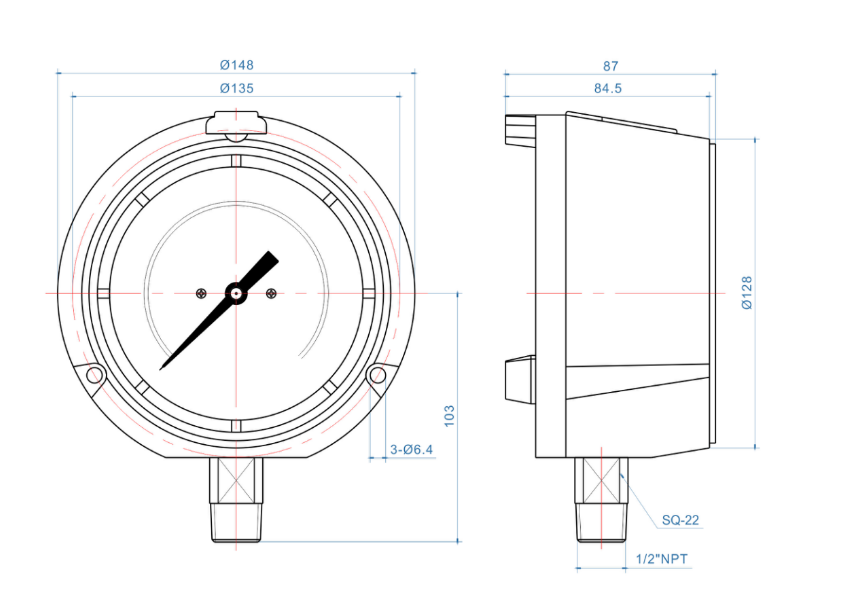
Performance & Engineering
The performance of an oil pressure gauge is defined by its accuracy, repeatability, hysteresis, and response time. Accuracy is typically specified as a percentage of full scale (%FS) and is influenced by manufacturing tolerances, calibration errors, and temperature variations. Repeatability, the ability to provide consistent readings under identical conditions, is crucial for reliable monitoring. Hysteresis, the difference in readings between increasing and decreasing pressure, should be minimized. Response time, the speed at which the gauge reacts to pressure changes, is critical for detecting rapid fluctuations. Force analysis focuses on the stress distribution within the sensing element under varying pressure loads. Finite Element Analysis (FEA) is commonly used to optimize the design and ensure structural integrity. Environmental resistance is paramount; gauges must withstand vibration, shock, temperature extremes, and exposure to engine fluids. Compliance requirements include adherence to SAE J1226 (Pressure Gauges – Performance Requirements) and other relevant industry standards. The gauge’s design must also consider the effects of pulsation and harmonic frequencies present in the oil system. Damping mechanisms, such as fluid filling or restricted orifices, are often employed to reduce needle oscillation and improve readability. Proper mounting orientation is also critical to avoid errors caused by gravitational effects.
Technical Specifications
| Parameter | Unit | Typical Value | Tolerance |
|---|---|---|---|
| Pressure Range | PSI | 0-100 | ±1% FS |
| Accuracy | %FS | 2 | ±0.5% |
| Repeatability | %FS | 1 | - |
| Hysteresis | %FS | 0.5 | - |
| Response Time | Seconds | <0.5 | - |
| Operating Temperature | °F | -40 to 250 | - |
Failure Mode & Maintenance
Common failure modes include Bourdon tube rupture (due to overpressure or fatigue), diaphragm leaks (due to material degradation or puncture), transducer drift (due to sensor aging or contamination), and connection failures (due to corrosion or vibration). Fatigue cracking in the Bourdon tube can occur due to repeated pressure cycling. Delamination of diaphragm materials can result from chemical attack by aggressive engine oil additives. Oxidation and corrosion of metallic components can lead to increased resistance and inaccurate readings. Failure analysis often involves visual inspection, metallographic examination, and chemical analysis to identify the root cause. Maintenance procedures include periodic calibration, leak testing, and inspection of connections. Regular cleaning of the gauge face and housing is also recommended. It’s essential to use the correct engine oil specifications to prevent premature degradation of internal components. If a gauge exhibits erratic readings or fails to respond, it should be replaced immediately to avoid potential engine damage. Preventative maintenance schedules should incorporate regular checks of the oil pressure gauge as part of the overall engine monitoring program.
Industry FAQ
Q: What is the impact of oil viscosity on the accuracy of an oil pressure gauge?
A: Oil viscosity significantly affects gauge readings. Higher viscosity oils require more force from the oil pump to achieve the same pressure, potentially leading to higher readings. Conversely, lower viscosity oils may result in lower readings. Gauge calibration should account for the specific viscosity of the engine oil being used. Temperature also impacts viscosity, so consistent oil temperature is essential for accurate measurements.
Q: How does pulsation in the oil system affect the gauge's lifespan and readings?
A: Continuous pulsation can induce fatigue in the Bourdon tube or diaphragm, reducing its lifespan and potentially leading to premature failure. It also causes needle oscillation, making accurate readings difficult. Damping mechanisms, like fluid filling or restricted orifices, are employed to mitigate these effects.
Q: What are the benefits of using a digital oil pressure gauge over a mechanical one?
A: Digital gauges offer higher accuracy, better repeatability, and the ability to integrate with engine control units (ECUs) for data logging and diagnostics. They are less susceptible to vibration and temperature effects compared to mechanical gauges. However, they require a power source and can be more complex to troubleshoot.
Q: What materials are most resistant to common engine oil additives?
A: Stainless steel (316), PTFE (Teflon), and Viton are generally the most resistant materials to the harsh chemicals found in modern engine oils, including detergents, dispersants, anti-wear additives, and corrosion inhibitors. Beryllium copper offers good resistance but can be susceptible to corrosion in some environments.
Q: What is the recommended calibration frequency for oil pressure gauges in critical applications?
A: In critical applications, such as high-performance engines or industrial equipment, calibration should be performed at least annually, or more frequently if specified by the equipment manufacturer. Regular calibration ensures the gauge maintains its accuracy and provides reliable readings.
Conclusion
The oil pressure gauge remains a fundamental component in engine monitoring and preventative maintenance. Understanding the material science behind its construction, the intricacies of its manufacturing process, and the factors influencing its performance are crucial for ensuring reliable operation and preventing costly engine failures. Selecting the appropriate gauge for a specific application requires careful consideration of accuracy requirements, operating environment, and compatibility with the engine oil in use.
Future developments in oil pressure gauge technology will likely focus on miniaturization, increased accuracy, and integration with wireless sensor networks for remote monitoring and predictive maintenance. Advanced sensor technologies, such as MEMS-based pressure transducers, are expected to gain prominence. Continued advancements in materials science will further enhance the durability and chemical resistance of these critical instruments.
 English
  Arabic
  China
China  China (Taiwan)
  Danish
  Dutch
Dutch  French
  German
  Greek
Greek  Hindi
Hindi  Indonesian
  Italian
  Japanese
  Korean
  Latin
Latin  Polish
  Portuguese
  Russian
  Spanish
  Turkish