
Apr . 01, 2024 17:55 Back to list
oil pressure gauges Performance and Engineering
Introduction
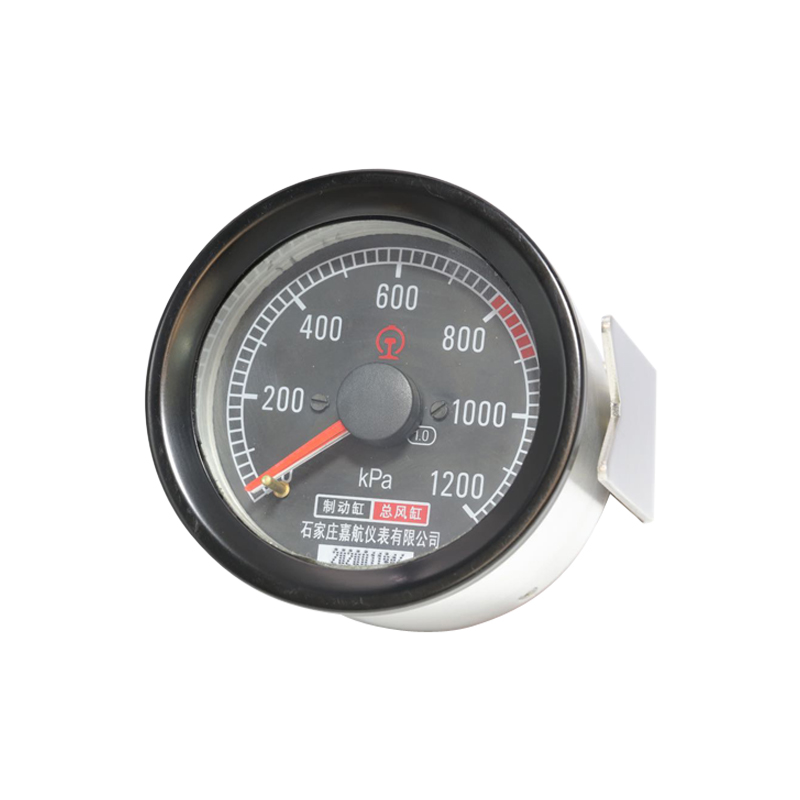
Oil pressure gauges are critical instrumentation within internal combustion engine systems and hydraulic machinery, serving as indicators of fluid pressure generated by pumps. Their technical position lies central to preventative maintenance and operational efficiency, providing real-time data for assessing component health and potential failures. These gauges are fundamental to ensuring the reliable operation of machinery across diverse industries including automotive, marine, aerospace, and industrial manufacturing. Core performance characteristics encompass accuracy, repeatability, responsiveness, and durability under harsh operating conditions. Modern gauges utilize various sensing technologies – Bourdon tube, diaphragmatic, and electronic – each with distinct advantages and limitations concerning pressure range, environmental sensitivity, and signal output. The escalating demand for predictive maintenance in Industry 4.0 contexts is driving advancements in digital oil pressure gauges offering remote monitoring and data analytics capabilities.
Material Science & Manufacturing
The construction of oil pressure gauges necessitates a careful selection of materials exhibiting compatibility with diverse hydraulic fluids and resistance to corrosion. Bourdon tubes are commonly fabricated from beryllium copper alloys (C17200), stainless steel (304, 316), or carbon steel, depending on the pressure range and fluid compatibility. Beryllium copper offers high strength, excellent corrosion resistance, and good fatigue life but is more expensive. Stainless steel provides superior corrosion resistance in aggressive environments. Carbon steel is used for lower pressure applications but requires protective coatings. Gauge cases are often constructed from die-cast aluminum, brass, or stainless steel, selected for durability and resistance to impact. The lens is typically manufactured from polycarbonate or tempered glass to withstand pressure and impact. Manufacturing processes involve precise metal forming (hydroforming or bending for Bourdon tubes), welding (TIG or laser welding for connecting components), and assembly. Critical parameters during Bourdon tube fabrication include controlled bending radius to ensure linearity and minimize stress concentrations. Welding parameters (current, voltage, gas shielding) are crucial to prevent porosity and maintain structural integrity. Accuracy is maintained through rigorous calibration processes utilizing certified pressure standards and computerized calibration equipment. Diaphragmatic gauges utilize materials like nickel alloys (Hastelloy) for diaphragms, chosen for their resistance to a wide range of fluids and temperatures.
Performance & Engineering
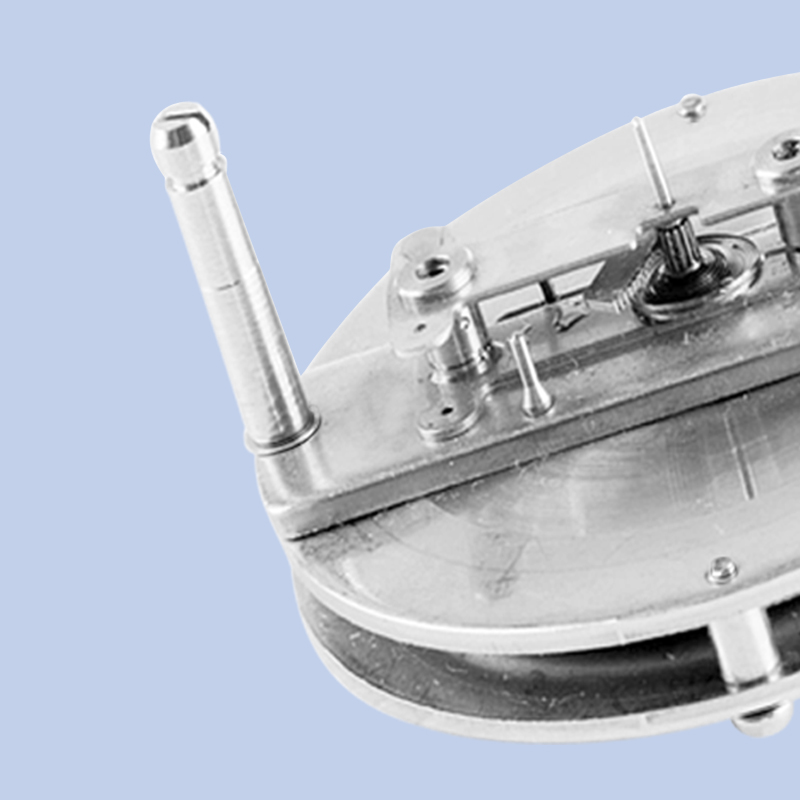
The performance of oil pressure gauges is dictated by several key engineering considerations. Force analysis is central to Bourdon tube design, requiring precise calculations of hoop stress and torsional deflection to ensure accurate pressure translation. Environmental resistance is crucial; gauges must withstand temperature fluctuations, vibration, shock, and exposure to corrosive fluids. Compliance with industry standards (SAE J1226 for automotive applications, ISO 7251 for general industrial use) dictates performance requirements related to accuracy, hysteresis, and repeatability. Electronic pressure gauges utilize piezoresistive or capacitive sensors, requiring careful circuit design and signal conditioning to minimize noise and drift. The selection of damping fluid (glycerin or silicone oil) within the gauge housing is critical for mitigating the effects of pulsations and vibration, enhancing readability and extending gauge life. Materials selection impacts thermal expansion coefficients, influencing accuracy over varying temperature ranges. The gauge's response time (the time taken to reach a stable reading after a pressure change) is a crucial performance parameter, particularly in dynamic systems. Fatigue life is a significant concern, particularly in applications with frequent pressure cycles. Finite Element Analysis (FEA) is employed to optimize designs and predict stress concentrations within critical components, thereby enhancing durability and reliability. Hydraulic system compatibility requires attention to fluid viscosity and temperature characteristics, as these factors can influence gauge readings.
Technical Specifications
| Parameter | Bourdon Tube Gauge | Diaphragmatic Gauge | Electronic Gauge |
|---|---|---|---|
| Pressure Range | 0-10,000 psi | 0-5,000 psi | 0-15,000 psi |
| Accuracy | ±1% FS | ±0.5% FS | ±0.25% FS |
| Operating Temperature | -40°C to 85°C | -60°C to 120°C | -20°C to 85°C |
| Process Connection | 1/8" NPT, 1/4" NPT | 1/8" NPT, 1/4" NPT | 1/8" NPT, M12x1.5 |
| Case Material | Steel, Aluminum | Stainless Steel | Plastic, Steel |
| Output Signal | Analog (Pointer) | Analog (Pointer) | 4-20mA, 0-5V, Digital (Modbus) |
Failure Mode & Maintenance
Oil pressure gauges are susceptible to several failure modes. Bourdon tubes can experience fatigue cracking due to repeated pressure cycles, particularly near the welded joints or bends. Corrosion, induced by exposure to incompatible fluids, can lead to tube rupture or blockage. Diaphragmatic gauges can suffer from diaphragm rupture or degradation due to chemical attack or excessive pressure spikes. Electronic gauges may fail due to sensor drift, circuit component failure, or connector corrosion. Blockage of the process connection due to particulate contamination is a common issue, leading to inaccurate readings. Leakage can occur at the process connection due to thread damage or improper sealing. Maintenance involves regular visual inspection for signs of damage (cracks, corrosion, leaks). Periodic calibration using certified pressure standards is crucial to ensure accuracy. Cleaning the process connection and replacing filters prevents blockage. For electronic gauges, checking the wiring and connectors for corrosion and ensuring proper grounding are essential. Replacement of the gauge is necessary in cases of severe damage or irreparable failure. Preventative maintenance programs incorporating regular inspection, calibration, and fluid analysis can significantly extend gauge life and minimize downtime. Proper selection of gauge materials compatible with the process fluid is paramount in preventing corrosion-related failures.
Industry FAQ
Q: What is the impact of pulsation on gauge accuracy, and what mitigation strategies are recommended?
A: Pulsation, or rapid fluctuations in pressure, can introduce inaccuracies in gauge readings due to dynamic errors and increased wear. Mitigation strategies include using gauges filled with damping fluid (glycerin or silicone oil) to absorb energy and reduce needle oscillation. Installing a pulsation dampener upstream of the gauge provides further stabilization. Selecting a gauge with a slower response time can also reduce the impact of pulsations, albeit at the cost of responsiveness to rapid pressure changes.
Q: How do different process fluids affect the longevity of the gauge materials?
A: Different fluids exhibit varying levels of corrosivity. Highly corrosive fluids like strong acids or bases can rapidly degrade materials like carbon steel and some aluminum alloys. Choosing gauge materials resistant to the specific fluid is crucial. Stainless steel (316) offers broad compatibility, while specialized alloys like Hastelloy are required for highly aggressive fluids. Regularly analyzing the process fluid for contamination and implementing filtration systems can also extend gauge life.
Q: What are the considerations when selecting an electronic pressure gauge versus a mechanical gauge?
A: Electronic gauges offer advantages in remote monitoring, data logging, and integration with control systems. However, they are more susceptible to electrical noise and require a power supply. Mechanical gauges are simpler, more robust, and do not require power, but lack advanced data capabilities. The choice depends on the application requirements, budget, and integration needs.
Q: What is the recommended calibration frequency for oil pressure gauges in a critical industrial application?
A: The recommended calibration frequency depends on the application's criticality and operating conditions. For critical applications, calibration should be performed at least annually, or more frequently if the gauge is exposed to harsh environments or experiences frequent pressure spikes. Establishing a calibration schedule based on historical data and risk assessment is best practice.
Q: What are the common causes of zero drift in electronic pressure gauges and how can they be addressed?
A: Zero drift in electronic gauges can be caused by temperature fluctuations, sensor aging, and electrical noise. Addressing zero drift involves ensuring proper temperature compensation circuitry, periodically recalibrating the gauge, and shielding the wiring to minimize noise interference. Proper grounding is also crucial for reducing drift caused by electrical interference.
Conclusion
Oil pressure gauges represent a cornerstone of fluid power monitoring and control across a wide spectrum of industries. Their selection and implementation necessitate a deep understanding of material science, manufacturing processes, performance characteristics, and potential failure modes. The ongoing trend towards digitalization and predictive maintenance is driving the adoption of electronic gauges offering enhanced data acquisition and analytics capabilities.
Successfully employing oil pressure gauges demands consistent adherence to industry standards, diligent maintenance practices, and careful consideration of the specific application requirements. Proper material selection, rigorous calibration, and proactive failure analysis are critical to maximizing gauge lifespan, ensuring operational reliability, and minimizing costly downtime. As Industry 4.0 continues to evolve, advancements in sensor technology and data analytics will undoubtedly shape the future of oil pressure gauge design and functionality.
 English
  Arabic
  China
China  China (Taiwan)
  Danish
  Dutch
Dutch  French
  German
  Greek
Greek  Hindi
Hindi  Indonesian
  Italian
  Japanese
  Korean
  Latin
Latin  Polish
  Portuguese
  Russian
  Spanish
  Turkish