
Apr . 01, 2024 17:55 Back to list
portable air pressure gauge Performance Analysis
Introduction
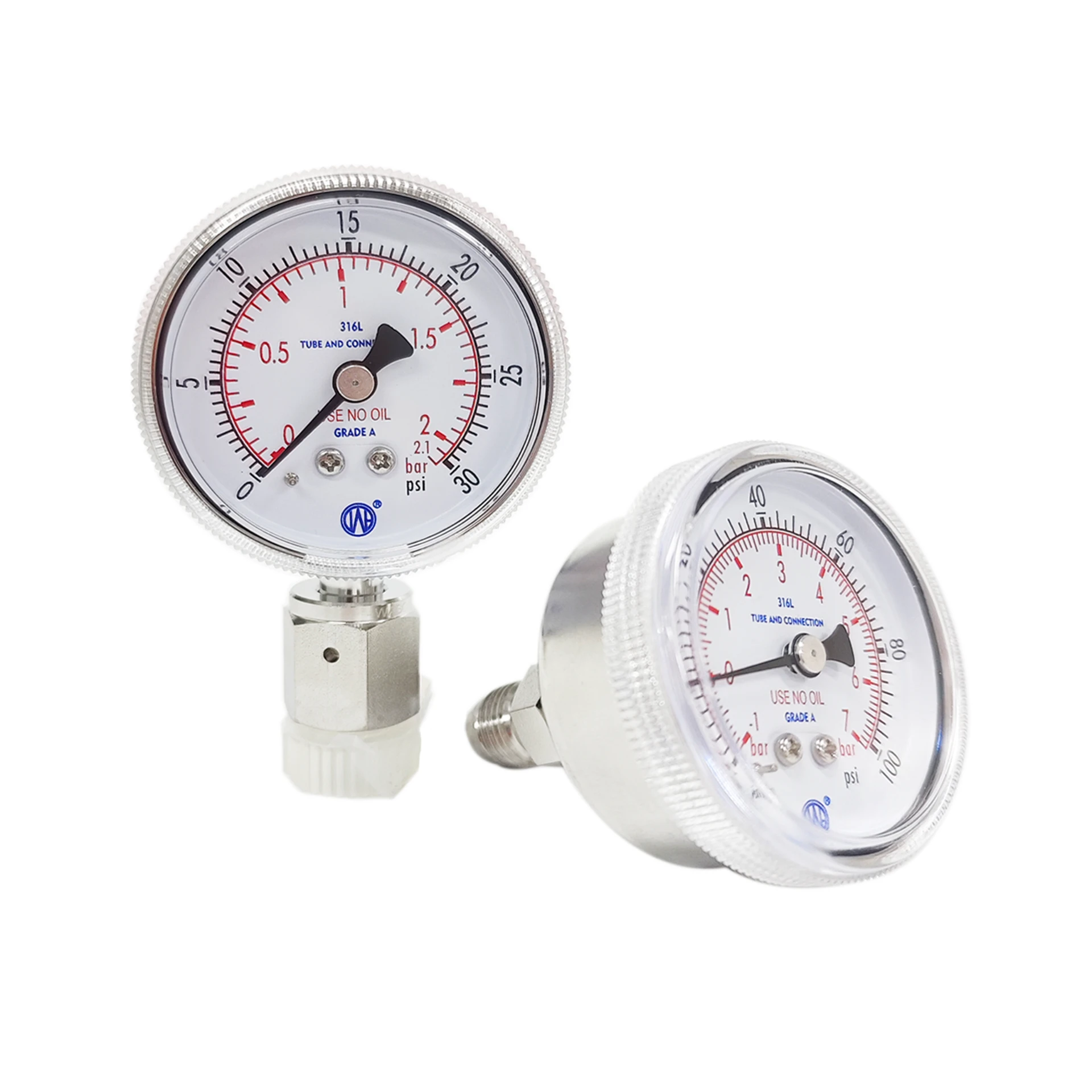
Portable air pressure gauges are precision instruments utilized for the localized measurement of pneumatic and hydraulic pressure. They occupy a critical position within the maintenance, repair, and operations (MRO) sector, as well as process control in industries such as automotive, aerospace, manufacturing, and HVAC. Unlike permanently installed pressure transmitters, these gauges offer flexibility and portability, enabling technicians to diagnose system performance at various points without requiring system shutdown or complex installation procedures. Their core performance characteristics revolve around accuracy, repeatability, durability, and the range of pressures they can effectively measure. The prevalence of digital displays coupled with analog functionality has expanded their utility, enabling advanced features like data logging and unit conversion. A key pain point within industry is maintaining calibration accuracy in field conditions and mitigating the risk of inaccurate readings leading to costly downtime or safety hazards.
Material Science & Manufacturing
The construction of a portable air pressure gauge typically involves several key materials. The gauge housing is commonly manufactured from brass, aluminum alloy, or reinforced engineering plastics (ABS, polycarbonate) chosen for their durability, corrosion resistance, and ability to withstand mechanical shock. Bourdon tubes, the core sensing element in many analog gauges, are frequently crafted from beryllium copper alloys or specialized spring steel, selected for their high elastic limit and fatigue resistance. Digital gauges employ pressure transducers incorporating piezoresistive silicon or capacitive sensors. These sensors rely on the principle of converting pressure into an electrical signal proportional to the applied force. Manufacturing processes vary depending on the gauge type. Analog gauges require precision forming of the Bourdon tube using processes like deep drawing and annealing, followed by meticulous calibration and assembly. Digital gauges involve semiconductor fabrication for the sensor, followed by signal conditioning circuitry, analog-to-digital conversion, and LCD display integration. Critical parameters during manufacturing include dimensional accuracy of the Bourdon tube, material heat treatment to optimize spring characteristics, sensor linearity and hysteresis, and environmental sealing to prevent moisture ingress. Quality control relies heavily on pressure testing, finite element analysis (FEA) for stress analysis, and statistical process control (SPC) to ensure consistent performance.
Performance & Engineering
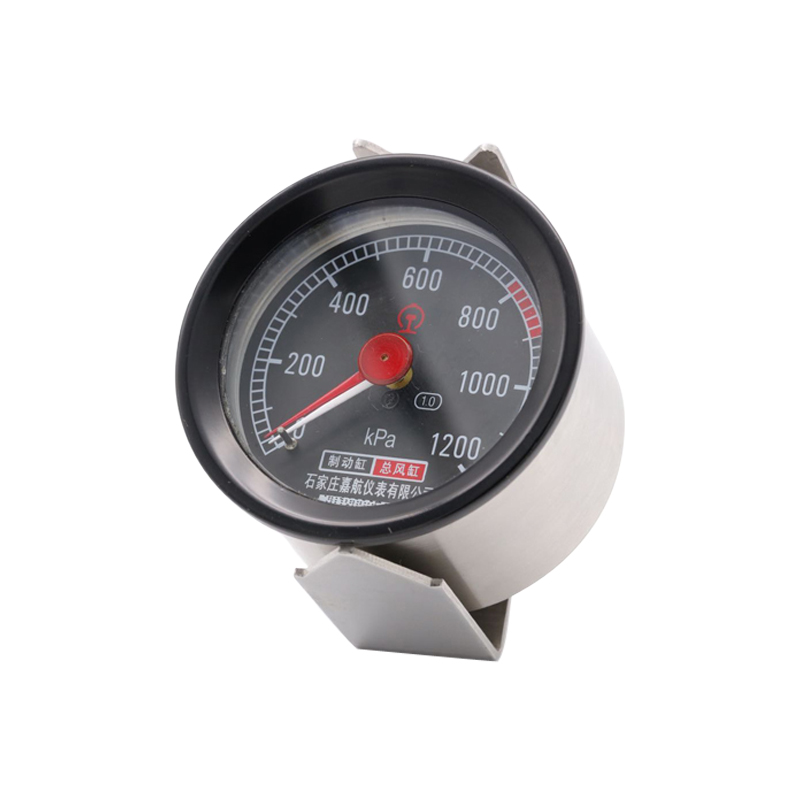
The performance of a portable air pressure gauge is dictated by several key engineering principles. Force analysis focuses on the stresses within the Bourdon tube or the pressure transducer under maximum operating pressure. Fatigue life is a critical consideration, particularly for gauges subjected to frequent pressure cycling. Environmental resistance is paramount, requiring protection against temperature fluctuations, humidity, and potentially corrosive atmospheres. The accuracy of the gauge is determined by factors such as sensor linearity, hysteresis, and thermal drift. Calibration procedures are essential to minimize these errors. Digital gauges often include temperature compensation algorithms to mitigate the effects of temperature variations on sensor output. Compliance requirements vary depending on the target industry. For example, gauges used in pharmaceutical or food processing applications must meet stringent sanitary standards (3-A Sanitary Standards). Gauges intended for hazardous environments must comply with ATEX or IECEx directives, requiring intrinsically safe design to prevent ignition of flammable gases or vapors. Furthermore, the gauge’s ingress protection (IP) rating is critical, defining its ability to withstand dust and water exposure. Proper gasket selection, sealing techniques, and material compatibility are vital for maintaining long-term performance and preventing leakage.
Technical Specifications
| Parameter | Unit | Typical Value | Tolerance |
|---|---|---|---|
| Pressure Range | psi | 0-100 | ±1% FS |
| Accuracy | % FS | 1 | ±0.5% |
| Resolution | psi | 0.1 | N/A |
| Operating Temperature | °F | 32 to 140 | ±2% per °F outside range |
| Media Compatibility | - | Air, Nitrogen, Hydraulic Oil | Consult compatibility chart |
| Process Connection | NPT | 1/8" Female | Various options available |
Failure Mode & Maintenance
Portable air pressure gauges are susceptible to several failure modes. Fatigue cracking of the Bourdon tube can occur due to repeated pressure cycling, particularly near the welded joints. Delamination of the diaphragm in diaphragm gauges can lead to inaccurate readings. Degradation of the sealing materials (O-rings, gaskets) can result in pressure leaks. Oxidation and corrosion of metallic components can compromise the gauge’s structural integrity. Digital gauges can experience failures in the pressure transducer, LCD display, or internal circuitry. Moisture ingress is a common cause of failure, leading to corrosion and electronic component malfunction. Maintenance procedures include regular visual inspection for leaks, cracks, or physical damage. Periodic calibration using a NIST-traceable standard is crucial for maintaining accuracy. Proper storage in a clean, dry environment is essential to prevent corrosion. For digital gauges, battery replacement and software updates may be required. If a gauge is exposed to corrosive media, thorough cleaning and inspection are necessary. In the event of a Bourdon tube failure, the entire gauge typically needs to be replaced, as repair is often impractical. Preventative maintenance schedules should be implemented based on usage frequency and environmental conditions.
Industry FAQ
Q: What is the typical lifespan of a portable air pressure gauge?
A: The lifespan is highly dependent on usage frequency, environmental conditions, and maintenance practices. A well-maintained analog gauge can last 5-10 years, while digital gauges generally have a lifespan of 3-7 years, limited by battery life and component degradation.
Q: How often should a portable air pressure gauge be calibrated?
A: Calibration is recommended annually, or more frequently if the gauge is used in critical applications or exposed to harsh environments. Calibration ensures accuracy and compliance with relevant standards.
Q: What is the difference between absolute, gauge, and differential pressure measurements?
A: Gauge pressure is relative to atmospheric pressure, absolute pressure is relative to a perfect vacuum, and differential pressure measures the difference between two pressures. Portable gauges typically measure gauge pressure.
Q: What materials are compatible with common hydraulic fluids used in conjunction with these gauges?
A: Compatibility depends on the specific fluid. Stainless steel, brass with nickel plating, and certain fluoropolymers (e.g., PTFE) generally offer good resistance to most hydraulic fluids. Always consult a chemical compatibility chart.
Q: How can I prevent damage to a digital pressure gauge’s electronic components?
A: Protect the gauge from moisture, extreme temperatures, and physical shock. Use a protective case during transport and storage. Avoid prolonged exposure to direct sunlight and corrosive substances. Ensure proper battery maintenance.
Conclusion
Portable air pressure gauges represent an indispensable tool for professionals across diverse industries requiring precise and localized pressure measurements. Their functionality hinges upon a sophisticated interplay of material science, manufacturing precision, and robust engineering design. Understanding the inherent failure modes, implementing diligent maintenance protocols, and adhering to relevant industry standards are crucial for maximizing lifespan, ensuring accuracy, and mitigating potential safety risks.
Looking ahead, advancements in sensor technology, wireless connectivity, and data analytics will likely drive further innovation in portable pressure gauge design. Integration with mobile devices and cloud-based platforms will enable remote monitoring, predictive maintenance, and enhanced data management capabilities. Continued emphasis on robustness, accuracy, and user-friendliness will solidify the role of these gauges as essential components in modern industrial operations.
 English
  Arabic
  China
China  China (Taiwan)
  Danish
  Dutch
Dutch  French
  German
  Greek
Greek  Hindi
Hindi  Indonesian
  Italian
  Japanese
  Korean
  Latin
Latin  Polish
  Portuguese
  Russian
  Spanish
  Turkish