
Apr . 01, 2024 17:55 Back to list
pressure gauge Gauge Performance Analysis
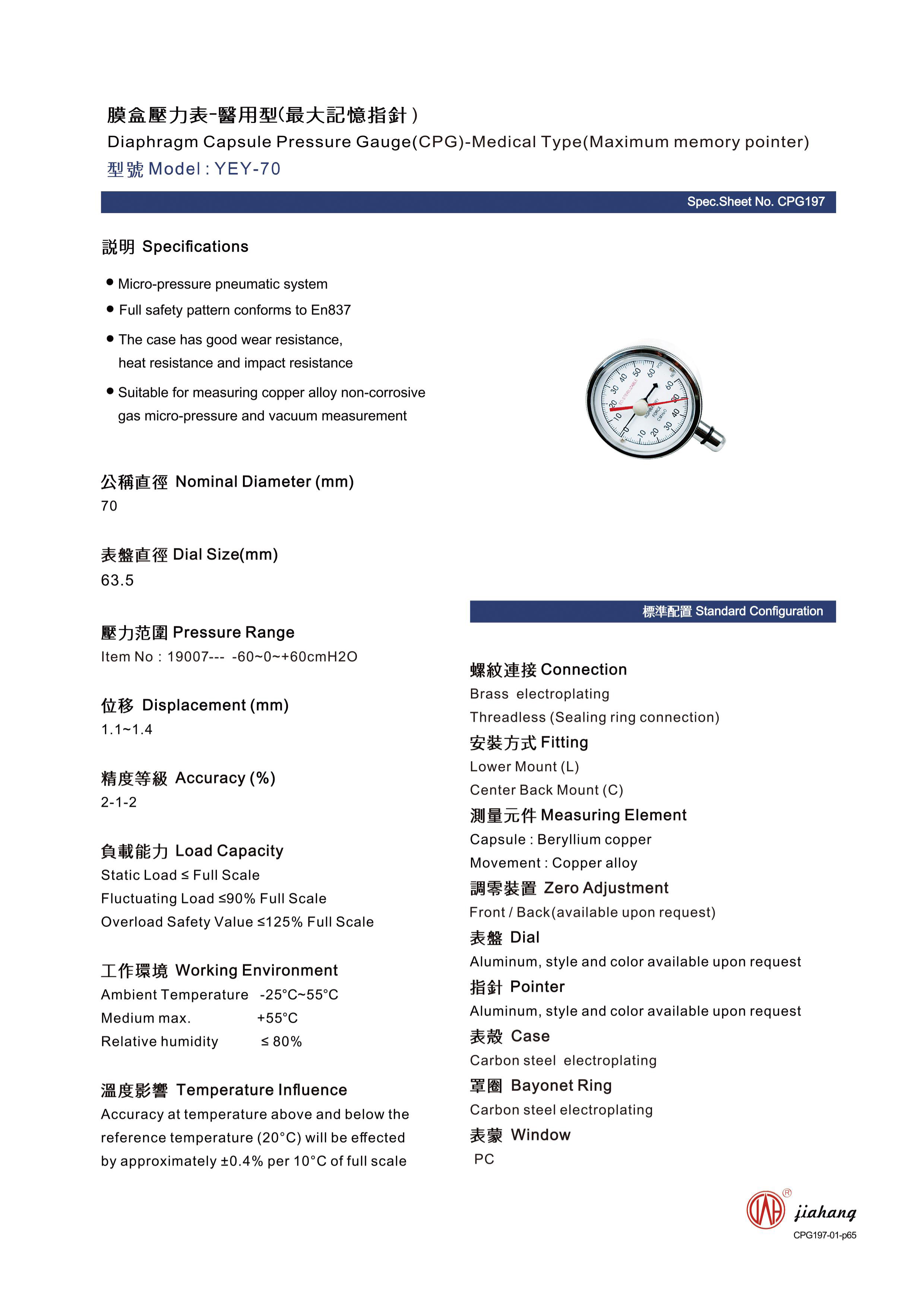
Introduction
Pressure gauges are fundamental instruments in industrial process control, providing a visual indication of fluid or gas pressure. They represent a critical component in ensuring safe and efficient operation across diverse sectors, including oil & gas, chemical processing, power generation, and HVAC systems. Their technical position within the industrial chain lies between the pressure source (pumps, compressors, reactors) and the control systems (PLCs, SCADA). Gauges translate physical pressure into a measurable reading, enabling operators to monitor, regulate, and maintain optimal operating conditions. Core performance characteristics are defined by accuracy (as a percentage of span), resolution, and response time, all critically linked to the gauge’s intended application and environmental factors. The increasing demand for higher accuracy, remote monitoring capabilities, and compliance with stringent safety standards drives continued innovation in pressure gauge technology, specifically towards smart gauges and digital communication protocols.
Material Science & Manufacturing
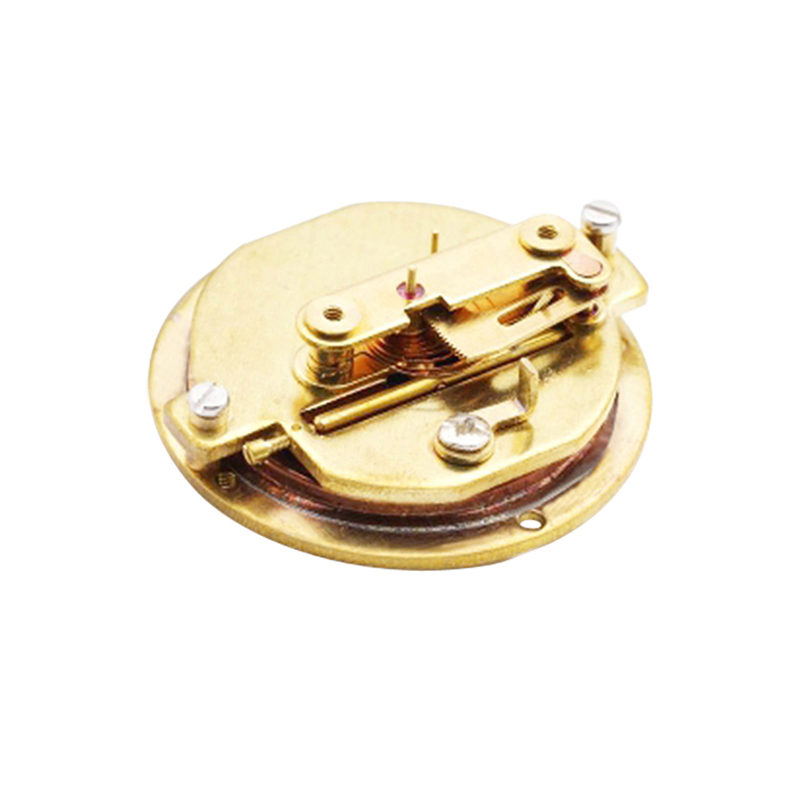
The construction of a pressure gauge relies on a combination of materials selected for their mechanical strength, corrosion resistance, and compatibility with the measured medium. Bourdon tubes, the most common pressure-sensing element, are typically manufactured from alloys like beryllium copper, stainless steel (304, 316), and nickel alloys (Monel, Inconel). Beryllium copper offers excellent elasticity and fatigue resistance but requires careful heat treatment to avoid embrittlement. Stainless steels provide good corrosion resistance in a broad range of environments. Nickel alloys are chosen for highly corrosive applications. The gauge case is often constructed from aluminum, steel, or molded plastics. Manufacturing processes for the Bourdon tube involve cold drawing, bending, and heat treatment to achieve the desired elliptical or spiral shape. Precision bending is crucial for accuracy; deviations lead to non-linearity in the pressure reading. Welding, primarily TIG or laser welding, is used to connect the Bourdon tube to the fitting. The movement mechanism relies on gears and linkages, often manufactured from brass or stainless steel, requiring precise machining and assembly to minimize friction and hysteresis. Parameter control during heat treatment, especially for beryllium copper, and the consistency of welding are paramount to ensuring long-term reliability and minimizing drift.
Performance & Engineering
The performance of a pressure gauge is dictated by several engineering principles. Force analysis focuses on the stress-strain relationship within the Bourdon tube. As pressure increases, the tube attempts to straighten, generating a force proportional to the pressure. The gauge’s mechanism translates this force into a pointer deflection. Environmental resistance is a critical design consideration. Temperature fluctuations can cause zero shift (drift in the reading at zero pressure) and affect the material’s elasticity. Vibration can lead to premature wear of the movement mechanism and inaccurate readings. Ingress protection (IP) ratings, such as IP65 or IP67, define the gauge’s ability to withstand dust and water ingress. Compliance requirements stem from standards set by organizations like ASME (American Society of Mechanical Engineers) and EN (European Norms). These standards dictate accuracy classes (e.g., 0.1%, 0.25%, 0.5% of span), safety features (e.g., blowout discs), and testing procedures. Furthermore, functional implementation involves the calibration process, utilizing a calibrated pressure standard to verify the gauge's accuracy across its entire range. Liquid-filled gauges are frequently used in applications with significant vibration to dampen the effects and extend the instrument's life. Materials selection must account for chemical compatibility with the process fluid to prevent corrosion and ensure long-term accuracy.
Technical Specifications
| Parameter | Unit | Typical Value (Standard Gauge) | Premium Gauge (High Accuracy) |
|---|---|---|---|
| Pressure Range | psi | 0-30 to 0-10,000 | 0-10 to 0-20,000 |
| Accuracy | % of Span | ±3% | ±0.25% |
| Connection Size | in. (NPT) | 1/4", 1/2" | 1/4", 1/2", 3/4" |
| Case Material | - | Steel, Aluminum | Stainless Steel |
| Wetted Parts Material | - | Brass, Steel | 316 Stainless Steel |
| Operating Temperature | °F | -40 to 180 | -60 to 250 |
Failure Mode & Maintenance
Pressure gauges are susceptible to several failure modes. Fatigue cracking in the Bourdon tube is a common issue, particularly in applications with pressure pulsations or vibrations. This can lead to a gradual drift in the reading or a catastrophic rupture. Delamination of the Bourdon tube coating can occur due to corrosion or material incompatibility. Degradation of the movement mechanism, characterized by increased friction and hysteresis, leads to inaccurate readings and sluggish response. Oxidation of wetted parts, specifically in corrosive environments, causes corrosion and eventual failure. Zero drift, often caused by temperature fluctuations or mechanical stress, requires recalibration. Maintenance involves regular visual inspection for leaks, physical damage, and corrosion. Periodic calibration, typically every 6-12 months, ensures accuracy. Liquid-filled gauges should be inspected for liquid level and clarity; discoloration indicates contamination. For gauges used in critical applications, implementing a preventative maintenance schedule with regular replacements is recommended. When replacing a gauge, ensure the new gauge has compatible wetted materials for the process fluid and meets the required accuracy and safety standards. Avoid over-tightening the connection, as this can damage the Bourdon tube.
Industry FAQ
Q: What is the difference between a liquid-filled and a dry pressure gauge, and when should I choose one over the other?
A: Liquid-filled gauges (typically glycerin or silicone oil) dampen the effects of vibration and pulsation, providing a more stable reading and extending the gauge’s lifespan in harsh environments. They are ideal for applications with significant vibration, shock, or pressure fluctuations. Dry gauges are suitable for applications where vibration is minimal and a quick response time is essential. Liquid-filled gauges can also help lubricate the movement, reducing wear and tear.
Q: How often should a pressure gauge be calibrated?
A: Calibration frequency depends on the application’s criticality and the gauge’s accuracy requirements. A general guideline is to calibrate gauges every 6-12 months. However, gauges used in critical safety systems or processes with stringent accuracy requirements may need more frequent calibration, potentially quarterly. Any gauge that has experienced a shock, overpressure event, or suspect reading should be recalibrated immediately.
Q: What does the "accuracy" rating of a pressure gauge mean?
A: Accuracy is expressed as a percentage of span. For example, a gauge with an accuracy of ±1% of span means that the actual reading can deviate from the true pressure by up to 1% of the gauge’s full-scale range. A gauge with a range of 0-100 psi with ±1% accuracy could read anywhere between 99 psi and 101 psi when the actual pressure is 100 psi. Lower percentages indicate higher accuracy.
Q: What is a "Bourdon tube," and how does it work?
A: The Bourdon tube is the primary sensing element in most mechanical pressure gauges. It's a curved, flattened tube that is sealed at one end and connected to the pressure source. As pressure increases, the tube attempts to straighten, causing a small displacement. This displacement is mechanically linked to a pointer that indicates the pressure reading on the gauge dial. Different tube shapes (spiral, helical, twisted) are used depending on the pressure range and application.
Q: What is an IP rating, and why is it important for pressure gauges?
A: IP (Ingress Protection) rating defines the level of protection a gauge provides against solid objects (dust) and liquids (water). The first digit represents solid protection (0-6), and the second represents liquid protection (0-8). For example, IP65 means the gauge is dust-tight (6) and protected against water jets (5). A higher IP rating is crucial for gauges used in harsh environments where exposure to dust, water, or other contaminants is likely.
Conclusion
Pressure gauges remain indispensable tools for monitoring and controlling processes across a multitude of industries. The selection of the appropriate gauge hinges on a thorough understanding of the application's requirements, including pressure range, accuracy needs, environmental conditions, and compatibility with the process fluid. Advancements in material science and manufacturing techniques continually improve gauge performance and durability, while adherence to international standards ensures safety and reliability.
Looking ahead, the integration of digital technologies, such as wireless communication and remote monitoring capabilities, is poised to further revolutionize the field of pressure measurement. The development of smart gauges with self-diagnostic features and predictive maintenance capabilities will enhance operational efficiency and minimize downtime. Continued research into new materials and sensor technologies will enable the creation of more accurate, robust, and cost-effective pressure gauges for increasingly demanding applications.
 English
  Arabic
  China
China  China (Taiwan)
  Danish
  Dutch
Dutch  French
  German
  Greek
Greek  Hindi
Hindi  Indonesian
  Italian
  Japanese
  Korean
  Latin
Latin  Polish
  Portuguese
  Russian
  Spanish
  Turkish