
Apr . 01, 2024 17:55 Back to list
Pressure Gauge Performance Analysis
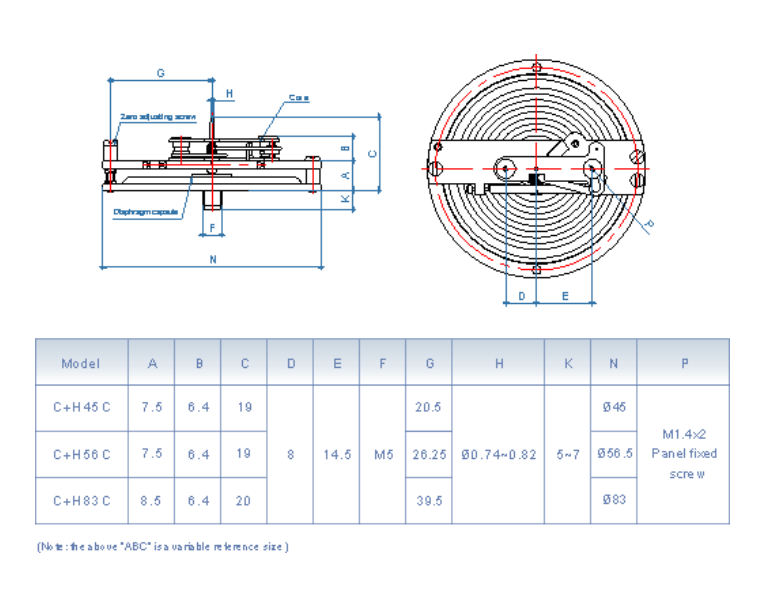
Introduction
Pressure gauges are fundamental instruments in industrial process control and monitoring, serving as indicators of force exerted by fluids (liquids or gases) per unit area. Their technical position within the industry chain is critical, acting as essential components in systems ranging from oil and gas pipelines to chemical processing plants, HVAC systems, and aerospace applications. Core performance characteristics center around accuracy, repeatability, and robustness under varying environmental conditions. Modern pressure gauges utilize various technologies including Bourdon tubes, diaphragms, and strain gauges, each suited to specific pressure ranges and applications. A key industry pain point lies in ensuring long-term accuracy and reliability in harsh environments, particularly those involving corrosive media, extreme temperatures, or high vibration. Furthermore, compliance with stringent safety standards and traceability requirements presents ongoing challenges for both manufacturers and end-users.
Material Science & Manufacturing
The core material for Bourdon tubes, the most common type of pressure gauge component, is typically beryllium copper, phosphor bronze, or stainless steel (304, 316). Beryllium copper offers excellent spring properties and corrosion resistance but presents manufacturing challenges due to beryllium’s toxicity. Phosphor bronze provides a cost-effective alternative with good resilience, although it's less corrosion resistant. Stainless steel, particularly 316, is favored for high-corrosion environments. Diaphragm gauges often employ materials like Hastelloy, Monel, or Teflon-coated stainless steel for compatibility with aggressive fluids. Manufacturing involves forming the tube or diaphragm to precise dimensions using processes like cold drawing, stamping, and welding. Parameter control is paramount; the tube’s ovality, wall thickness, and heat treatment directly impact accuracy. Welds must be free of defects to prevent failure under pressure. For digital gauges utilizing strain gauges, semiconductor materials (silicon) are bonded to a substrate and meticulously calibrated. Manufacturing tolerances are in the micrometer range. Surface finishing, such as passivation for stainless steel, is critical to enhance corrosion resistance. Quality control procedures include hydrostatic testing to verify leak tightness and cyclical pressure testing to assess fatigue life.

Performance & Engineering
Performance analysis of pressure gauges centers on several key areas. Force analysis considers the pressure-induced stress on the sensing element (Bourdon tube, diaphragm), requiring meticulous calculations to ensure the material’s yield strength is not exceeded. Environmental resistance is crucial; gauges must withstand temperature fluctuations, humidity, and vibration without significant drift. Compliance with standards like IEC 61000-4-3 (electromagnetic compatibility) and IEC 60751 (accuracy) is mandatory. The gauge’s linearity and hysteresis are critical engineering considerations. Linearity refers to the proportional relationship between applied pressure and output signal; hysteresis describes the difference in output for the same pressure applied increasing versus decreasing. For digital gauges, signal conditioning circuitry and analog-to-digital converters (ADCs) play a critical role in accuracy and resolution. Furthermore, the gauge's mounting configuration (panel mount, surface mount) impacts its vibration sensitivity and overall performance. In applications involving pulsating pressures, damping mechanisms (fluid filling, restrictors) are implemented to prevent needle oscillation and improve readability. The selection of a suitable pressure gauge involves careful consideration of the media’s compatibility with the wetted materials, the required accuracy, and the operating environment.
Technical Specifications
| Pressure Range | Accuracy (Full Scale) | Operating Temperature | Process Connection |
|---|---|---|---|
| 0-10 PSI | ±0.25% FS | -20°C to 80°C | 1/4" NPT (Female) |
| 0-100 PSI | ±0.5% FS | -40°C to 120°C | 1/2" NPT (Female) |
| 0-500 PSI | ±1.0% FS | -30°C to 100°C | 3/4" NPT (Female) |
| 0-1000 PSI | ±1.5% FS | -20°C to 85°C | 1" NPT (Female) |
| 0-10,000 PSI | ±2.0% FS | -10°C to 60°C | 1/2"-14 UNF (Female) |
| 0-20,000 PSI | ±3.0% FS | 0°C to 50°C | 9/16"-18 UNF (Female) |
Failure Mode & Maintenance
Common failure modes in pressure gauges include fatigue cracking of the Bourdon tube or diaphragm due to cyclical pressure fluctuations. Corrosion, particularly in aggressive media, can lead to material degradation and eventual failure. Leakage through the process connection is another frequent issue, often caused by improper sealing or thread damage. For digital gauges, drift in the zero point can occur due to temperature variations or component aging. Hysteresis can increase over time due to mechanical wear. Failure analysis often reveals that exceeding the gauge’s pressure range or operating it outside its specified temperature limits are contributing factors. Maintenance involves regular visual inspection for leaks, damage, or corrosion. Periodic calibration (typically annually) is essential to ensure accuracy. For gauges exposed to harsh environments, protective coatings or enclosures can extend their service life. If a gauge exhibits significant drift or consistently inaccurate readings, it should be replaced. Proper installation, including the use of appropriate dampening devices and avoiding excessive vibration, is crucial for preventative maintenance. Record-keeping of calibration and maintenance activities is essential for traceability and quality control.
Industry FAQ
Q: What is the impact of media viscosity on the accuracy of a pressure gauge?
A: High viscosity fluids can introduce a damping effect, potentially leading to a delayed response and a slight underestimation of peak pressures. Furthermore, highly viscous fluids can cause clogging in the process connection, affecting the gauge's ability to accurately measure pressure changes. Selecting a gauge with a larger process connection bore or employing a diaphragm seal can mitigate these effects.
Q: How does temperature affect the accuracy of a pressure gauge?
A: Temperature variations can cause thermal expansion or contraction of the sensing element (Bourdon tube, diaphragm), leading to drift in the zero point and changes in accuracy. Gauges are typically specified with an operating temperature range; exceeding this range can significantly degrade performance. Temperature compensation mechanisms are incorporated in some high-precision gauges.
Q: What are the advantages of using a digital pressure gauge over an analog gauge?
A: Digital pressure gauges offer several advantages, including higher accuracy, improved resolution, and the ability to transmit data remotely. They often incorporate advanced features such as data logging, alarm functionality, and programmable units. However, they generally have higher initial costs and require a power supply.
Q: What is the significance of the 'wetted parts' material?
A: The 'wetted parts' are the components of the gauge that come into direct contact with the process fluid. Selecting a material compatible with the fluid is critical to prevent corrosion, erosion, or chemical reactions that could lead to failure or inaccurate readings. Material selection guides are essential for ensuring long-term reliability.
Q: What are the considerations for selecting a pressure gauge for a vibrating environment?
A: High vibration can cause premature failure of the sensing element or damage the gauge’s internal components. Consider using a liquid-filled gauge to dampen vibrations. Selecting a robust gauge with a reinforced case and a stable mounting configuration is also crucial. Furthermore, isolating the gauge from the vibration source using flexible connections or vibration dampers can significantly improve its lifespan.
Conclusion
Pressure gauges remain indispensable tools for industrial process monitoring, and advancements in materials science and manufacturing continue to refine their performance and reliability. Understanding the interplay between material properties, manufacturing tolerances, and operating conditions is paramount for selecting the optimal gauge for a specific application. Addressing the core industry pain points of accuracy, environmental resilience, and regulatory compliance requires a holistic approach, encompassing proper gauge selection, rigorous testing, and preventative maintenance practices.
Future trends in pressure gauge technology will likely focus on the integration of wireless communication capabilities, enhanced data analytics, and self-diagnostic features. The development of new materials with improved corrosion resistance and temperature stability will further extend the lifespan and reliability of these critical instruments. Continued adherence to international standards and a commitment to continuous improvement will be essential for maintaining the integrity and safety of industrial processes.
 English
  Arabic
  China
China  China (Taiwan)
  Danish
  Dutch
Dutch  French
  German
  Greek
Greek  Hindi
Hindi  Indonesian
  Italian
  Japanese
  Korean
  Latin
Latin  Polish
  Portuguese
  Russian
  Spanish
  Turkish