
Apr . 01, 2024 17:55 Back to list
Pressure Gauge Puzzle Performance Analysis
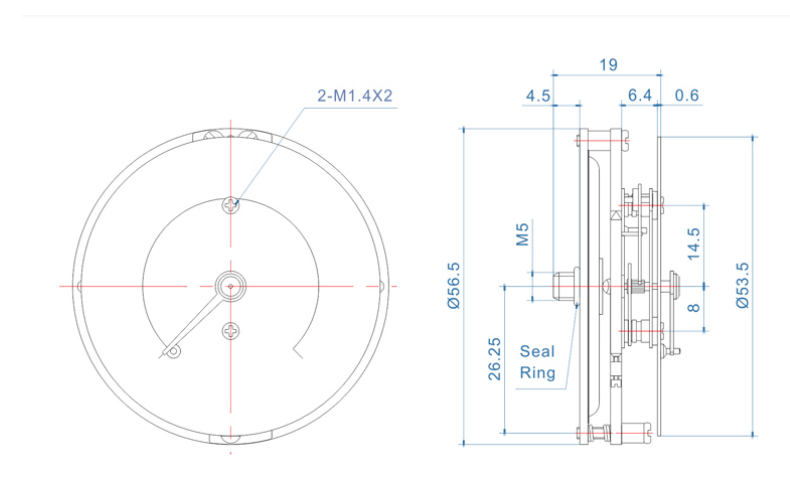
Introduction
Pressure gauge puzzles, encompassing mechanical and digital implementations, represent a critical component within process instrumentation and control systems. Their primary function is to accurately measure static or dynamic pressure and translate this data into a visually interpretable format. This guide details the engineering principles, material science, manufacturing processes, performance characteristics, failure modes, and industry standards associated with these devices. They find widespread application across numerous sectors including oil and gas, chemical processing, pharmaceutical manufacturing, HVAC systems, and aerospace, acting as essential safeguards and indicators of process health. A key industry pain point centers around ensuring long-term accuracy and reliability in harsh operating environments, specifically concerning corrosion resistance, thermal stability, and minimization of drift. Understanding the nuances of pressure gauge puzzle design is therefore paramount for effective system integration and maintenance.
Material Science & Manufacturing
The construction of pressure gauge puzzles relies on a precise selection of materials to withstand specific pressure ranges and environmental conditions. Bourdon tubes, the core sensing element in many mechanical gauges, are typically manufactured from beryllium copper, phosphor bronze, or stainless steel alloys (304, 316). Beryllium copper provides excellent elasticity and corrosion resistance, but is more costly. Phosphor bronze offers a cost-effective alternative with good spring characteristics. Stainless steel, particularly 316, is preferred for corrosive environments. The gauge case is commonly constructed from aluminum, steel, or plastic (ABS, Polycarbonate). Digital gauges integrate pressure sensors (piezoresistive, capacitive, or inductive) with microelectronics. Silicon is the primary material for these sensors due to its piezoelectric properties and ability to be precisely fabricated using micro-electro-mechanical systems (MEMS) technology. Manufacturing processes for mechanical gauges include forming (bending the Bourdon tube to shape), welding (sealing the tube ends), and calibration. Digital gauges require semiconductor fabrication, surface mount technology (SMT) for component placement, and rigorous testing. Parameter control during Bourdon tube forming is crucial, focusing on precise bending radius and stress distribution to ensure linearity and accuracy. Welding parameters (temperature, shielding gas composition) must be optimized to prevent oxidation and maintain the structural integrity of the tube. Sensor calibration, for both mechanical and digital types, involves comparing the gauge output to a traceable pressure standard and adjusting the instrument accordingly.
Performance & Engineering
Performance characteristics of pressure gauge puzzles are defined by accuracy, resolution, hysteresis, and long-term stability. Accuracy refers to the deviation between the indicated pressure and the actual pressure. Resolution is the smallest pressure change that the gauge can detect. Hysteresis is the difference in output for the same pressure when approached from increasing or decreasing pressure values. Long-term stability relates to the drift in calibration over time. Engineering considerations include pressure range selection (choosing a range appropriate for the application to maximize accuracy), material compatibility with the process fluid (avoiding corrosion or degradation), and environmental protection (ensuring the gauge can withstand temperature fluctuations, vibration, and humidity). Force analysis on the Bourdon tube determines its ability to withstand overpressure events without permanent deformation or failure. Environmental resistance is improved through encapsulation, protective coatings, and the use of corrosion-resistant materials. Compliance requirements, such as those outlined by ASME B40.100, mandate specific performance criteria and testing procedures to ensure the safety and reliability of pressure measuring instruments. Digital gauge performance is further enhanced through signal processing techniques, such as filtering and linearization, to improve accuracy and reduce noise. The design of the gauge mounting (threaded connection, flanged connection) is also critical to ensure a leak-tight seal and prevent pressure loss.
Technical Specifications
| Parameter | Mechanical Gauge (Bourdon Tube) | Digital Gauge (Piezoresistive Sensor) | Units |
|---|---|---|---|
| Pressure Range | 0-100 psi to 0-10,000 psi | 0-10 psi to 0-5000 psi | psi |
| Accuracy | ±1.0% of span | ±0.25% of span | %FS (Full Scale) |
| Resolution | 1% of span | 0.1% of span | %FS |
| Operating Temperature | -40°F to 180°F | -20°F to 85°F | °F |
| Media Compatibility | Stainless Steel: Most fluids | Stainless Steel/Hastelloy: Compatible with many fluids, check sensor datasheet | - |
| Connection Type | 1/8” NPT, 1/4” NPT | 1/8” NPT, 1/4” NPT | - |
Failure Mode & Maintenance
Common failure modes for mechanical pressure gauge puzzles include Bourdon tube rupture (due to overpressure or fatigue), linkage wear (leading to inaccurate readings), and case leaks (resulting in environmental ingress). Digital gauges can fail due to sensor drift, electronic component failure, or communication errors. Fatigue cracking in the Bourdon tube typically occurs at points of high stress concentration, such as the bends or welds. Delamination of the Bourdon tube can occur due to corrosion or material defects. Degradation of the gauge case material can occur due to exposure to harsh chemicals or UV radiation. Oxidation of internal components can also lead to malfunction. Preventative maintenance includes regular visual inspection for leaks or damage, calibration checks against a traceable standard, and periodic cleaning to remove contaminants. For mechanical gauges, lubrication of the movement can reduce friction and improve accuracy. Digital gauges may require firmware updates or sensor recalibration. In case of a rupture, the gauge should be immediately replaced. Proper installation, including the use of a pressure snubber to dampen pulsations, can extend the service life of the gauge. Root cause analysis of failures is crucial to identify underlying issues and prevent recurrence.
Industry FAQ
Q: What is the impact of process fluid temperature on gauge accuracy?
A: Process fluid temperature can significantly impact gauge accuracy. Temperature variations cause changes in the material properties of the Bourdon tube or sensor, leading to expansion or contraction. This alters the zero point and span of the gauge, resulting in measurement errors. Compensation mechanisms, such as temperature compensation circuits in digital gauges or the selection of materials with low thermal expansion coefficients, are employed to mitigate this effect.
Q: How does vibration affect the performance of a pressure gauge puzzle?
A: Vibration can induce dynamic stresses on the Bourdon tube or sensor, leading to erratic readings or premature fatigue failure. Excessive vibration can also loosen internal components and cause mechanical wear. To minimize the impact of vibration, gauges should be mounted on vibration dampeners or isolated from the source of vibration. Digital gauges often incorporate filtering algorithms to reduce the influence of vibration noise.
Q: What is the difference between absolute pressure, gauge pressure, and differential pressure measurement?
A: Absolute pressure is measured relative to a perfect vacuum. Gauge pressure is measured relative to atmospheric pressure. Differential pressure is the difference in pressure between two points. The type of gauge puzzle required depends on the specific application. For example, a vacuum gauge measures absolute pressure, while a typical pressure gauge measures gauge pressure. Differential pressure gauges are used to measure flow rates or level in tanks.
Q: What are the key considerations when selecting a gauge material for a corrosive environment?
A: When selecting a gauge material for a corrosive environment, it's critical to consider the compatibility of the material with the process fluid. Stainless steel alloys (316, Hastelloy) are commonly used for their corrosion resistance. For highly corrosive fluids, special alloys or protective coatings may be required. The gauge case material should also be compatible with the environment to prevent corrosion and maintain a leak-tight seal.
Q: What is the recommended calibration frequency for pressure gauge puzzles?
A: The recommended calibration frequency depends on the application, operating conditions, and regulatory requirements. Generally, gauges should be calibrated at least annually or after any event that could affect their accuracy, such as a shock or exposure to extreme temperatures. Critical applications may require more frequent calibration intervals.
Conclusion
Pressure gauge puzzles are indispensable tools for accurate and reliable pressure measurement across a diverse range of industrial applications. Understanding their underlying material science, manufacturing processes, and performance characteristics is critical for optimal selection, installation, and maintenance. The ongoing evolution of digital gauge technology, incorporating advanced sensor designs and signal processing techniques, continues to enhance accuracy and functionality.
Addressing the industry’s pain points regarding long-term stability and corrosion resistance requires a diligent focus on material selection, protective coatings, and regular calibration. Compliance with international standards, such as those detailed below, is essential for ensuring safety, reliability, and traceability. Future advancements in sensor technology and wireless communication will likely further integrate pressure gauge puzzles into smart manufacturing ecosystems, enabling real-time monitoring and predictive maintenance capabilities.
 English
  Arabic
  China
China  China (Taiwan)
  Danish
  Dutch
Dutch  French
  German
  Greek
Greek  Hindi
Hindi  Indonesian
  Italian
  Japanese
  Korean
  Latin
Latin  Polish
  Portuguese
  Russian
  Spanish
  Turkish